
meta_title: "What Do Astronauts Eat in Space? Fun Guide for Curious Kids"
meta_description: "Explore what do astronauts eat on the ISS with hands-on activities, tasty space food facts and simple STEM experiments for children aged 6–12."
Imagine packing snacks for a trip that orbits Earth every 90 minutes! Astronauts on the ISS rely on a mix of freeze-dried, thermostabilised, rehydratable and fresh foods. This clever space food keeps meals tasty, nutritious and crumb-free in microgravity.
Understanding Space Food Categories
Every box that arrives at the station is pre-prepared, vacuum-sealed and ready for long missions. Each snack must stay safe, keep its flavour and pack a good nutritional punch.
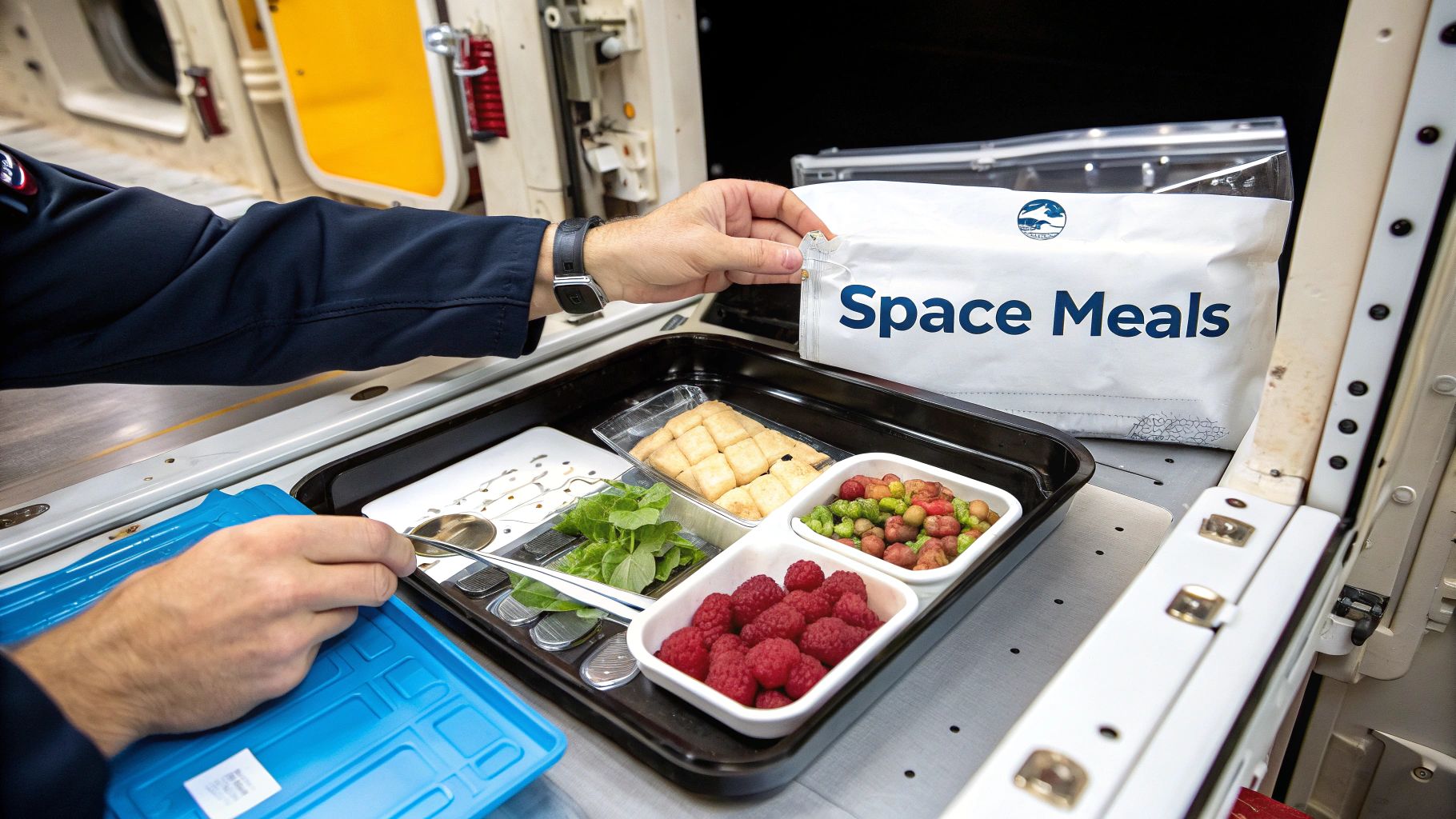
When astronauts eat, they pick from four main types:
- Freeze-dried fruits and meats: add water and enjoy a familiar crunch.
- Thermostabilised meals: heat-treated pouches, like tinned stew on Earth.
- Rehydratable powders and soups: water goes in through a valve—no spills.
- Fresh fruit and salads: flown up on resupply flights and eaten quickly.
Curious about daily life in orbit? Take a peek at what astronauts do in space for more fun facts.
Overview of Space Food Types
| Food Type | Preparation Method | Shelf Life | Key Benefit |
|---|---|---|---|
| Freeze-dried | Moisture removed under vacuum | 5 years | Lightweight, satisfying crunch |
| Thermostabilised | Heat-treated sealed pouches | 2 years | Ready to eat straight away |
| Rehydratable | Add water to powders or freeze-dried meals | 1–3 years | Flexible portions, simple prep |
| Fresh | Stored in sealed containers and eaten quickly | 3–7 days | Vitamins, familiar flavours |
Even a tiny crumb can float in zero gravity, so every bite must be sealed.
Space Snacks In Action
You can bring space food concepts to life at home:
- Turn raisins into “space beads” by growing sugar crystals on their surface.
- Pack your own mission pouches, labelling each with its shelf life.
Teachers and parents can use these activities as icebreakers. Invite children to sort foods by storage duration or design their own space-ready snack packs.
History of Astronaut Meals
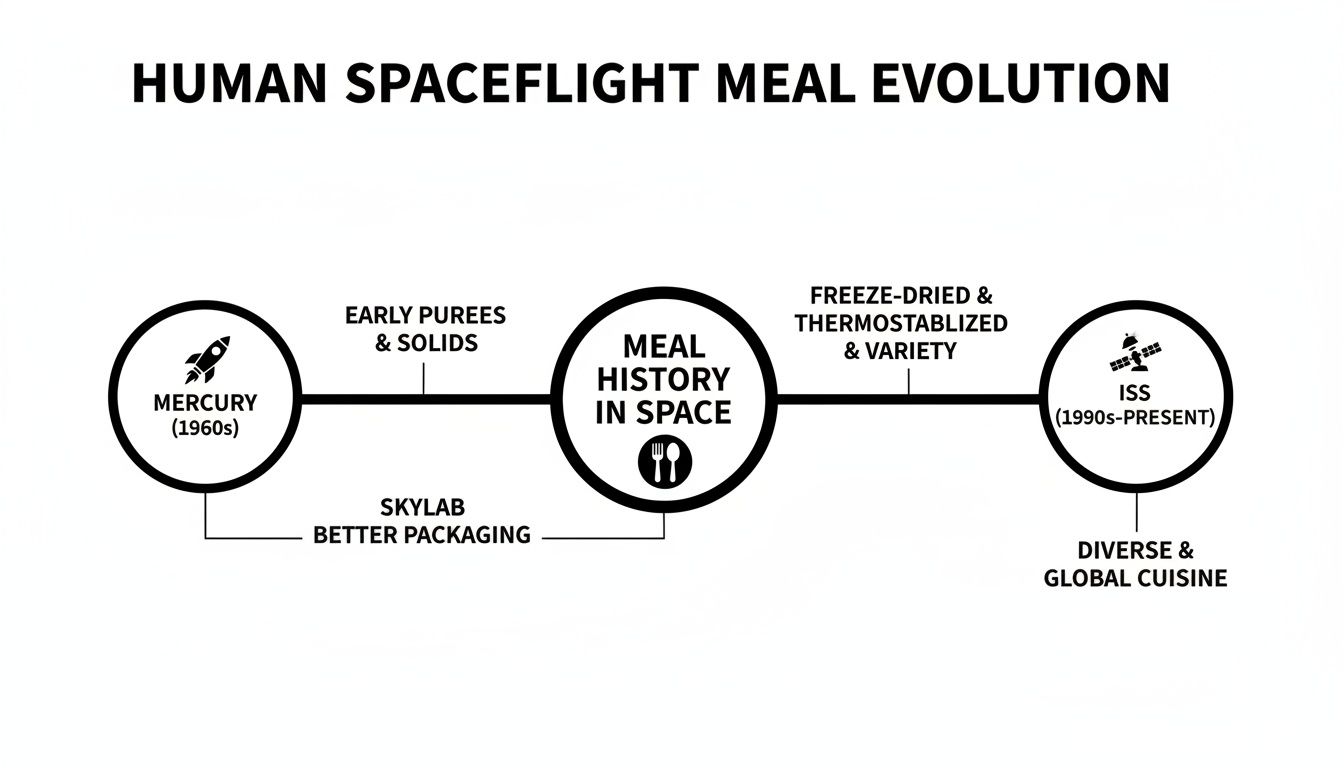
Let’s travel back to the Mercury programme, when astronauts sipped coffee and juice through straws in gel packs. Loose crumbs caused chaos, so engineers sealed meals in pouches and baked special low-crumb bread.
Early Space Snacks
- 1961 (Mercury): Gel packs squirted drinks straight into the mouth.
- 1965 (Gemini): Bite-sized cubes of freeze-dried food—crunchy beads in space!
- 1973 (Skylab): Tubes of puréed soups and fruits, plus water on cubes for texture.
Fast forward to 2015, when British astronaut Tim Peake became the first UK citizen to savour a bacon sandwich on low-crumb bread aboard the ISS. He teamed up with chef Heston Blumenthal to create tasty astronaut meals. Learn more at the UK Space Centre.
Modern Gourmet Menus
Today, space chefs and scientists craft menus that feel like a restaurant in orbit. They use elegant pouches, bold seasonings and artful plating to fight muted taste buds in microgravity.
“Food is more than fuel in orbit; it’s a taste of home and a boost for crew morale.”
Types of Space Food
Peek inside an astronaut’s lunchbox and you’ll find four clever solutions that balance flavour, nutrition and the quirks of zero gravity.
- Freeze-dried treats: moisture removed, perfect for light, crunchy snacks.
- Thermostabilised dishes: heat-treated pouches for ready-to-eat meals.
- Rehydratable packs: inject water, seal and shake for soups and powders.
- Fresh produce: flown up and eaten within days for vitamins and crisp textures.
Freeze-Dried Delights
Imagine ripe strawberries turned into crisp, jewel-like beads. Engineers flash-freeze the fruit, then remove moisture under vacuum. The result? Snacks that weigh up to 80% less and float like tiny comets—until water brings them back to life.
- Pro: Lightweight to save rocket fuel.
- Pro: Crunchy texture makes eating fun.
- Con: Taste can feel muted without the right water dose.
Thermostabilised Mains
Think of your favourite curry sealed in a pouch. Thermostabilisation uses heat to kill bacteria and lock in flavours. Astronauts enjoy chicken curry on the ISS, thanks to its 2-year shelf life.
- Pro: Bold flavours, no prep needed.
- Pro: Eat straight from the pouch.
- Tip: Warm gently with a water bath for extra comfort.
Rehydratable Dishes
Soups, pasta and egg powders arrive as dry mixes. Crew members inject water through a one-way valve, seal the bag and give it a gentle shake. Voila—familiar textures without floating droplets.
- Inject water.
- Seal and shake.
- Wait a moment before munching.
| Category | Processing | Preparation | Typical Shelf Life |
|---|---|---|---|
| Freeze-dried | Remove moisture under vacuum | Add water to rehydrate | 5 years |
| Thermostabilised | Heat-treated and sealed | Eat straight from pouch | 2 years |
| Rehydratable | Dehydrated mixes in pouches | Inject water and mix | 1–3 years |
| Fresh produce | Packed and sealed | Eat within days | 3–7 days |
Fresh Produce
Fresh fruits and vegetables ship up days before eating. Apples, carrots and leafy greens pack vitamins and a familiar crunch.
- Pro: Natural textures, vitamins stay intact.
- Con: Must be eaten in a few days.
- Tip: Keep in cool lockers to slow spoilage.
Every snack idea starts with a question: how would it fare in weightless space?
Packaging and Preparation in Microgravity
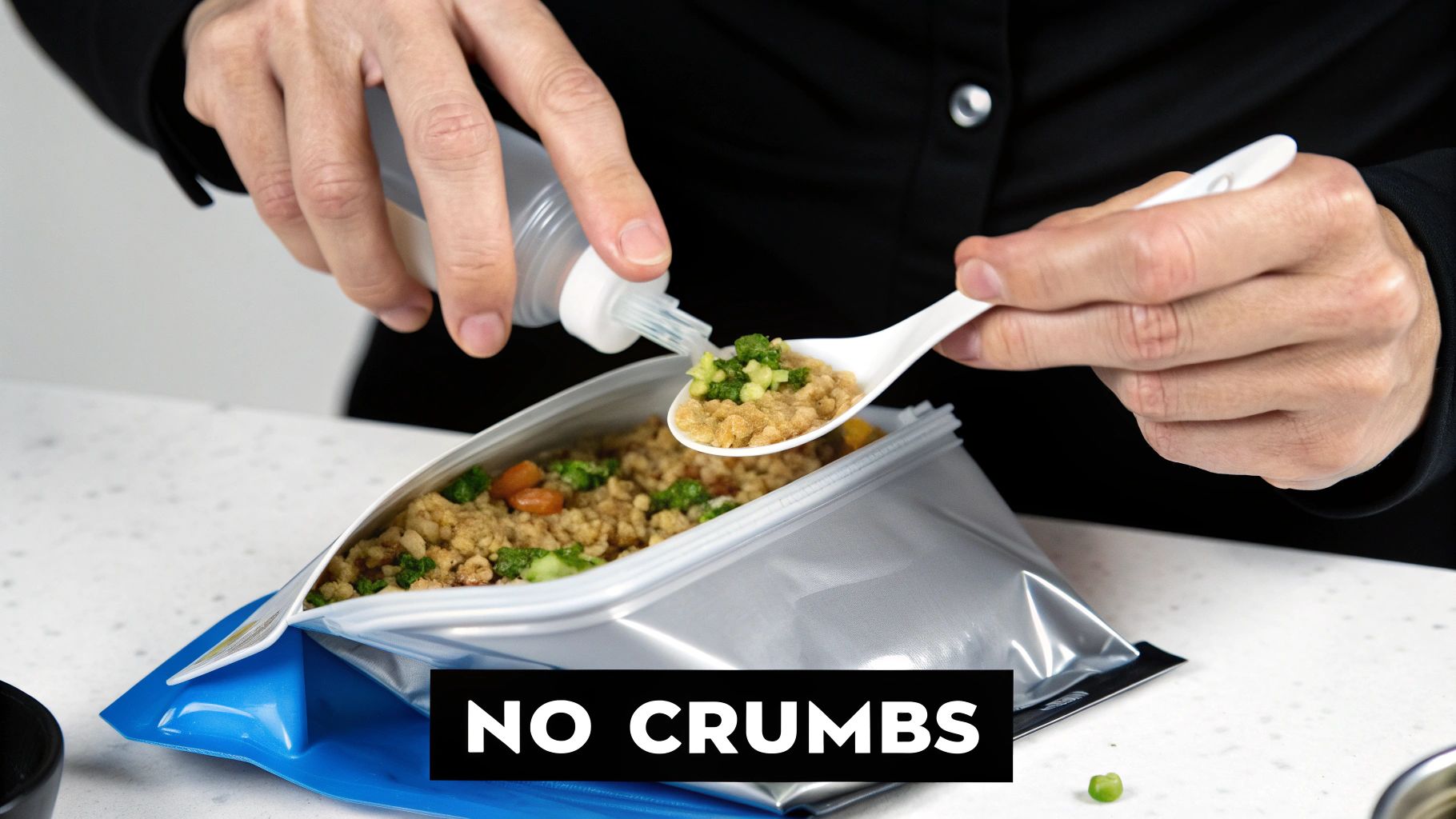
In zero gravity, crumbs and liquids can float everywhere. Packaging must be clever to keep messes at bay and flavours locked in.
Before we explore packaging, check out what is zero gravity to see why fluids act so oddly up there.
How Astronauts Use Sealed Pouches
Most meals arrive in foil-lined pouches. Astronauts snip them open with scissors and reshape them into makeshift bowls. A one-way valve keeps any rogue droplet from escaping when sipping soups or drinks.
Their simple routine:
- Inject water or oil through the valve.
- Seal and shake to mix.
- Mould into a bowl and tuck in.
Materials and Design Features
Space packaging uses multilayer foil, flexible polymers and even edible films. Some wrappers are plant-based and eaten after the meal—zero waste!
| Packaging Type | Material | Function | Special Feature |
|---|---|---|---|
| Pouch | Multilayer foil and plastic | Holds solids and liquids | One-way rehydration valve |
| Tube | Flexible polymer | Dispenses purees and sauces | Scissor-free twist cap |
| Wrapper | Edible film | Wraps breads and snacks | Biodegradable and tasty |
Every tear-resistant layer is a victory over floating crumbs.
Classroom Packaging Experiment
Bring the ISS to your class:
- Use sealable bags, crayons and pipettes.
- Draw valve shapes and practise squirting water inside without leaks.
- Time how fast you can mix and “eat” mock meals without spilling.
Grab more ideas on the Freebies & Activities page.
Nutrition and Meal Planning in Space
Astronauts can’t wander to the galley for a midnight snack. In microgravity, muscles weaken and bones lose density. Every bite must taste great and keep crews fit.
Dietitians tweak Earth-based guidelines for space:
| Nutrient | Earth Guideline | Space Adjustment |
|---|---|---|
| Protein | 0.8 g/kg body | 1.2 g/kg body |
| Calcium | 1000 mg | 1200 mg |
| Vitamin D | 600 IU | 800 IU |
| Calories | 2000–2500 kcal | 2500–3000 kcal |
Key goals:
- Extra protein for muscle strength.
- More vitamin D for bone health.
- Increased calories for daily tasks.
Planning Menus on Long Missions
To avoid menu fatigue, astronauts follow an eight-day rotation. They might enjoy pasta one night and spicy rice the next.
- Day 1: Scrambled eggs and granola.
- Day 2: Chicken curry and rice.
- Day 3: Vegetable chilli and tortillas.
- …
- Day 8: Special treat day (freeze-dried cake or cookies).
Download meal planners from our Freebies & Activities page and design your own cycle at home.
Try At-Home Energy Experiments
See how snacks fuel performance:
- Measure your heart rate before and after 10 minutes of jumping.
- Compare a sweet snack to a protein bar.
- Rate energy levels 1–10 and chart results.
This shows why astronauts plan both meals and workouts carefully.
Hands-On Activities And Lesson Ideas
Spark curiosity with space food science challenges that children can do at home or in class.
Build a Simple Freeze Dryer
Recreate freeze-drying with three household items:
- Sealable container.
- Silica gel packs.
- Fresh berries.
Freeze berries overnight, tuck them in the container with gel packs and wait five days. Note changes in colour and shape.
Craft Edible Space Ice Cream
- Measure 100 g of freeze-dried fruit into a sealed bag.
- Add 50 ml of milk or plant-based drink.
- Shake for one minute, freeze briefly and enjoy.
Children will love experimenting with flavours.
Sensory Spice Tasting Challenge
- Prepare moist and dry samples of salt, cinnamon and cumin.
- Blindfold tasters and rate flavour intensity on a 1–5 scale.
- Chart results to see how moisture changes taste.
Download lesson outlines from our Freebies & Activities page for more details. Teachers can also explore Hands-On Activities and Lesson Ideas for extra experiments.
Design Your Own Space Snack
- Sketch a snack shape and wrapper.
- List three ingredients and why they work in space.
- Choose freeze-drying, thermostabilisation or rehydration.
- Decide on pouch, tube or edible wrapper.
Groups can present designs and explain their science choices.
Frequently Asked Questions
-
Why do meals taste different in space?
Microgravity dulls taste buds by up to 30 %. Astronauts add bold spices and textures for flavour. -
Can astronauts eat fresh fruit on the ISS?
Yes. Fresh apples, oranges and berries arrive on supply flights and must be eaten in days. -
How is space food packaged to avoid crumbs?
Airtight pouches, one-way valves and low-crumb breads keep everything in place. -
What happens to food waste in microgravity?
Scraps go into sealed containers and burn up on re-entry with departing cargo ships.
For more fun, visit our Freebies & Activities page.
Hungry for more cosmic kitchen capers? Discover Space Ranger Fred and the Cosmic Kitchen on our book page. Explore the wider Space Ranger Fred universe at Space Ranger Fred for books, activities and out-of-this-world fun!