
Half-term is creeping up, the weather is unpredictable, and the children have already said “I’m bored” before breakfast. You want something exciting, but not the sort of outing that leaves everyone frazzled by lunch.
That’s why paultons park halloween works so well as a family mission. It has the costumes, pumpkins and spooky fun children love, but it also gives parents enough structure to plan the day properly. If your child likes stories, rides, ghost-hunting or the thrill of being out after dark with a hot chocolate, there’s a lot here to like.
Your Halloween Mission Should You Choose to Accept It
Last year, a parent at school pick-up described October half-term perfectly. She said she wanted “one big day out that feels special, but not terrifying, and not another soft play.” I knew exactly what she meant.
That’s the sweet spot Paultons Park aims for at Halloween. The park leans into a friendly frightful atmosphere. You get pumpkins, themed shows, dressed-up characters and just enough spookiness to feel seasonal without tipping into full horror territory. For children in the primary age range, that balance matters.
A day here also works nicely if you like to turn outings into learning without making them feel like homework. Children are already asking brilliant questions at Halloween.
- How do dark rides track scores?
- Why do lights look different in fog or mist?
- How do stage shows create spooky effects without being too scary?
- Why does a park feel different in daylight and after sunset?
Those questions are gold for parents, teachers and librarians. They open the door to observation, prediction and explanation. That’s proper learning, just wrapped in cobwebs.
Some of the best family learning happens when children don’t realise they’re doing it.
If you’re planning ahead for paultons park halloween 2026, think of it less like a standard theme park day and more like an expedition. You’ll need a mission plan, a few sensible choices, and a backup snack. Always a backup snack.
Mission Briefing Dates Tickets and Best Value
Saturday in late October can play out in two very different ways. Family one arrives at rope drop with a tight plan, does the headline rides, grabs lunch on the move, and heads home happy if a little tired. Family two stays overnight, spreads the fun across two park days, and has enough breathing room for a second go on a favourite ride, a slower lunch, and one child changing their mind halfway through. Both missions can work. The trick is choosing the version that fits your crew.
For 2026, Paultons’ Halloween short break dates currently run from 9th October to 2nd November on the official Halloween short breaks page. That wider date range helps if you are trying to dodge the busiest half-term days or book around school and work patterns.
When a day trip works best
A single day suits families who live fairly close, have children with good stamina, and are happy to prioritise. In plain English, you are picking the headline parts of the mission rather than trying to complete every side quest.
That can be the smartest first test run.
If your child is unsure about seasonal events, one day gives you a manageable sample of the pumpkins, decorations and Halloween atmosphere without committing to an overnight stay. It also keeps bedtime, familiar food, and the journey home predictable, which some children really need after a high-stimulation day.
When the short break earns its keep
The short break offer is listed from £48 per person, with a free second park day included, according to the official site. For many families, that changes the maths.
A two-day visit works like splitting a big science experiment into two lessons. On day one, your children explore and work out what they love. On day two, they can repeat favourites, catch anything they missed, and enjoy the atmosphere without that constant feeling of racing the clock.
That slower pace often matters more than the price headline. One child may want another turn on a ride. Another may need a proper sit-down break before they are ready to continue. Families with disabled children, neurodivergent children, or mixed ages often find that extra time reduces pressure for everyone, because the day does not have to be “perfect” by 3 pm.
| Feature | Single Day Ticket | 2-Night Short Break Package |
|---|---|---|
| Best for | Families nearby or on a tighter timetable | Families who want a slower pace |
| Pace | Faster, with more prioritising | More flexible |
| Repeat rides | Harder to fit in | Easier to revisit favourites |
| Overnight stay | No | Yes |
| Second park day | No | Included free |
| Best value use | A highlights mission | A fuller Halloween stay with more room to pause |
My parent rule for choosing
I use one simple test. How often does your child say, “Can we go again?”
If that phrase appears after every decent ride, the short break is usually the calmer option. If your children enjoy one full, exciting day and settle better in their own beds afterwards, the day ticket may suit you perfectly.
For a more detailed price-planning breakdown, this guide to Paultons Park tickets for families is handy when you are comparing day tickets with a longer stay.
Mission rule: Choose one day for a highlights mission. Choose the break if your goal is a steadier pace, more flexibility, and room for every Ranger recruit to enjoy the park in their own way.
Your Spooky Mission Itinerary Top Rides for Ranger Recruits
For children aged roughly six to twelve, the trick is choosing rides that feel thrilling without wiping them out by mid-afternoon. The good news is that Paultons is very good at that middle ground.
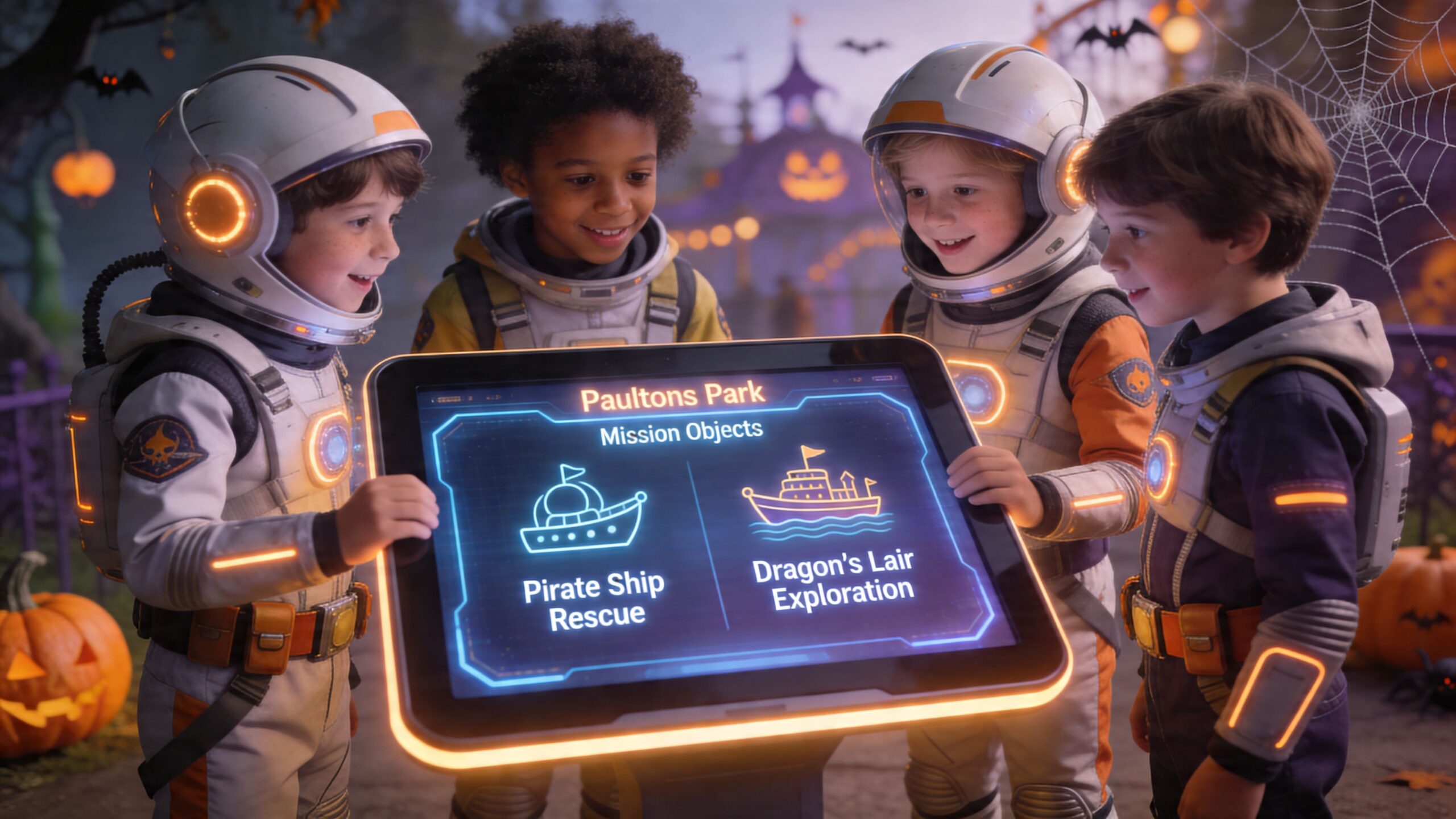
First mission objective, Ghostly Manor
If you only plan one must-do, make it Ghostly Manor. According to this Ghostly Manor coverage, it is the world’s first Gameplay Theater interactive dark ride. Guests use laser-style Phantom Phasers to capture ghosts as they travel through the attraction.
That description sounds fancy, but children understand it instantly. You’re on a moving mission. You aim. You zap. You score. Then you immediately want another go because somebody in your family beat you by a ridiculous amount and is now insufferably pleased with themselves.
The same source says the ride can boost visitor dwell time by up to 30% because families ride again to beat their high scores. That tells you something useful as a parent. This isn’t just a ride people “do once”. It has replay value.
The sneaky STEM in the ghost hunt
This ride is also a lovely little science conversation starter.
Children can think about:
- Light and aiming. The phaser works because you point accurately at hidden targets.
- Sensors. The ride system detects successful hits and turns them into feedback.
- Cause and effect. Better aim changes the score.
- Data. The scoreboard shows a result children can compare, question and improve.
Try simple questions while queueing or afterwards.
- “How do you think the ride knew you hit that ghost?”
- “Did quick aiming help, or careful aiming?”
- “Why did your score change between rides?”
That keeps the learning light. No lecture needed.
Best pacing for younger and older recruits
A smart family route usually starts with one headline attraction, then alternates between bigger thrills and gentler experiences. Children cope better when the day has a rhythm.
For younger primary children, you might mix:
- One major ride
- One show or walk-through area
- Snack stop
- One familiar favourite
- A calmer attraction before lunch
For older children, it often works better to tackle the headline rides earlier, then use shows and character moments as natural resets.
A quick look at the park in motion helps children picture the day before they arrive.
A simple ride strategy that saves arguments
Families often get stuck on one question. Do we queue now or come back later? My answer is boring but effective. Decide this before you enter the park.
Use one of these rules:
- Headline-first rule. Do the top ride as early as possible.
- Child-confidence rule. Start with something familiar, then build up.
- Replay rule. If a ride has a score or challenge element, assume someone will want a second turn.
That third rule matters a lot for Ghostly Manor.
If a ride includes scoring, children stop treating it like transport and start treating it like a mission.
Live Shows Character Encounters and Ghoulish Greetings
Not every child wants to race from coaster to coaster. Some children remember the music, the dancing and the characters more than any ride. At paultons park halloween, the atmosphere does a lot of the work.
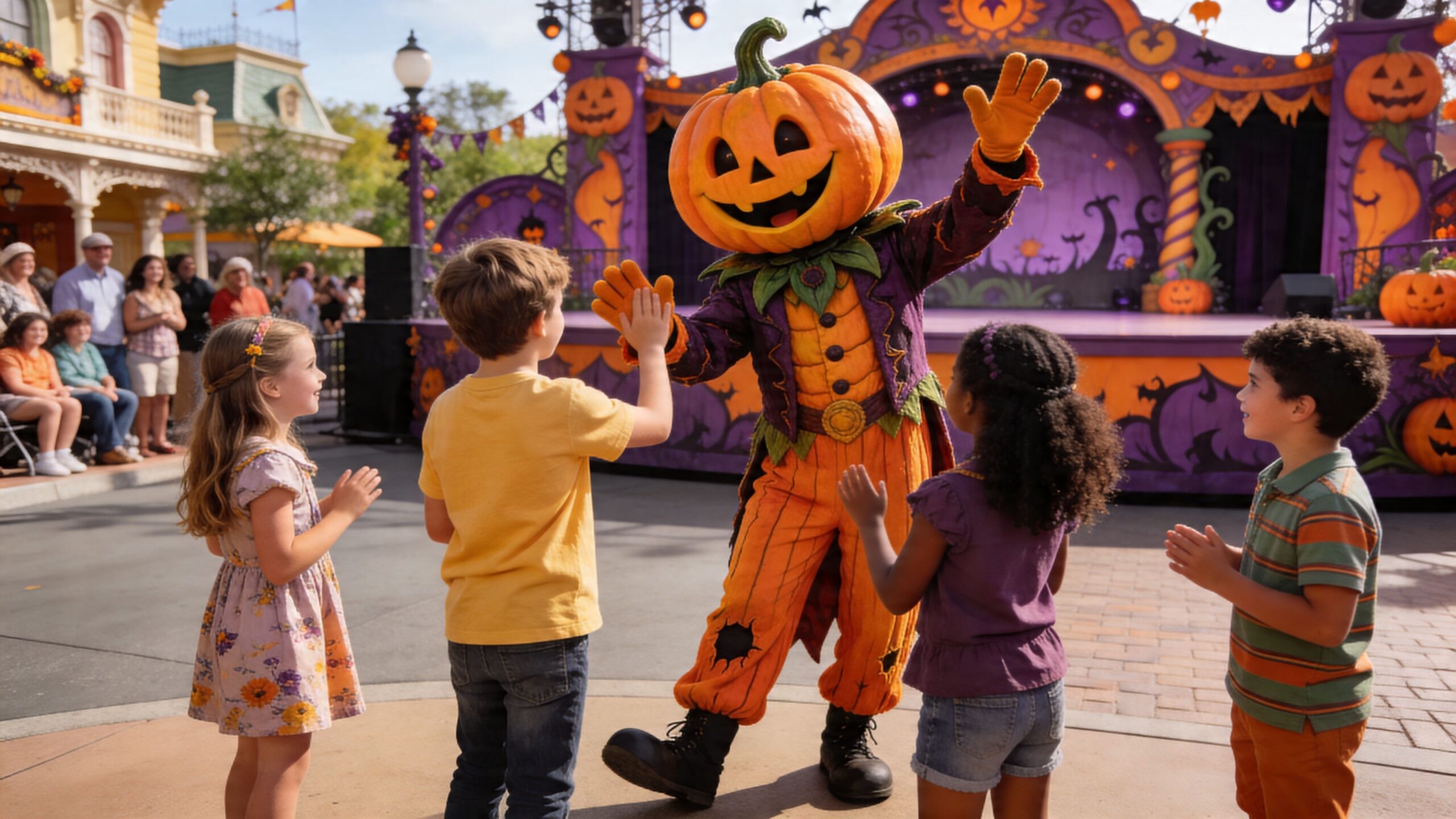
Why the shows matter
Shows are useful for more than entertainment. They create a pause point in the day. Feet rest. Snacks appear. Children reset. Parents breathe.
That’s especially helpful if you’ve got siblings who enjoy different things. One child may be counting down to the next ride, while another is happiest waving at characters and soaking up the decorations.
The friendly frightful feel
The event’s overall mood is usually much more playful than scary. Think pumpkins, autumn colour, Halloween costumes and lively stage energy rather than hard frights. That’s a big reason families with younger children keep coming back.
Children who are unsure about spooky events often cope better here because the theming tends to be readable. It says “Halloween fun” rather than “run for your life”. That distinction matters more than adults sometimes realise.
A few good ways to handle the entertainment side:
- Arrive with a character plan if your child cares a lot about meet-and-greets.
- Use a show as a lunchtime anchor so the day has shape.
- Talk through costumes in advance if your child worries about large mascots or face coverings.
Some children love a pumpkin mascot from twenty metres away and absolutely do not want to high-five it up close. Both reactions are normal.
What children tend to remember
The ride count fades. The sensory snapshots stay.
They remember:
- the giant pumpkins
- the funny dance moves
- the costume details
- the moment the park starts to glow later in the day
- the one character who waved directly at them and therefore is now part of family legend
That’s why I always tell parents not to over-pack the schedule. Leave room for noticing.
Mission Prep Costumes Safety and Park Logistics
A smoother day usually comes down to the boring bits done well. Shoes, layers, snacks, meeting points. The glamorous side of parenting.
Costume choices that still work on rides
Children love dressing up for Halloween. Brilliant. Just keep practicality in charge.
The best outfits for a theme park day are:
- Easy to move in. Long capes and stiff accessories can become annoying fast.
- Weather-friendly. October can swing from mild to chilly very quickly.
- Toilet-friendly. You do not want a complicated costume during a queue emergency.
- Layerable. A themed jumper or simple accessory often beats a full costume by mid-afternoon.
Face paint can be fun, but if your child rubs their eyes when tired, keep it minimal. That saves a lot of panda-style surprises later.
Park-day safety that actually helps
Children get excited and suddenly develop the directional awareness of a startled squirrel. Give them simple anchors.
Try this family checklist:
- Pick a meeting point as soon as you arrive.
- Take a photo of your child in their outfit that morning.
- Agree one queue rule such as “stay where you can see an adult”.
- Pack a small comfort item if your child gets overwhelmed in crowds.
If you’re bringing younger children or carrying coats, picnic bits and the usual “just in case” gear, it’s worth looking at these family outdoor wagon choices for parks. Not every family needs one, but for a long autumn day they can make the logistics much easier.
Food, breaks and keeping everyone steady
The biggest mistake on a Halloween park day is waiting too long to eat. Tired and hungry children do not become more resilient. They become tiny festival critics.
Build in:
- An early snack
- A proper sit-down pause
- One emergency snack that nobody knows about yet
That final one is elite parenting.
For broader autumn safety planning, especially if your family calendar is full of seasonal events, this guide to Bonfire Night safety with children is a handy companion read.
Ensuring a Calm Mission A Guide for Neurodiverse Families
This is the part many parents go looking for and don’t always find clearly enough. If you’re planning paultons park halloween for an autistic child or a child with sensory needs, good preparation makes a huge difference.
According to this discussion of accessibility at Paultons during Halloween, the park is known to be welcoming for autistic children, but official Halloween information on sensory-friendly provisions is limited. The same source notes that there are over 700,000 autistic people in the UK, and 70% have sensory sensitivities.
That matters because Halloween events can be tricky. Music is louder. costumes are bigger. lighting changes. Crowds build. Even children who cope well on ordinary days can find seasonal events harder.
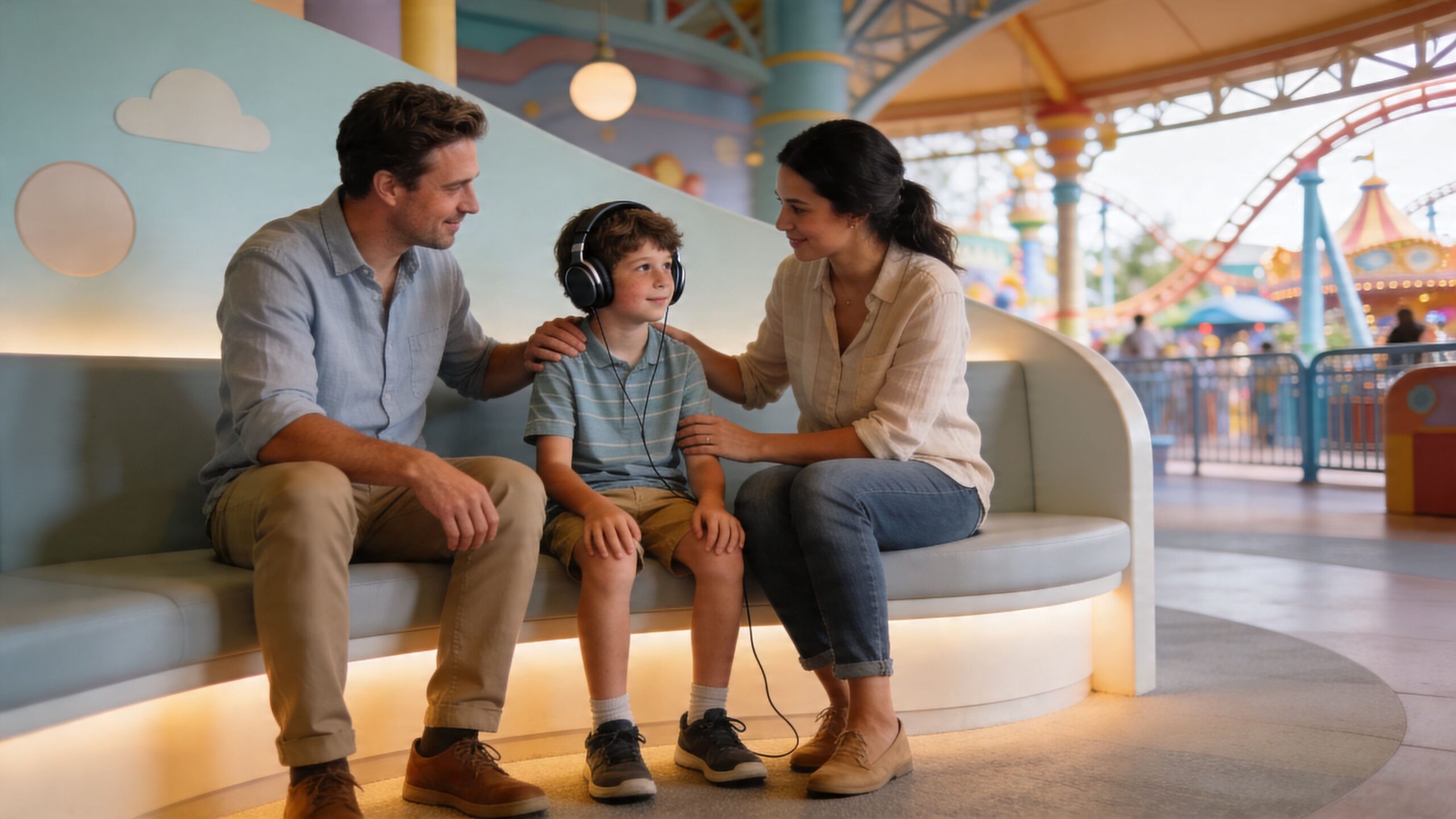
One encouraging sign
The same accessibility discussion shares a positive experience of an autistic child receiving an Access Wristband from the First Aid building near the entrance, which helped make the visit calm and stress-free.
That won’t answer every question, but it’s useful reassurance. It suggests families should feel confident asking for support rather than assuming they must cope.
How to prepare before the visit
For many neurodiverse children, predictability lowers anxiety. Give the day a shape before it happens.
You could try:
- A simple visual plan with arrival, first ride, lunch, one show, home time
- A sensory kit with headphones, safe snacks, fidget item and spare layer
- Clear choice points such as “If the show is too loud, we’ll go for a quiet walk instead”
- Photos or videos in advance so the environment feels familiar
Children often do better when they know the exit plan too. “If it gets too much, we can stop” is a very powerful sentence.
How to keep the day calmer in practice
Since official Halloween guidance appears limited, families may need to build their own calm strategy.
A practical approach is:
- Arrive earlier rather than later if your child finds crowds draining.
- Use quieter transitions between big attractions instead of chaining noisy experiences together.
- Watch body language closely. Many children show overload before they can explain it.
- Treat leaving early as a success if needed. A shorter happy visit beats a full difficult one.
If you’re supporting a child who experiences sudden overwhelm, this guide to understanding autistic meltdowns and shutdowns can help adults recognise what’s happening and respond more calmly.
Helpful reminder: A successful day doesn’t have to include everything. For many families, success means the child felt safe, included and able to enjoy even part of the event.
For backup ideas on lower-pressure family fun, these indoor activities for rainy days are useful to keep in your pocket if plans need adjusting.
The Space Ranger Fred Connection Turning Spooks into STEM
A good family day out delivers a subtle brilliance. It gives children a reason to ask better questions.
That’s why paultons park halloween can double as a STEM day in disguise. You don’t need a worksheet. You just need curiosity and a grown-up willing to say, “What do you think is going on there?”
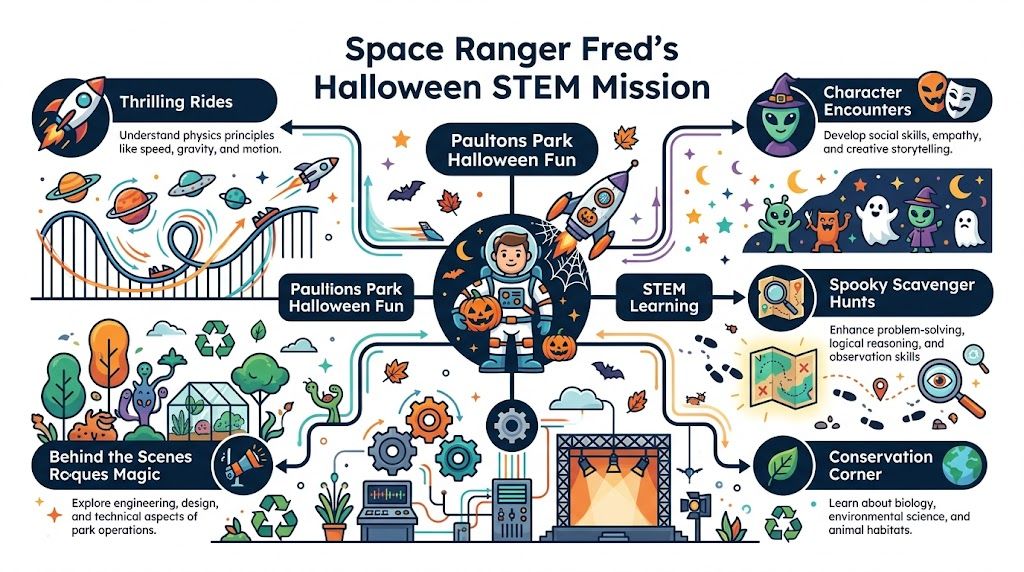
Five easy learning prompts for the day
Rides and motion
Ask why your tummy feels strange on fast turns or drops. Children can notice speed, direction and how their body reacts to movement.Maps and navigation
Let your child lead for one short section using the park map. That builds planning, sequencing and spatial awareness.Stage effects
During a show, ask which parts are made with light, sound, costume or timing. That turns “magic” into observation.Scoring systems
Interactive rides are great for discussing feedback. What changed between one attempt and the next?Design thinking
Ask what the park did to make Halloween feel exciting but not too scary. Children often spot colour, music, character design and decoration choices.
The Menturity layer
This is my favourite part because it helps children move from excitement to understanding.
Try these sentence starters:
- I think the ride works by…
- I try to notice…
- I can describe what changed…
- I can explain why that happened…
That final step matters. A child who can explain what they noticed is doing more than consuming entertainment. They are thinking like an investigator.
Children don’t need long lessons to build confidence. They need small chances to observe, test an idea and say it out loud.
If you’d like to keep that story-led learning going at home, the Space Ranger Fred book collection is a fun next step. For extra printable fun, the Space Ranger Fred freebies and activities page gives children something hands-on after the trip.
You can also pair the park day with another family read on the Space Ranger Fred blog if your child likes turning real outings into imaginative missions.
Mission Debrief and Your Next Adventure
A few practical questions usually pop up right at the end, often when you’re packing bags the night before.
What if it rains
This is Britain. It might. Pack layers, keep footwear sensible and build your day around flexibility rather than perfection. A drizzly day can still be excellent if everyone is warm and you don’t treat weather as a personal insult.
Is it suitable for children who don’t like scary things
Usually, yes, if your child enjoys seasonal fun more than full frights. The event’s family appeal comes from its playful Halloween atmosphere. If your child is wary, talk through costumes, music and decorations before you go, and give them permission to skip anything that feels too much.
Should we stay until later in the day
That depends on your child’s energy, not your ticket value calculations. Some children love the later atmosphere. Others fade fast once it gets darker and busier. Leaving on a high is often the winning move.
Is one day enough
It can be, if you choose your priorities and accept that you won’t do every single thing. If your children love repeating favourites, a longer stay may feel more relaxed.
The best part of paultons park halloween isn’t just the rides or the pumpkins. It’s the chance to spend a whole day following your child’s curiosity. They notice the lights, the sound effects, the engineering, the costumes and the map. You notice them growing in confidence.
That’s a pretty good mission.
Learning should be experienced, not just delivered.
If you’d like more story-led adventures that make science feel exciting, explore Space Ranger Fred. You’ll find fun books for children, activity ideas for families, and interactive school visits that help build confidence in reading, communication and STEM through storytelling.