What if your day at Paultons Park was also a mission in disguise?
Many families arrive ready to compare the biggest splash, the fastest spin and the best ice cream stop. There is fun in that, of course. There is also a much better prize. A park visit can become a hands-on STEM adventure where children feel physics working on their own bodies and start asking the sort of questions real explorers ask.
That is the idea behind this guide to the new rides Paultons Park families are talking about. Treat it like a mission briefing from Space Ranger Fred. Each ride gives you a simple science puzzle to solve. Why do you feel heavier on one ride and lighter on another? What makes a boat swing like a pendulum? How does friction help a car stop safely? The park becomes a training ground, and the lessons stick because they arrive wrapped in laughter.
I’m Space Ranger Fred, and I love turning ordinary family outings into practice runs for future scientists, engineers and space travellers. Paultons Park suits this approach especially well because its newer attractions give families a mix of motion, sound, water, height and clever design to examine. If your child has ever stared at a ride and asked, “How does that work?”, you already have your mission objective.
You can even carry that idea into seasonal visits. Our guide to Paultons Park Halloween adventures for curious families shows how a themed day out can spark the same sort of observation and problem-solving.
If you enjoy thinking about how spaces are built for play and learning, you might also like this guide to designing an adventure recreation center.
By the end, you should know which rides may suit your family best, and you will have a few easy ways to turn waiting, watching and riding into little science wins. That is a strong result for any mission.
1. Ghostly Manor
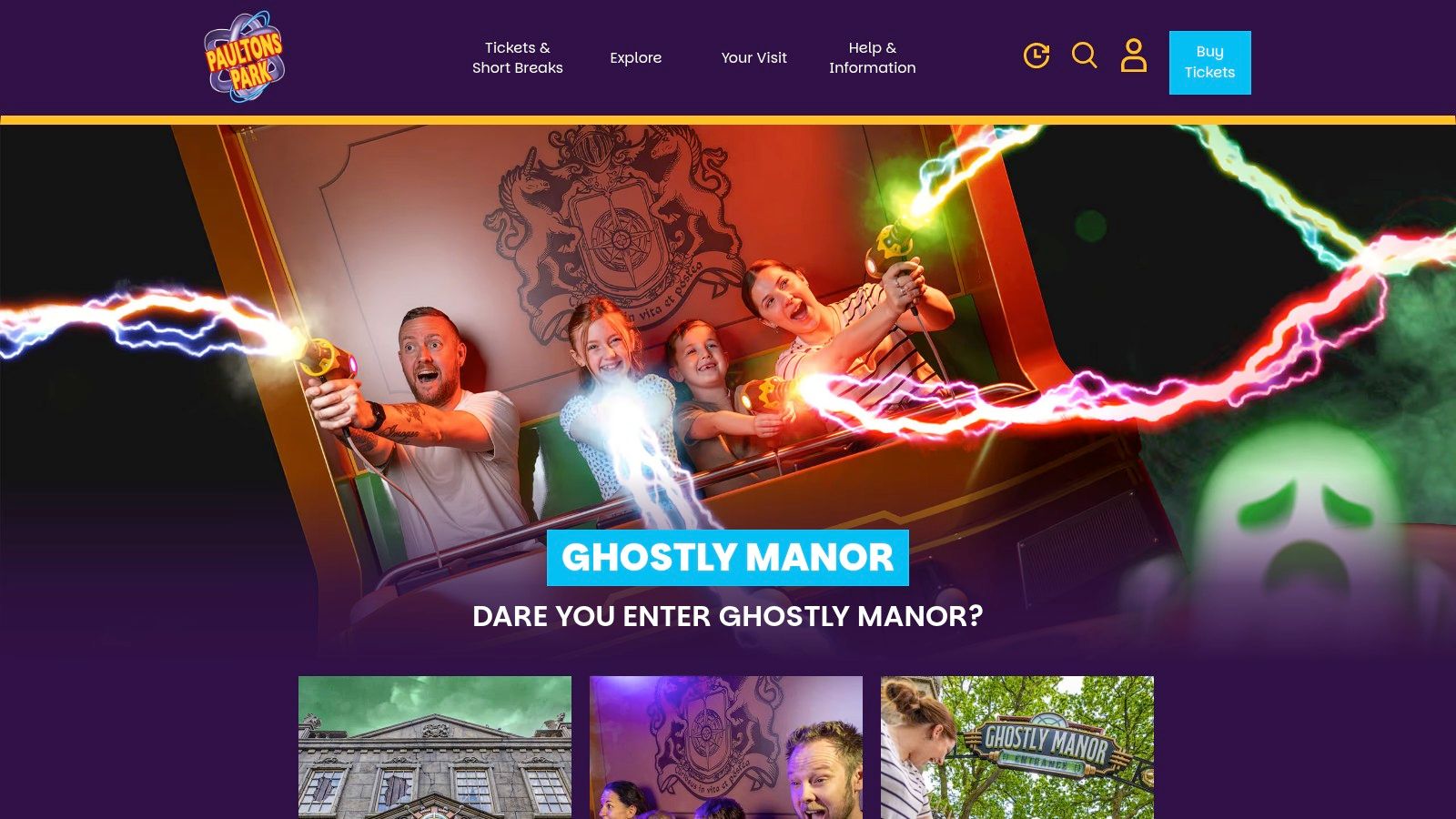
Alt text: new rides Paultons Park Ghostly Manor dark ride
If your family wants one of the newest talking points at the park, Ghostly Manor is a clever pick. It opened in May 2025 as Paultons Park’s newest dark ride, and park information describes it as a family-friendly haunted attraction with playful effects and illusions on a compact footprint in the wider park line-up, as noted on the Paultons Park new attractions page.
That matters for parents because indoor rides can rescue a drizzly day. It matters for children because this is science wearing a ghost costume.
The science hiding in the spooky bits
Dark rides are brilliant for explaining how our senses work. Low light changes what we notice. Moving images and practical effects can trick our brains into thinking something has appeared, vanished or floated across a room. That links neatly to simple ideas about light, shadow and perception.
Ask your child this while you queue. “Did the ghost really move, or did the light change?” That one question turns a scare into an experiment.
Practical rule: If a child enjoys stories, torches and optical illusions, they may love this ride more than they expect.
There’s also the game element. Interactive rides often feel exciting because children aren’t just watching. They’re making choices, aiming, reacting and comparing results. That builds observation skills, quick thinking and confidence.
For families planning autumn fun, this fits nicely with my guide to Paultons Park Halloween ideas.
Pros and possible wobbles
- Strong rainy-day option: Indoor attractions can be handy when the British weather behaves like a confused cloud machine.
- Good repeat value: Interactive scoring gives children a reason to ride again and test a new strategy.
- Story-rich learning: It opens the door to chat about illusion, design, sound and atmosphere.
A possible wobble is that some younger children don’t enjoy darkness or spooky effects, even when they’re playful. A gentle warning before boarding helps. “It’s pretend spooky, like a science mystery house,” usually works better than “It’s not scary.”
If your child leaves saying, “I know how they fooled us,” mission accomplished.
2. Splash Lagoon
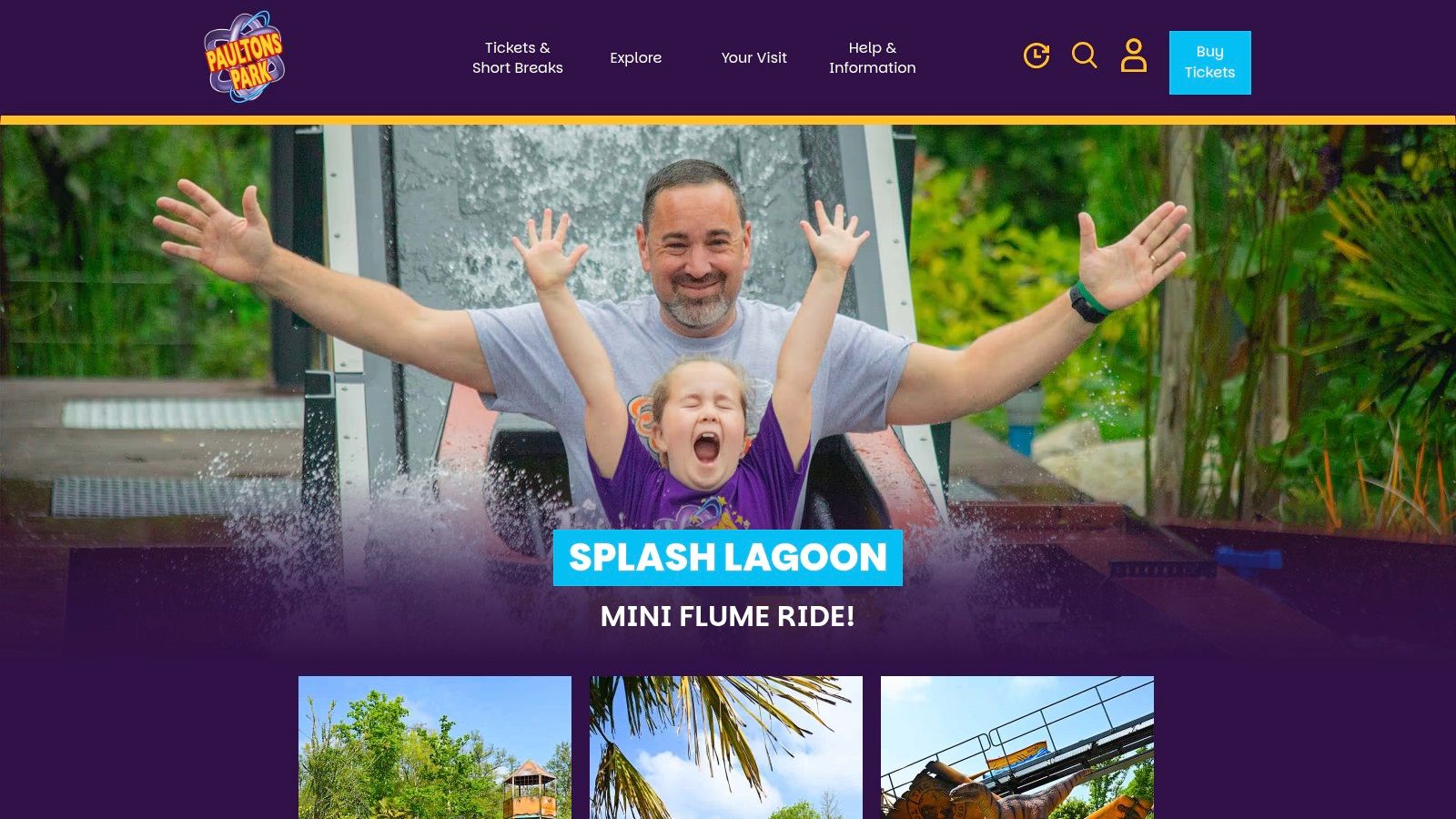
Alt text: new rides Paultons Park Splash Lagoon family flume
What makes a water ride feel different from a coaster, even when the drop looks gentle? Splash Lagoon gives children a clear, splashy answer.
From the Space Ranger Fred mission briefing point of view, this is a practical lesson in how water changes movement. A coaster train follows a track with wheels doing the guiding. A flume boat still has a route, but the water joins the job. That means families can feel drifting, bobbing and splashing as part of the ride itself, not just as decoration.
Splash Lagoon works well for younger adventurers because the science is easy to spot. Children can often tell what is happening with their bodies before they can name it. The slope helps the boat speed up. The water pushes against the sides and bottom. The splash at the end shows energy spreading out into the water around you, a bit like a mini landing test after a space capsule returns to Earth.
Here are the key ideas to point out while you queue or ride:
- Flow: moving water helps carry the boat along the channel
- Gravity: the downhill section pulls the boat forward
- Resistance: water pushes back and slows parts of the motion
- Weight distribution: where people sit can change how balanced or splashy the boat feels
A child-sized version sounds like this. “The boat moves because the hill pulls it down, and the water helps steer and slow it.”
Paultons Park’s ride page for Splash Lagoon shows it as a family ride, which matches the feel on the ground. It suits mixed-age groups who want excitement without jumping straight to the park’s bigger challenge rides. If you are planning the day around gentle wins first, it can help to check Paultons Park ticket options and planning tips before you go.
One practical wobble is easy to predict. British weather and water rides are not always best mates. A spare layer, dry socks or a small towel can save the mission.
For home educators or curious parents, there is a simple follow-up task here. Ask your child to draw the route and mark three points: where the boat speeds up, where it slows, and where the biggest splash happens. That turns a fun ride into observation, prediction and explanation, all in one go.
If they come off saying, “I knew the drop would make the splash bigger,” your junior astronaut has just practised physics without needing a worksheet.
3. Farmyard Flyer
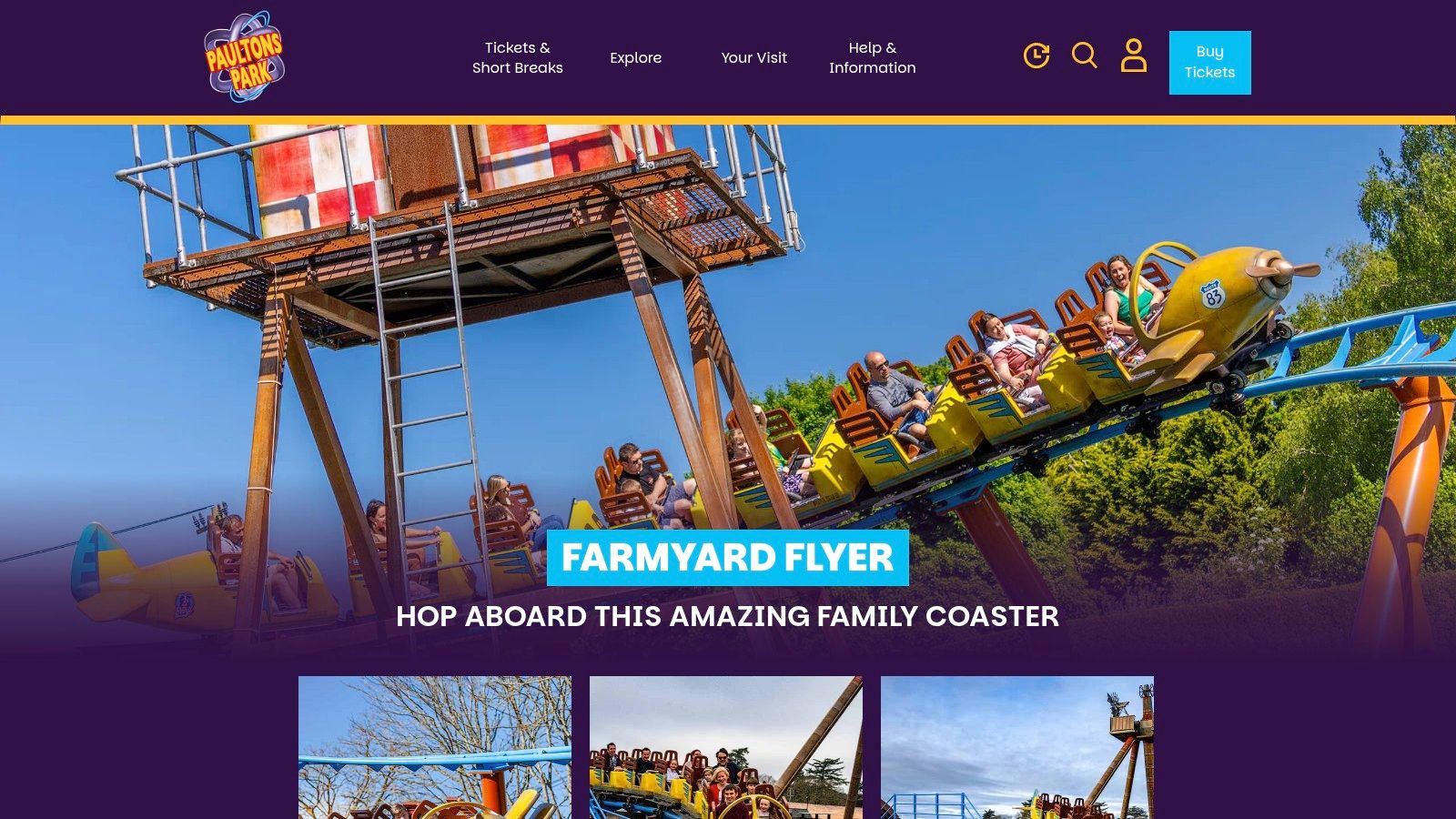
Alt text: new rides Paultons Park Farmyard Flyer coaster
What if your child’s first coaster was less of a test of bravery and more of a flight simulator for a young space ranger?
Farmyard Flyer plays that part beautifully. It is a gentle first coaster wrapped in a cheerful crop-duster theme, so the whole experience feels more like a practice mission than a giant challenge. For many families, that shift in mood matters. A playful story can make the science feel friendly.
The big lesson here is energy. The train climbs first, storing up energy in the same way a wound-up toy stores a little burst before it races off. Once the train reaches the top, gravity takes over and turns that height into motion through the dips and bends.
That makes Farmyard Flyer a handy ride for teaching coaster basics without too much sensory overload.
Children can often spot three things on this ride:
- The lift hill: the train is pulled upward and gains stored energy
- The drop: that stored energy changes into speed
- The turns: the track guides the train, and riders feel their bodies press slightly as direction changes
A child-sized version sounds like this. “The coaster climbs up to charge itself, then uses that height to zoom round the track.”
That simple idea links neatly to space travel too. Rockets need energy to leave the ground. Coasters need energy to start their journey. Different machines, same science principle.
Farmyard Flyer also works well as a confidence checkpoint. It gives children a first taste of anticipation, motion and that funny tummy feeling, but in a setting that usually feels manageable. Parents can use the queue and the ride exit as part of the lesson. Ask, “When did it feel fastest?” or “Could you tell when the turn was coming?” That helps children move from just feeling the ride to explaining it.
If you are mapping out a calm first-coaster day, this guide to Paultons Park tickets for families can help with planning.
You can also check current details directly on the Farmyard Flyer ride page.
One practical note for mission control. The ride is so approachable that many children hop off ready to go straight back on. That is lovely for confidence, though it can turn your schedule into a small queue strategy exercise.
4. Storm Chaser
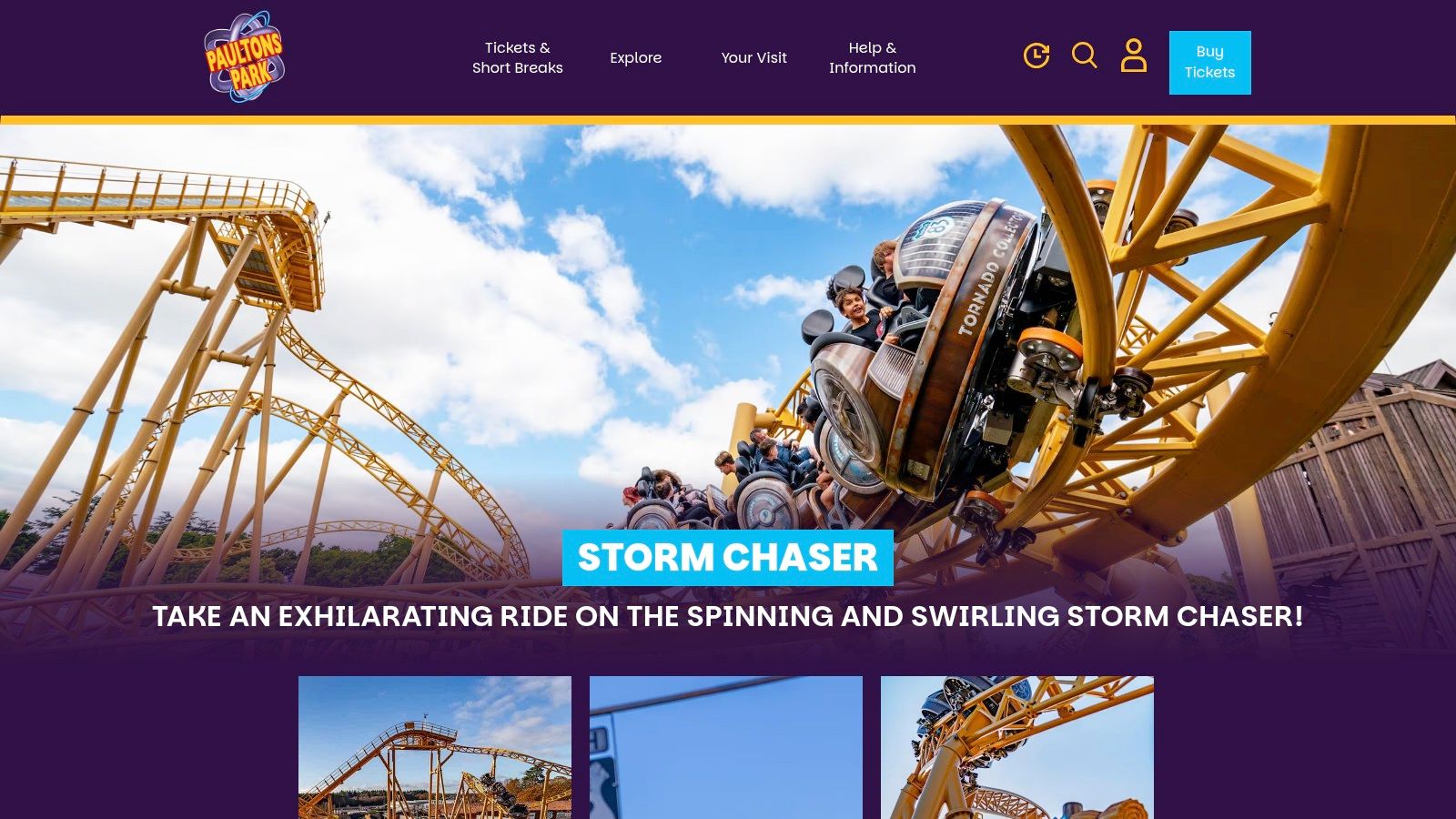
Alt text: new rides Paultons Park Storm Chaser spinning coaster
What happens when a family coaster and a weather experiment get bundled into one mission? You get Storm Chaser, a ride that teaches children a clever bit of physics while they are busy squealing.
Storm Chaser sits in Tornado Springs, so the theme already gives you a useful clue. The cars do not just race along the track. They spin as they travel, which means riders are learning about two kinds of motion at once. Forward motion comes from the track. Rotation comes from the car turning around its own centre. Space Ranger Fred would call that a fine bit of mission training.
Why the ride feels different each time
On a standard coaster, you can usually guess what is coming because your body keeps facing the same way. Storm Chaser changes that. One moment you might face into a turn. The next, you might be looking sideways or even backwards as the track carries you onward.
That changing view matters because your brain uses sight to help judge speed and direction. If the view changes, the same section of track can feel bigger, faster or stranger than it did a moment earlier. It is a bit like walking through your living room in daylight, then again with a torch. Same room, different experience.
Here are the main science ideas children can spot:
- Rotation: the car turns while it moves along the track
- Changing forces: your body feels pushes from different directions as the spin and track combine
- Perspective: the track can feel new each time because your seat angle keeps changing
- Body awareness: some riders laugh at the spin, while others prefer gentler motion
That last point is helpful for families. Different bodies react in different ways, and that is part of the lesson too. A child who loves drops may still dislike spinning. Another may be perfectly happy with turning but unsure about speed. Mission control works best when everyone knows their own settings.
A weather lesson hidden in the fun
The storm theme gives you an easy way to explain the ride without turning it into a classroom talk. Swirling storm systems rotate around a centre. Storm Chaser uses that same visual idea on a much smaller, much safer scale. The comparison is simple enough for younger children to grasp, and it links the ride to real-world science they may already have seen on weather maps.
The official Storm Chaser ride page is the best place to check access and rider details before your visit.
After the ride, try one mission question. “Did the track change, or did your view change?” That helps children separate what the ride was doing from what their body was feeling.
If your child likes active science at home, these trampoline games that build balance and motion awareness make a nice follow-up.
And if they are the sketching type, hand them a pencil and ask for a simple track drawing with arrows showing where the car spun. That turns excitement into explanation, which is very much the Space Ranger Fred way.
5. Cyclonator
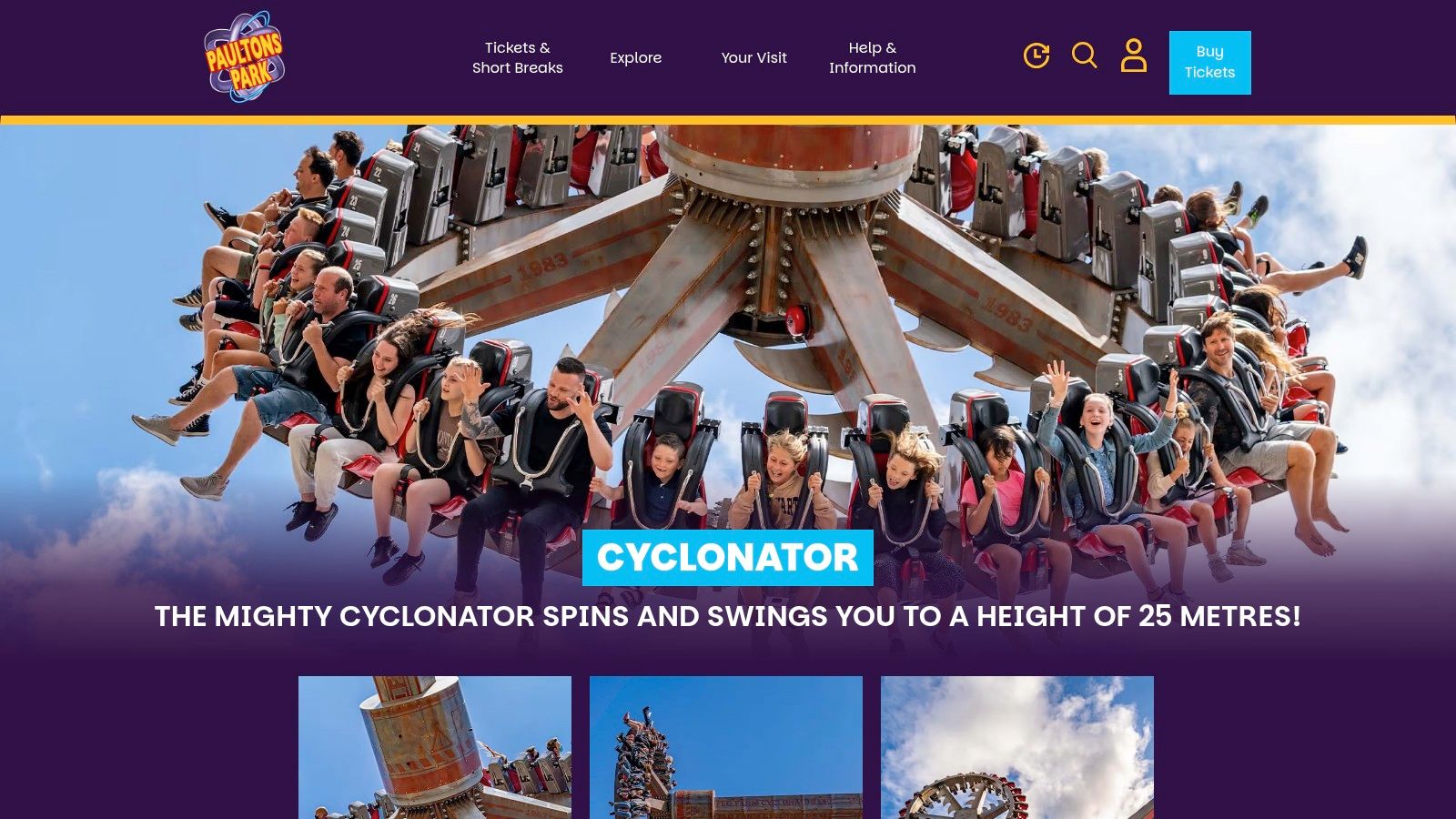
Alt text: new rides Paultons Park Cyclonator pendulum ride
Cyclonator is the one that makes many adults say, “I’ll hold the bags.” Fair enough.
The plan notes describe it as a pendulum-style gyro-swing in Tornado Springs that swings and spins up to 25 metres. That gives you a giant moving example of pendulum motion, circular motion and changing forces all in one go.
The giant playground pendulum
If a child has ever used a park swing, they already know the basic idea. Cyclonator is the much bigger, much noisier cousin. It rises, slows near the top, swings back through the middle and speeds up again. That’s a brilliant way to feel how height and speed trade places during motion.
Try this explanation:
“At the top, the ride has more height. In the middle, it has more speed.”
That simple idea is the heart of loads of ride engineering.
- Best for older children: It’s aimed more at tweens, teens and adults than younger riders.
- Excellent visual science: Pendulum movement is easy to spot from the ground.
- Good spectator value: Even children not riding can learn by watching the pattern.
For energetic children who like movement challenges at home as well, these games for the trampoline can extend the balance and body-awareness fun.
Who will enjoy it most
Cyclonator suits children who already like stronger sensations and don’t mind being high up. It can also be useful for school groups discussing forces because the ride motion is so visible. You can point, predict and then watch the pattern repeat.
The direct park listing for details is the Cyclonator ride page.
One caution is obvious. Big swings are not for everyone. Some children dislike the stomach-drop feeling, while others absolutely adore it and come off looking like they’ve just discovered a new moon.
6. Windmill Towers
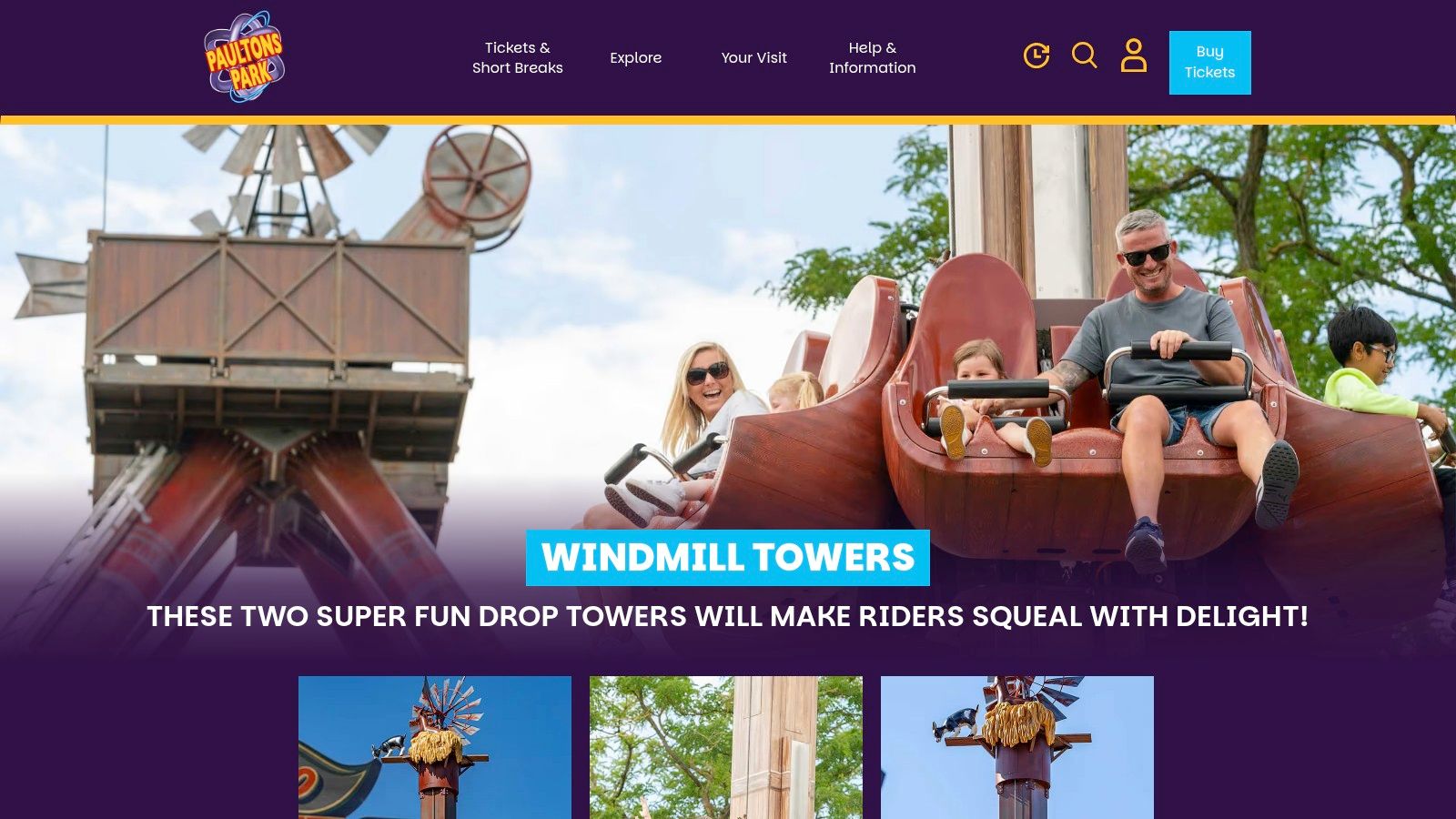
Alt text: new rides Paultons Park Windmill Towers drop ride
What makes your tummy go funny on a drop ride, even when the tower is quite small?
Windmill Towers gives younger riders a clear, friendly first lesson in that feeling. Space Ranger Fred would call it a beginner mission in vertical motion. You go up, pause, drop, bounce, and settle. Because the pattern is so simple, children can feel each stage and then talk about what happened.
That matters. Big thrill rides can blur everything into one loud rush. Windmill Towers slows the lesson down enough for younger children to notice the science, not just the squeals.
A gentle first look at gravity
The key idea is gravity pulling you downward while the ride changes speed around you. For a brief moment on the drop, your body feels lighter than usual. Children often describe that as a floaty tummy, and that is a brilliant starting point for real physics language.
A useful family prompt is:
“When did you feel lightest?”
That question turns a ride into an experiment.
The engineering is easy to spot as well. Unlike a coaster twisting through bends, this ride moves in a straight vertical path, which makes the sequence easier to understand and retell. Young riders can describe it almost like mission notes. Up. Wait. Drop. Bounce. Stop.
Mission hint: Watching one full cycle from the ground often helps a nervous child predict the motion before they board.
Why it deserves more credit
Families often rush past stepping-stone rides because the larger attractions grab the headlines. Windmill Towers does a different job. It helps children build confidence in manageable stages and gives them a safe way to test how their body reacts to height and falling motion.
That makes it useful far beyond the first scream and laugh. A child who succeeds here is often learning something bigger than bravery. They are learning to observe, predict, and try again, which is very close to the problem-solving mindset behind any good space mission.
You can check practical ride details on the Windmill Towers ride page.
7. Al’s Auto Academy
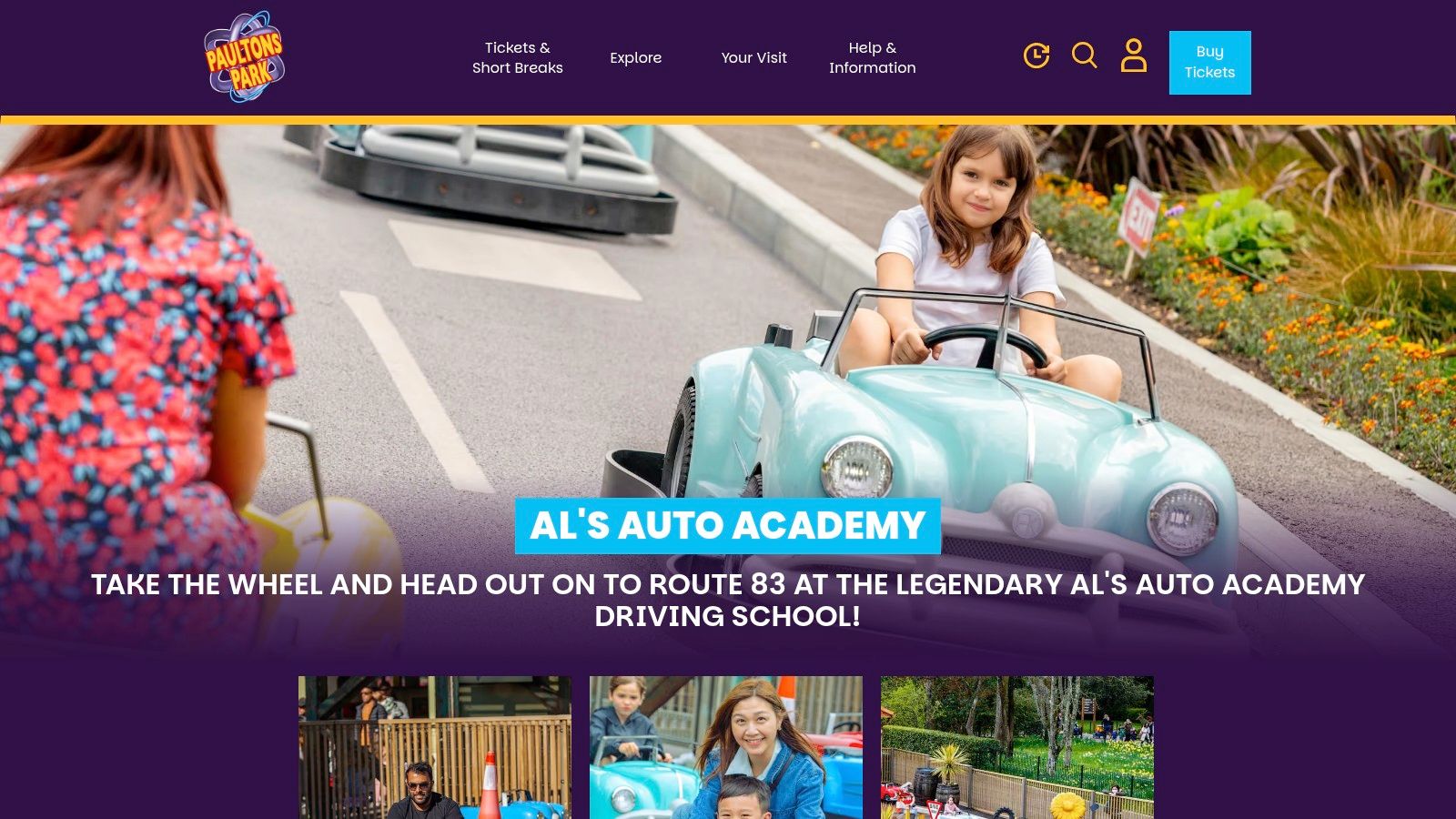
Alt text: new rides Paultons Park Al’s Auto Academy driving ride
Not every ride is about speed. Some are about control.
Al’s Auto Academy lets children steer vintage-style cars around a themed route, and that changes the learning completely. Instead of mainly feeling forces created by a ride system, children make decisions themselves. Turn here. Slow there. Watch the path. Stay aware.
STEM meets role-play
This is one of my favourite kinds of family attraction because it blends practical thinking with fun. Children work on coordination, timing and spatial awareness without feeling as though they’re doing a lesson.
It also supports simple PSHE-style ideas:
- Following rules: Roads work when people cooperate.
- Watching signs: Information matters.
- Making corrections: A small steering change can solve a big wobble.
- Building independence: Children enjoy being trusted with a task.
That’s very close to real problem-solving. It’s also very close to the Space Ranger Fred mission style. Observe. Decide. Try. Adjust.
Best for children who like doing, not just riding
Some children don’t chase thrills. They want agency. They want to press, steer and feel in charge. Al’s Auto Academy is perfect for them.
The park’s Al’s Auto Academy ride page is the best place to check rider guidance before your trip.
A possible issue for families is that self-drive attractions can move more slowly when lots of first-time drivers are learning the ropes. Still, that slower pace is part of the value. Children aren’t just passengers. They’re practising attention and decision-making.
For teachers and librarians, this ride also sparks great follow-up writing. “Write three road rules for a moon buggy school” is the sort of task children want to do.
Paultons Park New Rides: 7-Way Comparison
| Attraction | Implementation complexity | Resource requirements | Expected outcomes | Ideal use cases | Key advantages |
|---|---|---|---|---|---|
| Ghostly Manor | High, indoor projection mapping, rotating theatre, interactive hardware | High tech maintenance, content updates, climate control, trained operators | Strong family draw, high re-ride value, high hourly capacity | All-weather family attraction, seasonal events (Halloween), indoor guest flow anchor | Weather‑proof, immersive storytelling, high capacity |
| Splash Lagoon | Moderate, water channels, themed scenery, simple mechanics | Water treatment/pumps, boats maintenance, weather-dependent operations | Appealing to mixed-age families, moderate throughput, seasonal reliability | Introductory flume for young children and families, Lost Kingdom theming tie‑in | Gentle thrills for young riders, dinosaur theming |
| Farmyard Flyer | Low–Moderate, compact coaster engineering, basic theming | Routine coaster maintenance, modest footprint, photo system upkeep | Confidence‑building coaster for primary‑age kids, steady throughput | First‑coaster experience, step‑up ride for young children | Smooth, beginner‑friendly layout; accessible footprint |
| Storm Chaser | Moderate, spinning coaster dynamics, themed area integration | Mechanical maintenance, restraint checks, theming upkeep | Family thrill with high replayability, good capacity | Signature family coaster, repeat visits within Tornado Springs | Spinning variability, strong theming and area cohesion |
| Cyclonator | High, pendulum/gyro‑swing structural and dynamic systems | Significant structural maintenance, safety inspections, weather limits | Standout thrill for tweens/teens/adults, strong visual draw | Thrill anchor for adolescent guests and school groups | High kinetic spectacle, photogenic and educational about forces |
| Windmill Towers | Low, junior drop tower mechanics, paired units | Moderate mechanical maintenance, weather‑sensitive operation | Introductory drop experience, usually short queues | First‑drop experience for primary‑age children, educational theming | Gentle drop introduction, ties to weather/energy themes |
| Al’s Auto Academy | Moderate, self-drive vehicles, track layout, control systems | Vehicle maintenance, supervisory staffing, queue management | High engagement and dwell time, useful for educational visits | Role‑play/PSHE learning, KS1–KS2 school groups, family interaction | Promotes independence and road‑safety learning; highly engaging for kids |
Mission Debrief Your Adventure in Learning is Complete
What did your crew bring home from Paultons Park besides soggy socks, snack wrappers and a camera roll full of grins?
A surprisingly solid bit of science training.
Space Ranger Fred would call this a field test. Your family met the ideas first with hands, eyes and stomachs, then put names to them afterwards. Children often learn that way. The body spots the pattern before the brain finds the label.
That is why rides can be such useful teaching tools.
Over one day, your crew sampled several different systems in action. One ride played with light, sound and misdirection. Another turned gravity and flowing water into something you could feel through the boat. One coaster introduced the basic rhythm of climbing, dropping and turning, while another added spin, changing viewpoints and the odd surprise for your balance system. A swing ride showed how speed builds through an arc, a drop tower made vertical motion feel manageable, and a driving ride gave children a small rule-based world to control for themselves.
That mix helps ideas stick. A child may hear the word "force" in class and shrug. Feeling a pull at the bottom of a ride gives that word a job to do. The same goes for balance, momentum, friction and perception. They stop being abstract terms and start behaving like tools your young cadet has used.
Parents do not need to turn the day into a lesson plan, either. One good question is often enough. Why did that section feel faster? What changed when the car started spinning? Why did the drop feel big at first and smaller the second time? Those small prompts help children observe, compare and explain, which is exactly how problem-solving grows.
There is a language benefit as well.
Some children explain ideas more easily after they have felt them. A ride gives them a concrete reference point. "I felt pushed into the seat." "The boat sped up after the slope." "I was nervous, then I knew what was coming." That kind of talk builds reasoning and confidence at the same time.
Paultons Park suits this mission-briefing approach because the ride line-up gives families several ways to compare movement, challenge and design in one trip. It feels a bit like trying different astronaut training simulators. Each one teaches a different response, and each one adds a little more confidence.
Practical planning matters too, especially for younger children and visitors who need clearer access information. Recent reporting has highlighted questions some families have raised before visiting, according to Blooloop’s report on Valgard and accessibility questions. Checking the latest park guidance before you travel can make the day calmer and easier to map out.
If your child comes off a ride full of questions, stay with that moment. Curiosity is doing the hard work for you.
Chat on the drive home. Sketch a favourite ride at teatime. Ask which attraction felt fastest, highest, strangest or easiest to control. That is how a fun family day turns into lasting understanding, one small mission report at a time.