
Let's cut to the chase: can you actually grow strawberries inside your home? The answer is a resounding yes. It’s an incredibly rewarding project that brings a taste of summer indoors, no matter what the weather is doing outside.
Just imagine picking fresh, juicy berries for your breakfast, grown right there on your windowsill. It’s a simple act that feels as exciting as one of the discoveries in Space Ranger Fred and the Shoelace Adventure.
Yes, You Can Grow Strawberries Inside—and It's Glorious
Growing your own food at home always feels a bit like a fun science experiment, especially with something as delicious as strawberries. It’s a brilliant way to reconnect with where your food comes from, turning a small corner of your home into a productive mini-farm. This isn’t just a niche hobby anymore; it’s part of a growing movement towards more sustainable, local food.
The whole idea of indoor farming is really taking off in some fascinating ways. Take FlexFarming in Somerset, for example. They've launched one of Europe’s largest indoor vertical strawberry farms. This massive 500-square-metre facility is set to produce 10 tonnes of strawberries a year, which means more fresh, British-grown berries on the shelves year-round instead of relying on imports. You can read more about their incredible indoor farming project and see how it's shaking up the UK's food supply.
Before we dive into the how-to, here's a quick overview of what it takes to get your indoor strawberry patch thriving.
Indoor Strawberry Growing at a Glance
This table breaks down the essentials for a successful indoor strawberry setup.
| Factor | Key Requirement | Why It Matters Indoors |
|---|---|---|
| Lighting | 6-10 hours of direct light or a grow light | Natural sunlight is often limited indoors, so supplementing with a light is key for fruit production. |
| Watering | Consistent moisture; soil should not dry out | Containers dry out faster than garden beds, making regular checks crucial. |
| Variety | Day-neutral or everbearing types | These varieties are not dependent on day length to produce fruit, making them ideal for indoor conditions. |
| Benefits | Pest-free, year-round harvest | You control the environment, avoiding garden pests and enjoying fresh berries even in winter. |
Getting these basics right from the start sets you up for a delicious, home-grown harvest.
Why Grow Strawberries Indoors?
Beyond the sheer joy of it, there are some seriously practical reasons to start your own indoor strawberry patch:
- Year-Round Harvests: Forget waiting for summer. With the right setup, you can be picking fresh strawberries in the middle of winter, which is a truly special treat.
- Complete Pest Control: Say goodbye to slugs, aphids, and other garden invaders. Growing indoors gives you total control over the environment, meaning you can skip the chemical pesticides.
- Perfect for Small Spaces: You don’t need a big garden. A sunny windowsill, a balcony, or even a small corner with a grow light is all you need to get started.
For many, growing strawberries inside is more than just gardening; it's a hands-on learning experience. It teaches patience, observation, and the basics of plant science in a fun, tangible way.
This kind of project-based approach can be an amazing way to learn. You get a front-row seat to the entire life cycle of a plant, from a tiny flower to a ripe fruit, right before your eyes.
If you’re interested in this style of education, you can read our guide on what project-based learning is and how it helps spark curiosity. It's a fantastic way to make STEM subjects come alive, not just for kids but for adults, too.
Choosing the Right Strawberry Varieties for Indoors
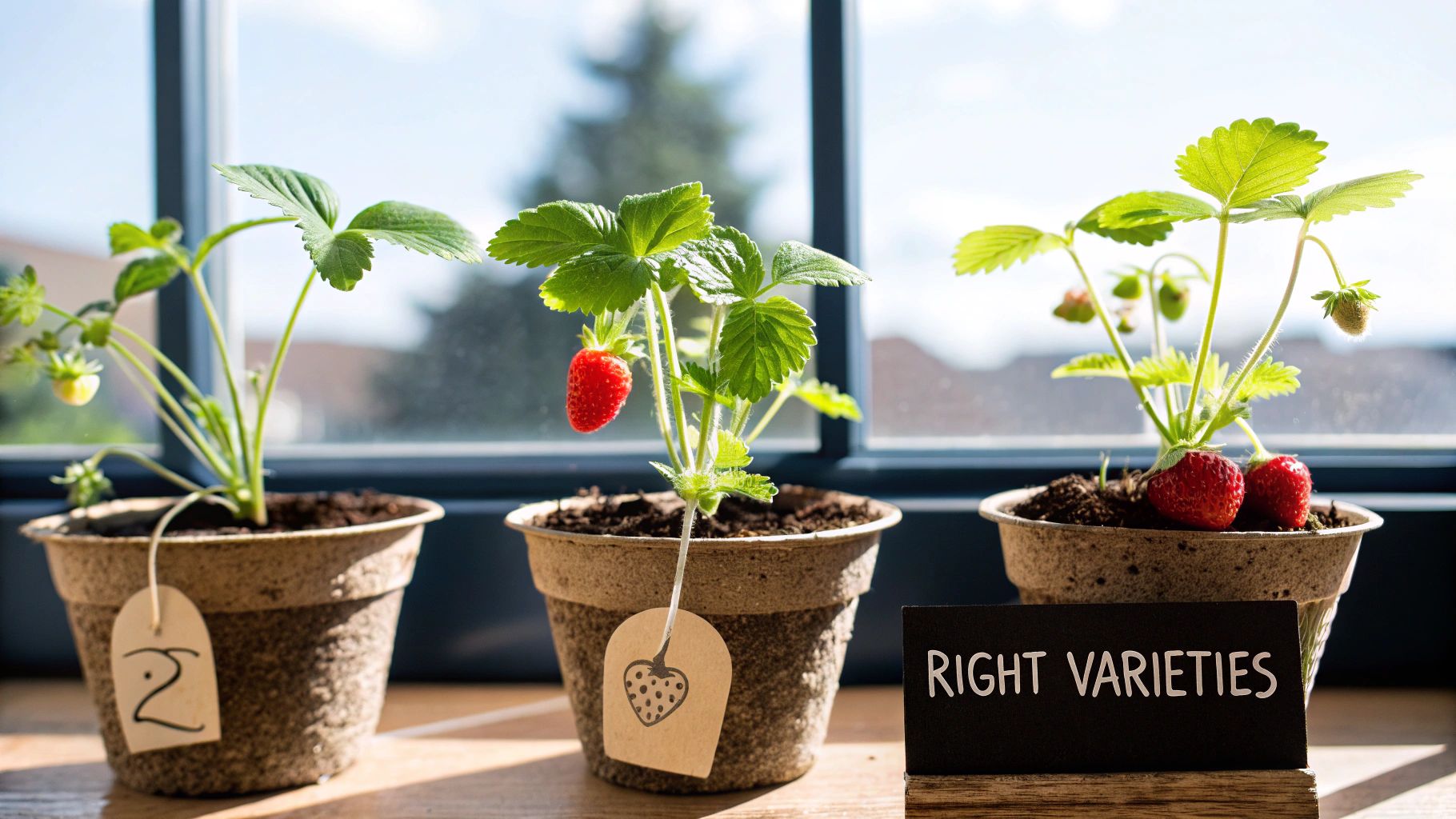
Before you even think about pots or soil, you need to pick your players. Just like the characters in Space Ranger Fred and the Umbrella Rescue have different skills, strawberry plants have different personalities. Not all are cut out for life on a windowsill, so choosing the right type is your first mission.
Strawberry varieties generally fall into three main camps. Getting your head around them is the key to deciding which one will actually thrive in your home.
The Three Main Strawberry Types
-
June-Bearing: These are the traditional garden favourites. They produce one enormous crop of large berries over a few weeks in early summer, and then they’re done for the year. Because their fruiting is tied to specific daylight hours, they just aren't a good choice for growing indoors.
-
Everbearing: As their name suggests, these plants produce fruit more than once a season. You’ll typically get a harvest in late spring and another in late summer or early autumn. While better than June-bearers, their fruiting can still be a bit hit-and-miss indoors.
-
Day-Neutral: This is your champion for indoor growing. Day-neutral varieties are the real superstars because they aren’t fussy about how many hours of daylight they get. This means they'll produce flowers and fruit continuously as long as you keep them happy, which is perfect for a controlled indoor environment.
Honestly, choosing a day-neutral variety is the single most important decision you can make. It’s the difference between getting a few berries and enjoying a steady supply.
Top Varieties for Indoor Pots
So, which day-neutral varieties should you actually look for? You'll want types that stay relatively compact and are known for their brilliant flavour.
Here are a few I've had great success with:
-
Alpine Strawberries: These are a fantastic choice. They produce small, intensely flavourful berries and don't send out lots of runners, which keeps them neat and tidy in a pot. Varieties like 'Mignonette' or 'Yellow Wonder' are brilliant.
-
'Temptation': This is a popular and reliable everbearing variety that behaves a lot like a day-neutral plant. It produces sweet, medium-sized berries and is well-suited to hanging baskets.
Think of choosing a variety like choosing a pet. You wouldn't get a Great Dane for a tiny flat; you'd get a smaller breed that fits the space. Similarly, pick a strawberry plant that is happy living in a container.
Seeds or Plants: What's Best?
Your final choice is how to start your strawberry journey. You can begin with seeds or with established plants, often called 'runners' or 'bare-root' plants.
Starting from seed is a wonderfully educational process, but it requires a lot of patience—it can take a very long time to get to the fruiting stage.
For faster results, buying small, established plants is the way to go. You'll skip the whole germination phase and can expect to see flowers and fruit much sooner, which is far more exciting for everyone involved. This is the route I’d recommend for your first attempt at growing strawberries inside.
Creating the Perfect Home for Your Strawberry Plants
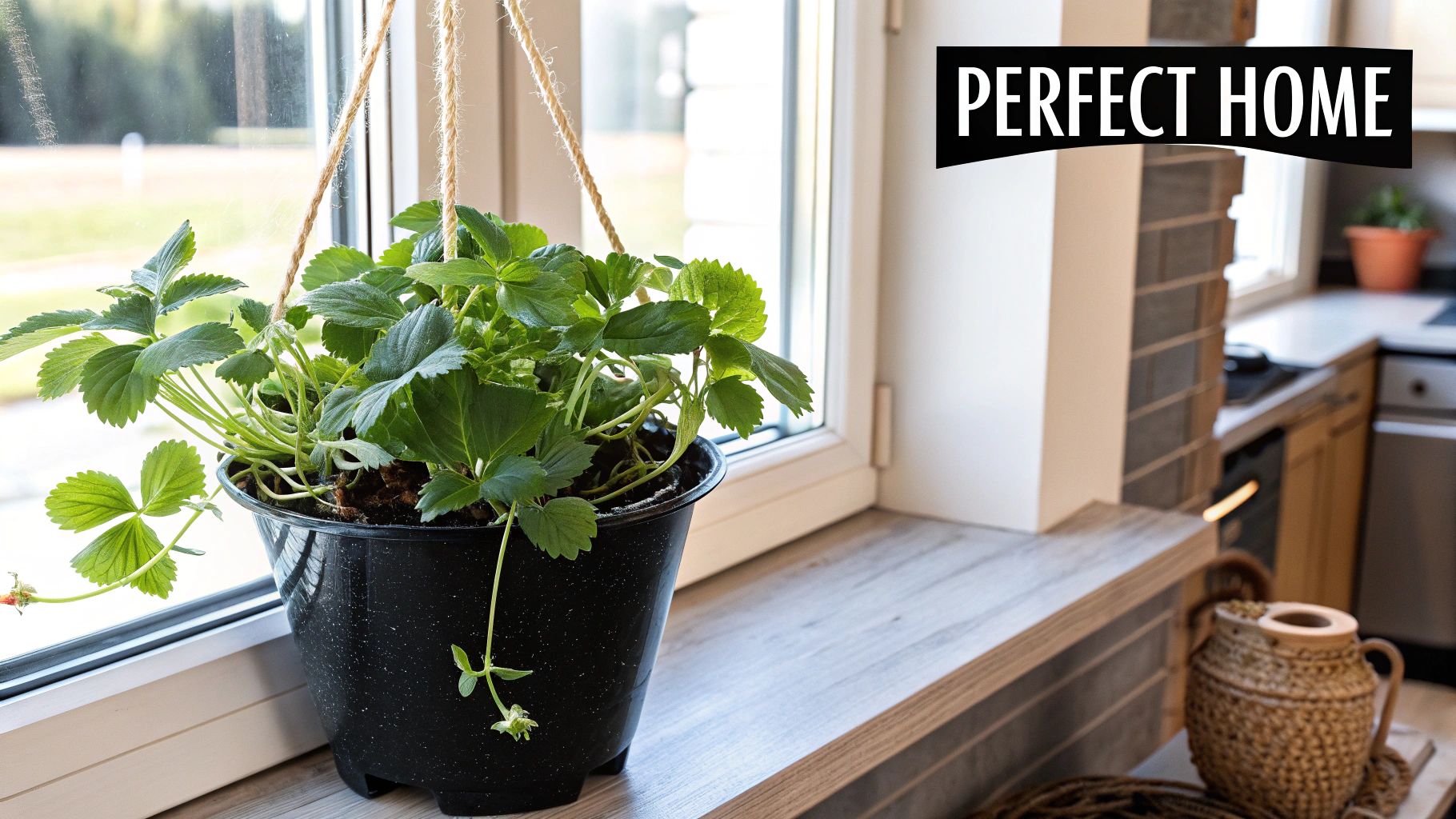
Alright, you’ve picked out your perfect strawberry runners. Now for the fun part: giving them a five-star home. Getting the container and soil mix right from the start is absolutely crucial. Think of it as building a strong foundation—it sets your plants up for a long and fruitful life.
Picking the Right Pot
Choosing a container is where you can get a bit creative, and you’ve got plenty of great options for indoor growing.
-
Terracotta Pots: These are a classic for a reason. Their porous clay helps the soil breathe and stops it from getting soggy. A pot around 20-30 cm (8-12 inches) in diameter gives a single plant plenty of room to get established.
-
Hanging Baskets: If you're short on space, these are a brilliant solution. They let the strawberry runners and fruit hang down beautifully, turning your plant into a living feature. Just make sure they have a good liner, like coco coir, to hold onto moisture.
-
Strawberry Pots: You’ve probably seen these special pots with little pockets staggered up the sides. They’re not just for show; they let you grow multiple plants in one compact, vertical space. Incredibly efficient and they look fantastic.
No matter which pot you go for, there’s one rule you absolutely can't ignore: good drainage is non-negotiable. Your container must have holes in the bottom. Without them, water will pool and your plants will face the dreaded root rot, a swift and certain end for most potted plants.
Crafting the Ideal Soil Mix
Step away from the garden soil! I know it’s tempting to just grab a scoop from outside, but it’s far too dense for containers. It compacts easily, often harbours pests, and simply won't drain well enough.
What you need is a light, airy potting mix that’s rich in nutrients, giving the roots plenty of room to stretch out. You can grab a bag of quality, all-purpose potting compost, or you could mix your own. Honestly, making your own soil mix is a fantastic hands-on activity, a bit like a mini science project. It’s a great example of learning by doing. If you’re keen on this kind of approach, you might find our guide on what experiential learning is an interesting read.
For a simple and effective DIY potting mix, just combine one part perlite, one part compost, and two parts coco coir. This recipe gives you brilliant drainage, great aeration, and enough nutrients to get your strawberries off to a flying start.
Interestingly, many commercial growers are ditching soil altogether. In the UK, around 55% of all strawberries are now grown using soilless methods. They use special substrates and deliver nutrients right to the roots, a technique you can easily adopt indoors. This industry shift, detailed in these trends on hydroponic strawberries, proves you don’t need a garden to get a great harvest.
Finally, a crucial tip for potting: make sure the crown of the plant—the bit where the leaves sprout from the roots—sits just above the soil line. If you bury it, it will almost certainly rot. Get that right, and you’ve given your plant the best possible start.
Mastering Light for Sweet and Juicy Berries
Think of sunlight as the engine that powers sweet, juicy strawberries. When you bring your strawberry patch indoors, you essentially have to become the sun. It’s a bit of a scientific puzzle, not unlike one Fred might solve in Space Ranger Fred and the Tick Tock Tale, but thankfully, this one has a pretty simple solution.
A sunny, south-facing windowsill can certainly give your plants a decent start. But let's be honest, it's often not quite enough for them to really get going and produce fruit, especially during the UK's notoriously grey winter months. If you’re serious about a reliable, year-round harvest, a grow light is the most valuable bit of kit you can buy.
Getting to Grips with Grow Lights
Diving into the world of grow lights can feel a bit technical at first, but the basics are straightforward. Plants don’t just see 'light'; they respond to different colours—or wavelengths—within the light spectrum. Blue light is fantastic for encouraging strong, bushy leaf growth, while red light is what really kicks flowering and fruiting into gear.
This is exactly why you'll see the term ‘full-spectrum’ slapped on the packaging of most decent grow lights. A full-spectrum LED light provides that perfect, balanced mix of all the colours your strawberries need to go through their entire life cycle, from a leafy green plant to one dripping with ripe, red berries.
How Much Light and Where to Put It
It’s not just about the type of light, but how long it’s on for. To really coax your plants into producing fruit, they need a long, consistent 'day'. You should be aiming for 12 to 14 hours of light every single day. A simple plug-in timer is your best friend here; it can automate the whole process, so your plants get exactly what they need without you even thinking about it.
Positioning is also crucial. Too far away, and the light is too weak to do much good. Too close, and you run the risk of scorching those delicate leaves. A good rule of thumb is to hang your lights about 15-30 cm (6-12 inches) above the top of your plants. As they get taller, you just nudge the light up a bit higher.
This infographic breaks down the key things to get right.
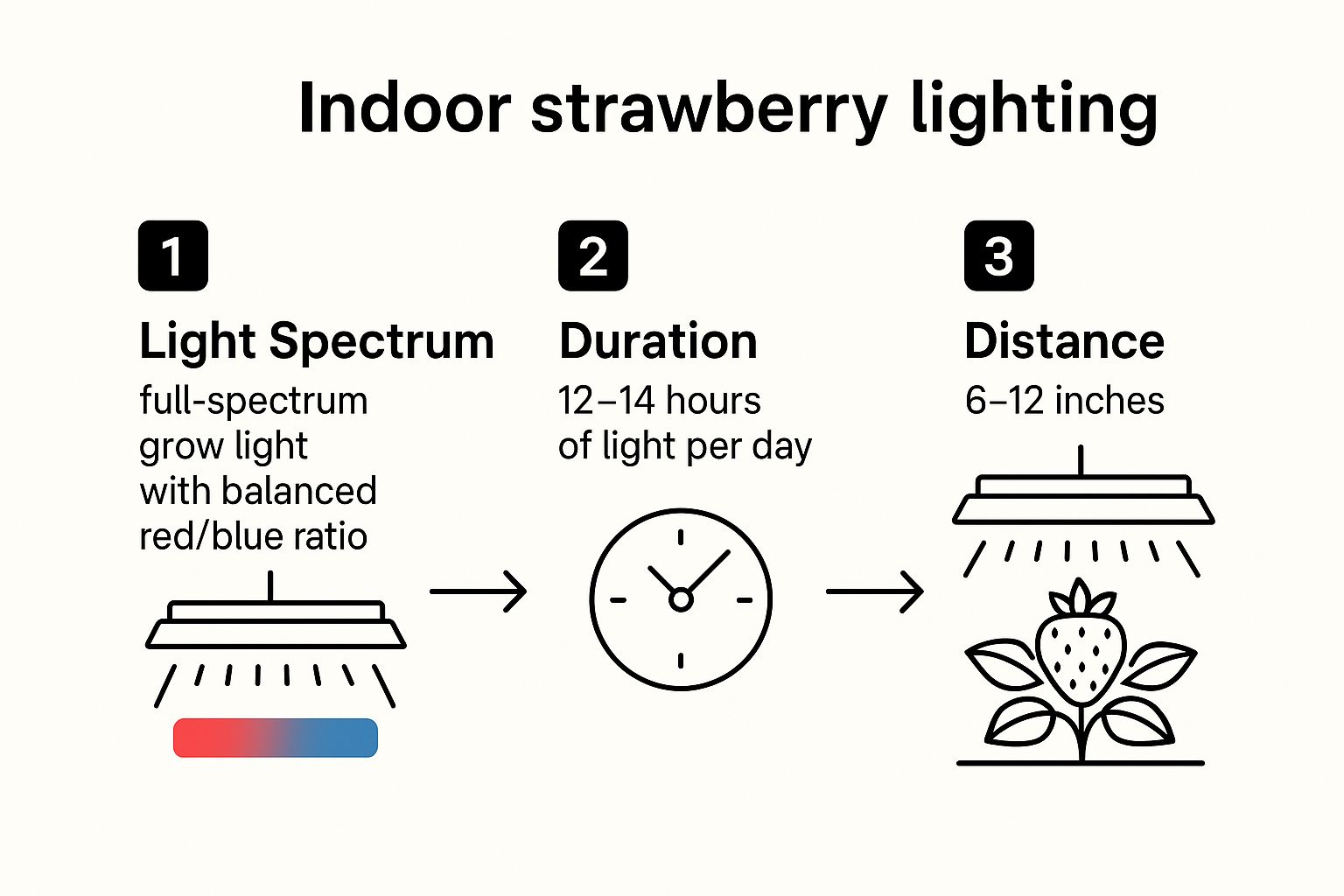
As you can see, it's all about balancing the light spectrum, duration, and distance. Get that right, and you've created the perfect artificial sunlight for a bumper indoor harvest.
Honestly, getting your lighting right is the single biggest step you can take towards a fantastic crop of indoor strawberries. It directly fuels the photosynthesis that creates the sugars, and that’s what gives your berries their wonderfully sweet flavour.
There are loads of options out there to suit any space or budget. You can find affordable clip-on LED lamps that are perfect for a pot or two on a shelf, or larger, flat-panel LEDs if you’re planning a more extensive setup. You really don’t need an expensive, high-tech system to succeed. A basic full-spectrum light, used correctly, will make all the difference.
Your Daily Care Routine: Watering, Feeding, and Pollinating
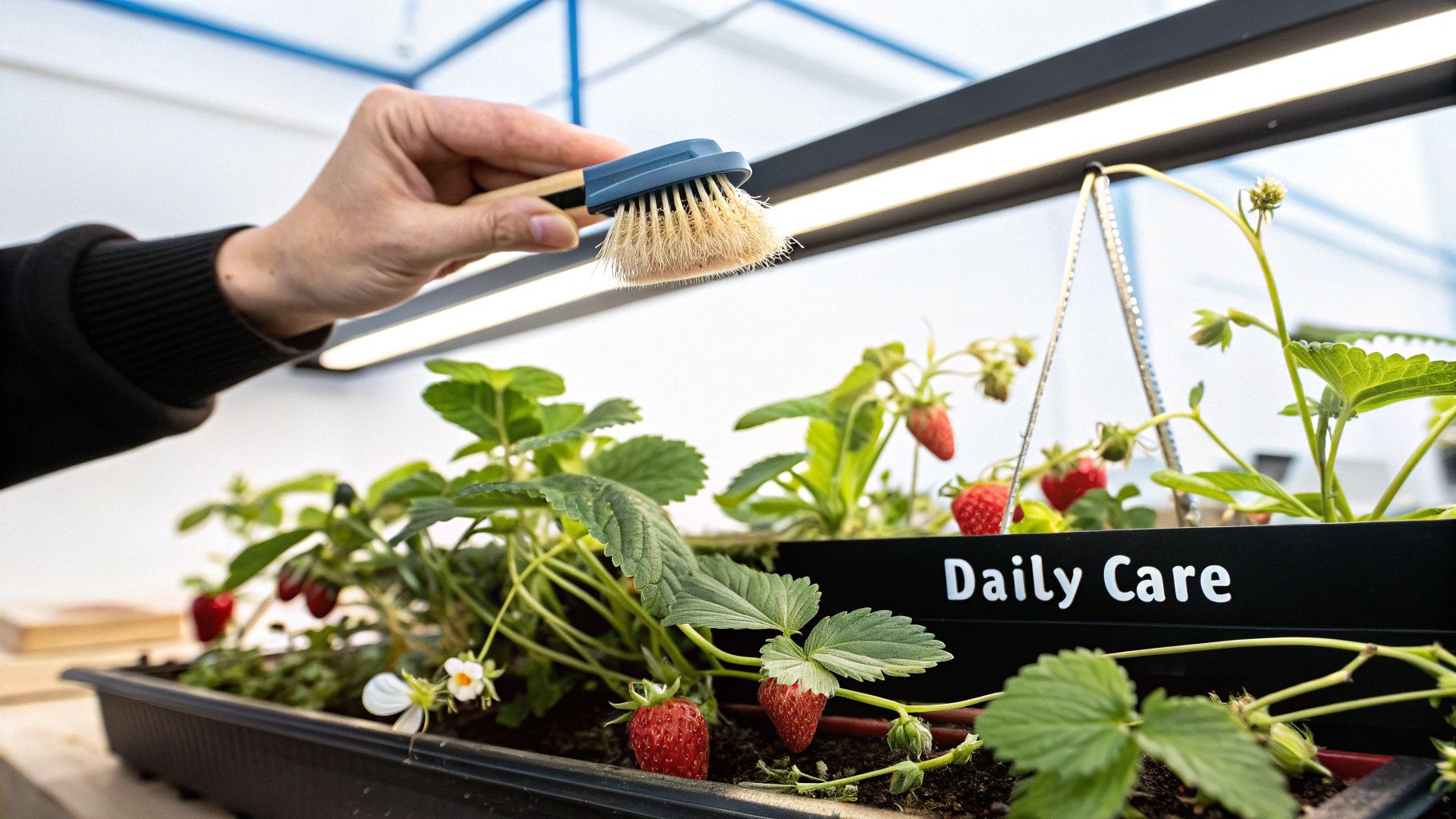
Now that your strawberry plants are settled in, your role shifts to daily caretaker. This is where the real fun begins, guiding your green plants into becoming brilliant fruit-bearers. It’s a simple and hugely rewarding routine that boils down to three key tasks: watering, feeding, and pollinating.
Knowing When to Water
The number one mistake people make when growing strawberries indoors is overwatering. It's an easy trap to fall into, but soggy soil leads to root rot, which is a swift and sad end for your plant.
To get it right, just use the 'finger test'. Poke your finger about an inch deep into the soil. If it comes out dry, it’s time for a drink. If it feels damp, hold off for another day. Simple as that. When you do water, give it a good soak until you see water running out of the drainage holes at the bottom.
Feeding for a Bountiful Harvest
Strawberry plants are hungry, especially when they're working hard to produce fruit. While the initial potting mix gives them a good start, they’ll need a top-up after a few weeks to keep them going strong.
- What to use: Look for a balanced liquid fertiliser that's high in potassium (the 'K' in N-P-K). Potassium is the magic ingredient that encourages lots of flowers and, ultimately, more fruit.
- How often: A little feed every two weeks during the growing season is usually perfect. Always follow the instructions on the package, but a good tip is to dilute it to half-strength. This prevents any risk of burning the delicate roots.
This little-and-often approach gives your plants all the energy they need to keep producing those delicious berries you’re waiting for.
The Art of Hand Pollination
Outdoors, bees and the breeze do all the hard work of pollination. Indoors, it's up to you to play the bee! It might sound a bit technical, but it’s a quick, fascinating process that's essential for turning those pretty white flowers into actual strawberries.
You’re essentially becoming a part of the plant’s life cycle. This hands-on activity is a brilliant STEM lesson, feeling just as clever and rewarding as one of Fred's solutions in Space Ranger Fred and the Tick Tock Tale.
All you need is a small, soft paintbrush or even a cotton bud. Gently swirl it around the yellow centre of one flower to pick up the pollen. Then, just as gently, dab that pollen onto the centre of your other open flowers. Do this every few days while the plants are in bloom. It’s a quick, easy task, and you can explore more ways to make science engaging with our guide to fun science for kids.
These techniques are a small-scale version of what's happening in modern agriculture. For instance, recent UK trials have shown that growing strawberries indoors with new methods can cut the plant production period from six months to just five weeks and reduce plant losses from over 20% to just 5%. You can learn more about these innovative strawberry growing methods that are helping to secure our food supply.
Harvesting Your Indoor Bounty and Solving Common Problems
This is it—the moment all your patience and care pays off. It’s harvest time! But what if your plants are looking a bit poorly? Don’t panic. Solving little problems is part of the fun, a bit like the clever fixes in Space Ranger Fred and the Shoelace Adventure. Let’s get you ready to reap your rewards and tackle any common issues that might pop up.
You’re aiming for the absolute peak of ripeness, as strawberries don’t get any sweeter after they’ve been picked. A perfectly ready strawberry will be a rich, glossy red from top to bottom, with no hint of white or green near the stem. The best clue? A wonderful fragrance you can smell before you even touch it.
When you’re ready to harvest, resist the urge to just pull the berry off the plant. Instead, grab a pair of scissors or use your fingernails to snip the little green stem about half an inch above the fruit. This is much gentler on the plant and actually encourages it to keep producing more delicious berries for you.
Troubleshooting Your Indoor Patch
Even with the best care in the world, you might run into a few hiccups. Here’s a quick guide to diagnosing and solving the most common problems you'll see when growing strawberries inside.
-
Leggy, Stretched Plants: If your plants have long, spindly stems and look like they’re reaching for the sky, the culprit is almost always not enough light. Try moving them closer to your grow light or simply leave it on for an extra hour or two each day.
-
Yellowing Leaves: This usually signals a nutrient deficiency or, more often than not, overwatering. The first thing to do is check the soil. If it feels soggy, let it dry out more between waterings. If watering isn’t the issue, a quick dose of a balanced liquid fertiliser should sort it out.
-
Pests Like Spider Mites: These tiny critters can sometimes appear, creating fine webs on the undersides of leaves. The good news is they are easy to deal with indoors. Just wipe the leaves with a damp cloth or give your plant a gentle shower under the sink to wash them away.
Spotting a problem early is the key to fixing it. Make it a habit to check your plants every day when you water them. A quick look under the leaves can help you catch any issues before they become serious.
By keeping a watchful eye, you can ensure your indoor strawberry patch stays healthy and productive, giving you a continuous supply of sweet, home-grown treats.
A Few Common Questions About Growing Strawberries Indoors
You've got your setup ready, but a few questions might still be bubbling up. Let's tackle some of the most common ones people have when they first decide to grow strawberries inside.
How Long Before I'm Actually Eating Strawberries?
This is the big one, isn't it? If you start with established runners, you're in for a relatively quick reward. You can expect to see the first flowers pop up in about 4-6 weeks. A few weeks after that, you'll be watching those little green berries turn into juicy red fruit.
With day-neutral varieties, the fun just keeps going. As long as you keep them happy, they'll produce fruit for months on end. It’s like having your own brilliant, ongoing science project—and one that’s far simpler than the cosmic puzzles in Space Ranger Fred and the Umbrella Rescue.
Will They Actually Taste Like Proper Strawberries?
Oh, absolutely! In fact, they can often taste even better than the ones you find in the supermarket. When you grow them yourself, you have total control over their world, making sure they get a steady supply of light and all the right nutrients.
But the best part? The unbeatable freshness. There's nothing quite like picking a perfectly ripe strawberry just moments before you eat it.
What are the biggest mistakes to avoid? I'd say it boils down to three things: overwatering (the fastest way to root rot), not providing enough light (which means few or no fruits), and forgetting to hand-pollinate the flowers. If you can get those three right, you’re on track for a sweet success.
Ready for more adventures in learning? Space Ranger Fred blends storytelling with science to make STEM fun and accessible for young explorers. Discover a universe of stories, games, and educational fun today at https://spacerangerfred.com.