
Keeping a classroom buzzing with genuine curiosity can feel like a monumental challenge, can't it? While traditional teaching methods have their place, the modern primary classroom thrives on dynamic, interactive approaches that cater to every type of learner. Passive listening is out; active participation is in. This is where effective classroom engagement strategies become essential tools for every educator and parent supporting their child's learning journey.
This guide moves beyond theory to provide a detailed roundup of ten practical, easy-to-implement techniques. We'll explore how to transform your learning environment, turning pupils from quiet observers into enthusiastic collaborators. You'll discover actionable insights, from structuring peer teaching exercises to gamifying complex topics. Fancy sparking a lively discussion on physics using a story like Space Ranger Fred and the Umbrella Rescue? Or perhaps launching a project on problem-solving inspired by Space Ranger Fred and the Shoelace Adventure? We'll show you how.
These strategies are not just about keeping children occupied; they are about fostering a deep, authentic connection to the material. They are designed to build confidence, encourage critical thinking, and make learning a memorable, collaborative adventure for everyone involved. Let's explore the methods that will ignite your classroom.
1. Active Learning through Think-Pair-Share
Think-Pair-Share is a wonderfully simple yet powerful collaborative strategy that transforms passive listeners into active participants. Developed by Frank Lyman, this method encourages pupils to ponder a question individually, chat about their thoughts with a partner, and then share their combined ideas with the whole class. This structure provides a low-pressure environment for pupils to articulate their thinking before presenting to a larger group, building confidence and fostering deeper understanding.
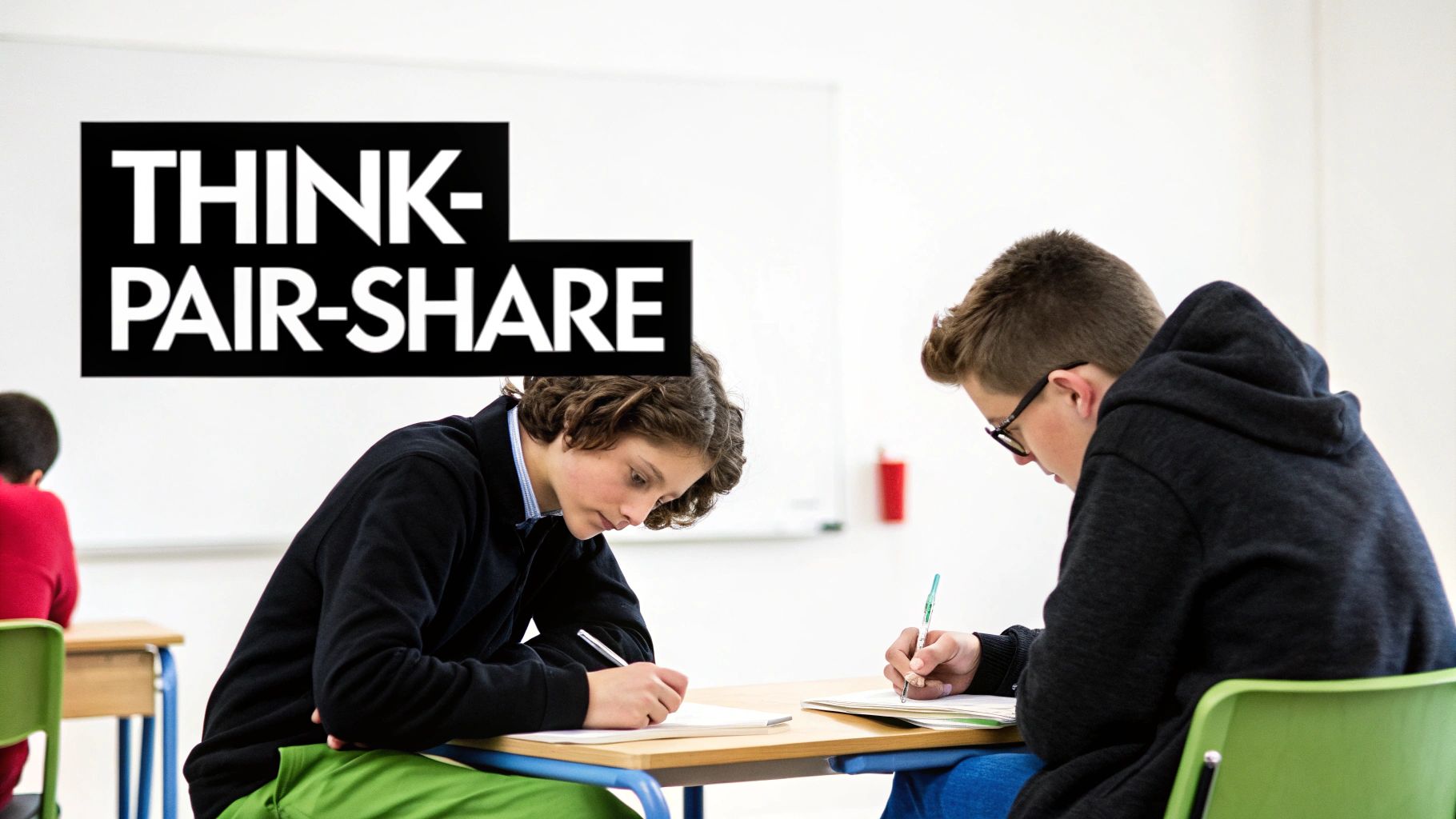
It’s one of the most effective classroom engagement strategies because it breaks down complex topics into manageable steps. For example, after reading a story like Space Ranger Fred and the Shoelace Adventure, you could pose a question linking literacy to STEM: "Think about the simple problem Fred solved. What steps did he take?" Pupils first think on their own, then pair up to map out his problem-solving process before sharing their sequence with the class. Easy peasy!
How to Implement Think-Pair-Share:
- Set Clear Prompts: Begin with a focused, open-ended question. Vague questions lead to unfocused discussions.
- Use Timers: Allocate specific times for each stage (e.g., one minute to think, two minutes to pair, five minutes to share) to keep the activity on track.
- Provide Sentence Starters: Offer phrases like "I think Fred's first step was…" or "My partner and I realised that…" to support pupils, especially younger ones.
- Rotate Partners: Regularly changing pairs exposes pupils to different perspectives and helps build a stronger classroom community.
2. Gamification in the Classroom
Gamification brilliantly transforms the learning environment by weaving game-like elements such as points, badges, and leaderboards into educational tasks. This strategy taps into pupils' natural desire for achievement and competition, making learning feel more like an interactive adventure than a chore. It provides immediate feedback and clear goals, which is a fantastic way to boost motivation and active participation in lessons.
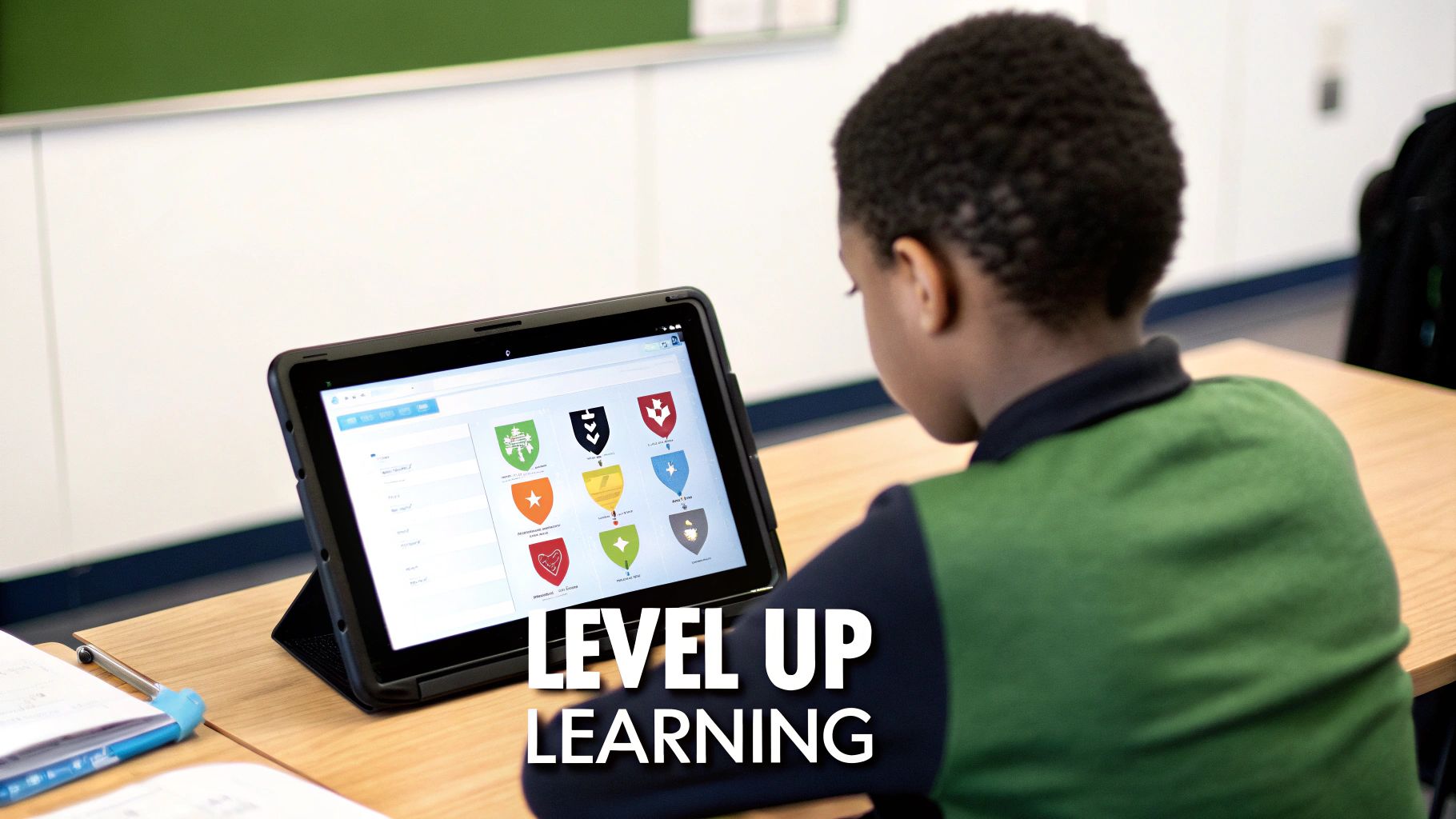
Gamification is one of the most dynamic classroom engagement strategies because it frames academic challenges as exciting quests. For instance, you could create a "Space Mission" where pupils earn "Astro Points" for completing STEM challenges inspired by Space Ranger Fred and the Tick Tock Tale. Each completed task, like designing a simple clock mechanism or exploring how gears work, moves them up a level on the "Galactic Leaderboard," turning a physics lesson into a thrilling race to save time.
How to Implement Gamification:
- Align with Learning Objectives: Ensure that every game mechanic, from points to badges, directly supports a specific educational goal. The fun should enhance the learning, not distract from it.
- Make Progress Visible: Use charts, digital leaderboards, or physical displays so pupils can see their progress. Visual tracking of achievements is a powerful motivator.
- Balance Competition and Collaboration: While leaderboards can be effective, include team-based quests where pupils must work together to earn rewards, fostering a collaborative spirit.
- Offer Meaningful Rewards: Move beyond simple points. Rewards could include choosing the next class activity, earning extra free reading time, or unlocking a special "mission briefing" video.
3. Flipped Classroom Model
The Flipped Classroom Model is a clever instructional approach that turns traditional teaching methods on their head. Pioneered by educators like Jonathan Bergmann and Aaron Sams, it involves pupils engaging with new material, such as short video lectures or readings, at home. This frees up precious class time for hands-on activities, collaborative problem-solving, and personalised teacher support, turning the classroom into a dynamic hub of learning.
This is one of the most effective classroom engagement strategies because it empowers pupils to learn at their own pace. For instance, before a lesson on simple machines, you could assign a short video explaining levers and pulleys. In class, pupils could then apply this knowledge by building a contraption to help the character from Space Ranger Fred and the Umbrella Rescue retrieve a stuck object, making the learning tangible and collaborative. How cool is that?
How to Implement the Flipped Classroom Model:
- Create Concise Content: Keep home-learning videos short and focused, ideally between 5-10 minutes, to maintain pupil engagement.
- Embed Comprehension Checks: Include short quizzes or reflective questions within the home material to ensure pupils understand key concepts before class.
- Plan High-Value Activities: Use class time for activities that require higher-order thinking, such as debates, experiments, or project-based learning.
- Provide Offline Alternatives: Ensure all pupils can participate by having backup materials, like printed transcripts or offline files, for those without reliable internet access.
4. Peer Teaching and Reciprocal Learning
Peer teaching transforms pupils into teachers, a powerful shift that deepens their own understanding of a topic. This reciprocal learning model is built on the simple yet profound idea that to teach something, you must first truly understand it. By explaining concepts to their peers, pupils reinforce their knowledge, build confidence, and develop crucial communication and leadership skills, making it one of the most effective classroom engagement strategies.
This strategy is highly adaptable. For instance, after a science lesson on simple machines inspired by Space Ranger Fred and the Umbrella Rescue, one pupil could be tasked with teaching a small group how a pulley works. They might use diagrams or simple props to explain the concept, solidifying their own learning while helping their classmates grasp the material. This method fosters a supportive and collaborative classroom environment where everyone feels valued. Explore more about collaborative learning and its benefits.
How to Implement Peer Teaching:
- Provide Clear Guidelines: Equip pupil-teachers with a simple structure or checklist for what they need to explain. This ensures the information shared is accurate and focused.
- Strategically Pair Pupils: Mix and match pupils based on different criteria, not just academic ability. Pairing pupils with different strengths can lead to new insights.
- Rotate Teaching Roles: Ensure every pupil gets the opportunity to be the teacher. This helps build confidence across the classroom and gives everyone a chance to lead.
- Use Sentence Frames: Offer supportive language prompts like, "The first step is…" or "A key thing to remember is…" to help pupils structure their explanations clearly.
5. Project-Based Learning (PBL)
Project-Based Learning (PBL) is a dynamic instructional method where pupils gain knowledge and skills by working for an extended period to investigate and respond to an authentic, engaging, and complex question, problem, or challenge. This approach, popularised by educational thinkers like John Dewey, shifts the focus from rote memorisation to active exploration, connecting classroom learning to real-world applications and fostering critical thinking.
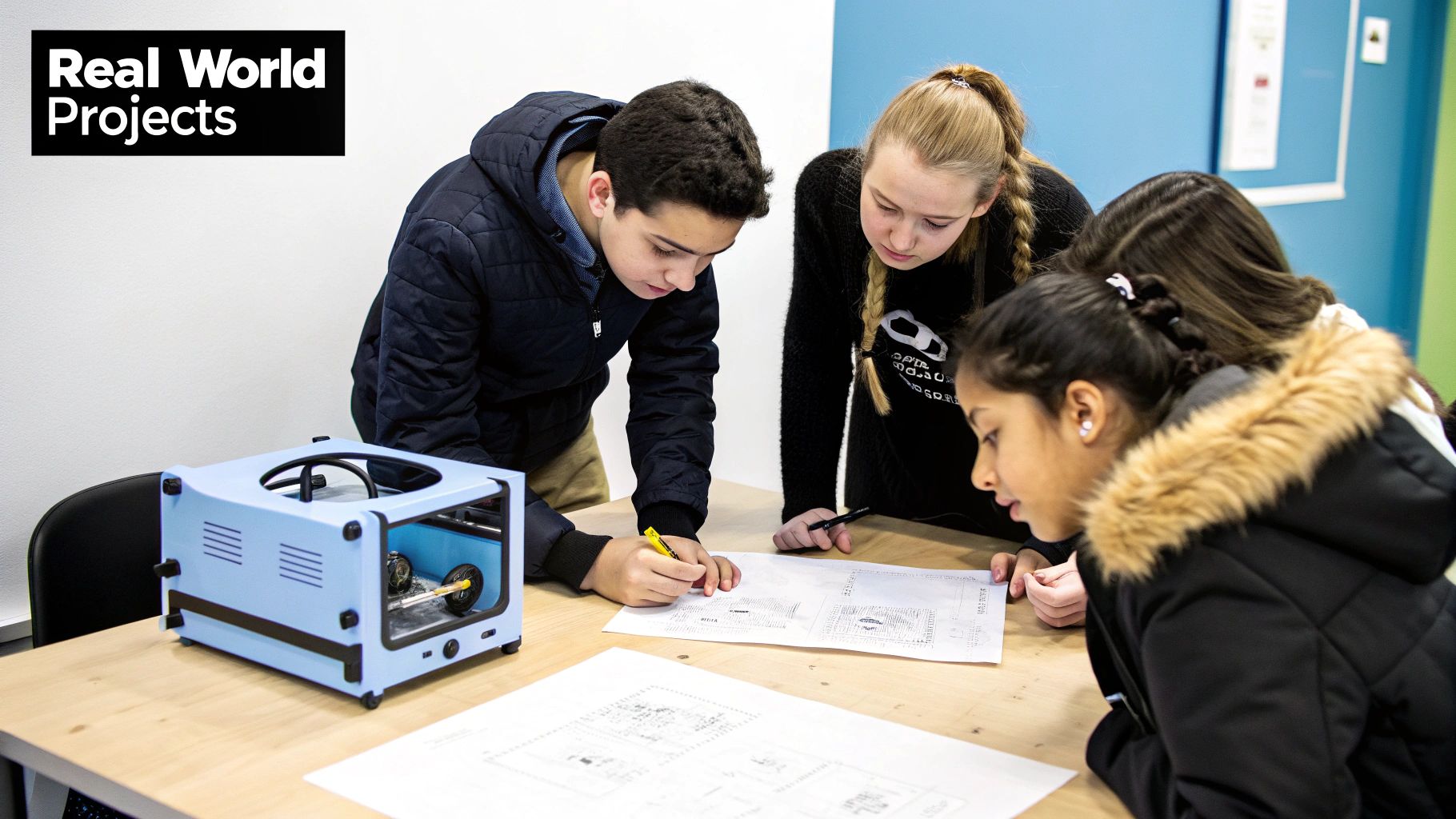
It is one of the most immersive classroom engagement strategies because it empowers pupils to take ownership of their learning. For example, inspired by Space Ranger Fred and the Tick Tock Tale, a class could undertake a project to design and build a working sundial or water clock. This cross-curricular task would involve researching historical timekeeping (History), applying principles of light and shadow (Science), and measuring angles (Maths), culminating in a tangible product that solves a real problem: telling time without modern technology. What a brilliant way to learn!
How to Implement Project-Based Learning:
- Start with a Driving Question: Frame the project around a challenging, open-ended question that sparks curiosity, such as "How can we design a device to measure time using only sunlight and water?"
- Provide Scaffolding and Checkpoints: Break the project into smaller, manageable steps with regular deadlines. Offer guidance and resources along the way to prevent pupils from feeling overwhelmed.
- Assess Process and Product: Use a clear rubric to evaluate not just the final outcome but also essential skills like collaboration, problem-solving, and time management.
- Connect to a Real Audience: Arrange for pupils to present their findings or showcase their creations to someone beyond the classroom, such as other classes, parents, or community experts.
6. Interactive Technology and Digital Tools
Integrating technology into lessons transforms the classroom into a dynamic, interactive environment. When used thoughtfully, digital tools are not just a substitute for traditional methods but a powerful way to facilitate active learning and cater to diverse learning styles. From collaborative online whiteboards to immersive science simulations, technology can make abstract concepts tangible and give every pupil a voice, boosting participation and deepening comprehension.
This is one of the most versatile classroom engagement strategies available today. For instance, after reading Space Ranger Fred and the Tick Tock Tale, which explores themes of time and mechanics, you could use a tool like PhET simulations to let pupils build and test their own virtual pendulum clocks. This hands-on, digital approach helps them visualise the physics concepts from the story in a safe and engaging way, connecting literacy with a memorable STEM experience.
How to Implement Interactive Technology:
- Align with Learning Goals: Ensure every tool serves a clear educational purpose. Technology should enhance the lesson, not distract from it.
- Provide Scaffolding: Teach pupils how to use new tools effectively. Offer tutorials or guided practice to build their confidence and digital literacy skills. Find excellent primary school teaching resources that can support this process.
- Balance Screen Time: Mix digital activities with offline, hands-on tasks to maintain engagement and prevent digital fatigue.
- Have a Backup Plan: Technology can be unpredictable. Always have a non-digital alternative ready to go in case of technical issues.
7. Differentiated Instruction
Differentiated Instruction is a fantastic approach that tailors teaching to meet the diverse needs of every pupil in the classroom. Championed by educator Carol Ann Tomlinson, this framework moves away from a one-size-fits-all model, recognising that pupils learn at different paces and in different ways. By varying content, process, and product, teachers can provide multiple pathways for pupils to engage with material and demonstrate their understanding.
This method is one of the most effective classroom engagement strategies because it ensures every child feels both supported and challenged. For example, when studying forces and motion inspired by a story like Space Ranger Fred and the Umbrella Rescue, a teacher could differentiate the task. Some pupils might build a simple parachute with guided instructions, while others could design and test their own air-resistance devices, and another group might create a digital presentation explaining the scientific principles involved. Everyone gets to be a scientist!
How to Implement Differentiated Instruction:
- Use Flexible Grouping: Group pupils based on readiness, interest, or learning preference, and change these groups regularly to avoid labelling.
- Offer Choice Boards: Create a grid of activities where pupils must complete a certain number, giving them autonomy over how they learn a concept.
- Tier the Assignments: Provide different levels of complexity for the same core task, ensuring all pupils work towards the same learning objective but with appropriate support.
- Utilise Formative Assessments: Use quick checks for understanding, like exit tickets or mini-quizzes, to gather data that informs your instructional decisions and groupings.
8. Classroom Discussion and Socratic Seminars
Socratic Seminars transform classroom discussion into a collaborative inquiry, moving pupils beyond simple answers towards deeper, collective understanding. This structured dialogue, rooted in the questioning methods of Socrates, encourages pupils to critically examine texts, ideas, or problems. Instead of debating, participants work together to construct meaning, challenging assumptions and exploring multiple perspectives in a respectful, structured environment.
This is one of the most powerful classroom engagement strategies for developing critical thinking and communication skills. For example, after reading a book like Space Ranger Fred and the Tick Tock Tale, which explores themes of time and urgency, you could start a seminar with a central question: "Is it always important to be fast?" Pupils would use evidence from the story and their own experiences to explore the complexities of this idea, building on each other's points to reach a more nuanced understanding.
How to Implement Socratic Seminars:
- Establish Clear Norms: Co-create rules for respectful dialogue, such as listening actively, building on others' ideas, and disagreeing with ideas, not people.
- Prepare Pupils: Provide the text or problem in advance along with open-ended guiding questions to help them prepare their initial thoughts.
- Model Questioning: Show pupils how to ask probing, clarifying, and follow-up questions that push the conversation forward, rather than just stating opinions.
- Use Wait Time: Intentionally pause for at least 3-5 seconds after a pupil speaks. This vital silence gives others time to think and formulate more thoughtful responses.
- Incorporate Reflection: End the seminar with a brief written or verbal reflection where pupils can process what they learned about the topic and the discussion process itself.
9. Cooperative Learning Structures
Cooperative learning structures are intentionally designed small-group activities where pupils work interdependently toward shared goals. Popularised by educational researchers like Spencer Kagan and Robert Slavin, these methods go beyond simple group work by building in individual accountability and positive interdependence. Every pupil has a crucial role, ensuring that success depends on genuine teamwork rather than on one or two pupils doing all the work.
These are some of the most powerful classroom engagement strategies as they promote both social skills and academic understanding. For instance, using the Jigsaw method after reading Space Ranger Fred and the Umbrella Rescue, a teacher could divide pupils into "expert groups". Each group would master a different aspect of the story’s STEM theme, such as the principles of air resistance on the umbrella, before re-joining their home groups to teach their peers what they learned. It’s a wonderful way to share the load and the learning!
How to Implement Cooperative Learning Structures:
- Assign Clear Roles: Give each group member a specific job, such as a facilitator (keeps the group on task), a recorder (writes down ideas), or a reporter (shares findings with the class).
- Establish Group Goals: Ensure the objective is clear and that pupils understand they are working together to achieve a common outcome.
- Teach Cooperation Skills: Explicitly model and teach skills like active listening, giving constructive feedback, and reaching a consensus.
- Keep Groups Small: Optimal group size is typically three to four pupils. This ensures everyone has a chance to contribute.
- Use Individual Accountability: Follow up group tasks with an individual quiz or a short reflection to ensure each pupil has mastered the content.
10. Formative Assessment and Feedback Loops
Formative assessment is a continuous process of checking for understanding to guide ongoing teaching and learning. Unlike summative tests that evaluate learning at the end of a unit, this approach involves gathering real-time evidence through observation, questioning, and quick tasks. This information creates a powerful feedback loop, allowing teachers to adjust instruction and pupils to understand their own progress and what they need to do next.
This is one of the most vital classroom engagement strategies because it makes learning a transparent, two-way conversation. For example, after a lesson on problem-solving inspired by Space Ranger Fred and the Tick Tock Tale, you might use an exit ticket asking pupils to write one thing they learned about time and one question they still have. This quick check provides immediate insight into class comprehension and informs the next day’s lesson plan. It’s a simple trick with a huge impact.
How to Implement Formative Assessment and Feedback Loops:
- Use Quick, Regular Checks: Employ tools like one-minute papers, exit tickets, or digital quizzes (using platforms like Nearpod) to frequently gauge understanding without creating test anxiety.
- Make Feedback Actionable: Focus on what pupils can do to improve. Instead of "Good work," try "You clearly explained Fred's plan. Next time, try adding more detail about the clock's mechanics."
- Involve Pupils in the Process: Encourage self-assessment and peer feedback using clear rubrics. This empowers pupils to take ownership of their learning journey.
- Adjust Instruction Promptly: Use the data you gather to make immediate changes. If half the class is confused, revisit the concept in a new way before moving on.
Classroom Engagement: 10-Strategy Comparison
| Strategy | 🔄 Implementation Complexity | ⚡ Resource Requirements | ⭐ Expected Outcomes | 📊 Ideal Use Cases | 💡 Key Advantages / Tips |
|---|---|---|---|---|---|
| Active Learning through Think-Pair-Share | Low — simple steps and routines | Low — minimal materials, short class time | ⭐⭐⭐⭐ — increases participation and retention | Quick concept checks; breaking up lectures; K-12 to university | Use clear prompts and timers; provide sentence starters |
| Gamification in the Classroom | Medium–High — design and balance mechanics | Medium–High — platforms, tokens, planning time | ⭐⭐⭐⭐ — boosts motivation and time-on-task | Practice/review, behavior systems, engagement drives | Align mechanics with learning goals; monitor competition |
| Flipped Classroom Model | High — content creation and accountability systems | High — videos/LMS and student access required | ⭐⭐⭐⭐ — more active class time; deeper application | Content-heavy courses; STEM lectures; blended learning | Keep videos short; include checks; provide offline options |
| Peer Teaching and Reciprocal Learning | Medium — needs structure, pairing and monitoring | Low–Medium — materials and teacher oversight | ⭐⭐⭐⭐ — teaching reinforces understanding and skills | Tutoring, small-group practice, cross-age programs | Train peers, rotate roles, monitor misconceptions |
| Project-Based Learning (PBL) | High — long-term planning and scaffolding | High — materials, community partners, extended time | ⭐⭐⭐⭐ — develops real-world skills and agency | Interdisciplinary units; authentic community problems | Use clear objectives, checkpoints, rubrics; scaffold work |
| Interactive Technology & Digital Tools | Medium — tool selection and integration | Medium–High — devices, licenses, training | ⭐⭐⭐⭐ — increases interactivity and immediate feedback | Hybrid/remote lessons, simulations, formative checks | Ensure tech serves objectives; have backups; teach digital safety |
| Differentiated Instruction | High — multiple pathways and management | Medium — varied materials and assessment tools | ⭐⭐⭐⭐ — meets diverse needs; increases engagement | Mixed-ability classrooms; inclusive classrooms | Use formative data, flexible grouping, transparent tiering |
| Classroom Discussion & Socratic Seminars | Medium — facilitation and norms required | Low — texts and preparation time | ⭐⭐⭐⭐ — strengthens critical thinking and discourse | Literature, ethics, advanced seminars, Socratic inquiry | Establish protocols, roles, and wait time to include all voices |
| Cooperative Learning Structures | Medium — roles, accountability, and training | Low–Medium — materials and group setups | ⭐⭐⭐⭐ — improves achievement and social skills | Jigsaw, STAD, group problem-solving, reviews | Assign roles, teach cooperation skills, use individual accountability |
| Formative Assessment & Feedback Loops | Medium — frequent checks and analysis routines | Low–Medium — tools for data tracking | ⭐⭐⭐⭐⭐ — very high impact on learning and growth | Ongoing instruction, differentiation, progress monitoring | Give specific, timely feedback; involve students in goals and revision |
Launching Your Classroom into a New Orbit of Engagement
Navigating the vast universe of classroom engagement strategies can feel like plotting a course through an asteroid field. From the structured collaboration of Think-Pair-Share and cooperative learning to the innovative horizons of gamification and the flipped classroom model, the tools at your disposal are both powerful and diverse. We've explored how peer teaching builds confidence, how Project-Based Learning ignites curiosity, and how interactive technology can bring complex concepts like gravity and air resistance to life in vibrant colour.
The journey towards a more engaged classroom isn’t about implementing all ten strategies overnight. Instead, it’s about thoughtful experimentation. The true power lies in selecting one or two approaches that resonate with your unique teaching philosophy and, most importantly, with the specific needs of your pupils. The goal is to cultivate an environment where learning is not a passive reception of information but an active, participatory adventure.
From Strategy to Lasting Impact
The ultimate value of mastering these concepts is the profound shift they create in your classroom's culture. When you integrate formative assessments as continuous feedback loops or differentiate instruction to meet every child where they are, you send a clear message: every voice matters, and every pupil can succeed. This transforms the learning space from a lecture hall into a dynamic laboratory where curiosity is the main component.
By empowering pupils to take ownership of their learning, you are not just teaching a curriculum; you are nurturing critical thinkers, problem-solvers, and collaborative leaders. These skills extend far beyond the classroom walls, preparing them for a future where adaptability and engagement are paramount. Imagine the energy when a Socratic seminar sparks a lively debate or a gamified quiz turns revision into a thrilling challenge. That is the essence of an engaged classroom.
Your Next Mission: Start Small, Think Big
The key takeaway is that small, intentional changes can lead to astronomical results. Perhaps you could introduce a simple cooperative learning structure next week or plan one Project-Based Learning unit for the next term. Consider how storytelling can weave these strategies together. A character-driven narrative, like the adventures found in the Space Ranger Fred books, can provide a fantastic framework for a STEM-focused project, encouraging pupils to solve problems just as Fred does in Space Ranger Fred and the Tick Tock Tale.
Embrace the process of trial and reflection. Observe what captures your pupils' imagination and what fosters the most enthusiastic participation. Every step you take towards a more interactive and pupil-centred approach helps launch your classroom into a new orbit of engagement, creating a space where every child is an active explorer on a shared mission of discovery.
Ready to infuse your lessons with adventure and ignite your pupils' passion for STEM? The Space Ranger Fred book series is expertly designed to support these very classroom engagement strategies, using captivating stories to make complex topics accessible and fun. Discover how Fred's missions can become your teaching tools at Space Ranger Fred.