
Every parent knows the moment. The rain is hammering the windows, the tablet battery has died, and someone small is announcing, with great drama, that they are bored.
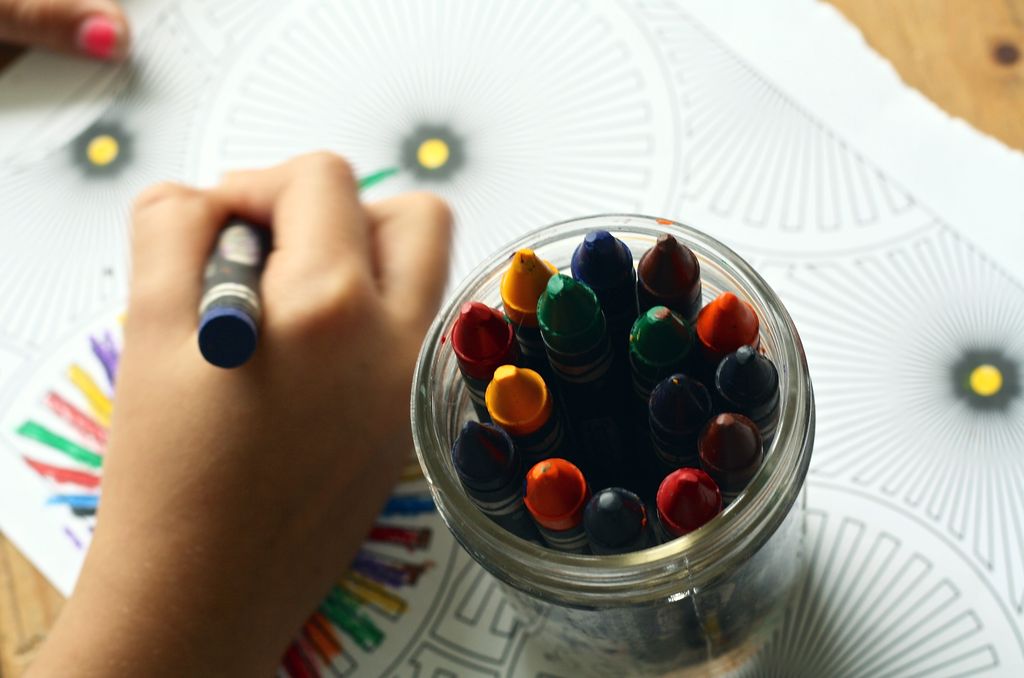
This is where a sheet of paper and a handful of crayons can quietly save the day.
Colouring is one of the oldest and simplest children’s activities there is, and it is easy to dismiss as just a way to keep little hands busy. But at Space Ranger Fred Mission Control, where we spend our days thinking about how children learn, we have come to see colouring as something rather more special. It is a screen-free, low-cost, endlessly flexible activity that quietly builds a whole toolkit of skills. Let’s take a closer look.
Why colouring matters more than you think
It builds fine motor skills
Gripping a crayon, steering it along a line and pressing just hard enough to leave a mark are all small physical skills, and they add up. The same hand control that keeps a child’s colour inside the lines today is the control they will use to hold a pencil, form letters and write their name at school.
Teachers often talk about “pencil readiness”, and colouring is one of the most enjoyable ways to get there. Children don’t feel they are practising. They simply feel they are making something.
It develops focus and patience
In a world of quick swipes and instant rewards, sitting with one picture for fifteen or twenty minutes is a genuine skill. Colouring Pages invite children to slow down, make choices and see a task through to the end.
Many parents notice that a child who struggles to settle will happily stay with a colouring page for a surprisingly long time. That ability to concentrate on something is exactly what classroom learning relies on.
It encourages decision-making and creativity
Should the rocket be red or purple? Is the moon silver, or is it the colour of cheese? Should the alien have three eyes or five?
Every colouring page is a tiny series of decisions, and there are no wrong answers. Children learn to trust their own choices, experiment with colour and put their own stamp on a picture. For more reluctant or perfectionist children, that freedom can be a gentle introduction to creative confidence.
It gives children a calm moment
Colouring has a settling effect. After a busy day at school, a quiet half hour with some pencils can help a child unwind, and it gives them a way to switch off without a screen. Plenty of adults have rediscovered the same calming effect, which is why adult colouring books have become so popular.
It sparks conversation
A colouring page is a brilliant conversation starter. “Tell me about your picture” often opens the door to stories a child wouldn’t otherwise share. Ask about the planet they’ve invented, why the dragon is wearing a hat, or where the spaceship is heading, and you may find a storyteller in the making.
Colouring and early learning
Colouring also sits neatly alongside the other things children are learning in their early years.
Colours and vocabulary. Naming colours, shades and shapes is part of building a child’s language. “Can you pass me the turquoise?” is a perfectly good vocabulary lesson in disguise.
Shapes and spatial awareness. Working around circles, triangles and curves helps children understand how shapes fit together on a page.
Following instructions. Colour-by-number and “colour all the circles blue” pages add a little structure and are a friendly way to practise numbers and listening skills.
Reading readiness. Children who enjoy sitting with paper and pencils are usually happier to sit with books, too. Colouring and reading make wonderful partners, and a child who has just finished colouring a space scene is often more than ready to hear a story about one.
Where to find good colouring pages
You don’t need to buy expensive books. There are plenty of generous websites offering printable pages, and the best of them cover a wide range of themes so that every child can find something they love.
One option worth knowing about is Pupla, a site of free colouring pages that you can print at home, with plenty of choice for different ages and interests. It is a handy resource to bookmark for those moments when you need something quickly, whether that is a rainy-day rescue or a quiet activity for a long afternoon.
A few tips when choosing pages:
- Match the page to the child. Toddlers do best with big, bold outlines and plenty of white space. Older children enjoy intricate designs with fine detail.
- Follow their interests. A child who loves dinosaurs, animals or rockets will happily colour for much longer than one handed a random picture.
- Print a few at once. Having a small stack ready means you can say yes the moment the “I’m bored” siren sounds.
- Use good paper if you can. Slightly thicker paper copes better with felt tips and watercolour pencils.
Make it more than a page: ideas to take colouring further
Once your child is hooked, there are lots of ways to stretch colouring beyond the single sheet.
Create a space mission
At Space Ranger Fred we love anything that turns learning into an adventure. Print a space scene, then ask your child to plan a mission. Which planet is the rocket visiting? Who is on board? What do they need to pack? Colouring becomes the first chapter of a story, and the story can run for days.
Colour a story
After reading a favourite picture book, ask your child to colour their favourite scene, or to draw and colour a new ending. It’s a lovely way to check how well they have understood the story, and it builds their sense of narrative.
Start a gallery
Pin finished colouring pages to the fridge, string them along a wall with washi tape, or keep them in a folder. Seeing their work displayed does wonders for a child’s pride, and a growing gallery shows how much their skills develop over time.
Colour with a purpose
Colouring makes a lovely handmade gift. Cards for grandparents, a picture for a friend’s birthday or a welcome-home banner all give a child’s artwork a real job to do, and make them feel useful as well as creative.
Try different materials
Crayons, pencils and felt tips each give a different effect. Try watercolour pencils, chalk pastels or even paint. Mixing materials teaches children about texture and colour mixing, and it keeps the activity fresh.
Turn it into a family hour
Don’t just hand over the pages. Sit down with your own, and colour alongside your child. Put some music on, or play an audiobook. You may find it’s the most relaxing hour of your week.
Colouring Pages for different ages
Toddlers (2 to 3). Chunky crayons, big simple shapes and lots of encouragement. Scribbling is a perfectly good start, and every scribble builds muscle control.
Preschoolers (3 to 5). Children begin to stay within the lines and to choose colours deliberately. Simple scenes with animals, vehicles and favourite characters are ideal.
Early primary (5 to 7). Longer attention spans mean more detailed pages, colour-by-number and themed scenes. This is a great age to link colouring with school topics such as the solar system, minibeasts or the seasons.
Older children (8 and up). Many enjoy intricate patterns, mandalas and detailed illustrations. For some, colouring becomes a relaxing hobby and a doorway into drawing and design.
A note for busy parents
If you are juggling work, school runs and everything in between, it’s easy to feel that every activity should be educational, enriching and Instagram-worthy. It doesn’t need to be.
Colouring pages work because they are simple. There is no setup, no mess to speak of, and no expensive kit. You can do it at the kitchen table, in a waiting room, on a train or on a camping trip. Ten minutes is enough to be worthwhile, and an hour is a bonus.
And if you’re reading this as a teacher, grandparent or childminder, the same applies. A box of crayons and a few printed pages can transform a restless room into a happily focused one.
Final thoughts
Colouring may look like a small thing, but its benefits are big. It strengthens little hands, steadies busy minds, feeds imaginations and brings families together around a table, away from the screens.
So the next time someone declares they are bored, reach for the crayons. You might just be handing them a superpower.
Happy colouring, Space Rangers!
Matthew Newnham is the creator of the Space Ranger Fred STEM adventure series for children. Find out more at spacerangerfred.com.
Disclosure: This article contains a sponsored link.