
Every book is a potential adventure waiting to happen. This guide is your map for finding those magical children's books that turn reading from a chore into a cherished activity for children aged 6–12. We'll explore how to navigate this wonderful world to build reading skills and ignite a powerful curiosity in everything from distant galaxies to the mysteries of science.
Why the Right Story at the Right Time Is Magic
Finding the perfect book for a child can feel like unlocking a secret level in a video game. It’s that moment when the story clicks, their eyes light up, and suddenly they can’t wait to find out what happens next. This guide is your friendly co-pilot, here to help match your young reader with books that will not just entertain them, but help shape their world for the better.
Think of this as your map to the vast universe of children's literature. We're here to help you navigate the dazzling constellations of picture books, chapter books, and non-fiction, making sure you find the stories that truly stick.
What We Will Explore Together
Throughout this guide, we'll cover everything you need to feel confident when choosing books. Our journey will take us through a few key areas, each designed to make the process simple and rewarding.
We will look at:
- Choosing Age-Appropriate Stories: Discover how to select books that match the reading and emotional development of children in the 6–9 and 9–12 age brackets.
- Uncovering Hidden Educational Power: Learn how fiction, especially stories packed with adventure, can be a fantastic way to introduce STEM concepts in an exciting, natural way.
- Weaving Reading into Family Life: Find practical tips and fun activities that make reading a joyful part of your daily routine, both at home and in the classroom.
The goal is to move beyond simply finding a book and towards discovering a portal to new worlds. A fantastic example is our own Space Ranger Fred series, which blends thrilling space adventures with real science, showing just how exciting STEM can be.
A well-chosen book does more than just teach a child to read; it teaches them to wonder, to question, and to dream. It builds empathy by letting them walk in someone else’s shoes and fosters resilience as they see characters overcome incredible challenges.
These stories become companions, offering comfort on quiet afternoons and sparking big ideas that can last a lifetime. Let's start this adventure and find the right stories to inspire your young explorer.
Matching Books to Your Young Reader's Journey
Stepping into a bookshop or library can feel like exploring a new galaxy—it’s exciting, but with so many choices, it can also be a little overwhelming. The secret to finding the perfect book is remembering that a child's reading needs change as they grow. A story that captivates a seven-year-old might not hold the same magic for a ten-year-old, and that’s a wonderful part of their journey.
Guiding a child means giving them the right book at the right time to build their skills and confidence, one story at a time. This idea is a bit like scaffolding in education, where we provide just enough support to help them reach the next level. And families are clearly on the hunt for those perfect reads—in the UK, the top 50 children's titles alone sold around 4.5 million copies in a single year, generating £22 million.
The Confident Explorer: Ages 6 to 9
For younger readers, the world of chapter books is just opening up. At this stage, children are making the big leap from simple picture books to stories with more substance, but they still need plenty of support to keep them turning the pages.
Books that work wonders for this age group tend to have a few things in common:
- Generous Illustrations: Pictures are brilliant for breaking up text, offering clues about the story, and keeping young minds hooked.
- Relatable Heroes: Characters facing familiar problems—like making friends or feeling nervous—help children see themselves in the story.
- Clear, Direct Plots: A straightforward adventure with a clear beginning, middle, and end is perfect for building comprehension skills without causing confusion.
Illustrated chapter books are a fantastic bridge. They offer the satisfaction of finishing a 'proper' book while providing the visual comfort kids are used to. If you're looking for recommendations, our guide to the best chapter books for 6-year-olds is a great place to start.
The Independent Adventurer: Ages 9 to 12
As children head towards the end of primary school, their reading abilities and emotional maturity take a huge leap. They're ready for more complex worlds, deeper ideas, and stories that challenge them.
At this stage, they often really get into:
- Deeper Themes: Stories exploring friendship, justice, courage, and identity start to resonate strongly.
- Complex Worlds: Elaborate settings, whether magical realms or distant galaxies, spark their growing imagination.
- Diverse Genres: This is the perfect time to introduce them to mystery, science fiction, historical fiction, and fantasy.
Readers aged 9 to 12 are starting to build their own reading identity. Giving them the freedom to explore different genres helps them discover what they truly love, turning reading from a school task into a genuine passion.
The visual below helps simplify the choice. Are you looking to build skills, spark curiosity, or just have some fun?
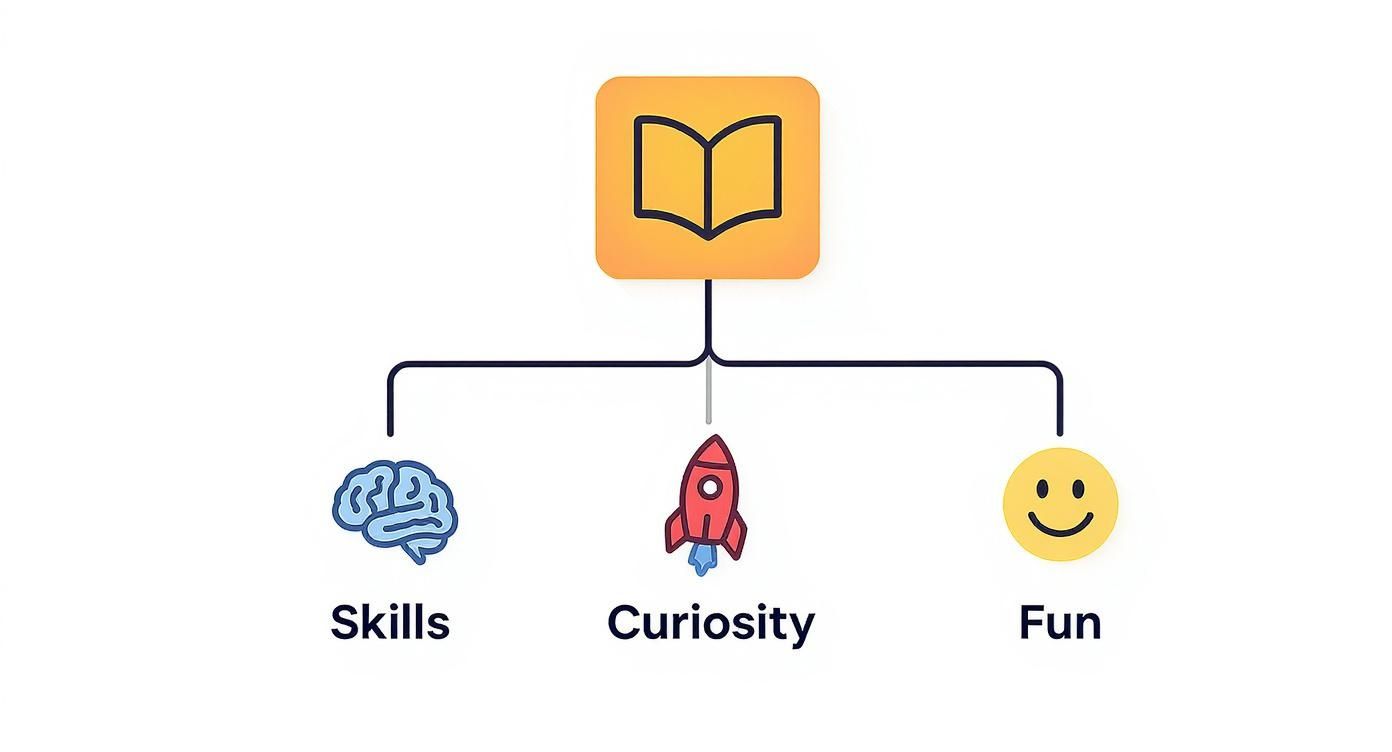
This quick visual guide shows how different reading goals can point you toward the perfect book for your young reader.
Matching Books to Your Child's Needs (Ages 6-12)
Sometimes you're looking for a book to do a specific job—maybe to help with a tricky school subject or just find a story that will make them laugh out loud.
Use this quick-reference guide to select the right type of book based on your child's reading level and interests.
| Your Child's Reading Goal | Book Ideas for Ages 6-9 | Book Ideas for Ages 9-12 |
|---|---|---|
| To Build Reading Confidence | Early chapter books with large font and lots of pictures, or funny, rhyming poetry collections. | High-interest series books where they already know the characters, or fast-paced graphic novels. |
| To Spark an Interest in STEM | Non-fiction books with amazing facts about space or animals, or sci-fi adventures like Space Ranger Fred. | Biographies of scientists and inventors, or mystery novels that require logical problem-solving. |
| To Encourage Empathy and Understanding | Stories about children from different cultures or books that focus on friendship challenges. | Historical fiction that puts them in another person’s shoes or stories dealing with complex emotions. |
| For Pure Fun and Escapism | Hilarious stories about silly situations or magical adventures with talking animals. | Epic fantasy quests with detailed maps and worlds, or laugh-out-loud books by authors like David Walliams. |
Hopefully, this guide makes it a little easier to find that next great read that not only fits your child's age but also fuels their unique interests and passions.
How Stories Build Brains and Spark Curiosity
A great story is so much more than entertainment—it’s a workout for a child's mind, building new pathways in their brain. When a young reader gets completely lost in an adventure, they aren't just following a plot. They’re flexing their imagination, building empathy, and strengthening the very neural connections that underpin critical thinking.
Think about it. Every time a child tries to solve a mystery alongside the characters or guesses what might happen next, they’re sharpening their problem-solving skills. This mental exercise makes them more creative and adaptable thinkers in all parts of their life, from the classroom to the playground.
The power of children's books is no secret. Here in the UK, the sector is a huge part of the book industry, which itself is part of a global market worth an estimated USD 12.16 billion. It’s clear that families everywhere recognise just how valuable a good story can be.
The Surprising Link Between Stories and STEM
Most people tend to put reading and science in two completely different boxes. But the truth is, stories are one of the best tools we have for making STEM subjects feel intuitive and exciting. A brilliant narrative can bring abstract concepts to life in a way a dry textbook never could.
Imagine trying to explain gravity to a nine-year-old. You could show them equations, or you could read them a story about an astronaut like Space Ranger Fred having to navigate the immense pull of a strange new planet. Suddenly, gravity isn't just a word; it’s a tangible force to be overcome, a real part of a thrilling adventure.
"Narrative is the native language of the brain. When we frame facts and concepts within a story, we make them memorable, relatable, and easier to understand."
This works because stories engage the brain on so many levels. They cleverly mix logic with emotion, which helps cement new information in a child’s long-term memory. A well-told tale provides vital context, making complex ideas like engineering principles or planetary physics feel like pieces of a grand, understandable puzzle.
How Different Genres Boost Different Skills
Not all stories give the brain the same kind of workout. The wonderful variety in children’s literature means you can find a book to nurture almost any skill.
- Fantasy and Sci-Fi: These genres are fantastic for encouraging out-of-the-box thinking. When characters face impossible odds in magical worlds or distant galaxies, it prompts readers to imagine truly innovative solutions.
- Mysteries and Adventures: Perfect for building logical reasoning and a keen eye for detail. Young detectives learn to spot clues, analyse information, and draw conclusions—the very foundations of scientific thinking.
- Historical Fiction: These stories are empathy-building machines. Stepping into the shoes of someone from another time and place gives children a much deeper understanding of different perspectives and the complexities of human experience.
- Modern Non-Fiction: The best non-fiction books today bring facts to life with stunning visuals and gripping storytelling. They prove that the real world is just as fascinating as any fictional one, sparking curiosity about everything from biology to technology.
By encouraging a child to explore different genres, you’re giving them a balanced diet of cognitive challenges. This variety doesn't just improve their ability to understand what they read; it strengthens their overall thinking skills. To explore this further, our guide offers practical tips on how to improve reading comprehension for young learners.
At the end of the day, reading isn't just a tool for literacy. It’s a launchpad for a lifelong love of discovery, turning children into curious, critical thinkers ready to explore the world around them.
Bringing Stories to Life Beyond the Page
The magic of a brilliant children's book doesn't have to end on the final page. In fact, that’s often the best place for a whole new adventure to begin! Extending the story with hands-on activities transforms reading from a quiet, solitary experience into an active, creative one. It’s a fantastic way to help cement a book's themes and lessons in a way that just feels like pure play.
When children get to build, create, or act out parts of a story, they connect with it on a much deeper level. This simple process makes abstract concepts tangible and reinforces learning without them even realising it. A thrilling science fiction tale suddenly becomes an engineering challenge, and a puzzling mystery turns into a lesson in logic and deduction.
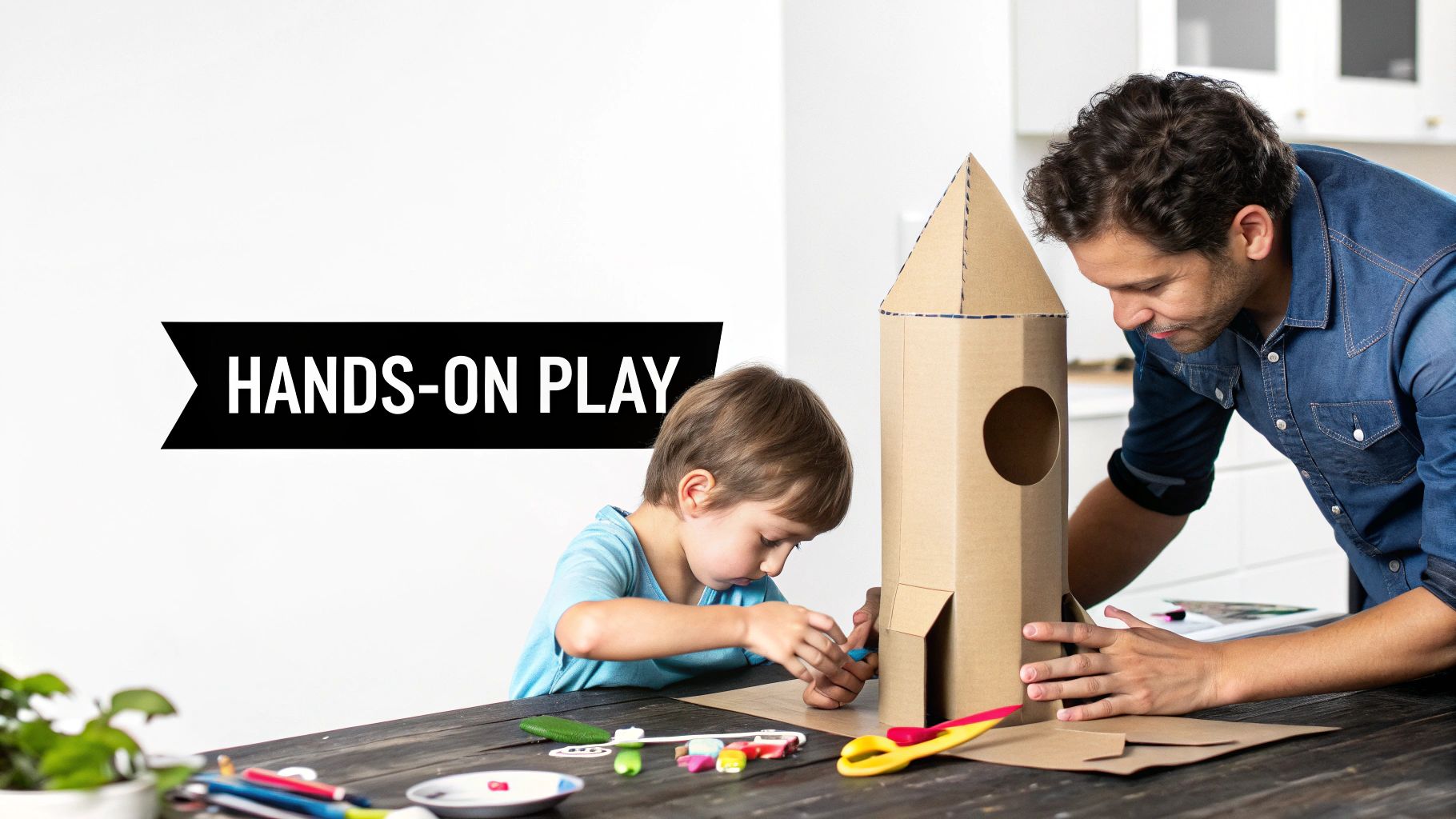
From Sci-Fi to Science Projects
One of the most exciting ways to stretch a story is by bringing its world into yours, especially with books that have strong STEM themes. The best part? You don't need expensive kits or complicated instructions. Everyday household items are often the perfect ingredients for sparking imagination.
Here are a few simple ideas to get you started after finishing a space adventure or sci-fi story:
- Build a Model Rocket: Gather cardboard tubes, empty plastic bottles, and colourful paper. Challenge your young reader to design and build a rocketship inspired by the book. This simple craft is a fantastic introduction to basic engineering and design principles.
- Design an Alien Ecosystem: Grab an old shoebox and transform it into a diorama of a strange new world. What kind of plants would grow there? What bizarre creatures might live in its landscape? This encourages creativity while touching on concepts of biology and ecology.
- Map a New Solar System: Use paper plates or circles of card to create a brand-new solar system. Your child can name the planets, decide their order from the sun, and even invent facts about each one’s atmosphere or inhabitants.
These activities don't just keep little hands busy; they encourage critical thinking and problem-solving in a fun, low-pressure environment.
Activities for Every Genre
Of course, the fun isn't limited to science fiction! Every genre of children's books offers a treasure trove of potential activities that can be adapted for home or the classroom. The key is to think about the core themes of the story and find a playful way to explore them.
By connecting a story to a hands-on task, you're helping your child build stronger memories of the plot, characters, and key lessons. This active engagement is a powerful tool for boosting reading comprehension and retention.
Here are some more ideas inspired by different types of stories:
- After a Mystery: Create your own secret codes! Write messages in invisible ink (lemon juice works a treat) or develop a symbol-based alphabet. You could even stage a mini 'whodunnit' mystery at home for the family to solve.
- After a Fantasy Adventure: Draw a detailed map of the magical land from the story. Where are the enchanted forests, towering castles, and dangerous mountains? This is a great exercise in geography, scale, and creative world-building.
- After Historical Fiction: Cook a simple recipe from the time period or region featured in the book. This sensory experience can make history feel much more real and relatable. You can also explore how well illustrated children's books capture different historical settings in our related article.
These activities help children understand that stories are more than just words on a page—they are springboards for imagination, discovery, and endless fun. For some ready-to-go creative missions, check out the fantastic resources on our Space Ranger Fred 'Freebies' page and get started right away.
How to Nurture a Lifelong Love of Reading
In a world buzzing with notifications and glowing screens, getting kids to fall in love with reading can feel like an uphill battle. But the good news is, it doesn't take grand gestures or an iron-clad screen time policy. Nurturing a lifelong reader is really about creating a warm, positive feeling around children's books, turning them into moments of connection and joy, not another chore on the list.
This isn’t about winning a war against technology; it's about showing kids that stories offer a completely different kind of magic. It’s about making reading feel like a treat, a quiet adventure shared between a child and the pages of a book. The secret is to make it easy, accessible, and above all, fun.

Create a Cosy Reading Environment
You don’t need a full-blown library in your house to make reading feel special. A simple, dedicated reading nook can make all the difference.
It can be as easy as:
- Piling comfy cushions and a soft blanket in the corner of a room.
- Draping a sheet over a chair to create a secret hideaway fort.
- Placing a beanbag next to a bookshelf with a small lamp for evening stories.
The goal is to carve out an inviting space that practically whispers, "This is a place for quiet adventures." When a child has a comfortable spot that’s just for them and their books, it transforms reading from a task into a treasured ritual.
Start a Family Reading Habit
When it comes to building habits, consistency is far more powerful than intensity. You don't need to block out hours every day; even 15 minutes of dedicated reading time can have a huge impact. This could be a family "reading ritual" where everyone—grown-ups included—puts down their devices and gets lost in their own book in the same room.
Reading aloud together is another fantastic way to bond, even for older kids who can already read on their own. Hearing a story brought to life with exciting voices and real emotion can make it unforgettable. These shared moments create powerful, positive memories that kids will always associate with books.
Empower Them with Choice
Want to kill a budding love for reading? Be too bossy about what they read. While it's great to offer suggestions, giving children the freedom to choose their own books is absolutely crucial for building a genuine passion. A regular trip to the local library or bookshop can feel like a thrilling expedition.
Let them gravitate towards what pulls them in, whether it's a graphic novel, a silly book of poems, or a non-fiction guide to their latest obsession. When a child chooses a book themselves, they have a personal stake in the story. They own that reading experience, which is incredibly empowering and motivating.
This sense of ownership is vital. While the UK's personalised children's books market is growing, a significant challenge remains. One report noted a decline in reading enjoyment among older students, partly due to a preference for digital content. Empowering children to choose their own physical books helps reignite that personal connection. Learn more about trends in the children’s book market.
Embrace All Forms of Story
Reading doesn’t always have to involve a physical book. Audiobooks are a fantastic way to share stories, especially on the go. Listening to a thrilling adventure during a car journey can hook a reluctant reader and introduce them to complex vocabulary and storytelling in a really accessible way.
Ultimately, nurturing a love of reading is about celebrating stories in all their forms and making them a joyful, essential part of family life. For more ideas on weaving learning into everyday fun, check out our post on 'How to Make STEM Fun at Home'.
Your Questions About Children's Books Answered
Stepping into the wonderful universe of children's books can sometimes feel like exploring a new galaxy. Every parent and teacher has questions, from figuring out new formats to tackling common reading hurdles. We've gathered some of the most frequent queries and answered them here, helping you make brilliant choices for your young reader.
Is It Okay If My Child Only Wants to Read Graphic Novels?
Absolutely! In fact, it’s something to celebrate. Graphic novels are a fantastic and totally valid gateway to literacy, using visual storytelling to help kids build critical skills. They're brilliant for teaching inference, as children learn to read emotions and understand plot points from the illustrations just as much as from the text.
This engaging format often feels far more approachable to a reluctant reader than a solid page of words, which is a huge win for building their confidence and stamina. The most important thing is that your child is reading and, crucially, enjoying it. You can always use their love for this style to introduce them to novels with similar action or fantasy themes when they feel ready.
How Do I Know If a Book Is the Right Reading Level?
The "five-finger rule" is a brilliantly simple test you can do right in the bookshop or library. Just ask your child to read one full page from a book that’s caught their eye. For every word they don’t know or can't pronounce, they hold up one finger.
Here’s how to read the signs:
- 0-1 Finger: An easy, comfortable read. Perfect for building fluency or for a relaxing bedtime story.
- 2-3 Fingers: This is the sweet spot! The book is challenging enough to stretch their skills but not so tough it causes frustration.
- 4 Fingers: This one might be a bit tricky for them to read alone right now. It could be a great choice to read together, where you can help with the difficult words.
- 5 Fingers: This book is probably too advanced for now. Best to save it for later so they don't get discouraged.
Of course, this is just a guide. A child’s passion for a topic can give them the motivation to tackle a slightly tougher book, so always factor in their excitement level!
How Can Books Help with School Topics Like Science and History?
Children's books are one of the most powerful tools for breathing life into school subjects. Stories have a unique way of making abstract or distant topics feel real, exciting, and memorable.
Try to find out what your child is covering in class. If they're learning about Ancient Egypt, a historical adventure set on the banks of the Nile can make the period feel far more vivid than a dry list of facts. For STEM subjects, a series like our very own Space Ranger Fred can turn concepts like planetary orbits into a thrilling adventure across the galaxy. Reading stories connected to their schoolwork deepens their understanding and shows them that learning is an adventure that happens everywhere.
How Can I Get My Child to Read When They Prefer Video Games?
This is a common challenge, but it helps to think of it as complementing their interests, not competing with them. First, try finding books that tap into what they love about gaming. If they enjoy epic fantasy RPGs, look for a series with detailed maps, magical quests, and brave heroes.
Creating a balanced routine is key. It's not about banning screens, but about carving out dedicated, screen-free time that makes reading a normal and expected part of the day. This protects reading time and makes it feel like a special ritual.
Next, make reading a shared experience. Reading a chapter aloud together before bed offers a special bonding time that screens simply can't replicate. Finally, let them see you reading. When children see the adults in their lives enjoying books, they recognise it as a worthwhile and fun thing to do.
For anyone curious about how children's books get discovered by young readers in the first place, you can find more details on effective , a major platform where many families find their next favourite story.
At Space Ranger Fred, we believe every book is a launchpad for adventure. We hope this guide helps you find the perfect stories to fuel your young explorer's journey. Keep exploring, keep reading, and keep wondering.