
Hello, fellow explorers! Are you looking for fun ways to turn reading practice into an exciting mission? You've landed in just the right place. We know that helping children aged 6–12 build their reading confidence is one of the most important adventures a parent or teacher can embark on. But it doesn't have to feel like a chore! The secret is to make it a game.
This guide is packed with our favourite kids' reading games, a mix of brilliant online platforms and hands-on activities that turn phonics, comprehension, and vocabulary into a playful quest. We’ll explore digital worlds where children can design their own characters and go on epic journeys, alongside classic games you can try together offline. We’ll even share a few Space Ranger Fred ideas you can try right now from our own free activities page.
Our mission is to help you find the perfect game to spark your child's curiosity and let them become the hero of their own reading story. Each entry in our list gives you a clear overview, age suitability, and direct links, so you can blast off into the fun straight away.
While digital adventures offer exciting ways to learn, don't forget the power of a good story. Combining interactive play with captivating books, like our very own Space Ranger Fred and the Shoelace Adventure, creates a powerful launchpad for literacy.
So, grab your co-pilot, and let’s explore the best reading games for your young adventurer!
1. Space Ranger Fred
As our featured choice, Space Ranger Fred offers a wonderfully rounded and dynamic way to approach children's literacy. Instead of just offering standalone games, this platform brings reading to life inside a rich, story-driven universe that blends STEM learning with playful adventure. It stands out by turning reading into a gateway for curiosity, problem-solving, and imaginative play, making it a fantastic resource for both home and school.
At its heart is a growing book series featuring the lovable characters Space Ranger Fred, his trusty dog Comet, and the tech-savvy Dr Daisy. Titles like The Shoelace Adventure and The Great Galactic Bake Off cleverly weave scientific concepts into funny, everyday challenges. This story-first approach means children aren't just decoding words; they're actively caught up in adventures that make big ideas like gravity or chemical reactions feel easy to understand and exciting.
Why It Stands Out
What truly sets Space Ranger Fred apart is how everything connects. The experience begins with the books but extends far beyond the page, offering a whole world that supports different ways of learning. This makes it a standout option for parents and teachers looking for comprehensive kids' reading games and activities that feel connected.
- Learning That Sticks: Reading is linked directly to hands-on activities. After reading about Fred’s galactic baking, children can try our printable activities that challenge them to solve a recipe-based puzzle or design their own space-themed cupcake. This helps reading and STEM skills stick.
- Teacher- and Parent-Friendly Resources: The website is a treasure trove of classroom-ready materials. Blog posts double as mini-lessons on topics like rocket fuel and constellations, while the “Become a Space Ranger!” programme provides a structured way to encourage ongoing engagement.
- An Active and Growing Community: With regular book releases, an active social media presence, and new blog content, the platform is always buzzing with new things to do. This active development shows a real long-term commitment to providing fresh, high-quality resources for its growing community of young learners.
Key Insight: Space Ranger Fred excels by making reading the launchpad for a wider world of exploration. The platform doesn't just offer games; it offers a universe where reading, science, and creativity are all linked, empowering children to see themselves as clever problem-solvers.
How to Use the Platform Effectively
To get the most out of Space Ranger Fred, try pairing a book with its related online resources. For example, read a story together and then explore the blog for a fun dive into the science ideas mentioned. Use the printable activities as a screen-free follow-up to check understanding and spark creative thinking.
While the full vision—including an animation series and a video game—is still in development, the existing resources already provide a fantastic framework for literacy. You can find our books in local bookshops or on our online shop.
Ultimately, Space Ranger Fred is more than just a collection of reading resources; it's a thoughtfully designed educational world. For educators and parents looking to inspire a genuine, lasting love for reading and science, this platform provides an exceptional toolkit.
Website: spacerangerfred.com
2. Teach Your Monster
Teach Your Monster is an award-winning series of kids' reading games from the Usborne Foundation, a UK-based charity. It's brilliant at turning the basics of learning to read into a grand adventure. Children start by creating their own unique monster, who they then guide through magical worlds, completing challenges that cleverly hide phonics and reading practice. The platform is designed with UK literacy experts, making it a perfect tool to support what children are learning in school.
The platform is split into two main games: Teach Your Monster to Read, which focuses on phonics from first letters to full sentences, and Teach Your Monster: Reading for Fun, which helps children enjoy reading for longer. This progression makes it a valuable resource for a wide age range, typically from the start of primary school up to around age 8 or 9. The games are wonderfully engaging, with in-game book rewards and silly quests that keep children motivated to learn.
Key Features & How to Use It
What makes Teach Your Monster stand out is its commitment to being accessible. The whole set of games is 100% free and has no ads when you play on a desktop or laptop computer. This makes it incredibly easy for schools and families to get started.
- How to Play: Free on desktop web browsers. Paid apps are available for iOS, Android, and Kindle Fire tablets if you prefer to play on the go.
- The Experience: The interface is bright, child-friendly, and very easy to use. Children can happily play the games on their own after a quick introduction.
- Teacher & Parent Tools: Signing up with an email allows you to create profiles for multiple children and track their progress. This is fantastic for classroom use or for parents managing several little monsters at home.
The gamified journey, where children "teach" their monster, cleverly reframes learning. The child becomes the expert, which is a powerful motivator. This approach is not only fun but also helps in building the confidence needed to develop better reading comprehension skills.
Why It Deserves Its Spot
Teach Your Monster earns its place for its brilliant mix of research-backed learning and genuine fun. It's a rare example of an educational tool that children actually ask to play.
| Pros | Cons |
|---|---|
| Completely free and ad-free on desktop. | Mobile play requires purchasing the apps. |
| Aligns with UK school phonics schemes. | The web version isn’t optimised for phones or tablets. |
| Engaging story-based quests keep kids motivated. | Content may be too simple for advanced readers over 8. |
| Excellent progress tracking for parents and teachers. |
Ultimately, its non-profit, ad-free model and proven educational framework make it one of the best free kids' reading games available today.
Website: https://www.teachyourmonster.org
3. Reading Eggs (UK)
Reading Eggs is a structured online reading programme that has become a firm favourite with UK primary schools and families. It uses a highly gamified approach, guiding children through a sequence of one-on-one lessons that cover the five essential parts of reading: phonemic awareness, phonics, fluency, vocabulary, and comprehension. The platform’s self-paced lessons, rewarding activities, and colourful animations make it one of the most engaging kids' reading games for building core literacy skills from the ground up.
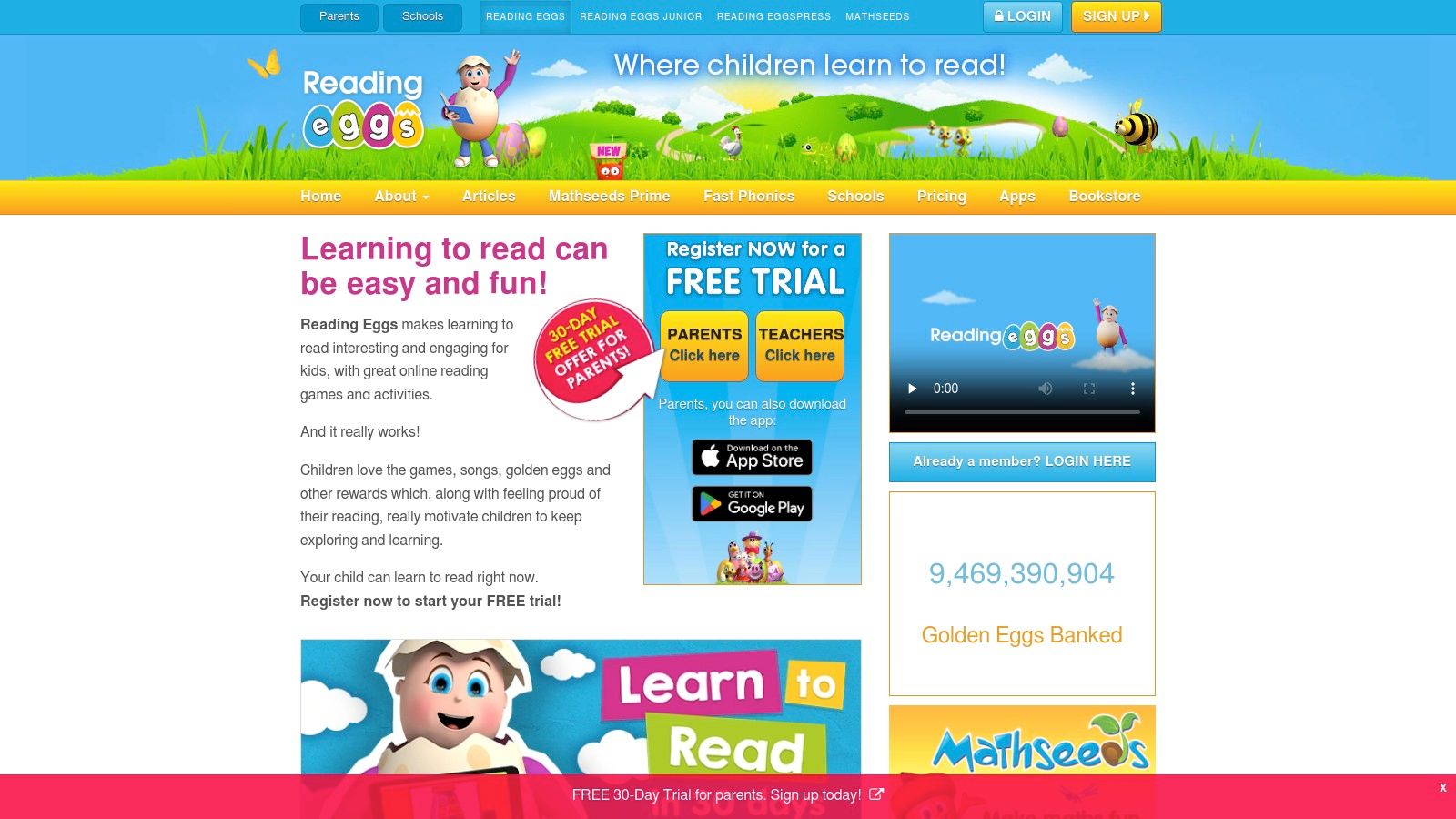
The programme is cleverly designed to grow with your child. It starts with Reading Eggs for ages 3–7, moves into Reading Eggspress for ages 7–13 to build comprehension and fluency, and even includes a Mathseeds section. With over 4,000 e-books, printable worksheets, and certificates to earn along the way, it provides a huge library of resources to keep young readers motivated and challenged as their skills grow.
Key Features & How to Use It
What sets Reading Eggs apart is its structured, step-by-step learning path combined with a vast digital library. After a quick placement test, the programme customises the starting point for each child, ensuring the content is perfectly matched to their current skill level. A single family subscription can support up to four children, each with their own tailored profile.
- How to Play: Available via desktop web browsers and dedicated apps for iOS and Android. It is a subscription-based service but often offers a 30-day free trial.
- The Experience: The interface is vibrant and engaging, with game-like rewards such as golden eggs and pets that motivate children to complete lessons. It's easy for young users to find their way around.
- Teacher & Parent Tools: The parent dashboard provides detailed progress reports, showing which sounds and books a child has completed, their quiz scores, and their estimated reading age. This makes it easy to see exactly where your child is excelling or might need extra support.
The platform also has a UK-specific shop where you can purchase physical book packs that are mapped directly to the in-game levels, providing a brilliant way to blend screen-based learning with traditional reading.
Why It Deserves Its Spot
Reading Eggs earns its place for its sheer amount of content and its scientifically-backed, structured approach. It effectively turns a complete reading curriculum into a series of fun and rewarding kids' reading games.
| Pros | Cons |
|---|---|
| Comprehensive, structured learning path from ages 3–13. | The subscription auto-renews and needs to be cancelled. |
| Excellent progress tracking for parents. | The reward system may feel too young for older, confident readers. |
| Family plan allows for up to four children. | The amount of content can feel overwhelming at first. |
| Large e-library with over 4,000 titles. |
For parents looking for a complete, all-in-one programme that guides a child from their very first letters to becoming a fluent reader, Reading Eggs is a powerful and well-regarded choice.
Website: https://readingeggs.co.uk
4. Night Zookeeper
Night Zookeeper is a wonderfully inventive UK-based platform that blends creative writing, drawing, and reading into a single, cohesive adventure. It's one of the more unique kids' reading games because it inspires children to become creators within its magical world. Children are invited to invent their own magical animals, write stories about them, and complete challenges that build vocabulary, grammar, and reading comprehension skills.

The platform is less about learning phonics by rote and more about sparking a genuine love for storytelling. It uses games, interactive lessons, and personalised feedback from a team of real-life tutors to guide children through the writing process. This makes it particularly good for children aged 6 to 12 who are ready to move beyond basic reading and into the richer world of creative expression. The focus is on building confidence and making literacy a fun, imaginative adventure.
Key Features & How to Use It
What makes Night Zookeeper special is how it brings everything together. Reading and writing aren't treated as separate subjects but as two sides of the same coin. Children read stories from other users and complete comprehension puzzles, then use that inspiration to create their own work. The platform also offers a robust parent dashboard to monitor progress and assign specific activities.
- How to Play: Available via any web browser on desktop or laptop. It also offers dedicated apps for iOS and Android tablets. Access requires a subscription, but a free 7-day trial is available.
- The Experience: The interface is vibrant and engaging, encouraging exploration. The mix of drawing, writing, and gaming keeps the experience fresh and exciting for children.
- Teacher & Parent Tools: The parent dashboard is a standout feature, providing detailed reports on your child's progress, including words typed, skills practised, and tutor feedback. Family plans allow for multiple child profiles under one account.
The creative loop is highly motivating. A child might be asked to read about a new part of the Night Zoo, then invent a creature that could live there and write a report about it. This context-driven learning helps children understand the real power of good literacy skills.
Why It Deserves Its Spot
Night Zookeeper earns its place for its powerful and unique focus on creative writing as a gateway to better reading. It’s an ideal next step for children who have mastered the basics and are ready to apply their skills in an imaginative and meaningful way.
| Pros | Cons |
|---|---|
| Excellent for developing creative writing and vocabulary. | Full access requires an ongoing subscription. |
| Personalised feedback from real tutors. | Less focus on foundational phonics for very early readers. |
| Strong parent/teacher dashboard for progress tracking. | The creative focus might not suit all learning styles. |
| Appeals to a slightly older age range (6-12). |
Ultimately, Night Zookeeper is a fantastic choice for families looking to nurture a budding author. It transforms literacy practice from a chore into a creative passion project, making it one of the most inspiring kids' reading games available.
Website: https://www.nightzookeeper.com
5. Twinkl Go! (KS2 English Games)
Twinkl Go! is the interactive digital hub from Twinkl, one of the UK's most widely used educational resource publishers. While the full platform is vast, its collection of kids' reading games for Key Stage 2 (KS2) is specifically designed to support the UK National Curriculum, making it an invaluable tool for teachers and home-educating parents. It moves away from pure entertainment towards curriculum-aligned practice, turning essential English skills into engaging, self-marking activities.
The platform offers a wealth of ready-to-play resources that cover spelling, punctuation, and grammar (SPaG), as well as reading comprehension. From tense-sorting challenges to activities focused on common misspellings, the games provide targeted practice that feels more interactive than a worksheet. These resources are perfect for reinforcing classroom learning, setting as homework, or using in small-group literacy lessons. The activities are designed for children aged 7-11, aligning perfectly with KS2 year groups.
Key Features & How to Use It
What makes Twinkl Go! so helpful is its direct link to school objectives. Teachers can find games that precisely match what they are covering in class that week. The self-marking feature gives instant feedback to the child and quick assessment data for the educator, saving lots of time.
- How to Play: Accessible on any web browser. Full access to the extensive library requires a paid Twinkl subscription, though some free games are often available to try.
- The Experience: The interface is clean, functional, and clearly structured for educational use. While it feels more like a school tool than a commercial game, it's easy for children to navigate.
- Teacher & Parent Tools: A subscription allows you to create 'lessons' by grouping resources and sharing them with children via a simple PIN code. Progress can be monitored, making it excellent for tracking understanding and finding any gaps in learning.
The platform is most effective when used to practise specific skills. For instance, after a lesson on using apostrophes, a teacher can assign a targeted Twinkl Go! game to give children immediate, interactive practice. This helps to solidify learning and develop better reading comprehension skills by strengthening foundational grammar.
Why It Deserves Its Spot
Twinkl Go! earns its place for being an incredibly practical and curriculum-focused tool. For educators and parents who need reliable, no-prep kids' reading games that directly support schoolwork, it is an unmatched resource.
| Pros | Cons |
|---|---|
| Strong alignment with the UK National Curriculum. | Full access requires a paid Twinkl subscription. |
| Large library of consistent, classroom-ready resources. | The design can feel more 'educational' than playful. |
| Self-marking activities provide instant feedback. | May not be as story-driven as other game platforms. |
| Excellent for targeted homework or revision tasks. |
Ultimately, for focused, assessment-friendly practice that saves teachers time and gives children meaningful reinforcement of their literacy skills, Twinkl Go! is an essential part of the educational toolkit.
Website: https://www.twinkl.co.uk/resources/twinkl-go/ks2-twinkl-go/english-ks2-twinkl-go
6. BBC Bitesize – Primary English
As a cornerstone of UK education, BBC Bitesize is a trusted, curriculum-aligned resource used by millions of families and teachers. Its Primary English section offers a vast library of kids' reading games, interactive guides, and video content that directly supports what children learn in the classroom. Unlike dedicated game platforms, Bitesize integrates learning into a broader educational framework, covering everything from phonics and punctuation to grammar and reading for meaning. It’s an incredibly reliable, no-cost tool for reinforcing core literacy skills.
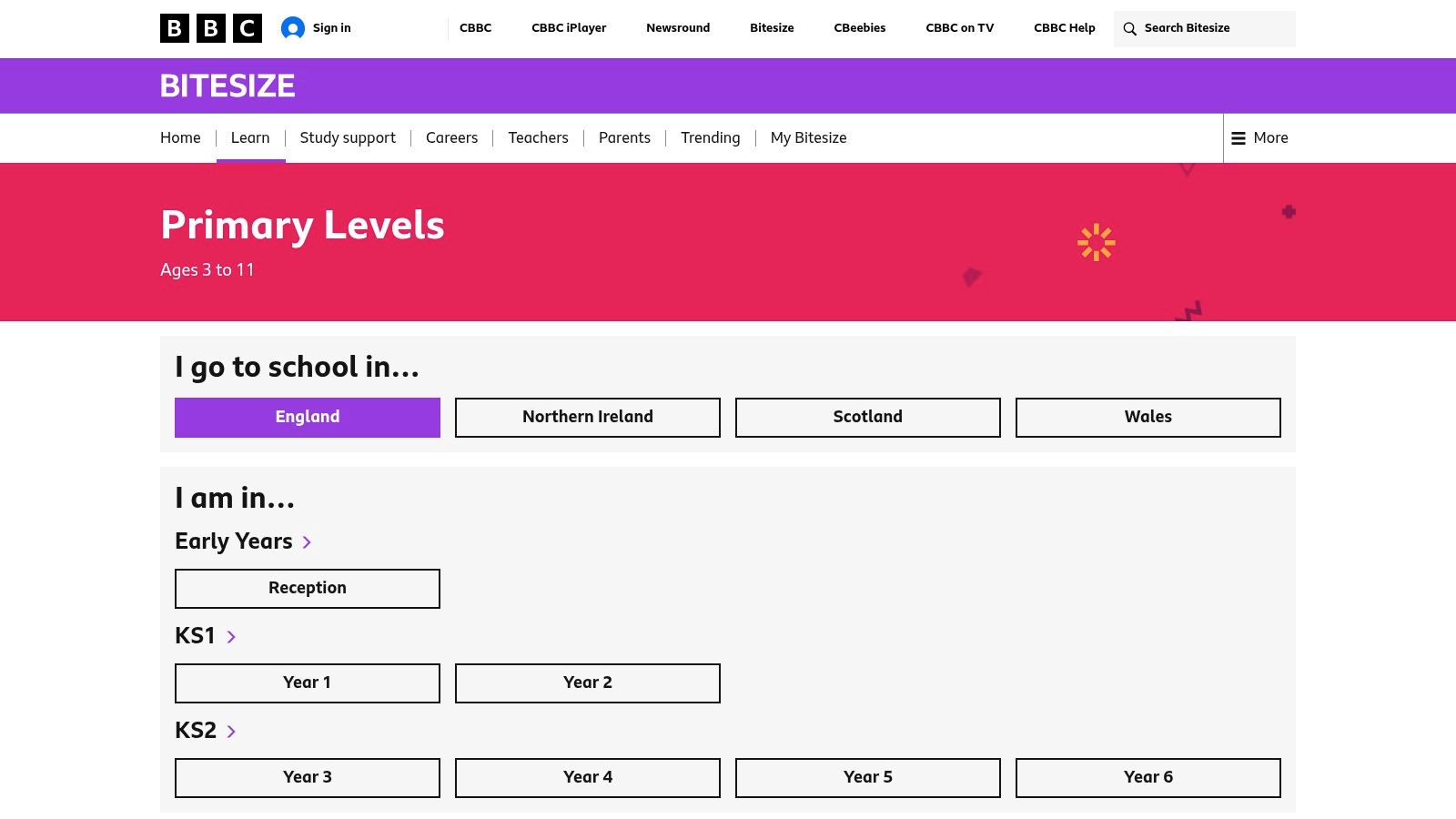
The content is organised by school year and topic, making it easy for parents and teachers to find relevant activities. For example, a Year 2 student can jump into games about suffixes or practise their comprehension with an interactive text, while a Year 6 student can tackle more complex topics like figurative language. The platform’s strength lies in its clear, simple explanations paired with short, focused activities that reinforce learning without overwhelming a child.
Key Features & How to Use It
What makes BBC Bitesize a go-to resource is its unwavering commitment to providing high-quality, ad-free educational content at no cost. It is designed as a public service, ensuring every child has access to safe, curriculum-focused learning materials.
- How to Play: Completely free on all modern web browsers. No sign-up is needed for most activities, allowing for immediate access.
- The Experience: The website is cleanly laid out and easy to navigate. Content is organised logically by country (England, Scotland, Wales, NI) and year group, so you can quickly find what you need.
- Curriculum-Aligned Content: All games, videos, and guides are developed in line with the UK National Curriculum, making it a perfect tool for homework support or revision.
The most effective way to use Bitesize is to target specific skills. If a child is struggling with subordinate clauses, for instance, you can find a dedicated page with a video explainer, a short guide, and an interactive quiz. This targeted approach makes it an excellent support for school learning.
Why It Deserves Its Spot
BBC Bitesize earns its place for being an authoritative, comprehensive, and completely free educational resource. It helps make tricky literacy concepts easier to understand and provides a safe online space for children to practise and build their skills.
| Pros | Cons |
|---|---|
| 100% free with no ads or subscriptions. | Less gamified progression and rewards than other platforms. |
| Directly aligns with the UK school curriculum. | Some older games are retired during site updates. |
| Covers a broad range of English topics. | Not designed as a standalone learn-to-read programme. |
| A highly credible and trusted source for parents. |
Ultimately, for families and teachers in the UK looking for reliable, curriculum-matched kids' reading games and activities, BBC Bitesize is an indispensable and unbeatable resource.
Website: https://www.bbc.co.uk/bitesize/primary
7. Amazon UK – Reading/Literacy Games
While digital games are fantastic, sometimes the best learning happens with a physical board or card game spread out on the floor. For parents and teachers in the UK, Amazon’s marketplace is a brilliant one-stop shop for a huge range of physical kids' reading games. It’s the go-to platform for stocking up on well-loved educational brands like Orchard Toys, Smart Kids, and Junior Learning, all in one place.

The real strength of using Amazon is the sheer convenience and choice. You can easily compare prices, read detailed customer reviews with photos, and ask questions to find the perfect game for your child's age and reading level. With Prime delivery, it’s possible to have a new literacy game ready for a rainy weekend in just a day. This platform simplifies the process of finding and buying high-quality, hands-on reading resources for home or the classroom.
Key Features & How to Use It
The biggest advantage of Amazon is its familiar layout and powerful search tools, which allow you to filter by age, brand, and price. For best results, use specific search terms like "phonics board games for 6 year olds" or "Orchard Toys sight words" to narrow down the huge selection and find the most relevant educational tools.
- How to Buy: Available on all web browsers and via dedicated iOS and Android mobile apps. A free Amazon account is required to make purchases.
- The Experience: The layout is familiar to most online shoppers. Customer reviews and ratings are crucial for checking a game's quality and educational value before you buy.
- Teacher & Parent Tools: Features like "Wish Lists" are perfect for teachers to share classroom needs with parents, while "Subscribe & Save" can sometimes offer discounts on things like learning supplies.
While our focus here is on physical games, it's also worth noting how other Amazon initiatives, like Amazon's AI-powered Kindle Translate, are making books in different languages more accessible. This focus on accessibility crosses different parts of its ecosystem, from physical to digital products.
Why It Deserves Its Spot
Amazon UK earns its place for making physical kids' reading games more accessible than ever. It empowers parents and educators to make informed choices by using community reviews and competitive pricing, making it easy to bring hands-on, screen-free learning into any environment.
| Pros | Cons |
|---|---|
| Huge selection from top UK educational brands. | Product quality can vary; checking reviews is essential. |
| Competitive prices, frequent deals, and fast Prime delivery. | Search results can be overwhelming without specific terms. |
| Customer reviews and photos provide valuable insights. | Some items may be sold by third-party sellers with different return policies. |
| Easy to compare products and bundle classroom supplies. |
Ultimately, for buying physical board and card games that support literacy, Amazon UK’s convenience, selection, and user-review system make it an indispensable resource for anyone looking to add some screen-free fun to their learning.
Website: https://www.amazon.co.uk
Top 7 Kids' Reading Games Comparison
| Item | Getting Started 🚀 | Resources Needed ⚡ | Likely Outcome ⭐📊 | Best For… 💡 | Key Advantage ⭐ |
|---|---|---|---|---|---|
| Space Ranger Fred | 🚀 Medium–High — multi‑platform rollout; books & activities ready | ⚡ Low for books/printables; High to access full animation/game/platform when released | ⭐⭐⭐ — boosts STEM curiosity and classroom engagement; scalable brand impact 📊 | 💡 Classroom STEM starters, parent–child reading, creative learning | ⭐ Engaging STEM storytelling; teacher resources; active community |
| Teach Your Monster | 🚀 Low — web game ready; mobile apps paid | ⚡ Very low on desktop (free); moderate if purchasing mobile apps | ⭐⭐⭐ — effective phonics practice and sustained engagement 📊 | 💡 Home or school phonics practice; early readers (6–10) | ⭐ Free ad‑free desktop; teacher tools; curriculum‑aligned design |
| Reading Eggs (UK) | 🚀 Medium — structured lesson sequencing | ⚡ Moderate — subscription, apps, multi‑child profiles | ⭐⭐⭐ — measurable reading progress; large e‑library impact 📊 | 💡 Structured at‑home programmes; multi‑child family subscriptions; school use | ⭐ Clear UK pricing & trials; printable packs; strong family management |
| Night Zookeeper | 🚀 Medium — integrated creative writing platform | ⚡ Moderate — subscription, parent dashboard | ⭐⭐⭐ — improves comprehension, creative writing & vocab 📊 | 💡 Older primary creative literacy, classroom writing programmes | ⭐ Story‑driven worldbuilding; transparent pricing; classroom roots |
| Twinkl Go! (KS2 English Games) | 🚀 Low–Medium — ready‑to‑use curriculum resources | ⚡ Moderate — Twinkl subscription; teacher setup time | ⭐⭐ — quick assessment and SPaG practice; consistent classroom results 📊 | 💡 Fast formative assessment, homework, KS2 lesson stations | ⭐ Strong curriculum match; self‑marking activities; large resource library |
| BBC Bitesize – Primary English | 🚀 Low — web portal with modular content | ⚡ Very low — free, browser access | ⭐⭐ — reliable curriculum practice; less gamified progression 📊 | 💡 No‑cost home practice, teacher reference, quick topic refreshers | ⭐ Free, trusted, curriculum‑aligned content |
| Amazon UK – Reading/Literacy Games | 🚀 Low — marketplace purchase process; product selection varies | ⚡ Moderate — purchase cost, storage, teacher prep time | ⭐⭐ — tactile, social play benefits; quality varies by product 📊 | 💡 Classroom manipulatives, gifts, stocking the library | ⭐ Wide selection; reviews & fast delivery; easy bulk purchasing |
Your Next Reading Mission Awaits!
And that’s a wrap on our cosmic tour of the best kids' reading games! We hope you've discovered some brilliant new tools and ideas to turn reading practice into an adventure your young explorer will truly love. From the creative worlds of Night Zookeeper to the curriculum-aligned fun of BBC Bitesize, the galaxy of resources is vast and exciting.
The key mission, as we've seen, is to make reading an active, joyful experience. Whether you’re setting up a board game from Amazon UK, diving into digital phonics with Teach Your Monster, or trying a themed activity from Twinkl Go!, you are showing your child that reading is not just a skill they must learn, but a superpower that unlocks incredible new worlds. Every word they figure out and every story you share is another step towards building a confident, curious, and lifelong reader.
Choosing Your Co-Pilot: Picking the Right Game
With so many options, how do you choose the perfect reading game for your child? The best way is to start with what they need and what they love.
- For the Reluctant Reader: Look for games that put fun and story first. Tools like Teach Your Monster or a narrative-driven adventure can feel more like play than practice, building positive feelings about reading.
- For the Competitive Child: Games with points, leaderboards, or timed challenges, like some on Twinkl Go!, can be fantastic motivation. An offline game with a clear winner can also channel their competitive spirit in a positive way.
- For the Creative Storyteller: Platforms like Night Zookeeper are ideal, as they let children become creators, not just consumers. This empowers them to use their literacy skills to build worlds and characters of their own.
- For Targeted Skill Practice: If you know your child needs a bit of help with a specific area like phonics or spelling, resources like Reading Eggs or the targeted activities on BBC Bitesize are invaluable. They offer a structured path that aligns with school learning.
Remember: The best "kids' reading games" are the ones your child actually wants to play. Ask them what looks fun, explore a few free trials together, and see what genuinely sparks their curiosity. A game that clicks with their personality is far more likely to become a beloved learning companion.
Mission Debrief: Key Takeaways for Your Adventure
As you embark on your next reading mission, keep these core ideas in mind:
- Balance Screen Time and Hands-on Time: Digital games are brilliant, but don't forget the power of hands-on, tactile play. Use ideas from our list to create your own offline activities, like a 'Space Ranger Fred Alien Word Scramble' using letter tiles on the fridge.
- Focus on Connection, Not Correction: The goal is to build confidence. When playing, celebrate effort and progress. Gently guide rather than constantly correct, creating a safe space where it’s okay to make mistakes.
- Make it a Habit: Just 10-15 minutes of a fun reading game each day can have a much bigger impact than one long, stressful session a week. Try to weave it into your daily rhythm, perhaps after school or before bedtime.
- Be a Reading Role Model: Let your children see you enjoying reading. Talk about the books you love, share funny passages, and make visiting the library an exciting outing. Your enthusiasm is the most powerful tool of all.
The journey to becoming a confident reader is a marathon, not a sprint. Filling it with joy, play, and encouragement is the surest way to the finish line. Every game you play is a stepping stone, building not just literacy but a lasting love of stories.
Ready to continue the adventure beyond the screen? The world of Space Ranger Fred is built on the power of storytelling to spark curiosity and make learning feel like an epic mission. Our books and free activities blend thrilling space stories with real STEM concepts, providing a perfect, playful next step for any young reader who loves games and exploration. Why not blast off into a new story today?