
Ready for an adventure, space explorer? Three… two… one… blast off!
Finding great educational space games for kids can feel like trying to spot a new planet in a galaxy full of stars. You’re looking for something that’s not just fun but also secretly teaches them about science, engineering, and the wonders of the cosmos. How do you find a game that sparks real curiosity without it feeling like homework?
Well, consider this your mission control! We’ve journeyed through the digital universe to bring you the best space-themed games that make learning an exciting adventure. From building rockets to exploring distant planets, these games will launch your child’s imagination into the stratosphere.
Let’s start the countdown and discover some amazing STEM learning games!
1. Minecraft Education – International Space Station
Do you have a Minecraft fan at home? The International Space Station world in Minecraft Education is a brilliant way to turn their love of building into a real STEM learning adventure. Created with NASA, this game lets players explore a blocky, but incredibly detailed, model of the ISS. They'll even get to complete tasks that real astronauts do!
Alt text: A clear diagram showing the eight phases of the Moon, perfect for explaining lunar cycles to kids.
It’s not just about floating around in zero gravity (though that’s pretty cool!). The game comes with over 10 lesson plans covering everything from growing plants in space to how the station gets its power. It’s a fantastic tool for teachers and parents to make big topics feel fun and hands-on.
Try This at Home!
After exploring the ISS in Minecraft, try building your own space station out of recycled materials like cardboard boxes, tubes, and foil. What rooms would you need? A science lab? A sleeping area? A garden? This is a great way to think like an engineer and a fun storytelling activity.
The Good and the Not-So-Good
| Pros ✅ | Cons ❌ |
|---|---|
| Great for Teachers: Comes with ready-to-use lesson plans and guides. | Needs a Special Licence: You'll need a Microsoft 365 for Education account. |
| Teamwork Makes the Dream Work: Kids can work together on missions. | Best with a Guide: It’s most educational when a grown-up helps lead the lessons. |
| Fun and Familiar: Uses a game kids already love to teach complex science. |
To make it even more real, why not learn about the actual space station before you play? You can explore more about the International Space Station in our blog post.
Available on: Windows, macOS, iPad, and Chromebooks through a Microsoft 365 for Education subscription. Visit the Minecraft Education website for details.
2. Mars Horizon
Ever wondered what it takes to run a space agency? Mars Horizon puts your older space fan in the director’s chair! With help from the European Space Agency (ESA), this strategy game lets you guide humanity from its first rocket launch all the way to landing astronauts on Mars.
This game isn't just about launching rockets. Players manage budgets, research new technology, and make big decisions about mission risks. It’s a brilliant way to understand the planning, patience, and problem-solving that goes into real space exploration. It’s one of the best STEM learning games for budding mission directors.
The Good and the Not-So-Good
Pros: Teaches real-world skills like strategic thinking and managing resources. It’s super authentic, thanks to input from real space agencies.
Cons: It has a lot of text to read, which might be tricky for younger kids. It’s a slower, turn-based game, so it might not suit those who love fast action.
Before you play, you could learn more about the challenges of reaching Mars to give the game’s goals some real-world weight.
Available on: PC, Nintendo Switch, PlayStation 4, and Xbox One. Visit the official Mars Horizon website for more information.
3. Kerbal Space Program (KSP)
For older kids ready to get serious about rocket science, Kerbal Space Program is the ultimate space sandbox. Players design, build, and fly their own rockets and spacecraft. The game’s amazing physics means you have to solve real problems to get into orbit, just like a real aerospace engineer!

The best part? It’s hilarious! The cute (and clumsy) Kerbal astronauts make it fun, even when your rocket design doesn’t quite work out. This cycle of building, testing, failing, and trying again is exactly how real science and engineering works. It's a fantastic educational space game that teaches persistence.
The Good and the Not-So-Good
Pros: Teaches real rocket science and orbital physics in a hands-on way. It’s a great lesson in not giving up! There's a huge online community with lots of tutorials.
Cons: It can be tricky to get started and might need some grown-up help. It’s very open, so players need to set their own goals.
To get a head start, why not explore more about how rockets work with your child?
Available on: PC and consoles (PlayStation & Xbox). Visit the Kerbal Space Program website for more details.
4. ESA Kids – Paxi Games
Looking for something free, fun, and educational? The European Space Agency’s (ESA) Kids website is a treasure trove of simple, browser-based games. Guided by a friendly alien named Paxi, children can learn about the Solar System, how to build a spacecraft, and even the problem of space junk.

These mini-games are perfect for younger learners. There’s nothing to download, and they are completely safe and ad-free. It’s a wonderful, gentle introduction to space science, offering a cool European perspective on space exploration.
The Good and the Not-So-Good
Pros: It’s 100% free, safe, and easy to access. The games are short, perfect for young children’s attention spans.
Cons: The gameplay is very simple, so older kids might find it too basic. They’re best used as a fun starter for a bigger conversation or activity.
Use these games to spark curiosity! After playing, challenge your child to find three new facts about their favourite planet. Visit the Paxi Games website to start playing.
5. NASA Space Place – Mars Rover Game
For another trusted and totally free resource, head over to NASA's Space Place. Their 'Explore Mars: A Mars Rover Game' lets kids drive a rover on Mars, using its tools to gather data, just like a real mission scientist! It’s a brilliant way to bring robotic exploration to life.
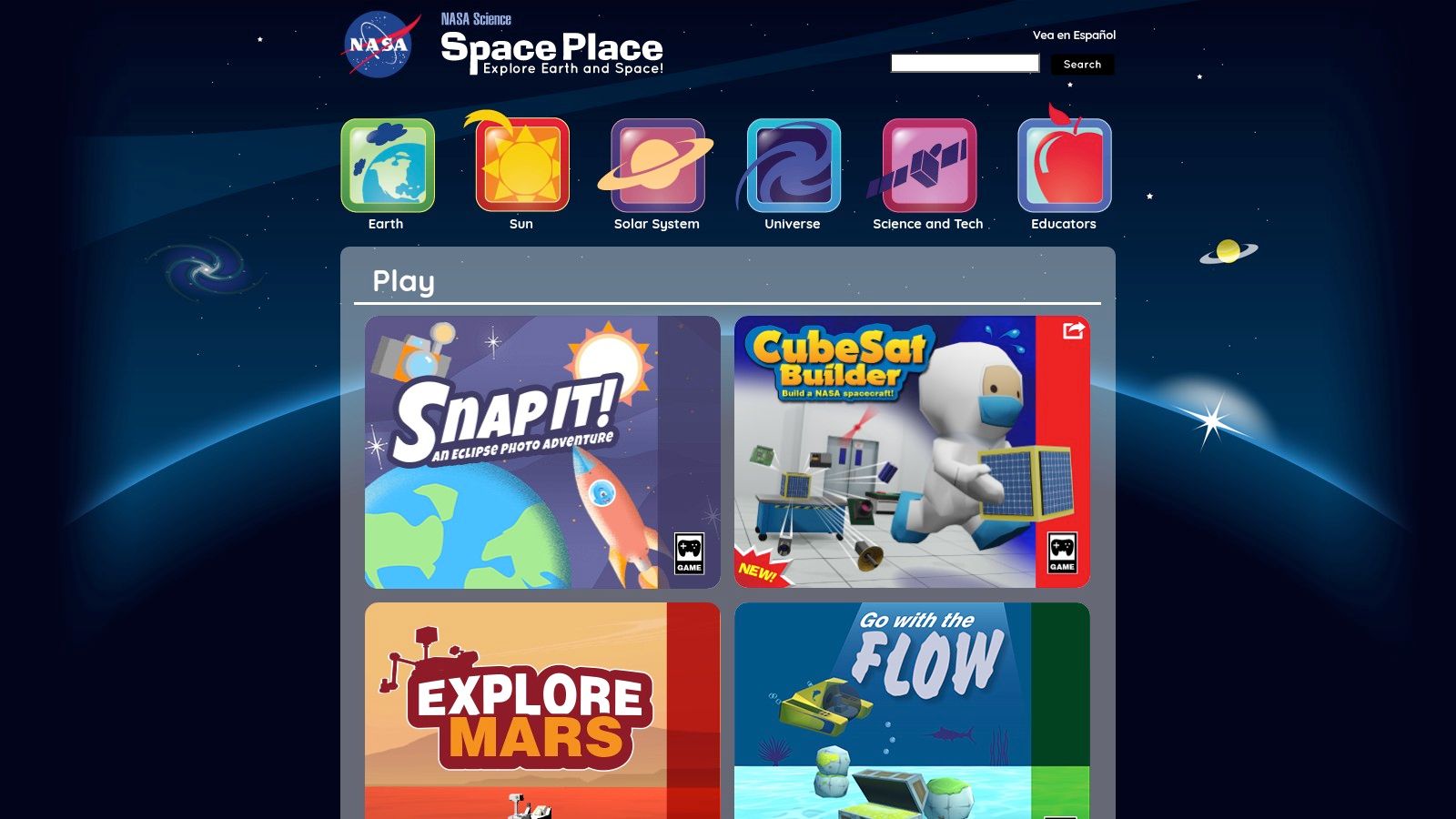
The site is full of bite-sized interactive games that make complex topics easy to understand. Because it’s from NASA, you know the science is spot-on. This makes it a fantastic educational space game for kids at home or in the classroom.
Fun Fact!
Did you know that real Mars rovers like Perseverance have to be programmed with instructions hours or even days in advance? It’s not like driving a remote-control car, because the signals take so long to travel from Earth to Mars!
Before playing, you could learn some amazing Mars rover facts to make the game even more exciting.
Available on: Any device with a web browser. Access the collection for free on the NASA Space Place website.
6. Space by Tinybop
For the youngest space explorers, Space by Tinybop is a beautiful digital toy. It’s less of a game with rules and more of a sandbox where kids can play with the science of our solar system. You can smash meteors into planets to make craters or tilt a planet to see how the seasons change.

It’s perfect for little hands on a tablet and encourages them to ask “what if?” It comes with a handbook for parents, full of facts and questions to start conversations, helping you guide their learning journey.
Try This with the App!
After your child plays with the planets in the app, ask them to draw their own alien that could live on one of them. What would an alien from a very hot planet look like? What about one from a gas giant like Jupiter? This blends science with creative storytelling.
Before they begin, you could also learn about our solar system's planets to give them a little background knowledge.
Available on: iOS and Android. Visit the Tinybop website for more information.
7. Space Agency
Want to be a rocket scientist on the go? Space Agency is a fun mobile game that lets you design rockets, launch satellites, and build your own space station. It simplifies tricky ideas like rocket staging into a casual and super-satisfying game.
It’s great for short bursts of play, making it perfect for learning on the move. The gameplay loop of building, launching, and completing missions is very rewarding and teaches the basics of mission planning.
The Good and the Not-So-Good
Pros: It’s affordable and works on most phones and tablets. The mission structure feels satisfying and teaches strategy.
Cons: The physics is simplified, so it's not as realistic as KSP. There are some optional in-app purchases for extra content.
Use the game to talk about the importance of careful mission planning. Why do rockets have different stages? What happens if you run out of fuel?
Available on: iOS and Android. Visit the Nooleus website for download links.
Choosing Your Mission: Which Game Is Right for You?
Alt text: Two children working together to build a homemade toy rocket, illustrating a fun educational space activity for kids.
So, how do you choose the best game for your young explorer?
- For Little Builders (Ages 8–12): Minecraft Education is perfect for creative kids who love to work together.
- For Big Thinkers (Ages 10+): Mars Horizon and Kerbal Space Program are brilliant for older kids who love strategy and a good challenge.
- For Young Beginners (Ages 6–9): ESA Kids, NASA Space Place, and Space by Tinybop are wonderful starting points for curious young minds.
The best educational space games for kids are the ones that feel like an adventure. They tap into a child’s natural curiosity and make learning feel like play. By matching a game to their interests, you can turn screen time into an amazing opportunity for discovery. Many of these STEM learning games are built on a learner-centered strategy, putting your child's curiosity first.
Frequently Asked Questions (FAQs)
1. What are the best free educational space games for kids?
NASA Space Place and ESA Kids (Paxi Games) are both fantastic, completely free resources offered by official space agencies. They are safe, ad-free, and packed with fun, science-based activities.
2. At what age can kids start playing these space games?
Kids as young as six can enjoy the simpler, more visual games like Space by Tinybop and the activities on the ESA Kids website. Older kids (10+) will get more out of complex simulators like Kerbal Space Program.
3. How can I make these games more educational?
Talk with your child while they play! Ask them questions like, “What do you think will happen next?” or “Why did your rocket do that?” You can also connect the games to our “Try This” activities, real-world events like a rocket launch, or a visit to a science museum.
4. Are these games better than just watching space documentaries?
They offer a different kind of learning! While documentaries are brilliant for facts, interactive games help children understand concepts like physics and engineering by doing. They can experiment, fail, and try again, which is a powerful way to learn.
Continue Your Space Adventure!
Did you enjoy this mission? The adventure doesn’t have to stop here! The Space Ranger Fred universe is all about blending stories with playful, hands-on science.
- Discover Our Books: Check out our latest Space Ranger Fred book for an exciting story that brings space science to life.
- Get Free Goodies: Head over to our Free Activities page for fun, printable activities to do at home.
- Join Our Crew: Sign up for our newsletter for more freebies and updates, and follow our journey on social media!
What are your family’s favourite educational space games? Share your top picks in the comments below – we’d love to hear them