
Remember those days when learning felt like a proper grand adventure, where every new fact was a discovery? It’s the same spark of curiosity that sends characters like Space Ranger Fred on cosmic quests, whether it’s figuring out the physics of a knot in Space Ranger Fred and the Shoelace Adventure or the mechanics of a gadget in Space Ranger Fred and the Umbrella Rescue. Today, we can bring that same sense of wonder to our children’s screens.
But with so many options, finding high-quality, genuinely free games can feel like navigating an asteroid field. Fear not, fellow explorers! We’ve charted a course through the cosmos of the internet to bring you the definitive list of the best online learning games for free.
This guide is designed to help parents and teachers cut through the noise. We've analysed the top platforms, highlighting their strengths in subjects like STEM and literacy, and noted their limitations. Each entry includes practical details on age suitability, platform compatibility, and direct links with screenshots, so you can quickly find the perfect fit for your young learner. These aren't just time-fillers; they're powerful tools designed to build crucial skills while your child has an absolute blast. Let's start the mission.
1. BBC Bitesize
BBC Bitesize is a trusted, curriculum-aligned hub of online learning games for free, offering a vast and well-organised collection for children in the UK. The platform provides a completely safe, ad-free environment where no sign-up is required, allowing children to jump straight into learning. It’s an ideal resource for parents and teachers seeking reliable, high-quality educational content that directly supports schoolwork.
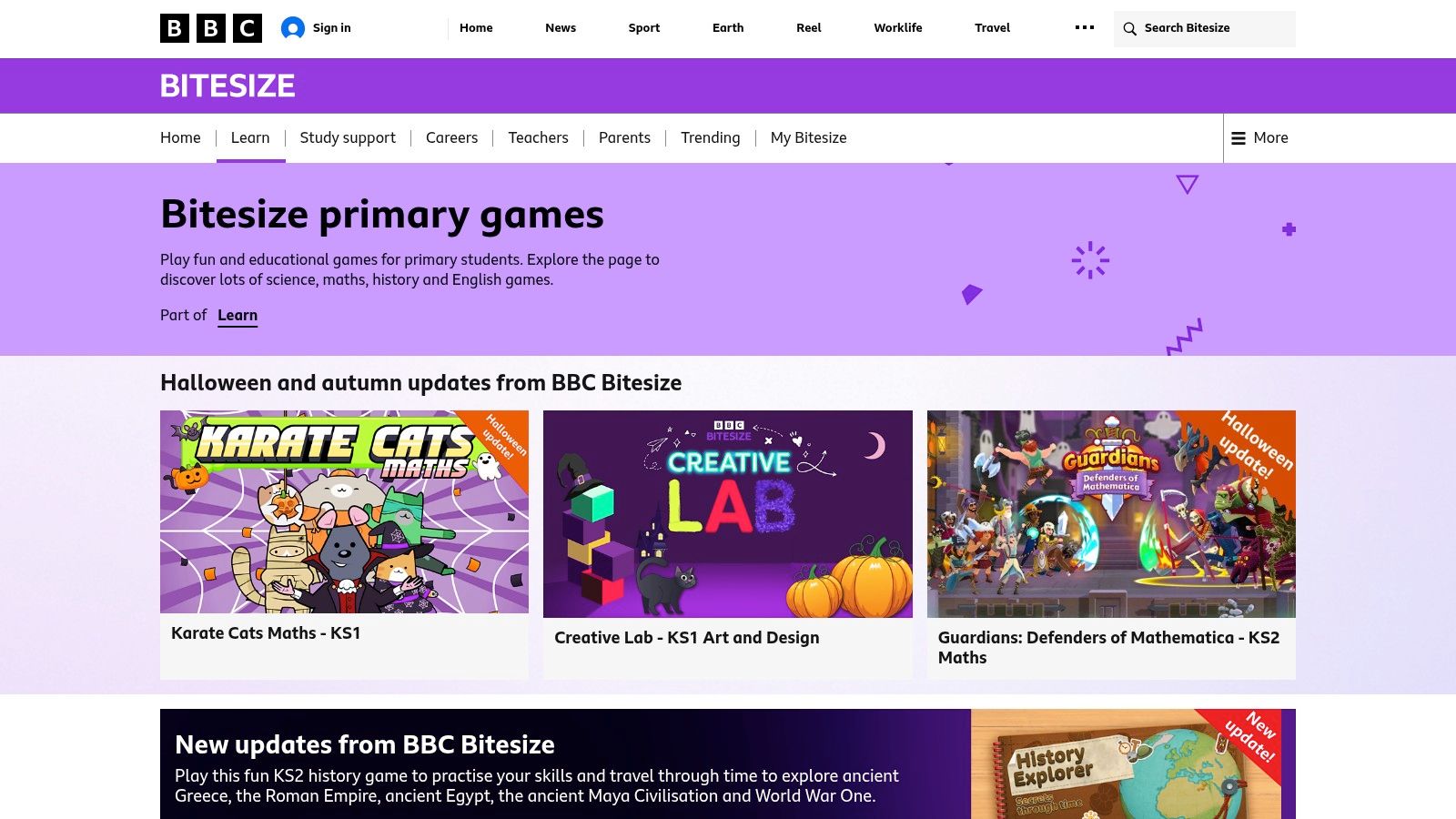
The games cover an impressive range of subjects, from core skills in maths and English to creative topics in science and history. For instance, a child fascinated by the physics in Space Ranger Fred and the Shoelace Adventure can explore related concepts in the science section. Its direct alignment with the UK curriculum (EYFS, KS1-KS3) makes it a standout choice for homework support and topic revision. The browser-based access means no downloads are needed, making it highly accessible. If you're looking for more options like this, you can find additional online educational games for kids on other resource lists.
Practical Considerations
- Best For: Reinforcing UK curriculum topics in a fun, interactive way.
- Limitations: While fantastic for independent play, it lacks a centralised progress tracking system for parents or teachers to monitor a child's performance over time.
- Tip: Use the clear age and subject filters to quickly find relevant games for specific homework tasks.
Website: https://www.bbc.co.uk/bitesize/primary-games
2. CBeebies Games
CBeebies Games is a vibrant and safe digital playground offering hundreds of online learning games for free, specifically designed for preschool children aged 2 to 6. Backed by the BBC, it provides a completely ad-free and secure environment where no sign-up is needed. The platform cleverly uses familiar CBeebies characters, like the Numberblocks and Hey Duggee, to gently introduce foundational concepts in literacy, numeracy, and creative thinking.
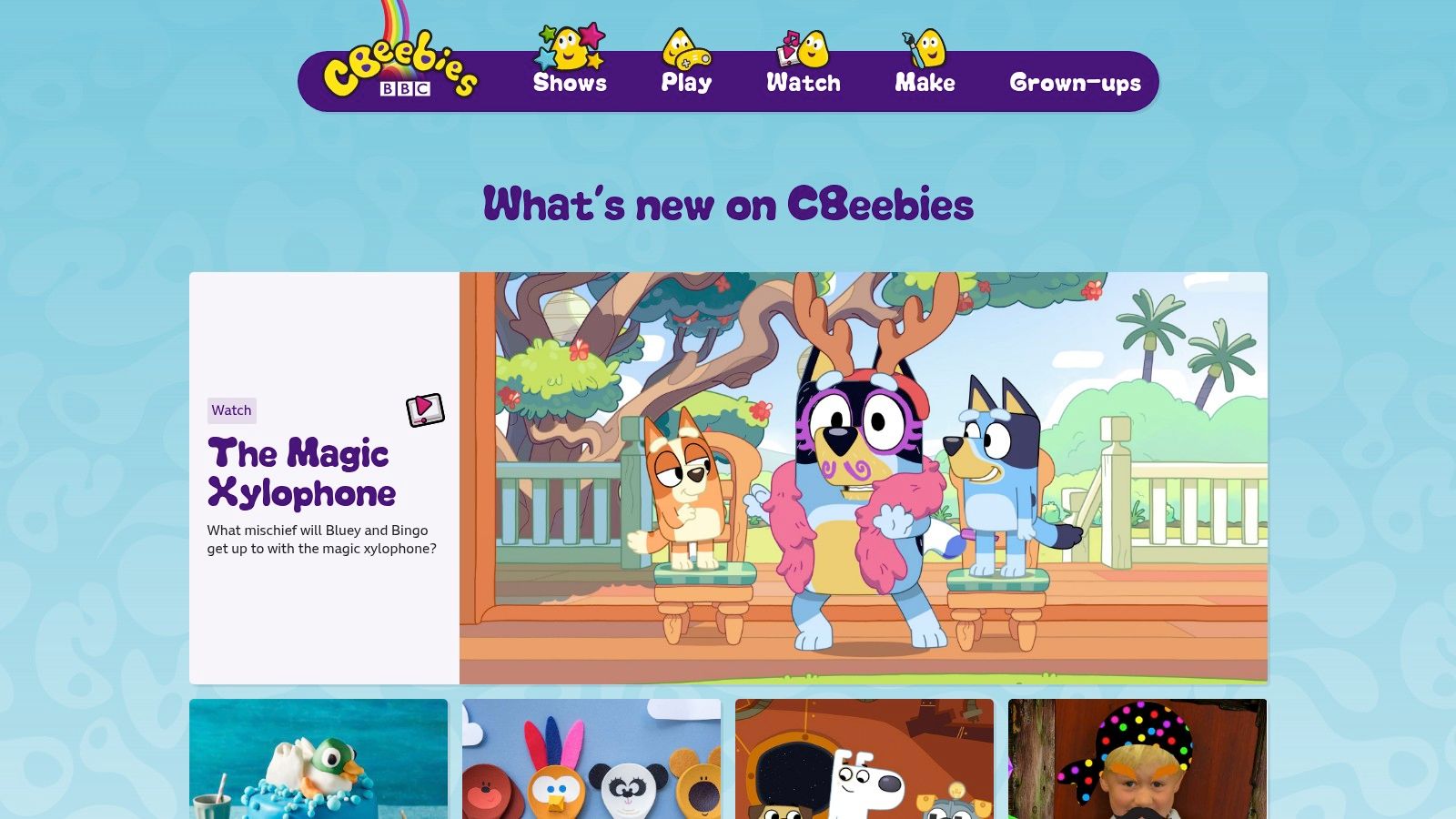
The games are touch-friendly and perfectly optimised for tablets and large phones, making them accessible for little hands. Children can explore early phonics, counting, shapes, and patterns in an intuitive way. While CBeebies focuses on the Early Years Foundation Stage (EYFS), its engaging activities can spark an early interest in STEM themes, much like the problem-solving found in stories such as Space Ranger Fred and the Tick Tock Tale, where understanding how things work is key to the adventure. It stands out as an excellent first step into digital learning, building confidence before children move on to more complex platforms.
Practical Considerations
- Best For: Introducing toddlers and preschoolers to foundational learning concepts through character-led play.
- Limitations: The content is specifically for the under-6 age group and lacks the academic depth required for primary school children. It also has no system for tracking progress across different games.
- Tip: Use the character filters to find games featuring your child's favourites, increasing their engagement and willingness to learn.
Website: https://www.bbc.co.uk/cbeebies/games
3. Topmarks
Topmarks is a long-standing and highly regarded source of online learning games for free, functioning as a curated portal of interactive educational resources. Primarily aimed at primary school children in the UK, it offers a vast library of games, particularly strong in maths and English, all accessible without needing an account or login. This makes it an exceptionally quick and easy-to-use platform for parents and teachers looking for curriculum-relevant activities.
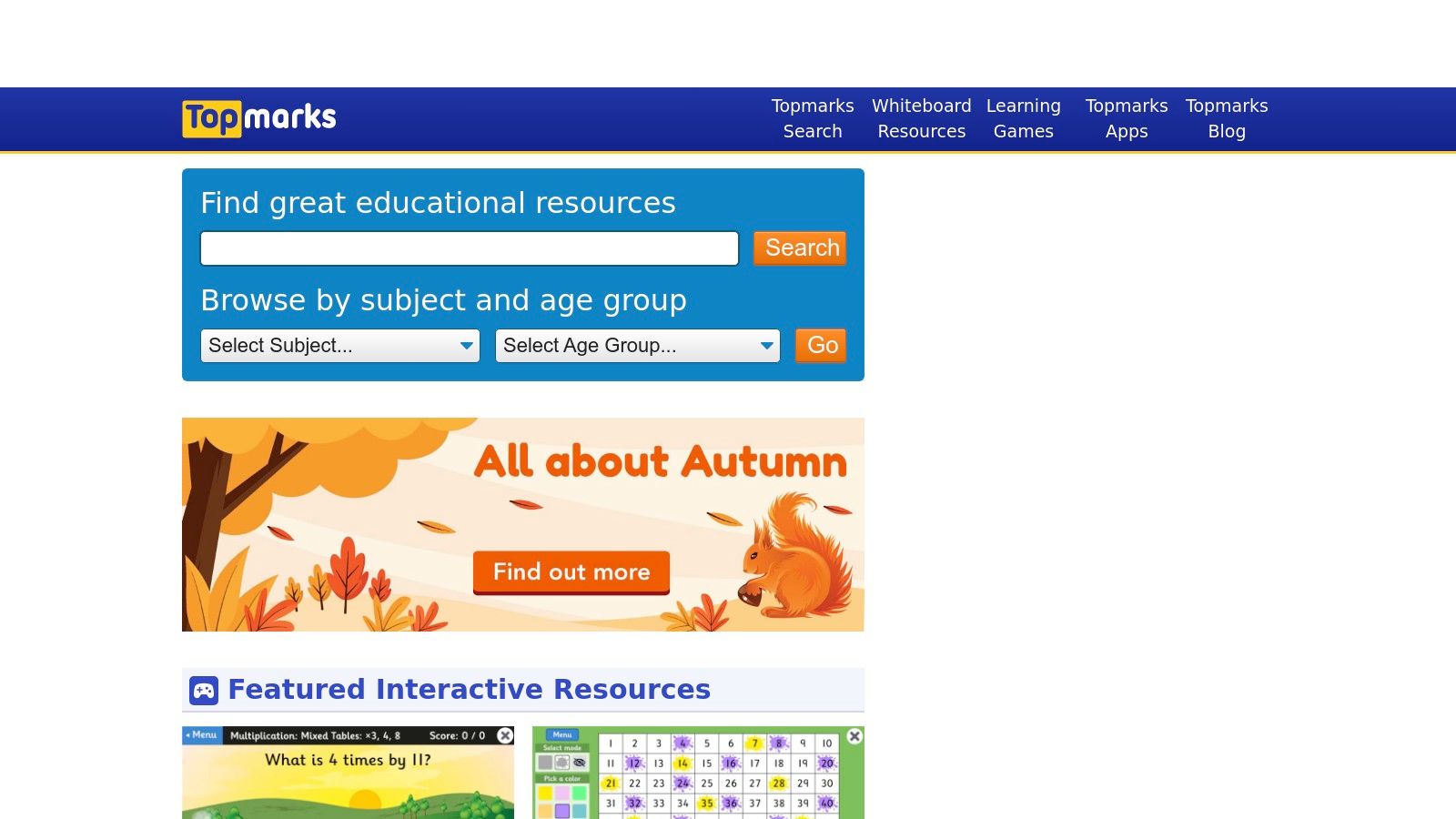
The platform organises its content by age group (3-14) and subject, aligning with the UK curriculum's Key Stages. Games like the popular Hit the Button help sharpen mental maths skills, reinforcing concepts that a child might encounter in STEM-focused stories like Space Ranger Fred and the Tick Tock Tale. Because Topmarks links to games from various developers, the user experience can differ between activities, but its browser-based HTML5 format ensures wide accessibility on tablets and computers.
Practical Considerations
- Best For: Quick, no-fuss access to maths and English games for classroom warm-ups or homework practice.
- Limitations: The quality and interface of games can be inconsistent as it hosts content from many different creators. It also lacks any form of progress tracking for parents.
- Tip: Use the search bar for specific topics (e.g., "fractions," "phonics") to quickly find targeted games instead of browsing categories.
Website: https://www.topmarks.co.uk/
4. ICT Games
ICT Games offers a focused collection of online learning games for free, created by a UK primary school teacher for EYFS and KS1 children. The platform’s strength lies in its pedagogical soundness, with simple, fast-loading games that directly target specific skills in English and maths. Its no-nonsense, classroom-tested design makes it a reliable tool for parents and teachers seeking to support foundational learning without unnecessary distractions or complex sign-up processes.
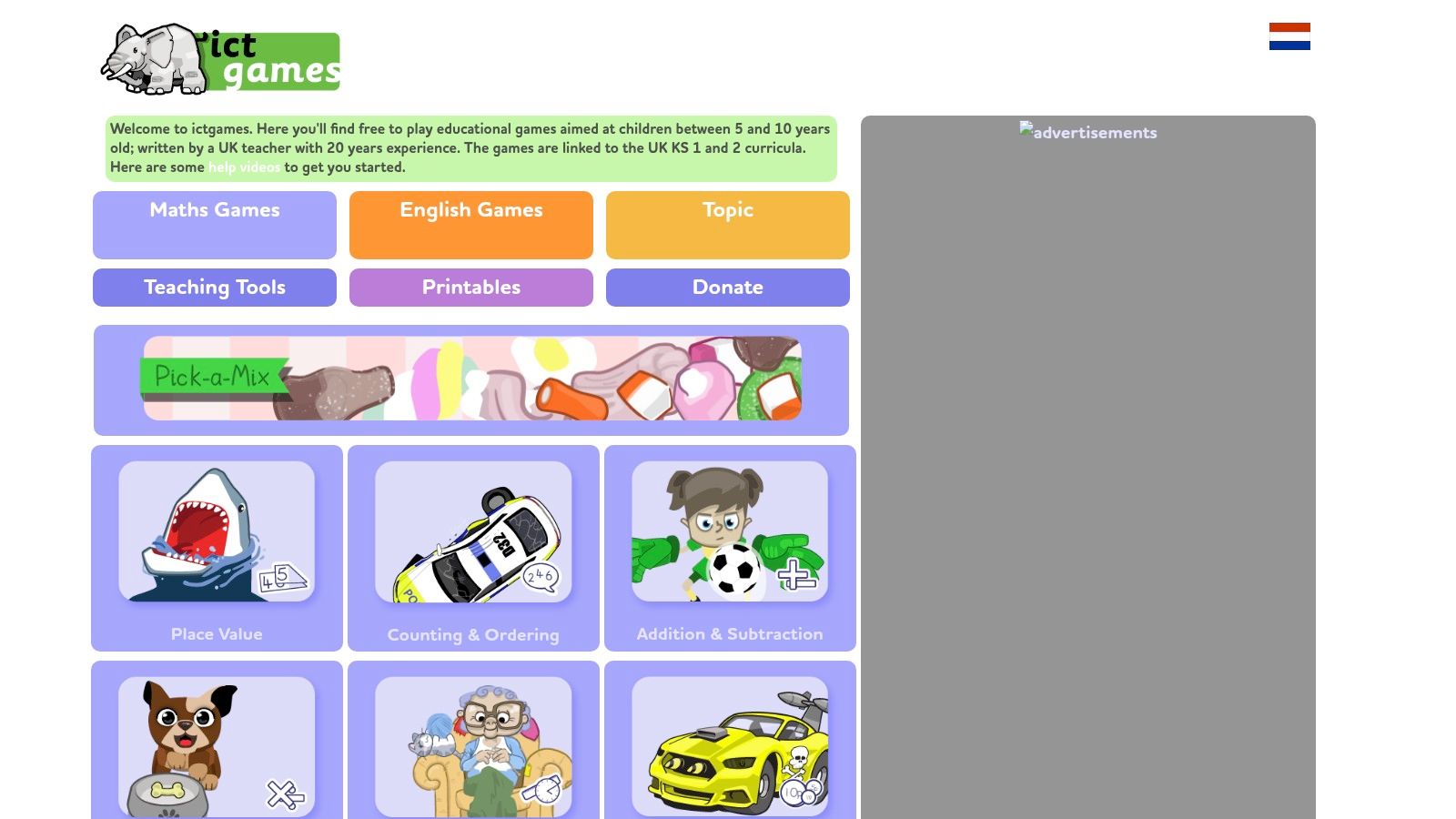
The games are thoughtfully organised by curriculum area, making it easy to find activities for phonics, counting, or telling the time. Children learning about the concept of time in a story like Space Ranger Fred and the Tick Tock Tale can practise their skills with the interactive clock games available on the site. Each game is designed to be intuitive and accessible on tablets and desktops, using HTML5 for broad compatibility. While the platform is free, it is supported by ads and optional donations.
Practical Considerations
- Best For: Targeted practice of core KS1 maths and English concepts.
- Limitations: The website contains ads, which can be distracting, and its catalogue of games is smaller and less visually polished than larger platforms.
- Tip: Use the clear menu links to find games that align precisely with the learning objectives your child is currently covering in school.
Website: https://ictgames.com/
5. Twinkl Go!
Twinkl Go! provides a rich library of interactive online learning games for free, designed by teachers to align directly with the UK curriculum. It is the digital arm of the well-known Twinkl educational resources platform, offering a structured, browser-based experience with no downloads required. While many resources require a subscription, a selection of high-quality games is always available for free, making it a great way to access curriculum-focused content.
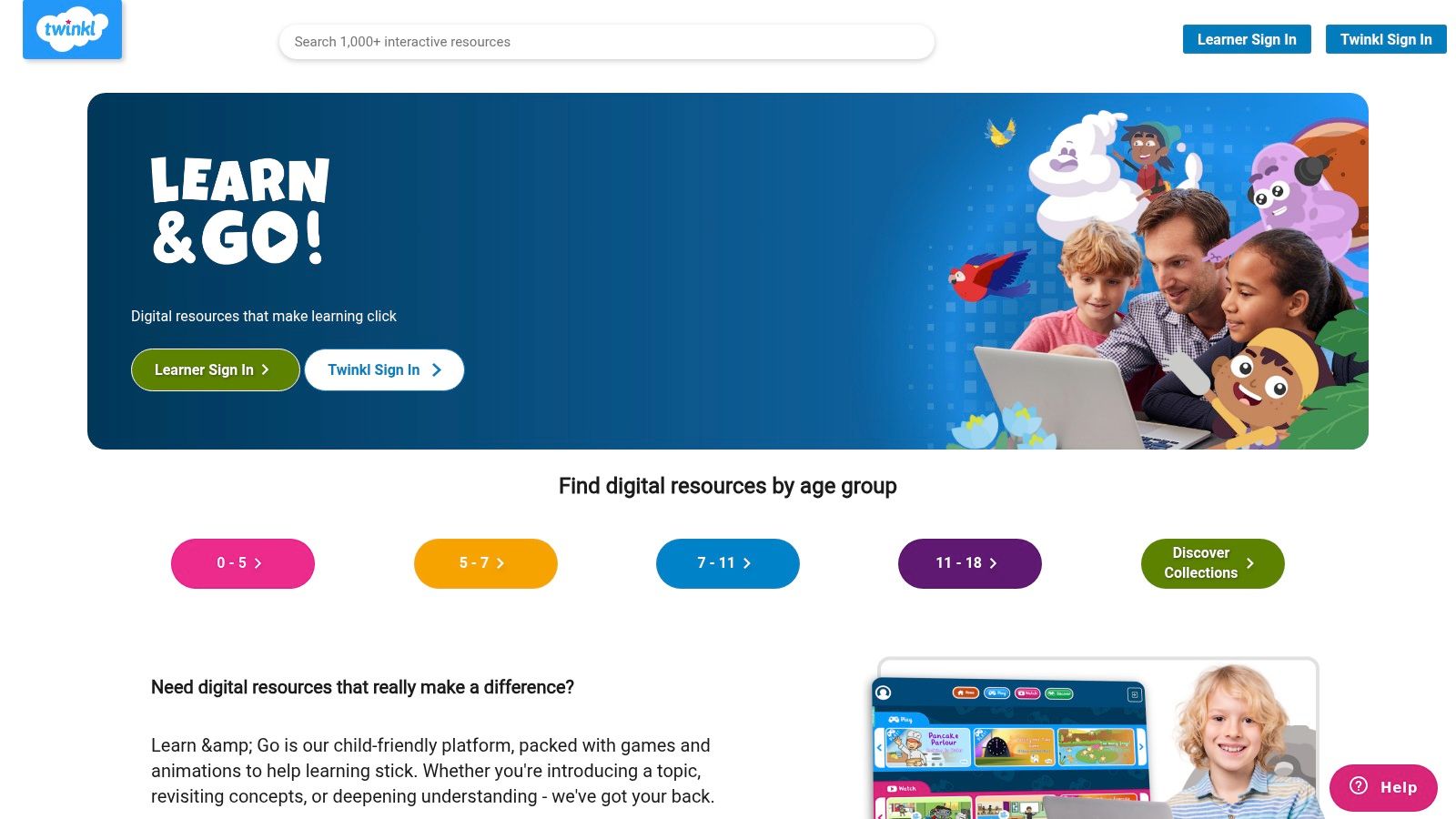
The platform’s strength lies in its direct link to school topics, covering everything from phonics and grammar to complex maths concepts. For a child exploring forces after reading about them in a fun story like Space Ranger Fred and the Umbrella Rescue, Twinkl Go! offers corresponding physics games that reinforce those ideas in a practical way. The integration with Twinkl's wider ecosystem means parents and teachers can easily find complementary worksheets and activities, creating a cohesive learning experience.
Practical Considerations
- Best For: Parents and teachers looking for games that directly support specific UK curriculum (KS1-KS2) learning objectives.
- Limitations: A significant portion of the best content is locked behind a paid membership, and navigating the vast website to find the free gems can sometimes be complex.
- Tip: Use the 'Free Resources' filter to quickly locate all the games and activities accessible without a subscription.
Website: https://www.twinkl.com/resources/twinkl-go
6. Prodigy
Prodigy transforms maths practice into a captivating fantasy role-playing game, making it a powerful hub for online learning games for free. Designed for children aged 6 to 13, its core gameplay is completely free and aligns with curriculum standards, allowing kids to battle monsters by correctly answering maths questions. The adaptive algorithm adjusts the difficulty in real-time, ensuring each child is challenged but not overwhelmed, making it a favourite in classrooms and homes.
The platform cleverly integrates maths problems into its quest-based storyline, which keeps children highly engaged. As they explore the world of Prodigy, they are not just playing; they are actively honing their mathematical abilities. This approach is brilliant for building foundational skills, much like how Space Ranger Fred and the Tick Tock Tale introduces concepts of time and sequencing through an exciting adventure. While the core game is free, a premium membership is frequently advertised, which unlocks cosmetic items and extra in-game content but is not required for learning. If you want to dive deeper into educational strategies, you can learn more about how to develop problem-solving skills through similar game-based methods.
Practical Considerations
- Best For: Making curriculum-aligned maths practice incredibly engaging and motivating.
- Limitations: The persistent promotion of the optional paid membership can be distracting for some children and parents. An internet connection is required to play.
- Tip: Teachers can create free accounts to set specific assignments and monitor class progress, aligning the game directly with classroom topics.
Website: https://www.prodigygame.com/
7. PhET Interactive Simulations
PhET Interactive Simulations offers a unique take on online learning games for free, moving away from arcade-style play to focus on research-backed, interactive science and maths simulations. Developed by the University of Colorado Boulder, this platform is a powerful tool for visualising complex concepts. It provides a completely free, open-source environment with no sign-up or licensing fees, making high-quality STEM education accessible to everyone.
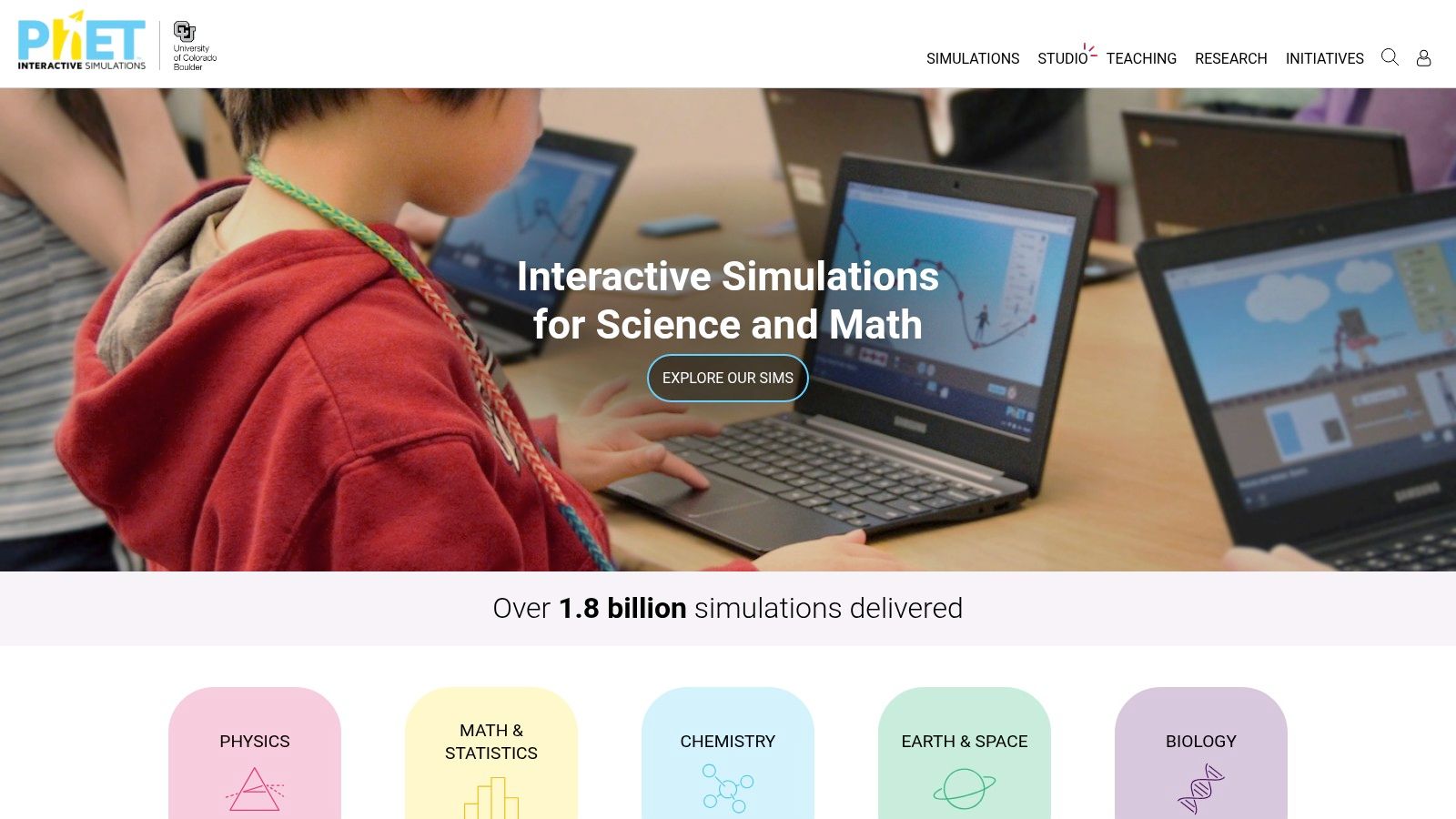
The simulations encourage inquiry-based learning, allowing children to conduct virtual experiments and explore cause-and-effect relationships in a safe setting. A child curious about the forces of motion after reading Space Ranger Fred and the Shoelace Adventure can manipulate variables in a physics simulation to see the principles in action. The platform's strength lies in its ability to make abstract scientific ideas tangible, from building circuits to understanding fractions, all within an intuitive, browser-based interface. Its multi-language support and accessibility features further broaden its reach.
Practical Considerations
- Best For: Older primary and secondary students who benefit from visualising and experimenting with STEM concepts.
- Limitations: It lacks traditional game mechanics like scoring or levels, which may not engage all children seeking competitive play.
- Tip: Use the simulations as a virtual lab to test hypotheses before or after a science lesson to solidify understanding.
Website: https://phet.colorado.edu/
8. ABCya
ABCya offers a massive library of online learning games for free, making it a popular choice in primary classrooms and homes across the UK. With hundreds of games organised by year group (from Pre-K to Year 6+), it covers core subjects like maths, literacy, and logical thinking. Its browser-based platform allows for instant play without any sign-ups, though the free version on desktops is supported by ads.
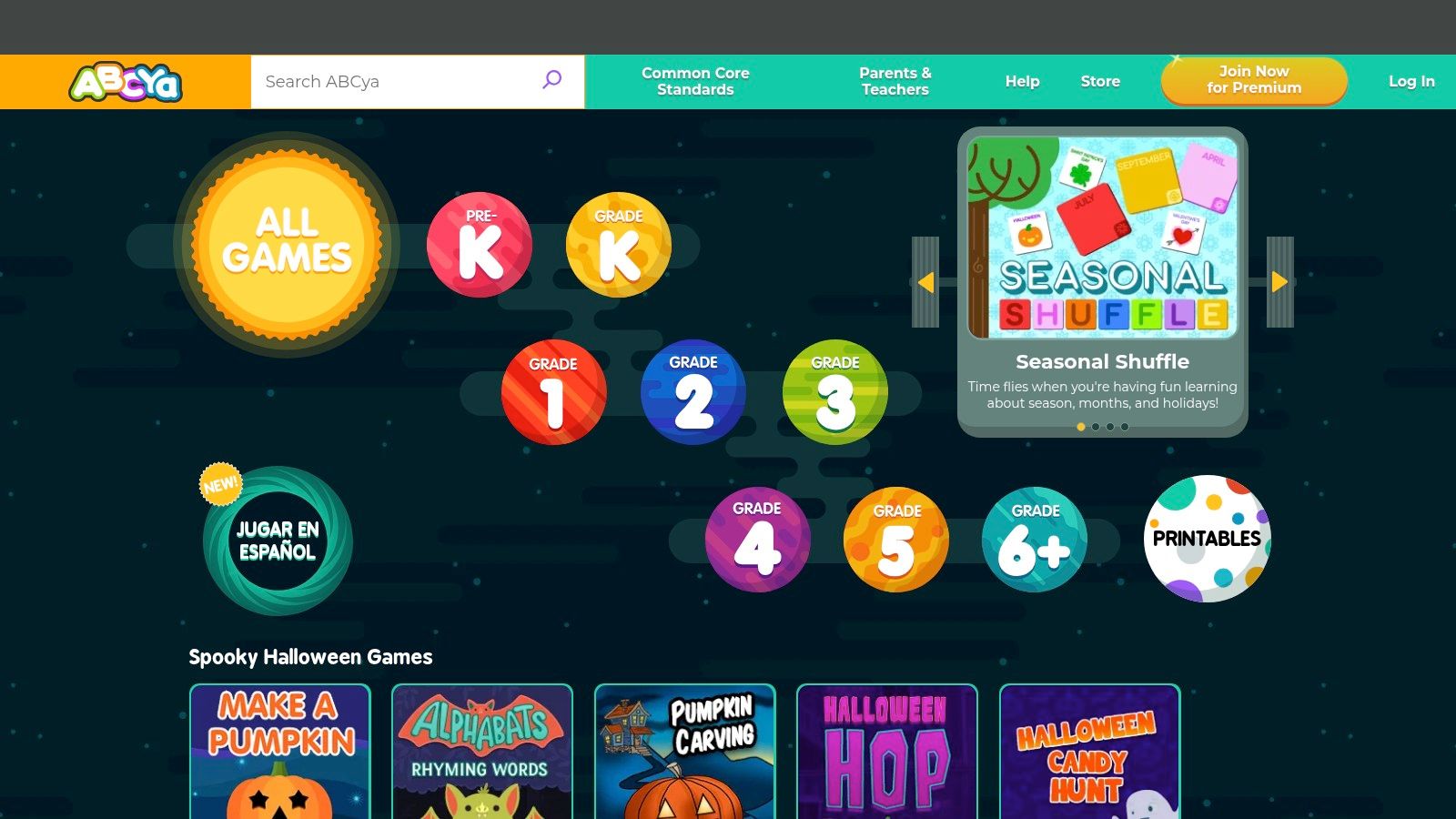
The platform’s strength lies in its sheer variety, providing games for nearly every primary school topic. A child who enjoys the time-telling puzzles in Space Ranger Fred and the Tick Tock Tale can find dozens of games to practise clock-reading skills. While many games are more for fun than direct curriculum alignment, they are excellent for reinforcing foundational skills in an engaging way. If you are seeking more platforms that blend play with learning, you can discover a great selection of fun learning games for kids in other curated lists.
Practical Considerations
- Best For: Quick, engaging practice of foundational maths and literacy skills.
- Limitations: The free desktop version contains ads, and many games focus more on general fun than specific curriculum objectives. Mobile access to free games is limited.
- Tip: Use the year group filters to narrow down the vast selection and find age-appropriate content for your child quickly.
Website: https://www.abcya.com/
9. Arcademics
Arcademics combines the thrill of arcade-style competition with academic practice, offering a huge library of multiplayer online learning games for free. The platform excels at transforming repetitive drills in maths, spelling, and typing into exciting races against other players from around the world. It requires no sign-up for basic play, allowing children to immediately jump into a game and start practising core skills in a highly motivating, competitive environment.
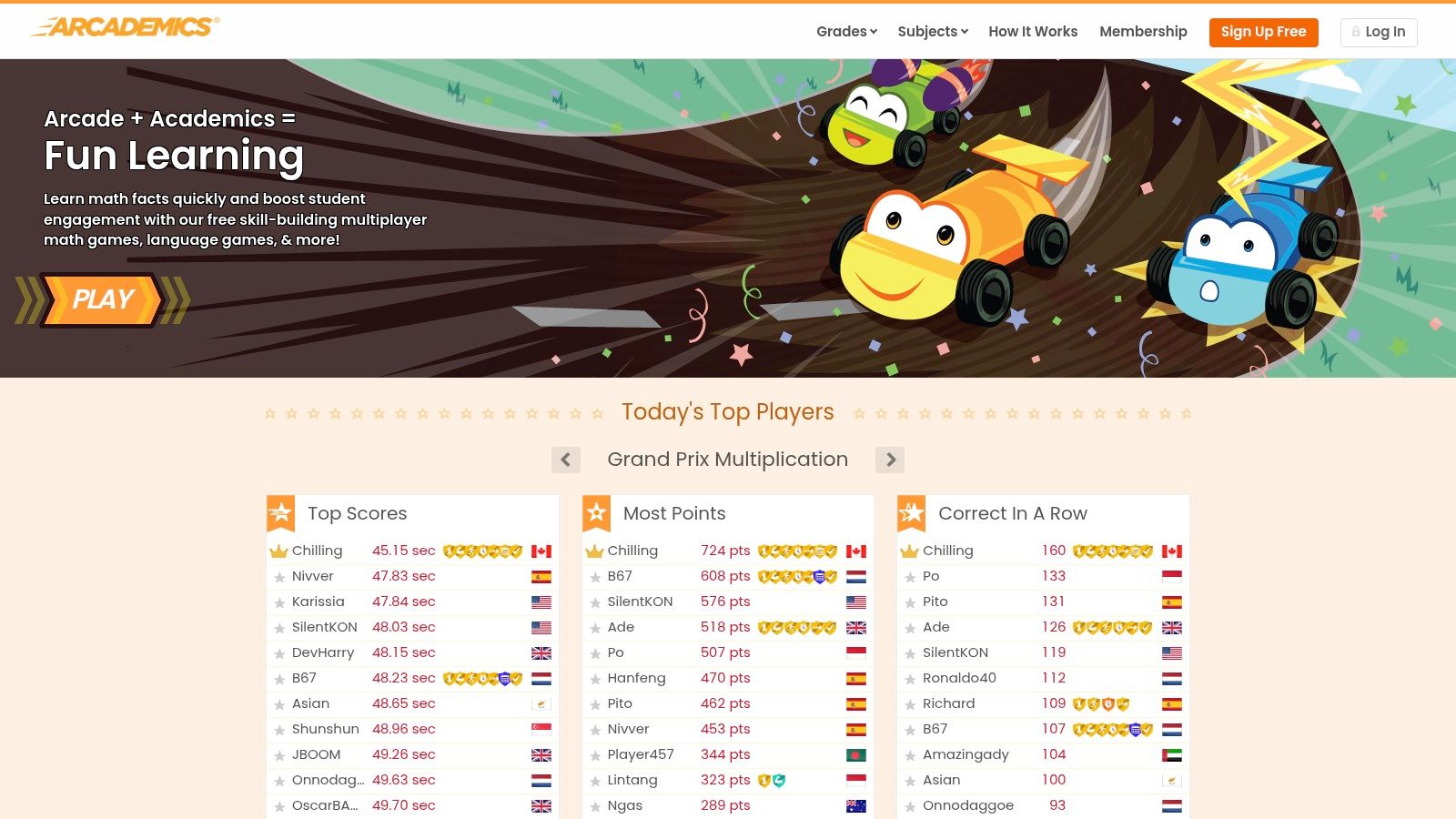
The platform’s strength lies in its fast-paced, social learning model. A child can practise multiplication in Grand Prix Multiplication or improve their typing speed in Nitro Type, all while competing live. This instant feedback and leaderboard-driven motivation can be incredibly effective for mastering foundational skills. The simple, browser-based games load quickly on both computers and tablets. Much like the problem-solving in Space Ranger Fred and the Shoelace Adventure, the games demand quick thinking and precision, making skill reinforcement feel urgent and fun rather than a chore.
Practical Considerations
- Best For: Children who thrive on competition and need to build fluency in maths, typing, or spelling.
- Limitations: The visuals are functional but may seem dated compared to more modern platforms. Advanced progress tracking and analytics require a paid subscription.
- Tip: Encourage your child to create a private game with friends or classmates for a more familiar and collaborative competitive experience.
Website: https://www.arcademics.com/
10. Coolmath Games
Coolmath Games has been a staple in classrooms for years, offering a massive collection of online learning games for free that cleverly disguise educational concepts as pure fun. The platform focuses on logic, strategy, and problem-solving, making it an excellent resource for developing critical thinking skills. It operates on a freemium model; access is free with ads, and no sign-up is required to start playing, ensuring immediate and easy access.
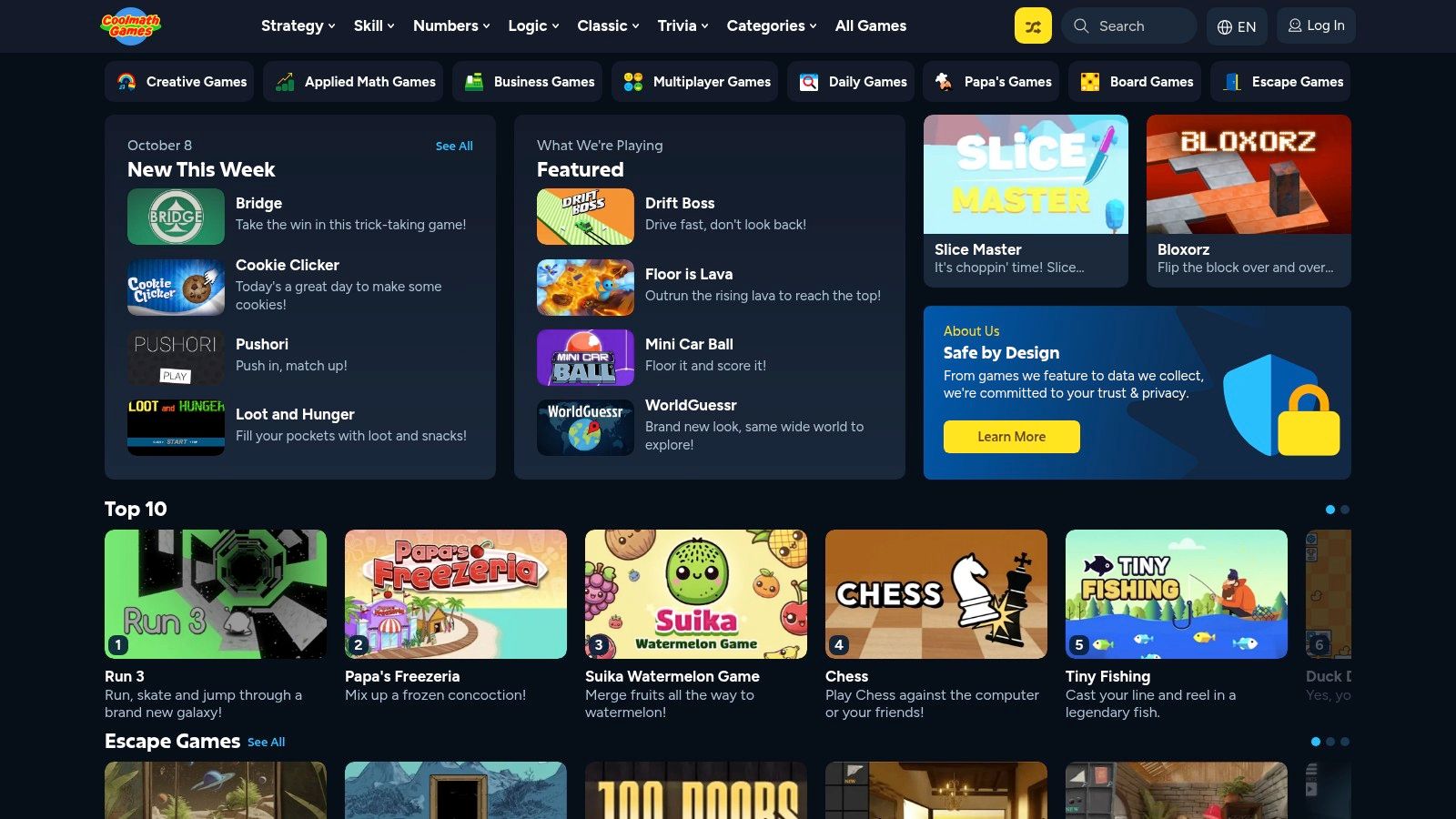
While not strictly curriculum-aligned, the games naturally reinforce vital STEM skills. For example, a child who enjoys the physics puzzles in Space Ranger Fred and the Tick Tock Tale will find hundreds of games on Coolmath that challenge their spatial reasoning and planning abilities in a similar way. The browser-based interface means there are no installations needed, and the site's commitment to only including non-violent, wholesome games provides peace of mind for parents and educators.
Practical Considerations
- Best For: Developing logic, spatial reasoning, and problem-solving skills through engaging gameplay.
- Limitations: The free version contains ads that can sometimes be distracting. Many games are more about general cognitive skills than direct curriculum topics.
- Tip: Use the genre categories like "Logic," "Strategy," and "Number" to find games that target specific thinking skills you want to encourage.
Website: https://www.coolmathgames.com/
11. Google Play Store – Educational Games
The Google Play Store serves as a massive repository for online learning games for free, offering an almost endless variety for Android users. It acts as a central hub where parents can filter specifically for educational games, sort by popularity, and read user reviews to find suitable apps. Its sheer scale means you can find games covering nearly every topic imaginable, from basic phonics to complex STEM concepts.
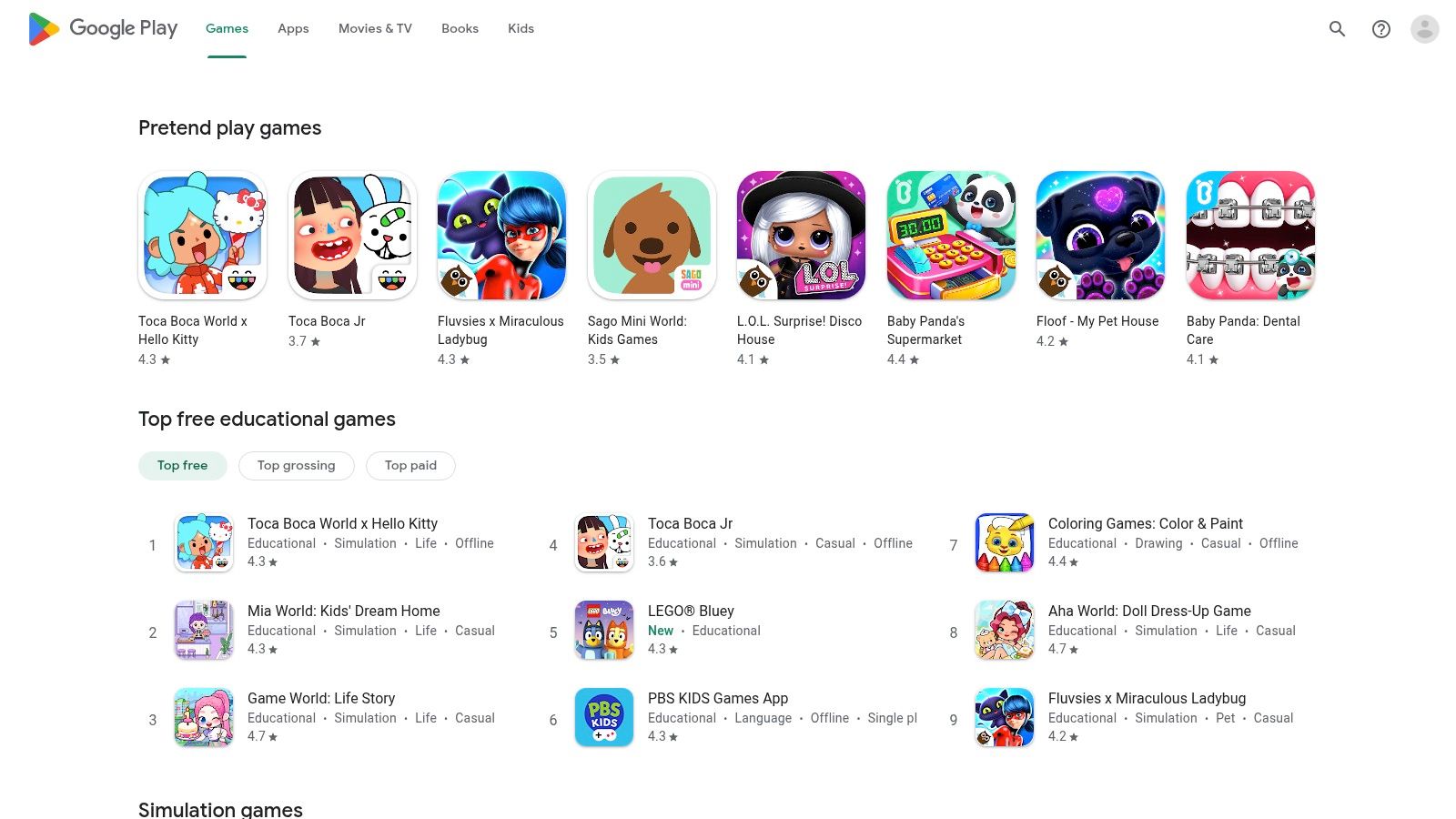
The platform’s strength is its unparalleled choice. You can find everything from coding puzzles to interactive science adventures that might explore the physics behind stories like Space Ranger Fred and the Tick Tock Tale. The inclusion of age ratings, parental controls, and user-generated feedback helps navigate the vast library. However, the quality can be inconsistent, and many "free" games rely heavily on ads or push for in-app purchases, which requires careful vetting by parents.
Practical Considerations
- Best For: Android users looking for the widest possible selection of educational apps on a single platform.
- Limitations: The quality varies dramatically between apps, and many free titles are supported by advertisements or have locked content requiring payment. It is only accessible on Android devices.
- Tip: Use the "Top Free" filter in the educational category and thoroughly read recent reviews to find high-quality, genuinely free games before downloading.
Website: https://play.google.com/store/apps/category/GAME_EDUCATIONAL?hl=en_GB
12. Apple App Store – Education/Kids Categories
The Apple App Store provides a well-curated destination for discovering online learning games for free through its dedicated Education and Kids categories. This platform is not a single website but a gateway to thousands of individual apps for iOS devices, with strong editorial oversight ensuring a high standard of quality and safety. Its robust parental controls and clear age ratings give parents peace of mind while their children explore new educational experiences.
The store excels in variety, offering apps that cover coding, languages, maths, and creative problem-solving. A child who enjoys the STEM puzzles in Space Ranger Fred and the Tick Tock Tale can easily find top-rated coding or physics games through the App Store’s curated lists. While access is limited to Apple devices, the intuitive interface and simple one-tap installation make it incredibly user-friendly for both parents and children. The UK-specific charts highlight apps that are popular and relevant locally.
Practical Considerations
- Best For: Discovering a vast, high-quality library of educational apps for iPhone and iPad users.
- Limitations: Many "free" apps contain in-app purchases or subscription prompts, which require careful supervision from parents. App availability can also vary by country.
- Tip: Use the "Top Free" charts within the Kids or Education categories to find popular, cost-free options, and always check the in-app purchase details before downloading.
Website: https://apps.apple.com/gb/
Free Online Learning Games Comparison: Top 12 Resources
| Platform | Core Features / Content | User Experience & Quality ★ | Value Proposition 💰 | Target Audience 👥 | Unique Selling Points ✨ |
|---|---|---|---|---|---|
| BBC Bitesize | UK curriculum KS1–KS3, wide subject range | Safe, ad-free, no login ★★★★ | Free, no sign-up 💰 | Ages 5–14 | Trusted UK-aligned content, easy access |
| CBeebies Games | Preschool games with BBC characters | Touch-friendly, ad-free ★★★★ | Free 💰 | Ages 2–6 | Familiar characters, early literacy focus |
| Topmarks | Curated games by age/subject, strong maths focus | Fast, no login ★★★★ | Free 💰 | Ages 3–14 | Teacher-friendly filtering |
| ICT Games | KS1–KS2 maths & English, teacher resources | Classroom-tested, some ads ★★★ | Free, optional donations 💰 | Ages 4–10 | Pedagogical support, help videos |
| Twinkl Go! | Curriculum games with broader Twinkl integration | Structured, paid after trial ★★★ | Paid membership, free trial 💰 | KS1–KS2 pupils | Integrated ecosystem with worksheets |
| Prodigy | Adaptive math RPG, teacher tools | Highly engaging, free core ★★★★ | Free core + paid extras 💰 | Ages 6–13 | RPG-style learning, quests & pet progression |
| PhET Interactive Simulations | STEM simulations, inquiry-based | High quality, no sign-up ★★★★ | Free 💰 | Upper primary & secondary | Research-based, multi-language support |
| ABCya | Large catalog, multiple platforms | Easy access, ads on free tier ★★★ | Freemium with ads 💰 | Pre-K to Year 6+ | Multi-platform, variety of subjects |
| Arcademics | Multiplayer math/spelling games | Engaging multiplayer, fast ★★★ | Free 💰 | Primary school | Multiplayer racing & leaderboards |
| Coolmath Games | Logic & strategy games, ad-supported | Large variety, ad interruptions ★★★ | Free + optional premium 💰 | Kids & teens | Massive game collection |
| Google Play Store – Edu | Thousands of educational games | Wide quality, reviews available ★★★ | Mostly free with ads/IAP 💰 | Android users various | Extensive app selection & parental controls |
| Apple App Store – Edu/Kids | Curated education/kids games | Strong curation, parental controls ★★★★ | Free with IAP/subscriptions 💰 | iOS/iPad users | Editorial picks, privacy labels |
Mission Complete: Launching Your Child's Learning Journey
Navigating the vast universe of educational resources can feel like charting unknown territory, but you're now equipped with a detailed map to some of the best online learning games for free. We've journeyed through comprehensive, curriculum-aligned platforms like BBC Bitesize and Topmarks, which are excellent for structured revision, and explored the high-energy, competitive fun of Arcademics, perfect for reinforcing maths fluency. From the narrative-driven quests in Prodigy to the hands-on scientific discovery offered by PhET Interactive Simulations, the common thread is clear: learning doesn't have to be a chore. It can be an engaging, interactive, and genuinely enjoyable adventure.
The true power of this curated list lies not in any single game, but in the variety and flexibility it offers. Your child might spend one afternoon building their coding logic with Twinkl Go! and the next sharpening their spelling and grammar on ICT Games. The key is to see these tools not as replacements for traditional learning, but as powerful supplements that can ignite curiosity in new and exciting ways.
Your Strategy for Successful Implementation
Choosing the right game is only the first step; creating a positive and effective learning environment is the mission-critical objective. To make the most of these free resources, consider these practical steps:
- Align with Learning Goals: Start with your child's needs. Are they struggling with fractions? Look to Prodigy or Coolmath Games. Do they need support with phonics? CBeebies Games and ABCya are fantastic starting points. A targeted approach yields the best results.
- Create a "Play Together" Plan: Dedicate some time to explore these platforms alongside your child. This co-discovery not only helps you assess the educational quality but also transforms screen time into valuable bonding time. It shows them you value their digital world and their learning journey.
- Balance and Variety are Key: Don’t rely on just one platform. A healthy digital diet involves a mix of different types of games and learning styles. Blend a session on a core subject-focused site like Topmarks with a more open-ended, creative tool to keep things fresh and engaging.
- Monitor Progress and Get Feedback: Check in with your child. Ask them what they enjoy, what they find challenging, and what they feel they’ve learnt. Their feedback is the most important metric for success. Notice which games they return to independently, as this often signals a genuine connection with the material.
Launching a Lifelong Love of Learning
Ultimately, the goal of using online learning games for free is to foster a positive relationship with education. It's about showing children that challenges can be fun and that acquiring new knowledge is a reward in itself. Much like the character Space Ranger Fred has to use his problem-solving skills to tackle unexpected challenges, whether it's an everyday problem in Space Ranger Fred and the Shoelace Adventure or a more complex one, these games build resilience and critical thinking. By transforming abstract concepts into interactive experiences, we help children build a strong foundation and, more importantly, a lasting curiosity that will propel them through their entire educational journey. You haven't just found some games; you've unlocked a launchpad for discovery.
For more adventures that cleverly blend storytelling with STEM principles, continue the journey with Space Ranger Fred. Our books are designed to make science accessible and exciting, turning everyday puzzles into thrilling missions that spark curiosity in young readers. Explore the collection at Space Ranger Fred and bring the spirit of discovery from the screen to the page.