
Reading comprehension is so much more than just recognising words on a page. It’s about getting children to think about what they’re reading.
We want to encourage them to connect the story to their own lives, to ask questions as they go, and to build a vivid mental picture of what’s happening. It's all about turning reading from a passive, mechanical task into an active, thoughtful adventure.
Why Your Child Reads the Words but Misses the Story
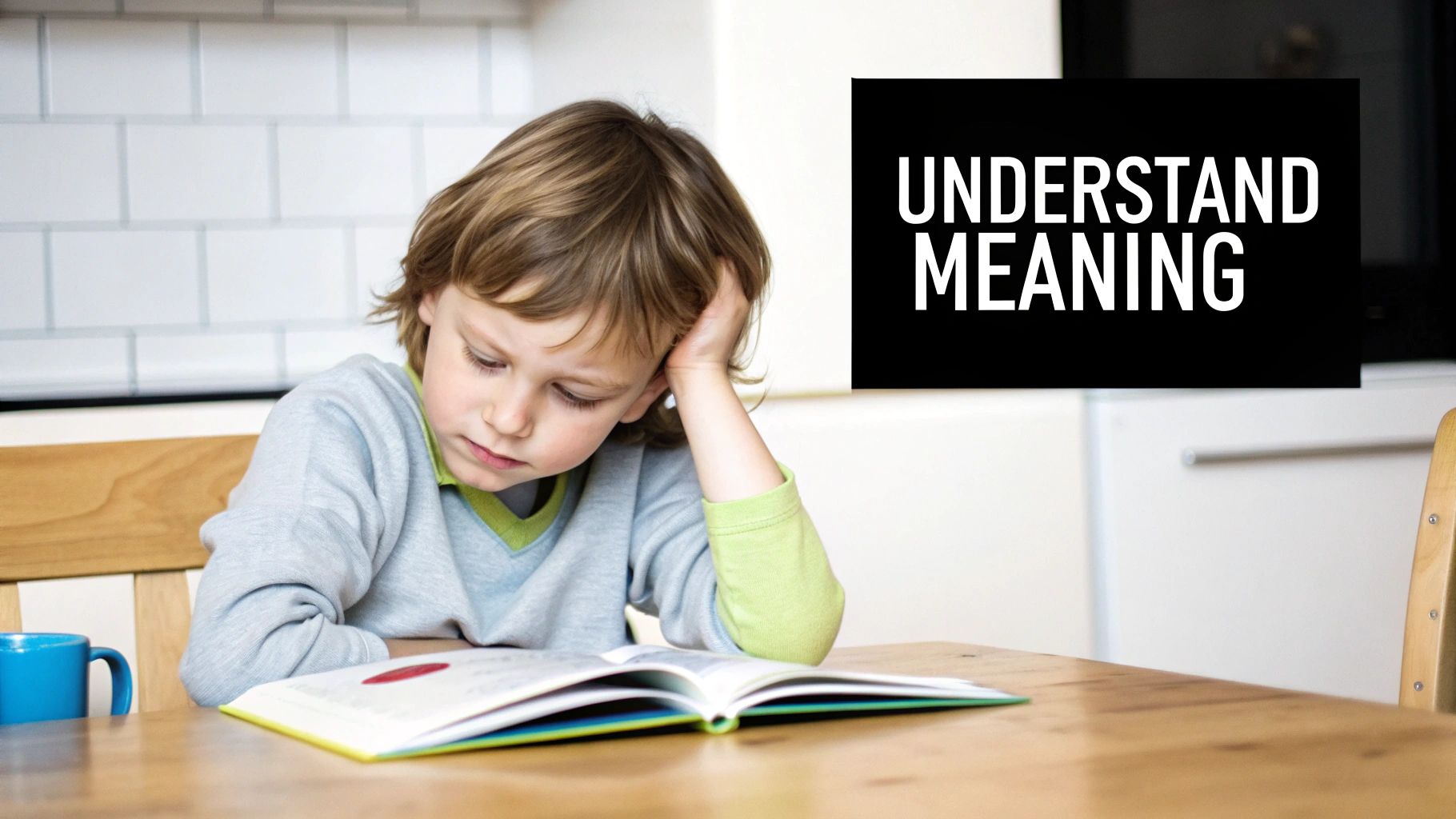
Have you ever listened to your child read a page perfectly, only to get a blank stare when you ask what it was about? It’s a classic moment, one that can leave parents and teachers scratching their heads. They can see the words, but the story—the real magic of it all—seems to have vanished into thin air.
This common hiccup points to a crucial difference between two key skills: decoding and comprehension.
Decoding is the technical bit—sounding out the words. It's the foundational skill that kids work hard to master in their early school years. But real reading is so much more. Comprehension is the art of pulling meaning from those words, of understanding and interpreting the story.
Think of it this way: decoding is knowing the notes, but comprehension is hearing the music.
The Building Blocks of Understanding
So, how do we help a child build that bridge from simply saying words to truly understanding them? It comes down to a few key ingredients working together.
- Vocabulary: A child needs a good grasp of most of the words they come across. If they’re stumbling over too many unfamiliar terms, the story’s meaning will start to fall apart.
- Background Knowledge: Everything a child already knows about the world acts like a mental filing cabinet. If they’re reading about space, for example, any prior knowledge about planets and gravity gives them hooks to hang new information on.
- Working Memory: This is the brain’s temporary sticky note. It’s what allows a child to hold onto details from the start of a sentence and connect them to what comes next, weaving the threads of the story together.
When these elements aren't firing on all cylinders, a child might be using all their brainpower just to decode the words. There’s simply no mental energy left over for understanding the bigger picture.
This is where our journey begins—by shifting the focus from just "reading the words" to "thinking about the story". It’s all about nurturing a child’s ability to predict, question, and read between the lines.
Take a book like Space Ranger Fred and the Tick Tock Tale. True comprehension isn't just about reading the phrase "the clock stopped". It's about sparking curiosity and asking, "Hang on, why did it stop? What kind of trouble does this cause for Fred?"
This inquisitive mindset is the secret sauce for strong comprehension. By fostering these skills, you can help transform your child from a word-reader into a genuine story-lover. If you’re keen to dive deeper into this, we’ve put together a full guide on how to develop critical thinking.
Turn Story Time into an Interactive Adventure

To really get the gears turning on reading comprehension, we need to stop thinking of story time as a one-way street. It’s so much more than just us reading at them. The magic happens when we shift it from a passive listening session into an active, shared experience.
It’s all about inviting your child into the story, making them a co-explorer on the journey rather than a quiet passenger. This one small tweak in how you approach reading together can make a phenomenal difference.
The goal here is to get past the simple recall questions, like "What happened next?" and dive into the ones that spark real curiosity. We want to be asking the 'why' and 'how' questions that get them thinking about the nuts and bolts of the story and what makes the characters tick.
Model Your Thinking Aloud
One of the most powerful things I’ve ever done to teach comprehension is simply to show them how my own brain works when I read. It’s a technique called 'thinking aloud', and it’s as simple as it sounds: you just say your thoughts out loud as you read together. It’s like pulling back the curtain on what it means to be an engaged reader.
For instance, if you're reading a STEM-packed adventure like Space Ranger Fred and the Tick Tock Tale, you could pause after a big moment. You might say, "Hang on a minute… I wonder why the spaceship's clock stopped working right when they got near that planet. What do you reckon might have caused that?"
This simple little question does a few brilliant things all at once:
- It normalises curiosity. You're showing them it's not only okay but fun to question the text and not have all the answers immediately.
- It encourages them to predict. When you ask, "What do you think will happen?", you’re nudging them to use clues to make a clever guess.
- It connects the story to what they already know. Your child might start thinking about batteries, magnets, or things they’ve seen in other films to cook up a theory.
What I love about this is that it’s not a test. It’s a shared puzzle you’re solving together.
By verbalising your thought process, you are essentially giving your child a blueprint for how to think critically about what they read. You’re showing them that reading isn't just about the words on the page—it's about the ideas behind them.
This focus on making reading an active, shared habit is something that’s getting a lot of attention. In fact, the UK government is investing significantly in programmes designed to boost literacy, recognising just how foundational these daily reading habits are. A few minutes of shared reading each day can build the skills for a lifetime of success, and you can discover more about these government-backed efforts to promote early literacy.
Become a Story Co-Creator
Another fantastic way to get those comprehension muscles working is to get your child to retell the story in their own words. After you finish a chapter of a book like Space Ranger Fred and the Shoelace Adventure, just ask them to give you the rundown. Who were the main players? And what was the big problem they were trying to solve?
This simple act of retelling forces them to digest what they’ve just heard, pick out the most important bits, and put them in order. It's a real workout for the brain!
You can even take this a step further and get creative with story mapping. Just grab a piece of paper and draw some simple boxes for the characters, the setting, the problem, and how it was solved. Filling this in together turns a comprehension exercise into a fun, visual game. Suddenly, they aren't just a reader; they're a true co-creator of the story.
Find Books That Spark Genuine Excitement

Here’s the single most powerful tool for boosting reading comprehension: a book your child simply cannot put down. It's not a fancy app or a rigid lesson plan. It's genuine, unprompted excitement.
When a child is truly captivated by a story, they'll push through tricky words and complex ideas without even realising they're working hard. Their motivation becomes the rocket fuel for their skills.
That’s why matching books to a child's unique passions is so crucial. Whether they’re obsessed with the cosmos, ancient dinosaurs, or mind-bending magic, there’s a book out there just waiting to grab their attention. Giving them the freedom to choose—even if it’s a graphic novel or a funny comic—is a huge step towards building their confidence.
The Power of Choice and Familiarity
Letting kids steer their own reading journey is empowering. It sends a clear message that reading is a source of pleasure, not just a school chore. Time and again, research shows that when children choose their own books, their engagement and comprehension shoot right up.
This is where book series become an incredible ally. A child who has just blasted off on a mission in Space Ranger Fred and the Shoelace Adventure will be itching to find out what happens next. They’ll eagerly dive into the next story, like Space Ranger Fred and the Umbrella Rescue, because they're already invested.
A familiar series creates a comfortable and safe reading environment. When a child already knows the characters, the world, and the general tone, they can dedicate more mental energy to following a more complex plot and understanding deeper themes.
This comfort zone is the perfect launchpad for tackling new challenges. They’re far more willing to try a slightly harder book if it features characters they already know and love. You can explore a variety of engaging titles by checking out our curated list of educational books for kids that balance fun with learning.
Choosing the right book can sometimes feel like a mission in itself. To help you on your way, here’s a quick guide to matching books with different reading stages.
Finding the Perfect Book A Parent's Guide
| Reading Stage | Key Characteristics | Book Ideas & Examples |
|---|---|---|
| Emergent Readers | Just starting to grasp concepts of print. Enjoys being read to, recognises letters, and loves picture-heavy stories. | Rhyming books, alphabet books, simple picture books with one sentence per page. Think Dr. Seuss or Eric Carle. |
| Early Readers | Beginning to decode words. Uses pictures for clues and can read simple, repetitive sentences. | Books with predictable text, high-frequency words, and strong picture support. The Elephant and Piggie series is a classic example. |
| Transitional Readers | Building fluency and confidence. Can handle more complex sentences and longer chapters. Still relies on some illustration support. | Early chapter books with larger text and pictures, like the Magic Tree House or Space Ranger Fred series. |
| Fluent Readers | Reads independently with good comprehension. Can tackle complex plots, diverse genres, and books with fewer pictures. | Chapter books and middle-grade novels. This is where they can dive into Harry Potter, Percy Jackson, or classic Roald Dahl. |
This table is just a starting point, of course. The most important thing is to pay attention to what gets your child excited about turning the page.
Balancing Their Picks with New Horizons
Of course, we also want to gently expand their reading horizons. The key is finding a happy medium between their favourites and introducing them to new genres and authors. The "one for you, one for me" approach works wonders—you simply alternate between their choice and a book you suggest.
UK-based research highlights just how powerful this blend of structured reading and personal choice is. Data from over 1.2 million pupils revealed that children in structured reading programmes read an average of 20.7 books a year.
Even more telling? When these kids read their favourite books—often at a level nearly two years above their official grade—their comprehension accuracy was an astounding 94%. It's clear proof that interest drives children to tackle more difficult texts with greater success. You can see more details in the full report on children's reading habits.
Ultimately, our role is to be a supportive guide, not a strict gatekeeper. Celebrate their choices, share in their excitement, and make the local library or bookshop feel like a place of endless possibility. When reading feels like an adventure they get to lead, their passion and comprehension will grow right alongside it.
Build a Joyful Reading Habit, Not a Daily Chore
In a world buzzing with notifications and endless video streams, convincing a child that a book is the most exciting choice can feel like an uphill battle. The secret isn't forcing it; it's about shifting their perspective so that reading becomes a treat, not a task.
The goal is to weave reading so seamlessly into your family's daily life that it feels like a natural part of the day, like a bedtime story or a weekend chat. When a child links reading with comfort, curiosity, and connection, they build a habit they actually want to keep. This positive vibe is the foundation for a lifelong love of stories, which naturally boosts their reading comprehension along the way.
Carve Out Cosy Reading Nooks
You’d be amazed at how much an inviting environment can transform a child’s attitude towards reading. You don’t need a grand library—a simple, cosy corner is often more magical.
Think of a space with a soft beanbag chair, a few comfy cushions, and good lighting. This little nook becomes a special spot that signals it’s time to unwind and dive into a good story. When a child has a welcoming space that feels like their own, picking up a book like Space Ranger Fred and the Tick Tock Tale feels less like homework and more like a mini-adventure. For more inspiration, check out our guide on how to make reading fun for your kids.
This has never been more important. Worryingly, reading for pleasure is declining among children in the UK. A recent survey revealed that fewer than 1 in 5 children aged 8 to 18 read daily in their free time—the lowest level ever recorded. This drop directly impacts their chance to build the vocabulary and fluency needed for strong comprehension. You can dig into the full findings in this National Literacy Trust research on children’s reading habits.
Make It a Shared Family Ritual
Turning reading into a family ritual is one of the best ways to build those warm, positive associations. It takes it from a solitary activity to a genuine moment of connection.
Here are a few low-pressure ideas to get you started:
- Family Book Club: Choose a book to read together, even if it’s just one chapter a week. Chatting about it over dinner or on a weekend walk brings the characters and plot to life in a whole new way.
- "Drop Everything and Read" (D.E.A.R.) Time: Set a timer for 10 or 15 minutes where everyone in the house—grown-ups included—stops what they're doing and just reads. Seeing you engrossed in your own book is one of the most powerful motivators.
- Character-Themed Nights: Reading Space Ranger Fred and the Shoelace Adventure? Why not have a "space" themed dinner or watch a documentary about planets afterwards? It makes the story feel bigger than the page.
The whole point is to remove any sense of pressure. By focusing on connection and enjoyment, you frame reading as a wonderful way to spend time together, not as another item on the to-do list.
This gentle, consistent approach helps you sidestep reading reluctance before it becomes a power struggle. When children see reading as a source of joy and a shared experience, their engagement naturally deepens, and their comprehension skills flourish right alongside it.
Boost Comprehension with Fun Games and Activities
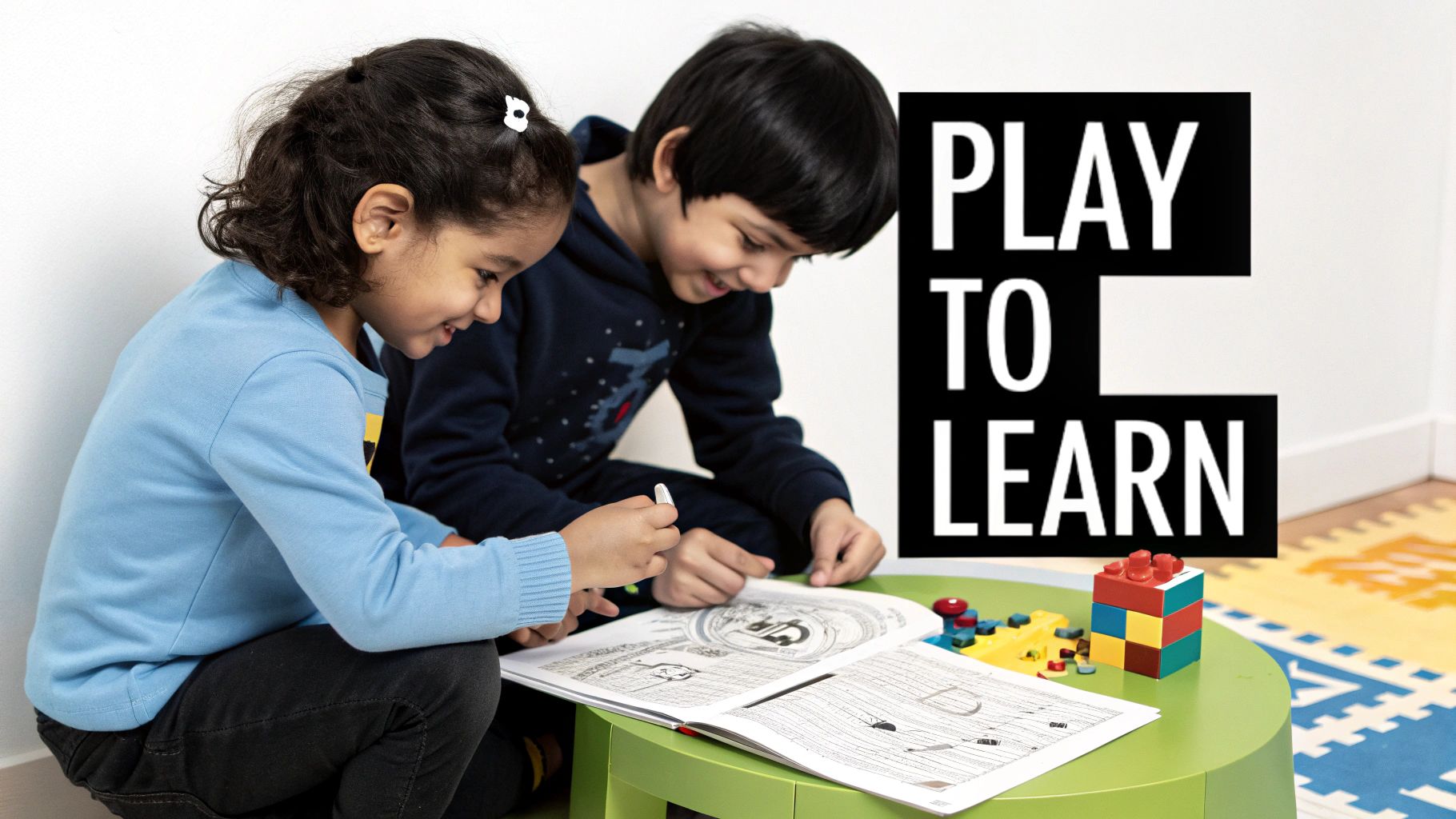
Right, let's bring those stories to life! The secret is to swap out passive reading for some good old-fashioned play. When we turn the ideas from a book into a hands-on, screen-free activity, we’re giving kids a brilliant way to process what they’ve just read.
It solidifies their understanding without ever feeling like homework. These playful methods are fantastic for cementing key details, exploring why a character did what they did, and making the plot stick. You're not just quizzing them; you're inviting them to interact with the story on their own terms.
Step into the Story
One of the best ways I’ve found to get kids thinking deeply is to have them step directly into the characters' shoes. It’s a game-changer for helping them understand motivation and perspective.
A cracking game for this is ‘character hot-seating’. After reading a story like Space Ranger Fred and the Shoelace Adventure, you can put your child in the "hot seat" to be interviewed as Fred himself.
Ask them things like, "Fred, how did you feel when you realised your shoelace was the key to saving the day?" or "What was the trickiest part of that mission?" This simple bit of role-playing gets them thinking beyond the words on the page and digging into the character’s feelings. It’s a fun, low-pressure way to dive into the story's deeper meaning.
Get Creative with Retelling
Moving beyond just reciting what happened, creative retelling helps children organise the story's structure in their own minds. They have to pinpoint the beginning, muddle through the middle, and nail the end—a core comprehension skill.
Here are a couple of my favourite ways to do this:
- Create a Comic Strip: Grab some paper and pencils and get your child to draw the main scenes from a chapter. They can add speech bubbles and captions to retell the story visually. This works wonders for visual learners.
- Build the Scene: Using LEGOs, building blocks, or even old cardboard boxes, challenge them to build a key setting from the book. Building the spaceship from Space Ranger Fred and the Umbrella Rescue makes them think about all the little details of that environment.
These activities aren’t just about making things; they're about thinking things through. By physically creating something connected to the story, children are mentally organising the plot and cementing important details in their memory.
To help you match the right activity to the right skill, I've put together this quick-glance table.
Comprehension Skills Activity Match-Up
Here’s a simple way to connect specific reading skills with fun activities you can do at home.
| Comprehension Skill | Activity Idea | What It Achieves |
|---|---|---|
| Character Analysis | Character Hot-Seating | Encourages empathy and helps children understand character motivations and feelings from an insider's perspective. |
| Sequencing Events | Comic Strip Creation | Forces children to identify and order the most important plot points, strengthening their narrative recall. |
| Understanding Setting | LEGO Scene Building | Helps children visualise the story's environment and understand how the setting influences the characters and plot. |
| Summarising | Puppet Show | Requires children to condense the story into its essential parts to create a short, performable summary. |
By turning comprehension practice into memorable family fun, you’re giving your child a brilliant toolkit to make reading an active, creative, and genuinely joyful experience.
Common Reading Comprehension Questions
As we’ve journeyed through different ways to boost your child's reading skills, a few common questions often pop up. I’ve heard these from countless parents and carers, so let's tackle them with some practical advice to help you support your young reader.
My Child Reads Fluently but Can’t Remember the Story. Why Is This Happening?
I see this all the time. It's a classic sign that your child is putting all their mental energy into decoding the words, leaving very little brainpower for actually understanding the meaning.
Think of it this way: they're concentrating so hard on hitting the right notes that they can't hear the music. It's a common hurdle.
To help, try reading aloud to them. This models what expressive, fluent reading sounds like. It’s also a good idea to break texts into smaller, more manageable chunks. After a paragraph or two, just pause and ask a simple, open question like, "What’s on your mind about that part?" This gently builds the habit of thinking about the story as they go.
How Can I Help an Older Child Who Says They Hate Reading?
With older, reluctant readers, forcing the issue often backfires spectacularly. Trust me on this one. The key here is to connect reading with their existing passions, showing them that books are a gateway to more of what they already love, not just a school chore.
The goal is to reframe reading as a tool for their own interests. If they love gaming, introduce them to online forums, strategy guides, or novels based on their favourite games. For a sports fan, try player autobiographies or magazines about their favourite team.
Audiobooks can also be a brilliant Trojan horse. A thrilling story can reignite their imagination and make picking up a physical book feel a lot less intimidating.
What's the Best Way to Introduce More Challenging Books?
The transition to more difficult books should feel supportive, not stressful. A great method I’ve seen work wonders is to alternate between a comfortable, familiar book and a slightly more challenging one. This keeps their confidence high.
You could also try 'paired reading', where you take turns reading pages of the trickier book. It gives them a safety net and allows you to chat about new words as they appear, taking the pressure off.
This is where book series really shine. A child who is already familiar with the world of Space Ranger Fred and the Shoelace Adventure will find it much easier to tackle a more complex plot in the next book. The characters and setting already feel like old friends, which frees up their mental energy to focus on the new story.
Ready to launch your child's reading adventure? The Space Ranger Fred book series is designed to spark curiosity and make learning about STEM an exciting journey. Discover a universe of fun, friendship, and problem-solving at https://spacerangerfred.com.