So, what on Earth—or rather, off of it—is space weather?
Think of it this way: when we talk about weather here on our planet, we’re talking about wind, rain, and snow. But up in space, the weather is something else entirely. It’s all about the wild and powerful activity of our Sun.
Your Guide to Solar Storms and Cosmic Forecasts
Imagine the Sun isn't just a steady, friendly ball of light in the sky, but more like a giant, crackling bonfire. Most of the time, it burns calmly, keeping our world warm. But every now and then, it flares up, spitting out huge sparks and massive gusts of super-hot energy that shoot across the solar system.
That explosive activity is the heart of space weather. It's a constant stream of particles and energy flowing from the Sun, and it’s a completely different beast from the weather we see on Earth.
Instead of clouds and rain, space weather is made up of things like:
- Solar Wind: A non-stop flow of charged particles streaming away from the Sun.
- Solar Flares: Sudden, incredibly bright flashes of radiation.
- Coronal Mass Ejections (CMEs): Giant, spectacular eruptions of solar plasma and magnetic fields into space.
These events can travel millions of miles before they reach our planet and interact with Earth’s magnetic field and atmosphere. To get a better picture of our cosmic neighbourhood, check out our easy guide to the solar system to see where Earth fits into all the action.
Space Weather vs Earth Weather: A Quick Comparison
It can be a bit tricky to wrap your head around two different kinds of "weather." This little table breaks down the main differences to make it crystal clear.
| Feature | Earth Weather | Space Weather |
|---|---|---|
| What is it? | Movement of air and water in Earth's atmosphere. | Flow of particles and energy from the Sun. |
| What causes it? | Uneven heating of the Earth by the Sun. | The Sun's magnetic activity. |
| What do we see? | Clouds, rain, wind, snow. | Auroras (Northern and Southern Lights). |
| Where does it happen? | In Earth's lower atmosphere (troposphere). | Throughout the solar system. |
Essentially, one is about what’s happening right here in our sky, and the other is about what our star is chucking at us from 93 million miles away!
Why Does It Matter?
Knowing about space weather is becoming seriously important for our modern, tech-filled world. Just like in the book Space Ranger Fred and the Shoelace Adventure, where a tiny detail can lead to gigantic consequences, a big solar storm can cause some real trouble back here on Earth.
A strong solar storm has the potential to impact everything from our GPS navigation and communication satellites to the stability of national power grids.
This is exactly why a "cosmic forecast" is no longer just sci-fi. By keeping a close eye on the Sun, scientists can give us a heads-up about incoming solar storms. This gives us precious time to protect the satellites, power grids, and all the other technology that our daily lives depend on.
This guide will dive into how these powerful solar events work and what they really mean for all of us down here on the ground.
Understanding the Sun's Powerful Eruptions
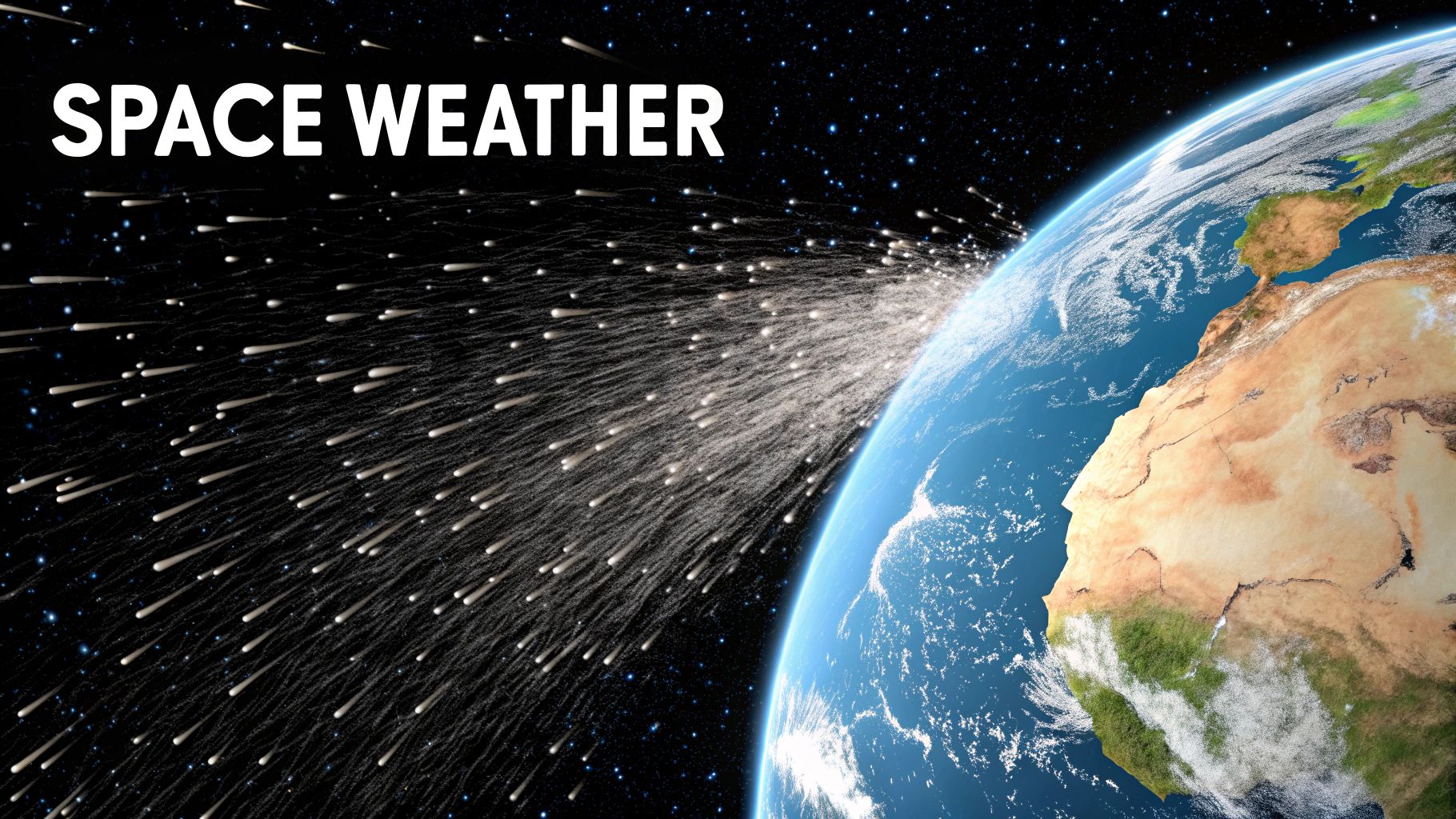
The engine driving all space weather is our very own star, the Sun. To really get what space weather is, we need to look at the spectacular, fiery drama constantly unfolding on its surface. It's a place of almost unimaginable energy.
Picture the Sun’s powerful magnetic fields as gigantic, invisible elastic bands. Over time, these magnetic lines stretch, twist, and tangle themselves into knots. When they get pulled too tight and suddenly snap, they unleash a phenomenal amount of energy into space.
It’s this sudden release of energy that causes some of the most dramatic events in our solar system. Getting to grips with these solar eruptions is the first step to understanding how they can affect us here on Earth, some 93 million miles away.
Sunspots and Solar Flares
The most obvious clues to the Sun's magnetic chaos are sunspots. These are the darker, cooler patches you can see on the Sun’s surface, where the magnetic fields are especially strong and tangled. Think of them as temporary warning signs for solar activity.
When the magnetic energy bottled up around these sunspots finally snaps, it can trigger a solar flare. This is a brilliant flash of light, an intense burst of radiation that can last for minutes or even hours. They are the biggest explosive events in our entire solar system.
A single big solar flare can release the same amount of energy as millions of volcanic eruptions going off all at once. It’s a staggering amount of power to unleash in such a short time.
Just like in Space Ranger Fred and the Umbrella Rescue, where a sudden downpour changes everything for Fred, a solar flare instantly changes the environment of space. It sends a powerful wave of X-rays and energetic particles hurtling outwards at the speed of light.
Coronal Mass Ejections: The Solar Super Soakers
Sometimes, a magnetic snap is so huge that it doesn’t just create a flash of light. It physically blasts a massive chunk of the Sun's outer atmosphere, the corona, right out into space. This is called a Coronal Mass Ejection (CME).
A CME is a gigantic, magnetised cloud of solar gas—or plasma—that can weigh billions of tonnes.
While the radiation from a flare reaches us in about eight minutes, a CME is more like a colossal tidal wave of particles, travelling much more slowly. It can take anywhere from one to three days to cross the enormous gap between the Sun and Earth. These are the solar events that often cause the biggest space weather headaches for us.
The Sun’s activity isn’t random; it follows a rhythm. It goes through a roughly 11-year cycle of high and low activity, which scientists call the solar cycle. During its peak, known as the solar maximum, sunspots, flares, and CMEs happen far more often, making disruptive space weather much more likely.
How Solar Storms Impact Life on Earth
You can't feel a solar storm like you can a gust of wind, but don't be fooled—its effects on our modern, plugged-in world are surprisingly powerful. While Earth’s magnetic shield does a fantastic job protecting us humans, our technology isn't quite so lucky. These cosmic events are a perfect example of what space weather is and why it matters so much.
When a Coronal Mass Ejection (CME) slams into our magnetic field, it's like striking a giant, invisible bell. This massive jolt creates powerful electrical currents that surge through space and can even be felt on the ground, causing serious headaches for the technology we rely on every single day.
Technology on the Brink
Our high-tech society is incredibly sensitive to the Sun's temper tantrums. A major solar storm has the power to interfere with some of our most important systems.
Here are a few of our biggest vulnerabilities:
- Satellite Communications: The energetic particles blasted out from a solar storm can wreak havoc on satellites, disrupting everything from your telly reception to vital weather forecasts. These particles act like tiny cannonballs, short-circuiting sensitive electronics. It's another reason we have to protect our spacecraft not just from space weather, but also from hazards like space debris and its dangers.
- GPS Navigation: Your car's satnav or the map on your phone depends on incredibly precise timing signals beamed down from GPS satellites. Space weather can warp and distort these signals, making navigation far less accurate. For aeroplanes and ships that depend on GPS for safe passage, this can become a very serious problem.
- The National Grid: Perhaps the biggest risk of all is to our electrical power grids. A powerful geomagnetic storm can create what are known as geomagnetically induced currents (GICs) that flow through power lines on the ground. Think of it like trying to force way too much water through a narrow pipe—the whole system gets overloaded. These currents can damage or even destroy giant transformers, potentially triggering widespread, long-lasting power cuts.
And these aren't just theoretical worries. Extreme space weather events are recognised as a high-impact, low-probability natural hazard. In fact, UK government assessments confirm that vital national systems like the electricity grid, air traffic control, and satellite communications are all vulnerable to these solar disruptions. You can find out more about how the UK prepares for these events in their detailed reports.
The Most Beautiful Side-Effect
But it’s not all doom and gloom! Space weather is also responsible for creating one of the most spectacular natural wonders on Earth: the aurora.
The beautiful, dancing lights of the Aurora Borealis (Northern Lights) and Aurora Australis (Southern Lights) are a direct, visible result of a solar storm interacting with our planet.
When those charged particles from the solar wind and CMEs are funnelled down Earth's magnetic field lines towards the poles, they collide with atoms and molecules high up in our atmosphere. Just like in the book Space Ranger Fred and the Tick Tock Tale where different elements create a big reaction, these collisions give the atmospheric gases a massive jolt of energy.
The energised atoms then release this extra energy as light, painting the night sky with brilliant, shimmering colours. Oxygen atoms typically glow green and red, while nitrogen atoms give off stunning shades of blue and purple. The aurora is a beautiful reminder that we are constantly connected to our star, living within its extended atmosphere and feeling its every mood.
The Real Risk of a Solar Superstorm
The idea of a "solar superstorm" might sound like it’s been plucked straight from a science fiction film, but it's a very real threat with a dramatic history to prove it. These aren’t just minor glitches; a really big space weather event could cause chaos on a global scale.
Long before anyone had even dreamed of satellites or electricity, our planet was feeling the Sun's fiery temper. The most famous example is the Carrington Event of 1859. During this monster storm, telegraph systems all over the world went completely haywire. Sparks literally flew from the equipment, zapping operators with electric shocks and even setting telegraph paper on fire!
A Modern Wake-Up Call
You might think that’s just a problem for old-fashioned technology, but a more recent event showed us just how vulnerable our modern world is. In March 1989, a powerful geomagnetic storm slammed into Earth and caused the entire power grid across Quebec, Canada, to collapse in less than two minutes. Millions of people were left in the dark for hours, all because of an eruption on the Sun.
This is a perfect example of a geomagnetic storm – the beautiful yet powerful display of space weather in action.
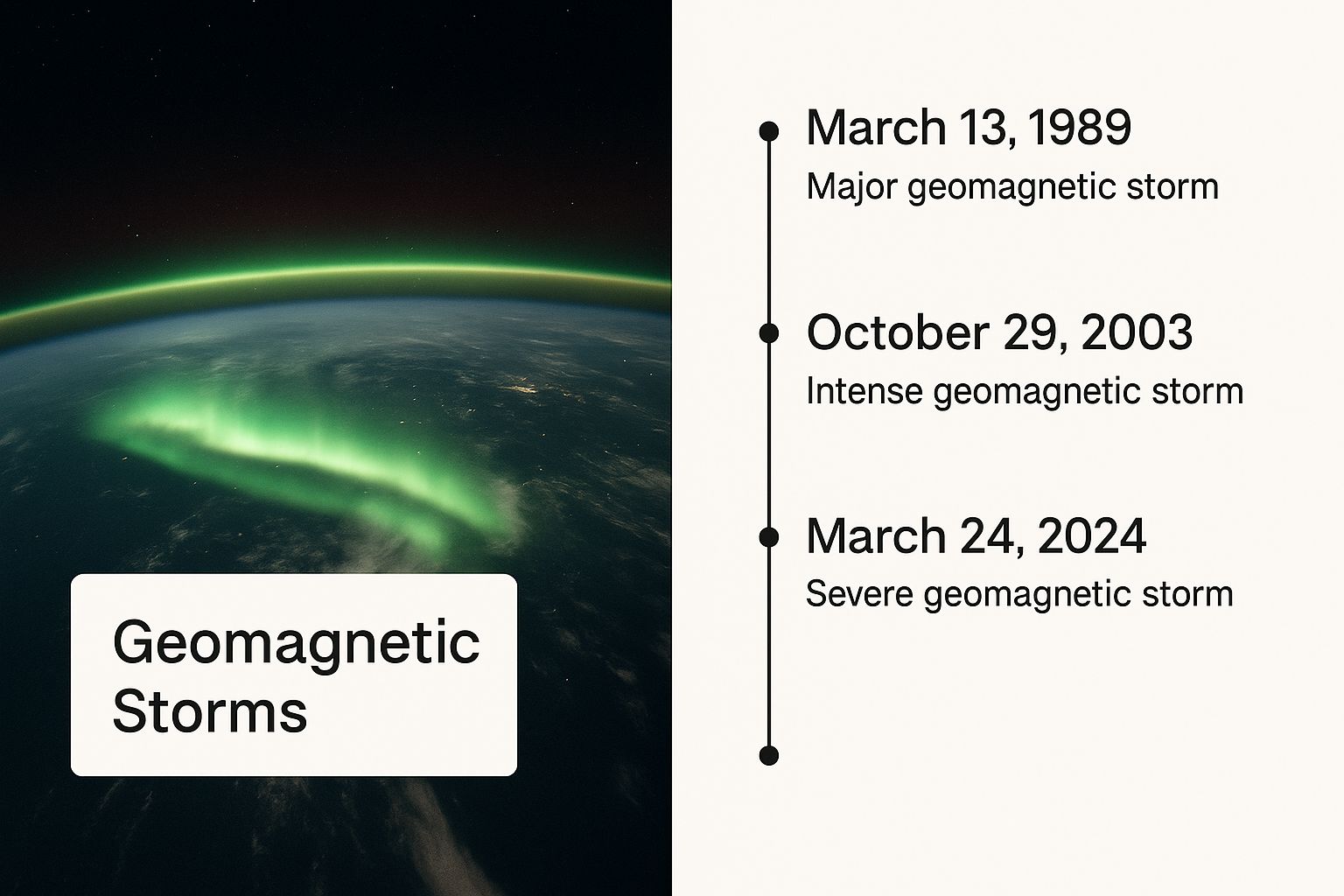
The image above beautifully captures the aurora seen from orbit, which is a direct result of solar particles hitting our atmosphere and causing these huge electrical disturbances.
These historical events aren't just fascinating stories; they're serious warnings. In fact, we had a very near miss in July 2012 when a blast of solar material, as powerful as the Carrington Event, erupted from the Sun. Luckily for us, it was pointing away from Earth and shot harmlessly past. It was a huge wake-up call for scientists and governments, reminding everyone how important it is to be prepared.
A big part of that preparation happens in orbit. You can find out more about how scientists work up there by reading our guide on what the International Space Station is and the incredible research they do.
Notable Space Weather Events in History
To put the threat into perspective, here's a quick look at some of the most significant solar storms we know about and the trouble they caused.
| Event Name | Year | Key Impacts |
|---|---|---|
| The Carrington Event | 1859 | Widespread failure of telegraph systems; operators received electric shocks and papers caught fire. Auroras were seen as far south as the Caribbean. |
| New York Railroad Storm | 1921 | A powerful storm that disrupted railway signal systems and caused fires in control towers. It showed how vulnerable electrical infrastructure was becoming. |
| The Quebec Blackout | 1989 | A geomagnetic storm caused the complete collapse of Quebec's power grid, leaving six million people without electricity for over nine hours. |
| The Bastille Day Event | 2000 | An "X-class" solar flare (the most powerful kind) caused some satellites to short-circuit and led to radio blackouts. |
| Halloween Storms | 2003 | A series of intense solar flares and CMEs that affected satellite communications, GPS accuracy, and even forced astronauts on the ISS to take shelter. |
These historical examples show a clear pattern: as our technology advances, our vulnerability to space weather grows.
The UK's National Risk
Recognising this growing threat, the UK government officially added severe space weather to its National Risk Register in 2012. This places it right alongside other major hazards like pandemics and extreme flooding. The UK's heavy reliance on technology and its location at a higher latitude make it particularly vulnerable to the effects of solar storms.
Just as Space Ranger Fred realises a problem is heading his way in Space Ranger Fred and the Umbrella Rescue, the first step to getting ready is knowing the risk. By studying what happened in the past, we can work on clever ways to protect our gadgets and power grids before the next big one hits.
Forecasting Space Weather to Protect Our Planet
So, how do we get a warning before a giant solar storm heads our way? Thankfully, we don’t have to guess. Much like the meteorologists who predict rain or sunshine on Earth, a dedicated group of scientists acts as our planet's cosmic weather forecasters. Their job is to keep a constant, watchful eye on the Sun.
These experts use an incredible array of tools to monitor our star's every twitch and flare. It’s a 24/7 job, carried out by organisations like the UK's own Met Office Space Weather Operations Centre. Think of them as our first line of defence against the Sun’s fiery outbursts, giving us the crucial heads-up we need to prepare.
Keeping a Watchful Eye on the Sun
To figure out what space weather is doing at any given moment, scientists rely on a whole fleet of specialised satellites. These spacecraft are our eyes in the sky, staring directly at the Sun from different angles so we never miss a thing.
One of the most important is NASA's Solar Dynamics Observatory (SDO). This amazing piece of kit captures stunning, high-definition images of the Sun in different wavelengths of light. This allows scientists to spot the tell-tale signs of an impending eruption, like the tangled magnetic fields that form around sunspots.
By analysing this constant stream of data, forecasters can:
- Identify potentially rowdy active regions on the Sun.
- Predict the likelihood of a solar flare or Coronal Mass Ejection (CME).
- Calculate the speed and direction of a CME after it blasts off.
This information is absolutely vital. It helps them estimate when a solar storm will arrive at Earth and how strong its impact might be. That forecast provides a precious warning window—anywhere from several hours to a few days—for everyone to get ready.
From Forecast to Action
This advance warning is where the real magic happens. It’s not just about knowing a storm is coming; it's about what we can do with that knowledge. It’s a bit like in the book Space Ranger Fred and the Tick Tock Tale, where having the right information at the right time helps Fred and his friends dodge a disaster.
A timely space weather forecast allows operators of critical infrastructure to take protective measures, turning a potential catastrophe into a manageable event.
For example, satellite operators can put their spacecraft into a "safe mode" to shield sensitive electronics. Airlines can reroute flights away from the poles where radiation is strongest, and national grid managers can tweak their systems to better handle the extra electrical currents.
Forecasting is also getting smarter and more local. Because the UK is at a higher geomagnetic latitude, it’s more vulnerable to space weather. Recent studies have shown that new models can predict extreme magnetic field changes specifically for the UK, making our national resilience strategies much stronger. You can read more about these forecasting advancements and their importance for the UK. This specialised forecasting is key to protecting our uniquely exposed systems.
Why Space Weather Matters for Our Future
Every day, our world becomes more connected with amazing new technology, and with that, our vulnerability to space weather grows. Think about it: self-driving cars, smart homes, and our big dreams for exploring the solar system all depend on delicate electronics. Suddenly, understanding our star's moods isn't just for scientists anymore; it’s a practical necessity for keeping our modern lives running smoothly.
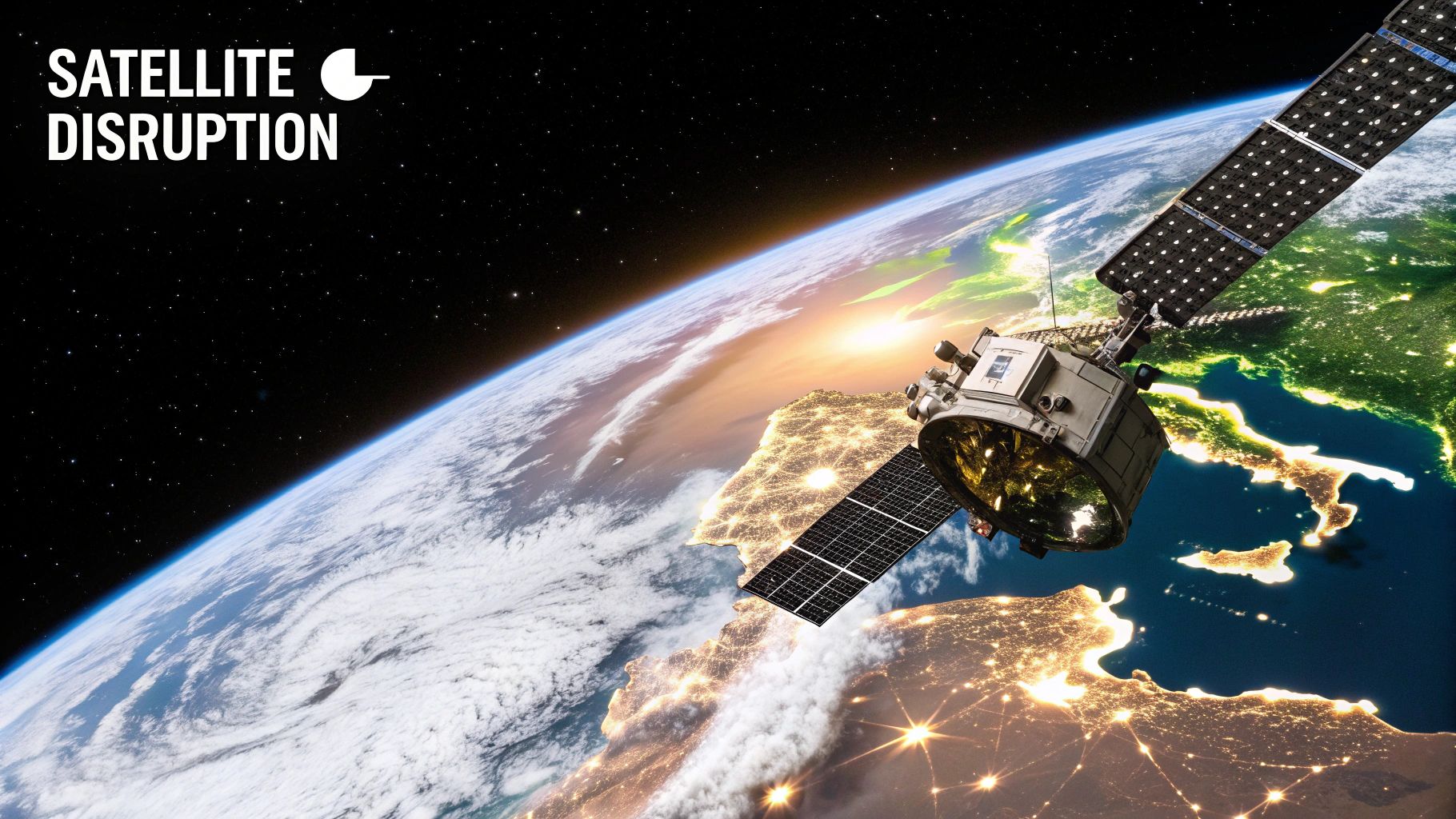
This isn't some distant, academic puzzle. Making sure our technological progress is strong and sustainable means we absolutely have to account for what the Sun might throw our way. We need to build resilience into our systems, from the power grids that light our cities to the satellites that guide our journeys.
The Ultimate STEM Challenge
Studying space weather is about so much more than just cool science—it’s about protecting our home. It’s the ultimate real-world STEM challenge that teaches us problem-solving on a planetary scale. For any young explorer out there, this is a field brimming with adventure and importance.
It sparks a deep curiosity about our place in the cosmos, reminding us that we are part of a much bigger, more dynamic system.
By learning to read the Sun's signs and predict its storms, we are taking vital steps to safeguard the future we are all building together. It is a cosmic responsibility that connects us all.
Just like the characters in Space Ranger Fred and the Shoelace Adventure learn how small actions can have big effects, understanding our star’s activity helps us protect our incredible world. The more we learn, the better prepared we’ll be for whatever the cosmos sends our way.
Your Space Weather Questions Answered
We’ve zipped through the big ideas, but you might still have a few questions buzzing around. Let's tackle some of the most common ones to help clear things up.
Can Space Weather Harm Humans on the Ground?
Thankfully, no. For most of us down here, the Earth's atmosphere and its powerful magnetic field act like a super-strong shield, protecting us from the Sun’s stormy outbursts. It's a different story for astronauts in space, of course, who need special shielding to stay safe.
Passengers on high-altitude flights over the poles might get a slightly higher dose of radiation during a major solar storm, which is why airlines keep a very close eye on space weather forecasts.
How Long Does It Take a Solar Storm to Reach Earth?
That all depends on which part of the storm you’re talking about. The intense light and radiation from a solar flare travel at the speed of light, so they get here in just over eight minutes.
The main event, however—the Coronal Mass Ejection (CME)—is a giant cloud of plasma that travels much more slowly.
A really fast CME can cross the 93 million miles to Earth in about 15-18 hours. Slower ones can take several days to arrive. This travel time gives forecasters a vital window to issue warnings.
Can I See the Effects of Space Weather Myself?
Yes, absolutely! The most beautiful and direct way to see space weather in action is by catching a glimpse of the aurora, also known as the Northern or Southern Lights.
During strong geomagnetic storms, these dazzling light shows can be seen much further from the poles than usual. Sometimes, they're even visible across parts of England! Following space weather prediction sites can tell you when you might have the best chance to spot them. Just like in Space Ranger Fred and the Umbrella Rescue, a little bit of forecasting helps you prepare for a spectacular event.
Ready for an adventure that makes learning about space a blast? Explore the universe with Space Ranger Fred and discover a world of stories, games, and fun STEM activities that will spark your child's curiosity. Blast off with Space Ranger Fred today!