
Ever looked up at the night sky and wondered which of those twinkling lights are stars and which are planets? It’s a brilliant question, and you’re not alone in asking it! From down here on Earth, they can look surprisingly similar.
The biggest difference comes down to one simple thing: stars make their own light, while planets just reflect it. Think of a star as a giant, cosmic light bulb, and a planet as a mirror bouncing that light back.
Ready to become a sky-spotting expert? Let’s explore!
Your Quick Guide to Stars and Planets
Alright, Space Rangers, let's get into it. The most common question any new stargazer has is "what's the real difference between a star and a planet?" The truth is, they're completely different kinds of space objects.
At its heart, a star is a colossal, fiery engine. It's an enormous, glowing ball of super-hot gas, mostly hydrogen and helium. Stars create their own energy through an amazing process called nuclear fusion, and that's what makes them shine so brightly across the universe.
Planets, on the other hand, are the smaller, cooler neighbours that travel around those fiery stars. They don't have their own light source. So, when you see Venus or Jupiter shining steadily in the sky, you're actually seeing sunlight bouncing off their surface or atmosphere and travelling all the way to your eyes.
This little animation sums it up perfectly: stars produce light, and planets reflect it.
As you can see, a planet’s shine depends entirely on its star. No star, no light, no visible planet. To make things even clearer, here’s a handy comparison table.
Stars vs Planets At a Glance
This quick chart breaks down the main differences to help you on your next stargazing adventure. It’s a great little cheat sheet before we dive deeper into what makes each one so unique and fascinating.
| Feature | Stars | Planets |
|---|---|---|
| Light Source | Create their own light and heat. | Reflect light from a star. |
| Size | Gigantic, often millions of km wide. | Much smaller than stars. |
| Temperature | Extremely hot. | Much cooler, with varied temperatures. |
| Composition | Mostly hot gas (hydrogen & helium). | Can be rock, ice, or gas. |
| Movement | Appear fixed in patterns (constellations). | 'Wander' across the night sky. |
| Twinkling | They twinkle. | Shine with a steady light. |
So there you have it! Next time you're looking up, you'll have a better idea of what you're seeing. But this is just the beginning of our cosmic journey.
What Exactly Makes a Star a Star?
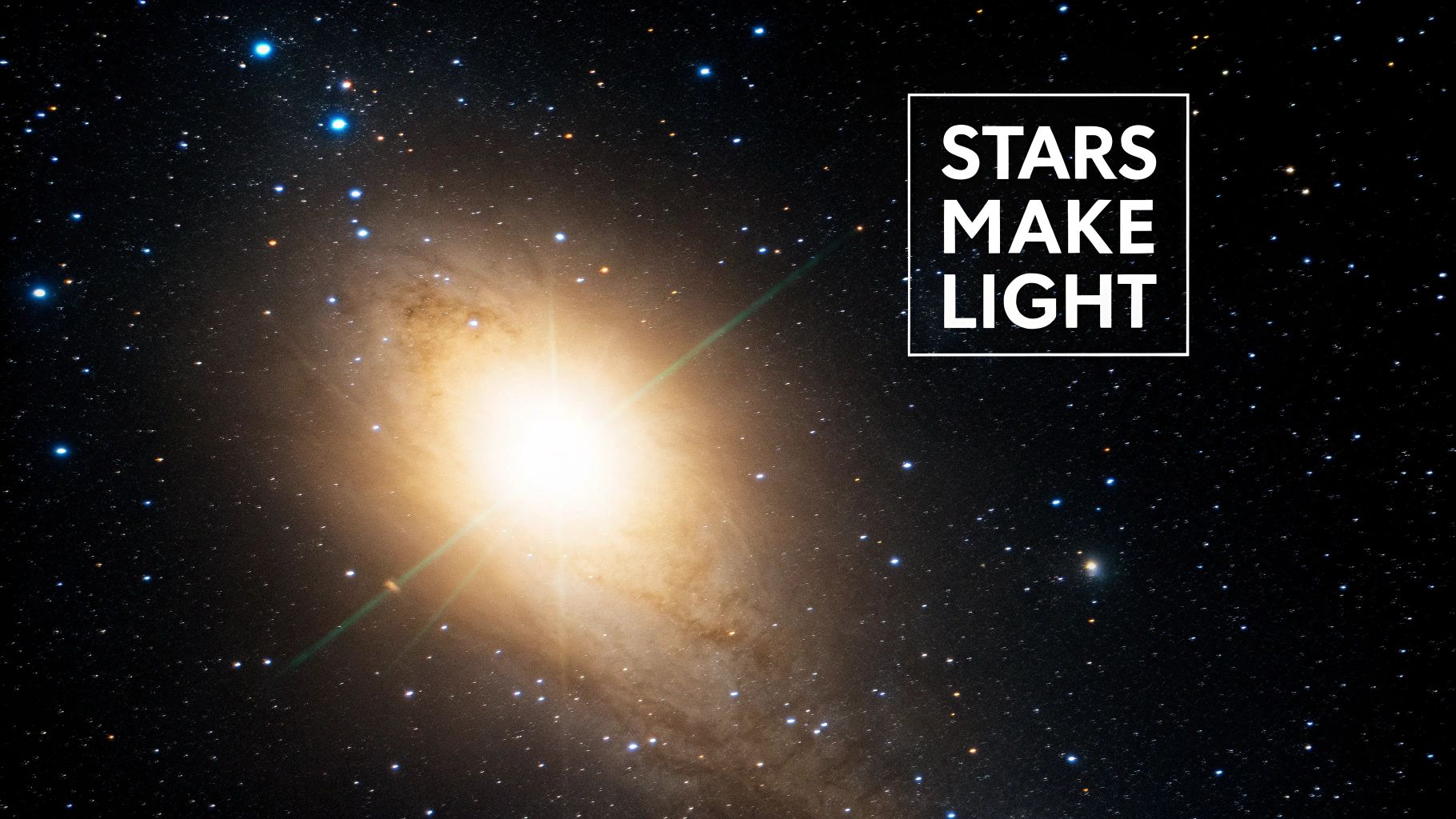
Stars are the universe's natural powerhouses. Think of them as gigantic, glowing balls of super-hot gas, mostly hydrogen and helium. Our very own Sun is the perfect example! They're so massive that the immense pressure at their core triggers a process called nuclear fusion. This is where the magic happens: a star squeezes hydrogen atoms together to create helium, releasing an unbelievable amount of energy.
That energy radiates outwards, producing all the light and heat that pours into space. It’s the reason stars shine so brightly and why our Sun keeps Earth warm enough for all of us Space Rangers.
From Cosmic Cloud to Glowing Giant
So, where do these incredible cosmic engines come from? Stars aren't just born out of thin air. They start their lives inside enormous, cold clouds of gas and dust that drift through space. If you want to learn more about these stellar nurseries, you can read our guide on what is a nebula.
Over millions of years, gravity starts pulling this material together into dense clumps. As these clumps get bigger, they also get hotter.
Eventually, the core of a clump gets so hot and dense that nuclear fusion kicks in. Just like that, a brand-new star is born! Stars can then happily burn through their fuel for billions of years.
Understanding What Makes a Planet a Planet
While stars are the universe’s brilliant lightbulbs, planets are more like cosmic mirrors. The biggest thing to remember is that planets do not create their own light. Instead, they shine by reflecting the light from the star they orbit.
A planet is a huge, usually round object that travels on a set path, or orbit, around a star. Think of it like a marble circling a lamp! They are much, much smaller and cooler than their fiery stellar neighbours.
Planets are also incredibly varied in what they’re made of. In our own solar system, we have two main types that showcase this amazing diversity.
Rocky Worlds and Gas Giants
The planets closest to our Sun are the smaller, rocky ones. They have solid, cratered surfaces you could (in theory) walk on. These include:
- Mercury
- Venus
- Earth (our home!)
- Mars
Further out, you’ll find the giants of our solar system. These are colossal worlds made mostly of gas and ice, with no solid surface to land on. These big characters are:
- Jupiter
- Saturn
- Uranus
- Neptune
The incredible variety in what planets are made of is a huge topic on its own. If you're curious about their different ingredients, you can find out more in our post about what are planets made of.
To bring this all to life, we've got some brilliant hands-on projects you can try.
Here is a quick look at some of the fun you can have on our activities page.
These resources are perfect for making your own solar system model or visualising how planets follow their orbits, helping to make these big ideas much easier to grasp.
How to Spot the Difference in the Night Sky
Right, you’ve got the theory down. Now, let’s put it into practice! With a couple of simple tricks, you’ll be a pro at telling planets and stars apart, just by looking up from your own back garden. The biggest clue is something you’ve probably noticed your whole life: twinkling!
The easiest way to spot the difference is to simply watch how they shine. Stars appear to twinkle, flickering like tiny diamonds in the dark. Planets, on the other hand, usually glow with a steady, unwavering light.
Why Do Stars Twinkle but Planets Don't?
So, what’s the secret behind this celestial light show? It all boils down to two things: distance and our planet’s wobbly atmosphere.
Stars are so incredibly far away from us that, to our eyes, they're just tiny pinpoints of light. As that pinpoint of light zips through the layers of Earth’s ever-moving atmosphere, it gets bent and bounced around. This constant disturbance is what makes the star seem to flicker or twinkle.
Planets are much, much closer. This means they appear as tiny but solid discs of light in our sky, not just pinpoints. Because their light comes from a slightly larger area, it’s far less affected by the atmosphere’s wobble, so they shine with a calm, steady glow. It's a simple trick, but it works almost every time!
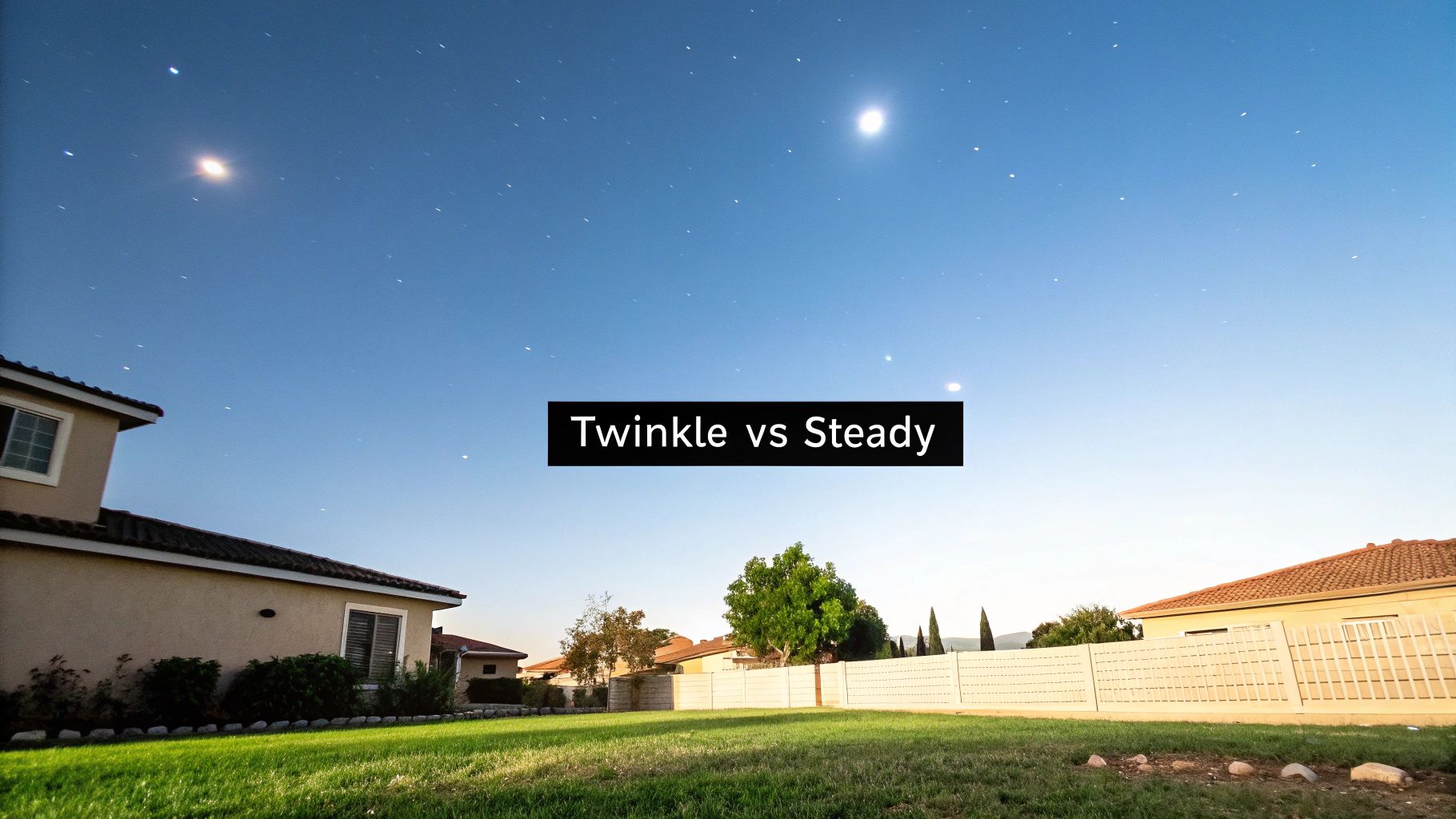
This image captures that key visual difference perfectly. That steady gleam from a planet is often the first giveaway that you’ve spotted one of our cosmic neighbours.
The UK’s astronomy community does a brilliant job helping young learners get to grips with these ideas. Schools often use fantastic resources like interactive posters and fun talks to explain the science in an exciting way. You can learn more about these great educational tools from The Royal Society of Edinburgh.
Learning to identify what’s what in the night sky is a brilliant skill for any budding Space Ranger. If you fancy getting a closer look, you might want to check out our guide on how to use telescopes for your next family adventure.
Fun Activities to Explore Stars and Planets
Ready to get hands-on? Bringing the cosmos into your home is a fantastic way to really understand the differences between stars and planets. These simple and fun activities use everyday items to make those big space ideas much easier to grasp.
One of the best ways to show how stars and planets handle light is with nothing more than a torch and a ball. It's a simple experiment, but it perfectly shows how stars create their own light while planets just reflect it.
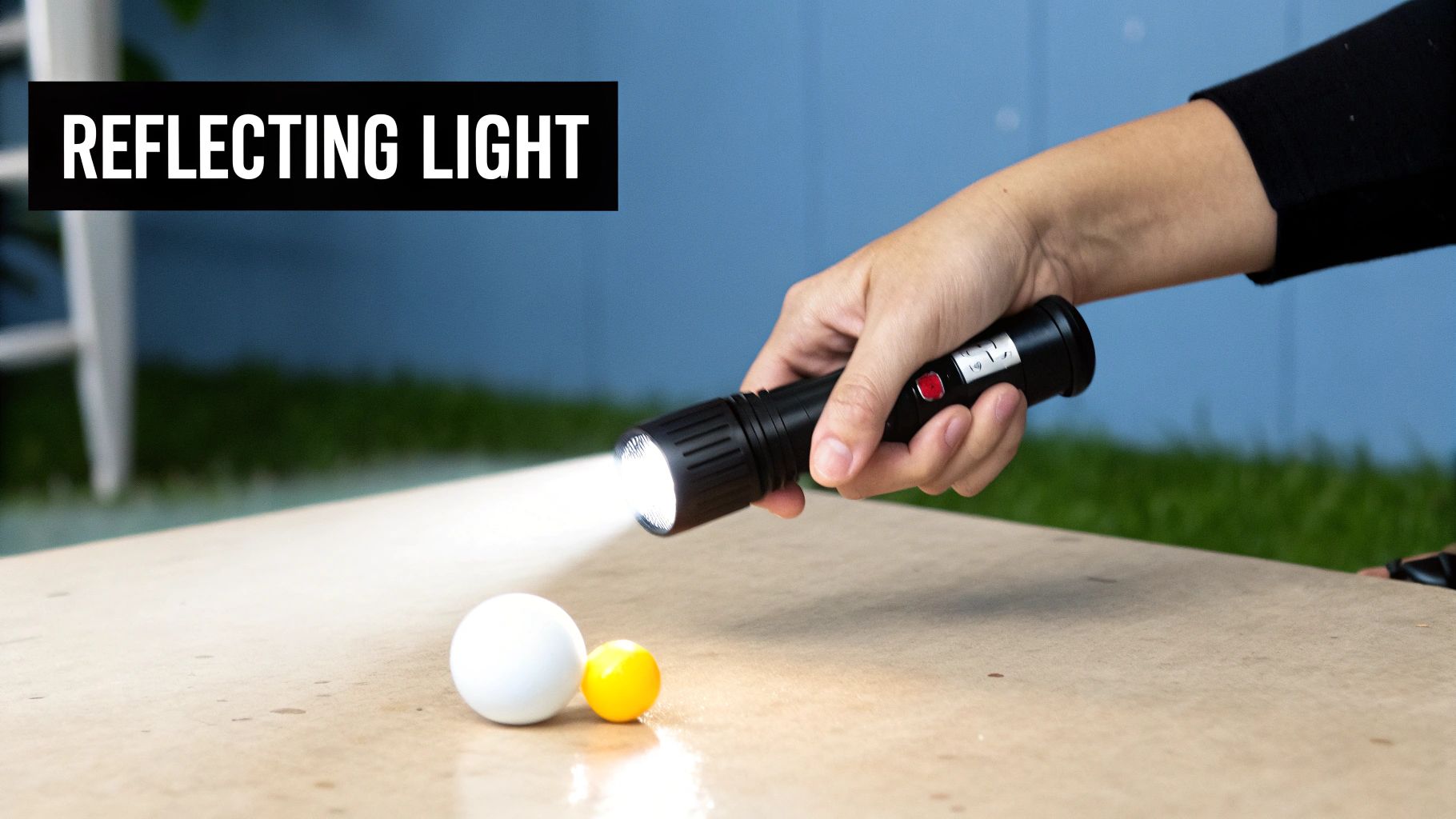
You can see the core idea right there: the torch is our star, making its own beam of light. The ball is our planet, and you can only see it because it’s reflecting that light back at you.
Make a Star in a Jar
Let's start with the stars! This 'Star in a Jar' activity is a brilliant way to see for yourself how stars produce their own light.
- Grab a clean, empty glass jar.
- Carefully pop a small, battery-powered torch or a string of fairy lights inside.
- Now, switch it on in a dark room and watch your jar glow from within—just like a real star!
This little experiment is a great reminder that stars are the source of their own brightness. If you're looking for more creative ideas like this, check out our amazing list of freebies and activities to keep the cosmic fun going.
Got Questions? We’ve Got Answers!
It’s brilliant to be curious about space! Asking questions is the first step on any great adventure. Here are some quick answers to a few of the things young Space Rangers (and their families!) often wonder about when they look up at the night sky.
Are There More Stars or Planets in the Universe?
That’s a big question with an even bigger answer! There are far, far more stars than planets. Scientists figure there are hundreds of billions of galaxies out there, and each one of those can have hundreds of billions of stars. It’s a mind-boggling number!
We now know that most of those stars probably have planets whizzing around them, but even so, the total number of stars is still much, much larger.
Can a Planet Ever Turn Into a Star?
This is a fantastic question, but the simple answer is no—a planet can't just decide to become a star. It all comes down to size and having the right ingredients. To light up, stars need to be incredibly massive to kickstart the fiery nuclear fusion process that makes them shine.
Planets are just too small and don't have nearly enough material to ignite that cosmic fire. They're born differently and stick to their own path through space.
Think of it like baking. To make a giant, star-sized cake, you need a mountain of flour and sugar. Planets are more like cupcakes—made from similar stuff, but they just don't have enough to become the main event!
Is Our Sun a Star or a Planet?
Our Sun is definitely a star! It’s the star right at the centre of our solar system, and it’s the reason we have light and warmth here on Earth.
It looks so much bigger and brighter than all the other stars because it's the closest one to us. All the planets in our cosmic neighbourhood, including our home, Earth, are on a constant journey orbiting the Sun.
Why Do Planets and Stars Seem to Move Differently?
Have you ever looked up at night and noticed that some bright lights seem to wander? Those are the planets! Stars are so unbelievably far away that, from our point of view, they appear to stay in fixed patterns we call constellations.
Planets, on the other hand, are much closer to us and are busy orbiting the Sun, just like we are. This movement makes them look like they are travelling across the backdrop of distant stars over days, weeks, and months. They're the original 'wandering stars'.
Hopefully, that's cleared a few things up! Exploring space is one of the most exciting adventures you can have. For more cosmic stories that bring the universe to life, grab the Space Ranger Fred books and get ready for an out-of-this-world journey.