
Meta title: What Makes the Sky Blue for Kids
Meta description: Discover what makes the sky blue with simple science, UK sky facts, and a fun jar experiment for children, parents, teachers, and librarians.
You'd think “what makes the sky blue” would have a tiny answer. Blue sky, blue question, done.
But children spot the problem fast. If the sky is blue, why is it white near the horizon, grey in Britain, and orange at sunset? That's when this turns into a proper mission.
A Cosmic Question from Planet Earth
A child looks up on the school run and asks, “Why is the sky blue?” Then, usually two seconds later, comes the harder follow-up. “And why isn't it blue all over?”
That's the right question.
The sky isn't painted blue like a bedroom wall. It's more like a giant light show happening above our heads all day long. Sunlight arrives from space, meets our atmosphere, and starts bouncing about in clever ways. If you want a simple starting point for the air around us, this guide to what the atmosphere is gives the bigger picture.
The blue sky is really a story about sunlight and air working together.
For children, this can feel like magic. For adults, it helps to know it's a science story with a clear explanation. The trick is to build it one idea at a time.
Start with this. Sunlight may look white, but it carries many colours. Then add the next clue. The air above Earth is full of tiny molecules. Those molecules don't treat every colour equally.
That's the heart of the mystery. Not all colours get scattered in the same way, so the sky we see depends on which colours are being sent around the atmosphere most strongly.
The Secret Rainbow Hidden in Sunlight
Sunlight looks plain at first glance. White. Ordinary. Nothing to report, mission commander.
But white sunlight is a bundle of colours hiding in plain sight. You can see that when light passes through a prism or water droplets and spreads into a rainbow.
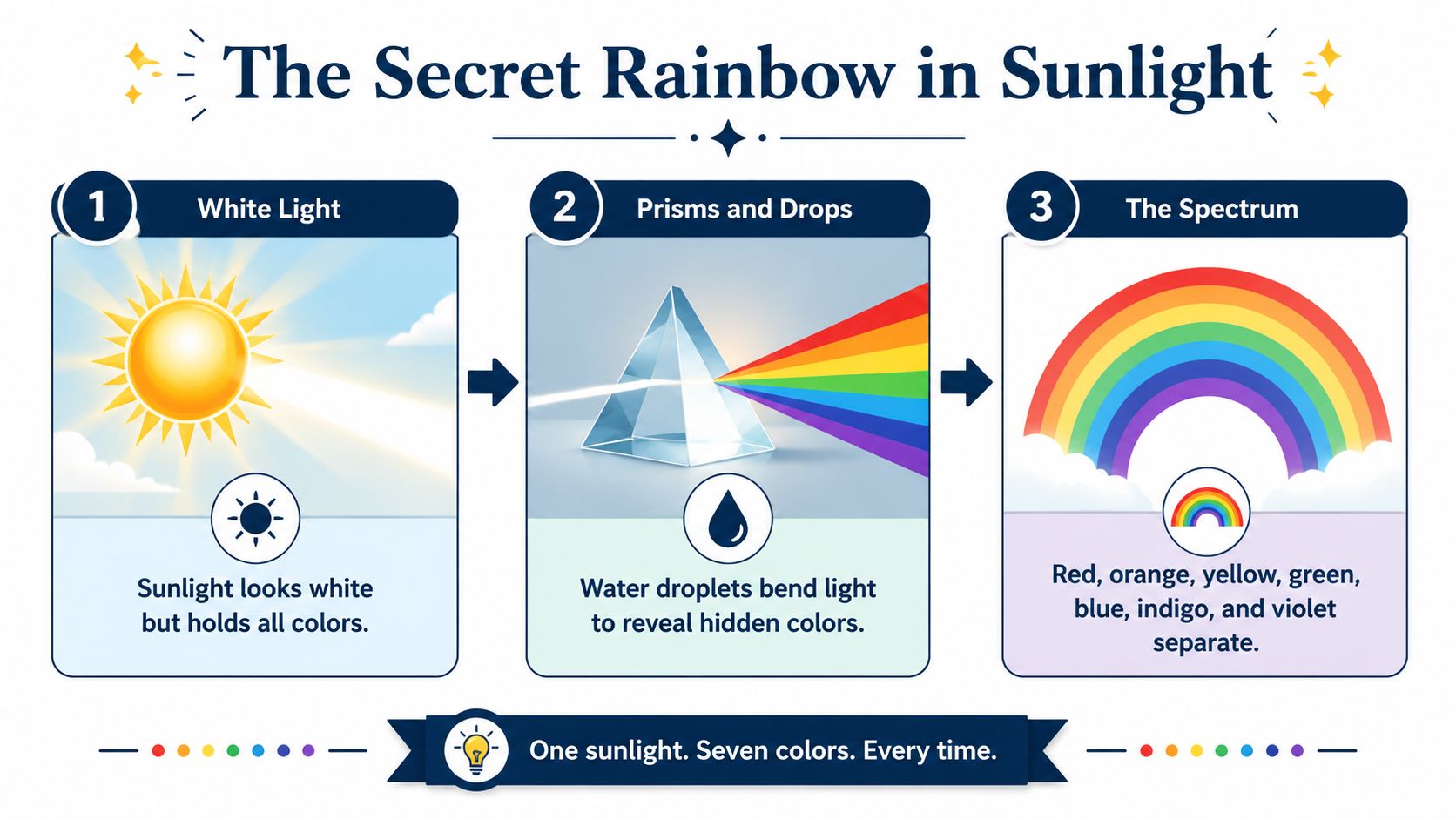
If your young explorer likes big science words, the rainbow is part of the electromagnetic spectrum. If they don't, “hidden colours in sunlight” works beautifully.
Why blue gets bounced around more
Here's the key idea. Earth's atmosphere is packed with tiny molecules, and those tiny molecules are especially good at scattering shorter wavelengths of light.
Scientists worked this out in stages. John Tyndall first observed this effect in 1859, and later Lord Rayleigh described it mathematically. Blue light is scattered about 10 times more effectively than red light by tiny molecules in the atmosphere, as explained in the University of California, Riverside summary of Rayleigh scattering.
That's a huge colour bias.
A handy way to picture it is a pinball machine. Sunlight comes in like a stream of balls. Red light travels more smoothly through. Blue light gets pinged off in lots of directions by the tiny particles in the air.
Why the whole sky looks blue
When blue light is scattered all over the atmosphere, it reaches your eyes from many directions. So even when you aren't looking straight at the Sun, you still see blue light arriving from the sky above you.
That's why the sky seems to glow blue across such a wide space.
A few points help children hold the idea in their heads:
- Sunlight starts mixed: It contains the colours of the rainbow.
- Air molecules are tiny: Tiny things in the atmosphere scatter short wavelengths especially well.
- Blue spreads out: Blue light gets sent around the sky more strongly than red.
Practical rule: If a child can say “sunlight has lots of colours, and air scatters blue light more”, they've got the core science.
There's also a lovely history lesson tucked inside this. Once scientists could describe how wavelength affected scattering, the blue sky stopped being just a puzzle and became a measurable physics problem. That's a brilliant message for classrooms. Questions that look simple can lead to deep science.
Your First Science Mission A Blue Sky in a Jar
Children understand science best when they can see it happening. So let's build a tiny sky on the kitchen table.
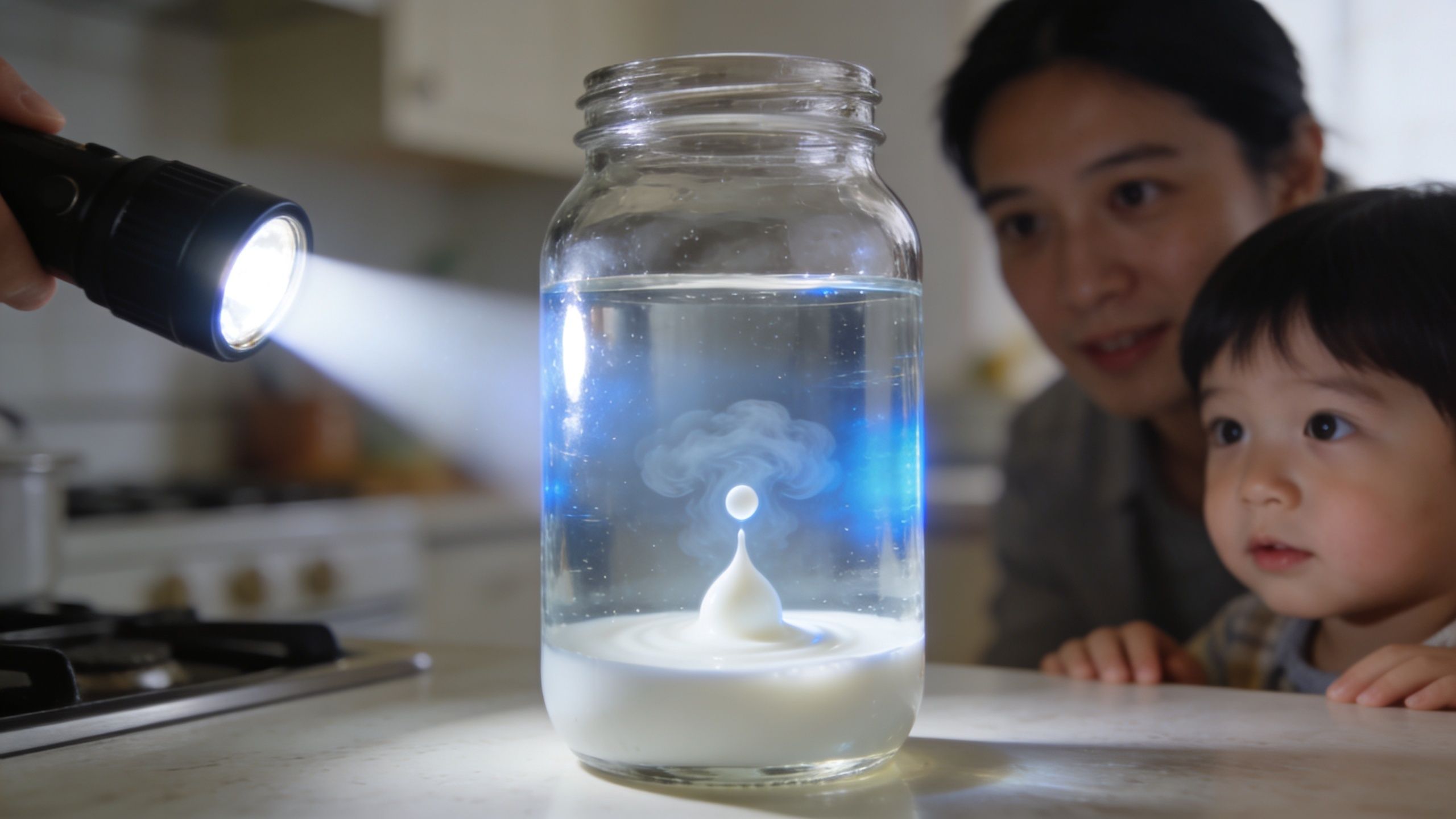
What you need
- A clear glass or jar
- Water
- A torch
- A drop or two of milk
If you'd like more simple ways to inspire your child with home science, that collection is a helpful extra resource for parents and teachers.
How to do it
- Fill the jar with water. Leave a little space at the top.
- Add a tiny drop of milk. Stir gently. You want the water only slightly cloudy.
- Shine the torch through the side. Look from the side of the jar first.
- Now look toward the far end of the jar. The colour can change depending on where you stand.
What children usually notice
From the side, the water can look bluish. Toward the far end, the light may look warmer, more yellow or orange.
That happens because the milk particles scatter the shorter wavelengths more strongly, a bit like the atmosphere does. It isn't a perfect copy of the sky, but it gives children a clear visual clue.
Mission notes for grown-ups
| Look for | What it means |
|---|---|
| Bluish glow from the side | Scattered short-wavelength light |
| Warmer light through the jar | Longer wavelengths travelling through more easily |
| No clear effect | Too much or too little milk |
Keep the torch out of children's eyes, and use only a small amount of milk. If the jar looks like a milkshake, the experiment has gone a touch too far into astronaut café territory.
For more hands-on ideas, explore these fun science activities for kids.
If your class or family enjoys this sort of story-led science, Space Ranger Fred books are a fun next step for curious readers who like experiments, adventures, and big questions.
Why Sunsets Look Red and Orange
If blue light gets scattered so easily, a clever child will ask the next thing straight away. Why doesn't the sky stay blue when the Sun is setting?
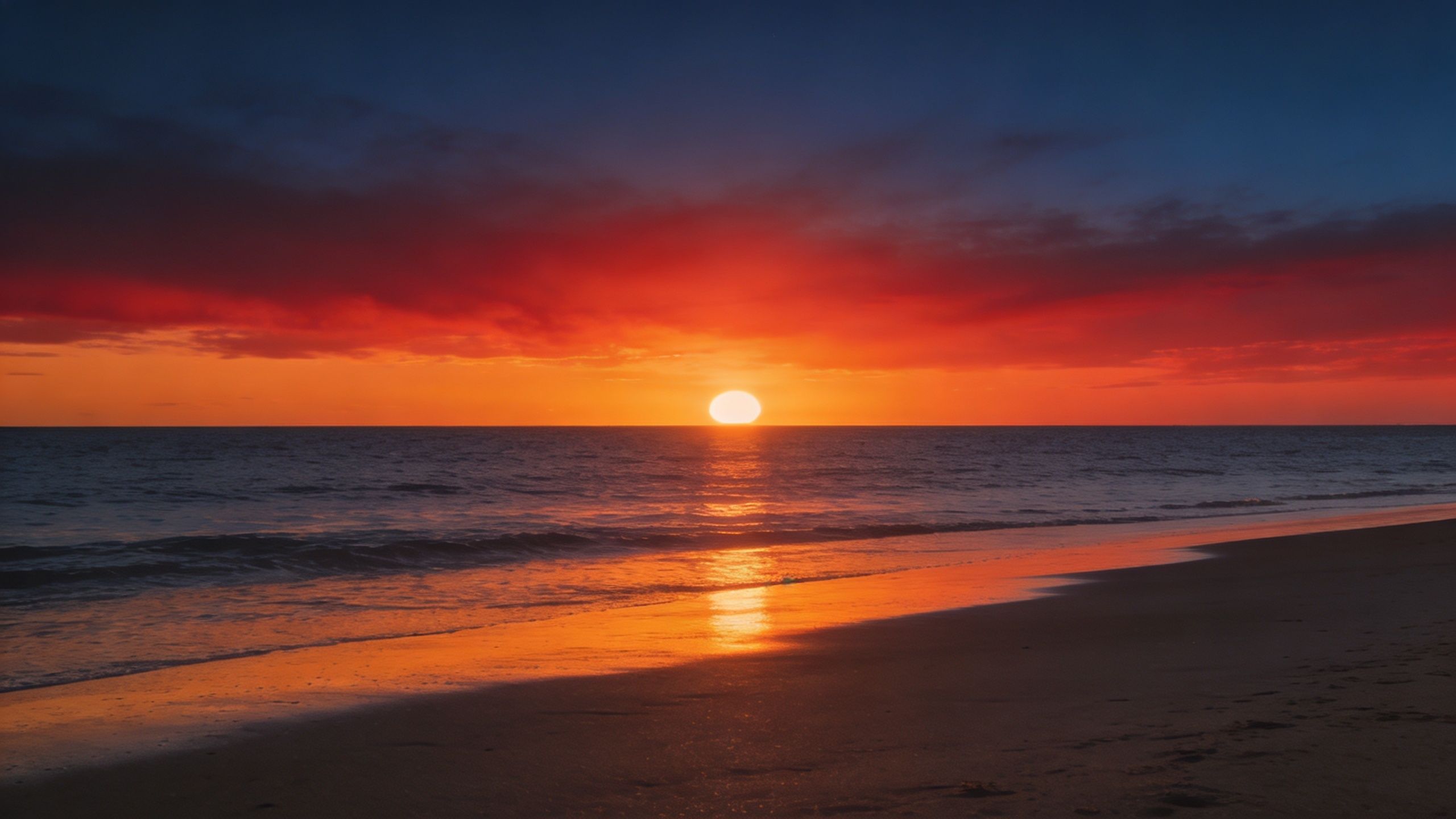
The answer is about distance through the atmosphere.
When the Sun is high, sunlight takes a shorter route through the air to reach you. When the Sun is low, at sunrise or sunset, the light has to travel through a much thicker slice of atmosphere. The UK Met Office explains that this longer journey causes more blue and violet light to be scattered away, allowing more yellow, orange, and red light to reach our eyes.
A simple way to picture it
Think of sunlight as a runner.
A short race leaves plenty of energy. A long muddy race through a giant field is another matter. By the time the light has crossed all that extra atmosphere, much of the blue part has been scattered out of the direct beam.
What's left coming straight from the Sun looks warmer.
- Sun high in the sky: shorter path, blue sky effect dominates
- Sun low near the horizon: longer path, red and orange stand out more
- Near the horizon: colours often look softer or paler because more light gets mixed and re-scattered
There's one more advanced twist that's worth knowing. A 2023 paper in Atmospheric Chemistry and Physics reported that at a solar zenith angle of 90°, ozone accounts for 66% of the blue colour of the zenith sky, with Rayleigh scattering accounting for 34%, under those sunset conditions, as described in the Atmospheric Chemistry and Physics paper.
That tells us something important. The sky's colour isn't controlled by one idea only. It changes with the Sun's position and with the chemistry of the atmosphere.
Here's a short visual explainer to support the sunset part of the mission:
Answering More Sky-High Questions
Children rarely stop at one answer. Sensible of them.
Why is the sky often pale in the UK
Anyone in Britain knows the sky isn't always a bold storybook blue. Often it looks pale, washed out, or nearly white near the horizon.
That's because humidity, haze, and other larger particles in the air scatter light more evenly across colours. The Met Office notes that in the UK the sky can appear paler or more white because water vapour, haze, and similar particles dilute the blue.
This is why a child in Cornwall, Cardiff, Manchester, or London may say, “But the sky doesn't look that blue today.” They're not wrong. They're making a smart observation.
In real life, the sky's colour depends on more than one ingredient. Sunlight, air molecules, humidity, haze, and viewing angle all join the experiment.
Why is outer space black
Outer space doesn't have Earth's atmosphere around your line of sight in the same way. Without that blanket of air scattering sunlight across the sky, space looks black.
The Sun is still shining. There just isn't the same atmospheric stage for the light show.
Is the sky blue on every planet
No. Planet skies depend on what their atmospheres contain.
A different atmosphere means different scattering, different dust, and different colours. That's a lovely reminder that science isn't about memorising one answer and stamping it onto everything. It's about asking what conditions are present.
Quick answers children can remember
- Why is the sky blue? Tiny bits of air scatter blue light strongly.
- Why is sunset red? Sunlight travels through more atmosphere, so blue gets scattered away from the direct beam.
- Why is the UK sky sometimes whitish? Water vapour, haze, and particles mix the colours more evenly.
That's the “I can explain” stage beginning to switch on.
Your Mission Debrief Sky Explorer
Mission complete, Sky Explorer.
You've got three powerful ideas now. Sunlight carries many colours. Tiny molecules in the atmosphere scatter blue light especially well. And the Sun's position changes the path light takes, which changes the colours we see.
That means a child can move from “I think” to “I try” and then to “I can explain”. That's real learning. Not just memorising a sentence, but understanding why the world looks the way it does.
If you enjoy visual storytelling around skies and weather, the Boo Snoo Sky Kids series is another creative example worth a look.
To keep children exploring, you might also enjoy the Space Ranger Fred freebies and activities page and this related post on why space is black.
Learning should be experienced, not just delivered.
Ready for more story-led STEM adventures? Explore the Space Ranger Fred books for fun science-rich reading, and if you're a teacher, librarian, or organiser, ask about interactive school visits that build confidence in reading, speaking, and curiosity through unforgettable space storytelling.