
Hey there, future scientist! Ready to turn your kitchen into a super-cool laboratory and uncover the secrets of the universe, one fizz and pop at a time? Science isn't just about tricky equations and white lab coats; it’s about being curious, getting creative, and feeling that awesome thrill of discovery. It’s all about asking ‘what if…?’ and then finding out the answer for yourself! Just like our hero, Space Ranger Fred, who uses his STEM smarts to solve cosmic puzzles in books like Space Ranger Fred and the Tick Tock Tale, you can become a problem-solver right in your own home.
Think of this guide as your launchpad, packed with nine of our absolute favourite hands-on science experiments for children. We’ve picked activities that use stuff you probably already have at home, making them easy, affordable, and perfect for a rainy afternoon. From bubbling volcanoes to secret messages in invisible ink, each experiment is a mini-adventure into the world of chemistry, physics, and biology. We'll give you everything you need: a simple list of materials, clear step-by-step instructions, and the "how it works" science behind each amazing reaction. So, grab your safety goggles and let's get exploring!
1. Volcano Eruption with Baking Soda and Vinegar
This classic chemistry experiment is a fantastic way to see an acid-base reaction in action and is one of the most memorable science experiments for children. It shows what happens when you mix an acid (that's the vinegar) with a base (the baking soda). The mix creates a gas called carbon dioxide. All that gas builds up pressure and has to go somewhere, so it forces the mixture up and out, just like a real volcano!
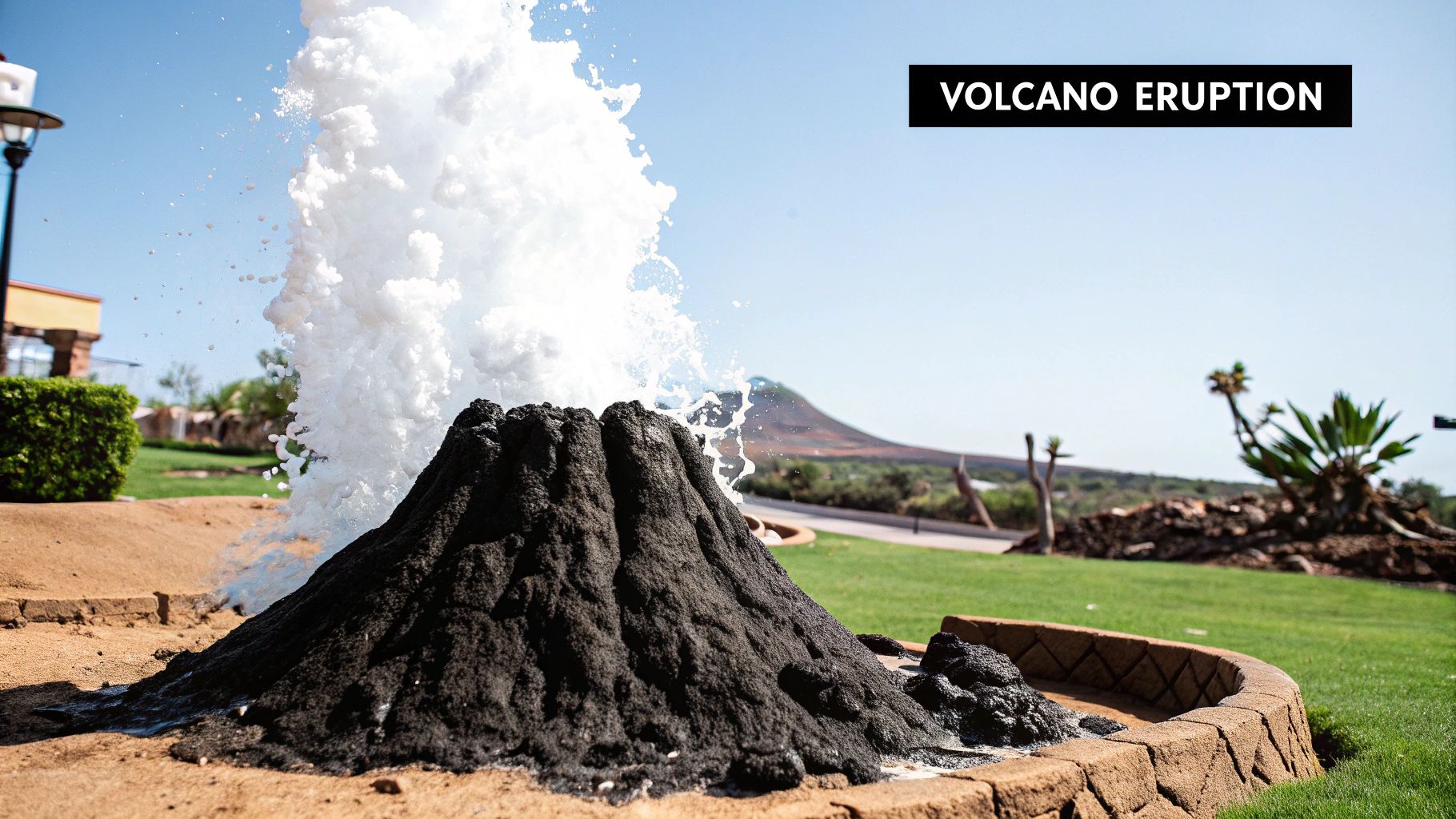
This experiment is perfect for showing off basic chemical principles in a safe, visual, and super exciting way. It’s so simple, making it great for home learning or a school science fair. Just like the problem-solving adventures in Space Ranger Fred and the Shoelace Adventure, this experiment gets you asking "why?" and "what if I tried this?".
### How to Create Your Eruption
This experiment is amazingly simple to set up. You can build a volcano cone around a small bottle using modelling clay or even just dirt in the garden for a more realistic look.
Actionable Tips for a Better Eruption:
- Add Dish Soap: A few drops of washing-up liquid will create more bubbles and a foamier, more dramatic "lava" flow.
- Use Warm Water: Mix a little warm water with the vinegar to help speed up the reaction for a faster, bigger eruption.
- Contain the Mess: Always do this experiment outside or place your volcano inside a big baking tray to catch the overflow.
- Experiment with Ratios: Encourage your child to see what happens when they add more baking soda or vinegar. Does it change how fast or how long the eruption lasts?
For more exciting STEM projects, you can explore a wide range of hands-on activities. Learn more about STEM activities for curious minds.
2. Rainbow Milk Explosion
Get ready for a beautiful and mesmerizing chemistry experiment! This is a colourful way to explore the science of molecules and something called surface tension. The Rainbow Milk Explosion shows how soap, which is a surfactant, breaks down the fat in milk. As the soap molecules race out to grab onto the fat molecules, they make the food colouring swirl and burst into amazing patterns. It looks like magic, but it's pure science!
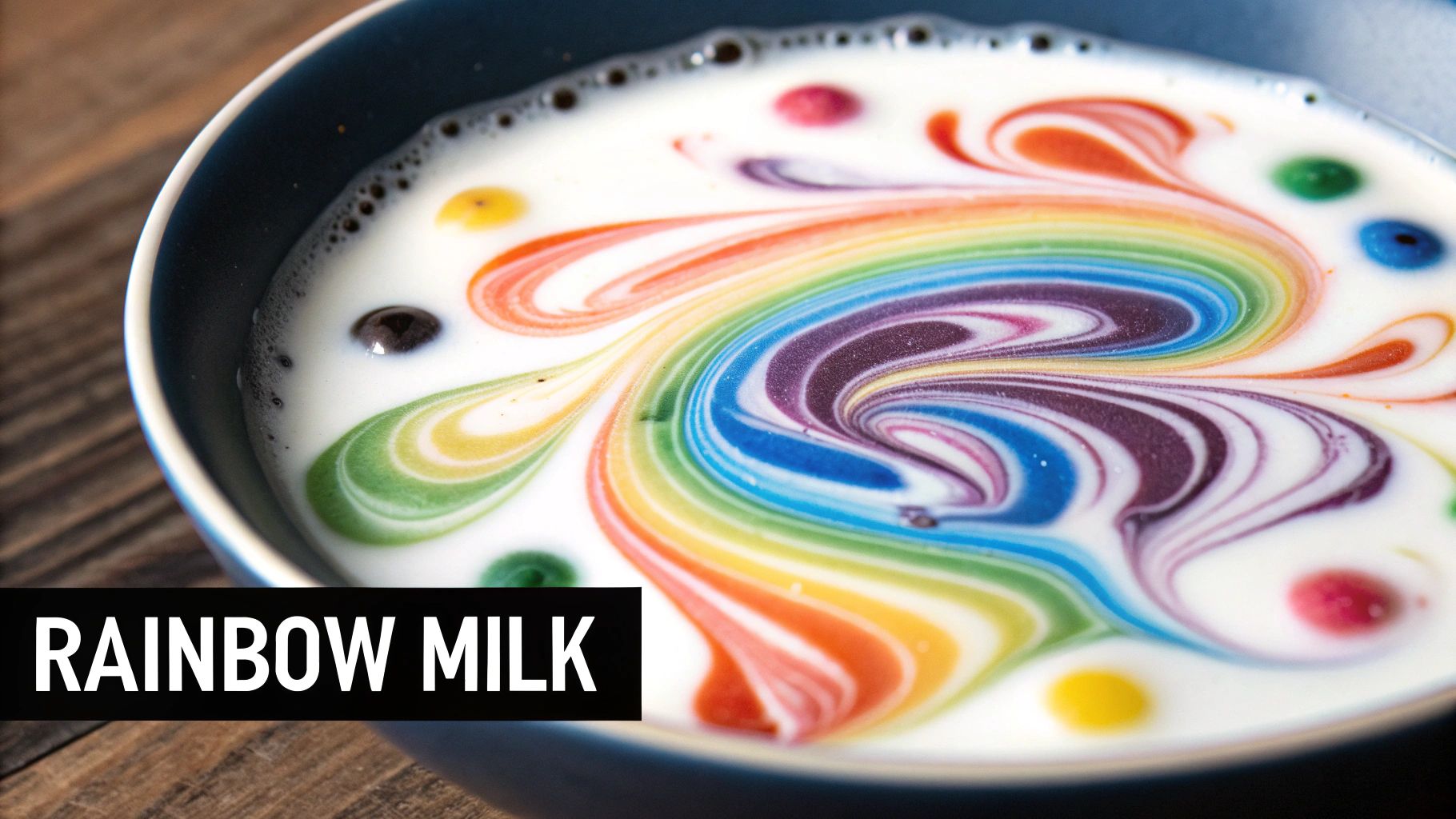
This is one of the most visually impressive science experiments for children, making it a star at science fairs and in classrooms. It’s a great way to teach tricky ideas like polarity in a simple, hands-on way. Just like Space Ranger Fred uses his problem-solving skills in Space Ranger Fred and the Tick Tock Tale, this activity gets kids to watch closely and wonder what they're seeing.
### How to Create Your Colourful Explosion
This experiment needs only a few common household items and delivers an instant "wow" factor. All you need is a shallow dish, milk, food colouring, and washing-up liquid.
Actionable Tips for a Better Explosion:
- Use Whole Milk: The higher fat content in whole milk gives a more dramatic and longer-lasting reaction because the soap has more fat molecules to chase.
- Place Colours Carefully: Add drops of different food colours to different spots in the milk. Try not to let them touch at first. This makes for better swirls.
- Just a Touch: Dip a cotton bud in soap and just touch the surface of the milk with it. Don't stir! Stirring will just mix the colours up too fast.
- Experiment with Soaps: Try different brands of washing-up liquid to see if they make different effects. Some might create a faster or brighter reaction.
3. Growing Crystals with Salt or Sugar
This fascinating experiment is a beautiful way to show the principles of solutions, saturation, and crystallization. When you dissolve a lot of salt or sugar in hot water, you create a supersaturated solution. As the water cools and evaporates over time, the tiny dissolved particles have nowhere to go, so they start linking up in a super-organized, repeating pattern, forming beautiful crystals. This process is similar to how real gemstones and minerals form deep inside the Earth!
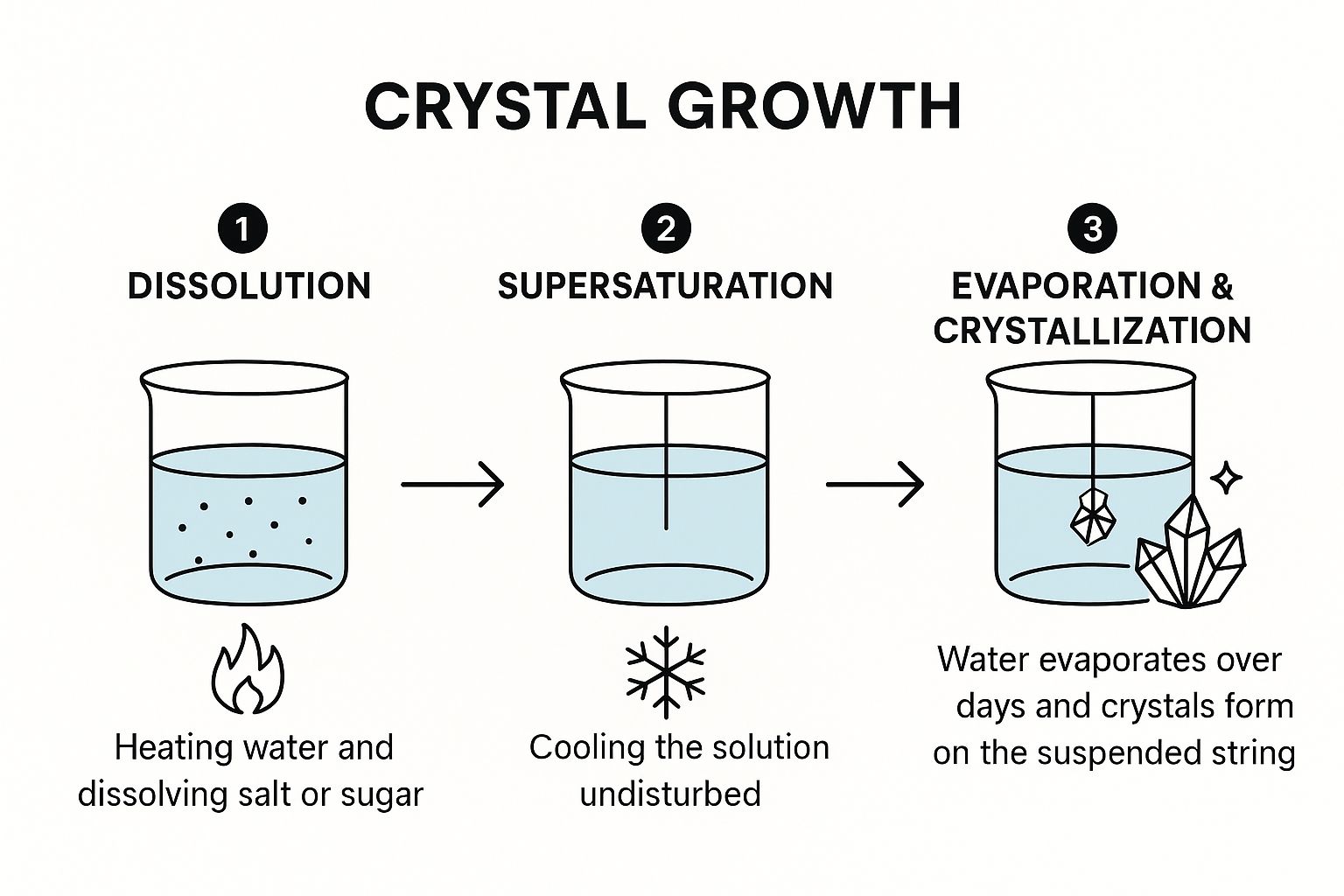
The infographic above shows the three key stages of crystal formation: dissolution, supersaturation, and crystallisation. Following these steps in order is the secret to growing great crystals. This experiment is a wonderful lesson in patience and observation. Much like the careful planning in Space Ranger Fred and the Umbrella Rescue, this activity shows how following a process leads to an amazing result.
### How to Grow Your Crystals
Growing crystals is part science, part patience, because the best results pop up after several days or even a week. It needs very little equipment but gives you a stunning result that kids can proudly put on display.
Actionable Tips for Bigger, Better Crystals:
- Use Distilled Water: Tap water has tiny impurities that can mess with crystal formation. Using distilled water will help you get clearer, better-shaped crystals.
- Create a Rough Surface: Crystals need something to grab onto. Tie a string to a pencil and lay it across the top of a jar, or use a fuzzy pipe cleaner as a base for the crystals to grow on.
- Ensure a Slow Evaporation: Cover the top of your container with a paper towel or a coffee filter. This keeps dust out but lets water evaporate slowly, which is the key to growing big crystals.
- Find an Undisturbed Spot: Put your crystal-growing setup somewhere it won't get bumped or moved. Vibrations can break up the delicate formation process.
This experiment is a perfect example of inquiry-based learning, where observation and patience are rewarded. Learn more about the benefits of inquiry-based learning.
4. Dancing Raisins in Carbonated Water
This fun physics experiment is a fantastic way to introduce kids to the ideas of density and buoyancy. It shows how gases can make an object float. The carbon dioxide bubbles in a fizzy drink stick to the wrinkly surface of the raisins. These bubbles act like tiny life jackets, making the raisins less dense than the water, so they float up. When they reach the top, the bubbles pop, and the raisins sink again, creating a cool, endless dance.
This experiment is a quiet, almost magical demonstration of science at work, making it perfect for the classroom or a calm afternoon at home. It’s a great way to spark curiosity about the invisible forces all around us. It’s one of the simplest yet most effective science experiments for children to see cause and effect in real-time.
### How to Make Your Raisins Dance
Setting this up takes just a minute. All you need is a tall, clear glass, some clear fizzy water (like soda water or lemonade), and a few raisins.
Actionable Tips for a Better Dance Show:
- Use Fresh Fizzy Water: The more bubbles in your drink, the more lift the raisins get, creating a livelier dance. A freshly opened bottle is best.
- Try Different Objects: Experiment with other small things like pasta shapes, corn kernels, or lentils. Do they dance too? This is a great way to practice observation skills.
- Choose a Clear Container: A tall, clear glass or jar is a must so you can see the raisins going up and down from all sides.
- Set Up a Control: Use a second glass with plain tap water and add raisins. This gives a clear comparison and proves that the bubbles are what make the raisins move.
For more great ideas to get children thinking scientifically, check out the full range of STEM learning adventures.
5. Invisible Ink with Lemon Juice
Time for some spy-craft! This classic chemistry experiment introduces kids to the world of oxidation and secret codes. By using lemon juice as ink, young scientists can write a secret message that stays invisible until it's revealed by heat. The citric acid in the lemon juice actually weakens the paper's fibers. When you heat it, that part of the paper oxidizes, or burns, at a lower temperature than the rest of the paper, turning brown and revealing the hidden words.
This experiment is a brilliant way to show chemical reactions using simple stuff from the kitchen. It mixes the thrill of being a secret agent with real science, making it perfect for a rainy day or a cool birthday party activity.
### How to Reveal Your Secret Message
Writing the message is the easy part; the magic happens when you gently heat the paper to make the words appear. An adult should always be in charge of the heating part.
Actionable Tips for Perfect Invisible Ink:
- Use the Right Tool: A cotton swab, a small paintbrush, or even a toothpick works perfectly for writing your message.
- Let It Dry Completely: Make sure the lemon juice is totally dry before you try to reveal the message. You can use a hairdryer on a low setting to speed this up.
- Safe Heating is Key: An adult can hold the paper close to a warm light bulb or gently iron it on a medium, no-steam setting. Never use an open flame.
- Experiment with Other Juices: Test other acidic liquids like orange juice, onion juice, or even milk to see if they work as well as lemon juice.
For more hands-on activities that spark imagination and a love for science, explore our collection of STEM projects for young explorers.
6. Egg in Vinegar Shell Dissolution
This fascinating biology and chemistry experiment shows the magic of chemical reactions with simple kitchen ingredients. It demonstrates how an acid (vinegar) reacts with a base (the calcium carbonate in an eggshell) to completely dissolve it. After a day or two, the hard shell vanishes, leaving behind the egg's delicate, see-through inner membrane. The result is a 'naked' or bouncy egg!
This experiment is a brilliant way to teach kids about acid-base reactions and cell membranes. The slow, visible change over a couple of days builds excitement and is a fantastic lesson in patience and observation. Much like the careful planning in Space Ranger Fred and the Umbrella Rescue, this activity shows how a steady process can lead to an amazing outcome.
### How to Create Your Bouncy Egg
This experiment needs very little setup but has a big impact. All you need is a raw egg, a glass or jar, and enough white vinegar to completely cover the egg.
Actionable Tips for a Better Transformation:
- Use Fresh Vinegar: Fresh white vinegar has a higher concentration of acetic acid, which will dissolve the shell more effectively.
- Change the Vinegar: For a perfectly clean result, carefully swap out the old, cloudy vinegar with fresh vinegar after the first 24 hours.
- Handle with Care: The final egg membrane is very fragile. Handle your bouncy egg gently over a sink or tray to avoid a messy pop!
- Document the Process: Encourage your child to take daily photos or draw pictures of the egg to track the changes. What happens to all the bubbles that form on the shell?
For more exciting STEM projects, you can explore a wide range of hands-on activities. Learn more about STEM activities for curious minds.
7. Static Electricity with Balloons
This classic physics experiment is a super fun and safe way to explore the invisible forces of static electricity. It clearly shows how electrostatic charge works. When you rub a balloon on your hair or a sweater, you're transferring tiny particles called electrons. This build-up of charge creates static electricity, which can then attract or repel other objects. It's a hands-on way to feel a basic principle of electricity.
This experiment is perfect for introducing ideas like atoms, electrons, and charge in a really fun, interactive way. Its simplicity makes it a fantastic activity for a rainy day at home or a primary school science lesson.
### How to Create Static Magic
This experiment needs almost no setup and delivers a huge "wow" factor. All you need is a balloon and a few household items to test its new powers.
Actionable Tips for Better Static Effects:
- Low Humidity is Key: Static electricity works best in dry air. Try this experiment on a cool, dry day for the strongest results.
- Use the Right Materials: Rubbing the balloon on a woolly jumper or hair is especially good for building up a strong static charge.
- Test Attraction: Challenge your child to pick up small, light things without touching them, like tiny pieces of paper, puffed rice, or even salt and pepper.
- Bend Water: Hold the charged balloon near a thin, steady stream of water from a tap and watch the water bend towards the balloon! This shows that the charge is powerful enough to affect liquids.
To discover more STEM activities that spark wonder, you can find a variety of engaging projects and ideas. Learn more about STEM activities for inquisitive kids.
8. Colour-Changing Cabbage pH Indicator
This cool chemistry experiment turns your kitchen into a science lab by creating a natural pH indicator from red cabbage. It shows the concept of pH—how acidic or alkaline something is—using a common vegetable. When you boil red cabbage leaves, you extract compounds called anthocyanins. These compounds change colour when mixed with acids or bases, giving you a vibrant, visual scale of a substance's chemical properties.
This experiment is perfect for introducing kids to chemistry concepts like acids and bases in a safe and colourful way. The magic of watching the purple cabbage water turn red with lemon juice or green with baking soda solution is a great way to make abstract scientific ideas real and understandable.
### How to Test Your Substances
Making the indicator is as simple as boiling chopped red cabbage in water and straining out the leaves. The purple liquid that's left is your magic potion, ready to test different things around the house.
Actionable Tips for a Better Colour Change:
- Strain It Well: Make sure you strain the cabbage water really well to get rid of all the plant bits. This will give you a clear and consistent indicator.
- Test a Wide Range: Gather safe household items like lemon juice, vinegar, soapy water, and a baking soda solution to see a whole rainbow of colour changes.
- Use Clear Containers: Test your substances in clear glasses or jars so your child can easily see the vibrant colour changes from every angle.
- Create a pH Chart: Help your child make a rainbow chart by lining up the tested liquids from most acidic (reds/pinks) to most alkaline (greens/yellows). This helps them visualize the pH scale.
For more engaging STEM projects that bring science to life, explore our full range of hands-on activities. Discover more about STEM activities for curious minds.
9. Homemade Slime Chemistry
Making homemade slime is more than just a gooey, fun activity—it’s a fantastic, hands-on introduction to polymer chemistry. This super popular experiment shows how mixing two liquids can create a totally new substance. The magic happens when polyvinyl alcohol (which is in white school glue) reacts with a cross-linking agent like borax or saline solution. This reaction links the long polymer chains in the glue together, forming that unique, stretchy, and non-Newtonian fluid we all know as slime.
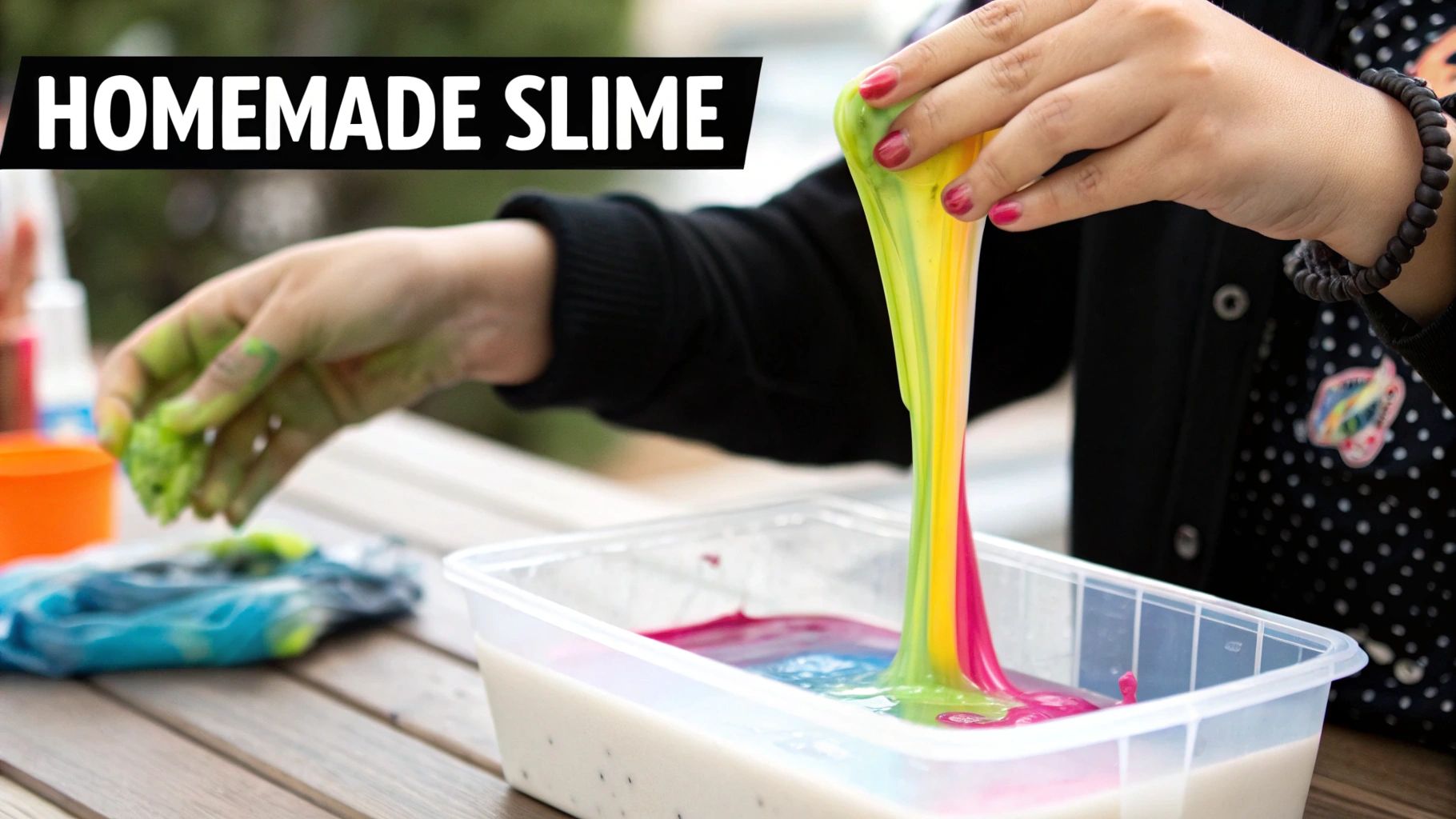
This experiment is a great way to explore states of matter, chemical bonds, and material science. Its popularity has made it one of the most fun and engaging science experiments for children. Much like the creative problem-solving in Space Ranger Fred and the Tick Tock Tale, making slime encourages kids to experiment and see how small changes can lead to very different results.
### How to Create Your Own Polymer Slime
Creating the perfect slime is all about getting the chemical reaction just right. The process involves carefully mixing your glue base with an activator to get the consistency you want.
Actionable Tips for Perfect Slime:
- Add Activator Slowly: Pour your saline solution or liquid starch in a little at a time while you keep stirring. This gives you control over the slime’s final texture and stops it from getting too stiff.
- Measure Precisely: Use measuring cups and spoons for consistent results. This helps kids understand why accuracy is important in science.
- Protect Your Workspace: Cover your table with a plastic cloth or work on a tray, and wear old clothes to avoid any messy accidents.
- Experiment with Ratios: Encourage your child to see what happens if they add a little more glue or a bit less activator. This experimentation is a key part of the scientific method!
For more amazing projects that blend creativity with science, you can find other mind-blowing science experiments for kids.
Science Experiments: 9-Item Comparison Guide
| Experiment | Implementation Complexity 🔄 | Resource Requirements ⚡ | Expected Outcomes 📊 | Ideal Use Cases 💡 | Key Advantages ⭐ |
|---|---|---|---|---|---|
| Volcano Eruption with Baking Soda and Vinegar | Low | Low | Dramatic fizzing eruption | Engaging demonstrations, STEM education for young kids | Safe, inexpensive, visually exciting |
| Rainbow Milk Explosion | Low | Low | Colorful swirling patterns | Intro to molecular science, classroom demos | Visually captivating, repeatable |
| Growing Crystals with Salt or Sugar | Medium | Low-Medium | Formation of tangible crystals over days | Long-term observation, geology lessons | Teaches patience, lasting keepsakes |
| Dancing Raisins in Carbonated Water | Low | Low | Continuous buoyant motion | Physics basics, density and buoyancy lessons | Simple, fun, immediate results |
| Invisible Ink with Lemon Juice | Low-Medium | Low | Hidden messages revealed by heat | Chemistry introductions, creative messaging | Magic-like effect, easy materials |
| Egg in Vinegar Shell Dissolution | Medium | Low | Flexible "bouncy" egg membrane over time | Acid-base reaction demos, cell biology intro | Tangible transformation, interactive |
| Static Electricity with Balloons | Low | Very Low | Immediate static effects | Introductory physics, electricity demos | Repeatable, interactive, simple |
| Color-Changing Cabbage pH Indicator | Medium | Low-Medium | Visual pH range color changes | Chemistry labs, environmental science | Natural indicator, broad concept introduction |
| Homemade Slime Chemistry | Medium | Low-Medium | Moldable, tactile slime | Polymer science, hands-on chemistry activities | Highly engaging, teaches polymers |
Your Mission: Keep Exploring!
Mission accomplished, young scientists! You’ve journeyed through bubbling volcanoes, dancing raisins, and colourful chemical reactions. From the simple fizz of baking soda and vinegar to the surprising strength of a dissolving eggshell, you’ve seen firsthand that science is not just something you read about in a textbook; it's something you do. Each of these science experiments for children has been a small but mighty step on a grand journey of discovery.
The most important part of science isn't just about getting the 'right' answer or a perfect result. It's about nurturing a curious mind and asking powerful questions: Why did that happen? What if I used a different liquid? How could I make the reaction bigger? This is the kind of critical thinking that fuels real scientists, engineers, and even intrepid space explorers every single day. You’ve already started developing this crucial skill.
From Kitchen Science to Cosmic Quests
Think back to our experiments. When you created invisible ink with lemon juice, you were exploring the principles of oxidation. When you built a colour-changing pH indicator from a cabbage, you were stepping into the world of analytical chemistry. These activities are more than just fun ways to spend an afternoon; they are foundational lessons in cause and effect, observation, and methodical investigation.
The real magic of science lies in understanding the 'why' behind the 'wow'. Each experiment you've completed has uncovered a small piece of the puzzle that explains how our incredible universe works, from the smallest atom to the largest galaxy.
Just as Space Ranger Fred learns about forces and air resistance in Space Ranger Fred and the Umbrella Rescue, you’ve learned that the world around you is full of amazing, invisible forces and principles waiting to be explored. The static electricity that made a balloon stick to the wall is a cousin to the lightning that flashes across the sky. The principles behind making slime are used to create advanced polymers for everything from medical devices to spacecraft.
Your Next Scientific Adventure Awaits
Don't let the adventure stop here. The nine activities in this guide are just the beginning. The world is your laboratory, and every single day presents a new opportunity for discovery.
- Observe your surroundings: Notice how dew forms on the grass or why some clouds are dark and others are white.
- Ask questions constantly: Wonder why a boat floats but a small stone sinks. Question how a tiny seed grows into a giant tree.
- Experiment safely: With a grown-up's help, adapt the science experiments for children we’ve shared. What happens if you use a different type of vinegar for the volcano? Can you grow crystals from other household substances?
By embracing this mindset, you are not just playing; you are training your brain to see patterns, solve problems, and think creatively. These skills are essential not only for becoming a scientist but for succeeding in any path you choose. Keep that spark of curiosity burning bright, because the next incredible discovery could be yours!
Ready to take your scientific curiosity to the next level? The Space Ranger Fred book series turns complex STEM concepts into thrilling adventures. Continue your journey of discovery and see how science solves problems across the galaxy at Space Ranger Fred.