
Alright, mission control and young space gardeners, welcome aboard! Ever stared at a juicy red strawberry and wondered how it all begins from a single, tiny seed? You’ve landed in the right spot. So, how long do strawberry seeds take to germinate? The short answer is usually between one and six weeks.
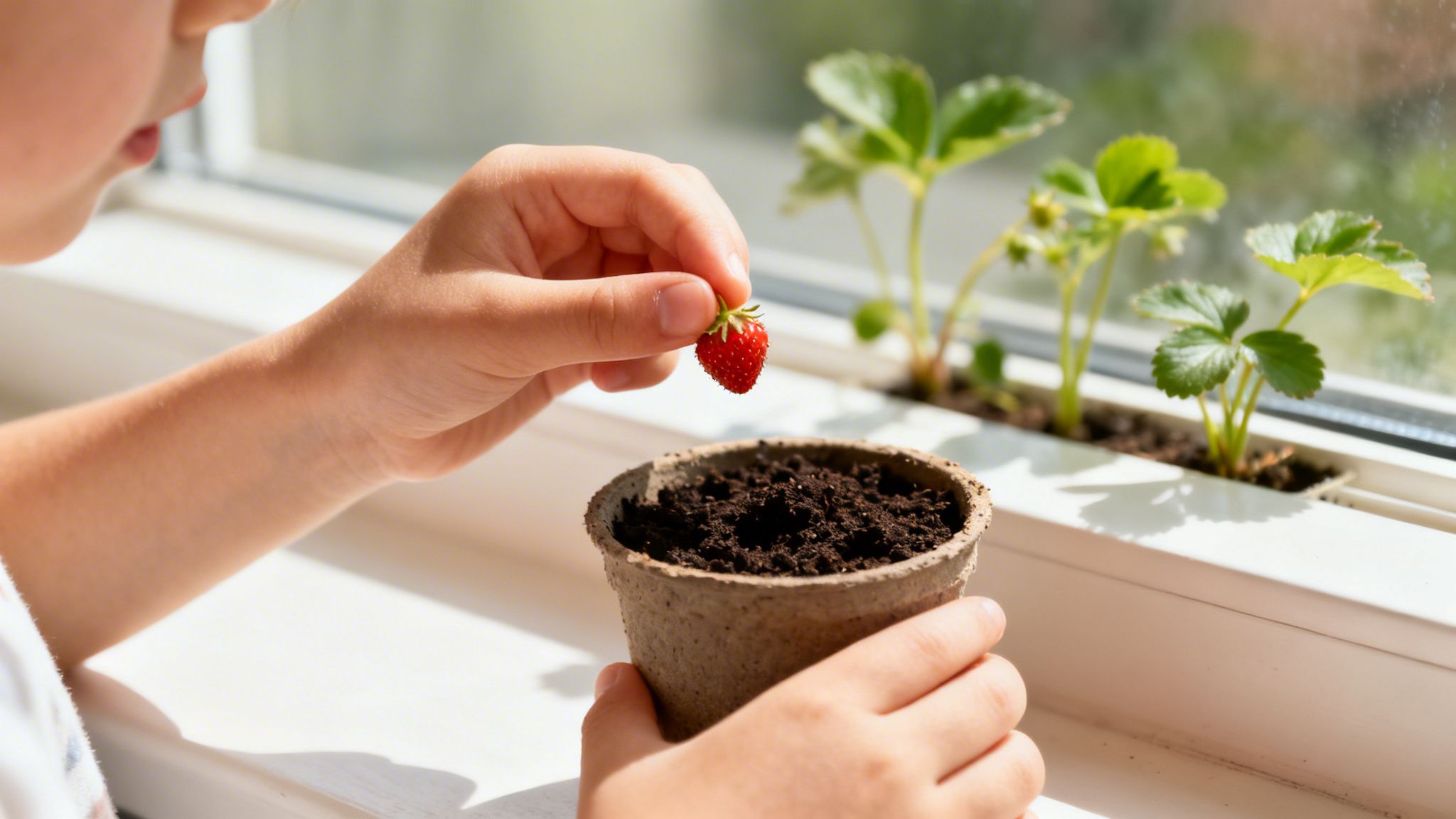
That’s a bit of a wide window, isn’t it? That’s because, just like a real space mission needs perfect conditions for a successful launch, your strawberry seeds have a few non-negotiables before they’ll decide to sprout. Think of this as your pre-flight mission briefing before we get our hands dirty.
In this guide, we're going to dive into all the secrets for helping those little seeds blast off and grow strong. Getting things right from the very start is your ticket to a successful harvest later on.
Here’s what you’ll need to know for a successful launch:
- Perfect Timing: Knowing when to plant is just as crucial as knowing how. Starting your seeds at the right time of year gives them the best possible shot at success.
- The Right Stuff: Every seed astronaut needs warmth, light, and just the right amount of water to wake up and start its journey.
- Patience, Young Gardener: Some seeds are sprinters, bursting out of the soil quickly. Others are more like marathon runners, taking their sweet time. Your job is to be the patient mission commander, keeping an eye on things.
Beyond just waiting for sprouts, understanding the optimal time to plant strawberries is key to a truly bountiful harvest, especially if you live somewhere with unique seasons.
Ready to start your gardening adventure? Let's grow some strawberries
The Secret Mission of Cold Stratification
Before a tiny strawberry seed can even think about sprouting, it needs to believe it’s survived a long, cold winter. This might sound strange, but we’re essentially tricking the seed into action with a process called cold stratification. Think of it as a necessary chilly nap.
It’s a clever bit of nature we can easily recreate. In the wild, seeds would spend months on the cold, damp ground over winter. This chilling period breaks their dormancy, signalling that spring—and growing time—has arrived. Without this signal, most strawberry seeds will simply stay asleep.
This step is absolutely vital. If you’re wondering how long strawberry seeds take to germinate, skipping this part could mean you’re waiting forever! It's an amazing look at how plants have their own built-in clocks, and learning to work with them is what makes a great gardener.
Why This Cold Nap Is So Important
We’re just mimicking what Mother Nature does every year. Strawberries drop their fruit in late summer, and the seeds within get buried under leaves, soil, and eventually snow. This extended cold, moist period is precisely what prepares them for germination when the weather warms up.
By giving them this artificial winter, we’re setting them up for success. It’s one of the most common reasons people fail when trying to grow strawberries from seed, but it’s surprisingly easy to get right.
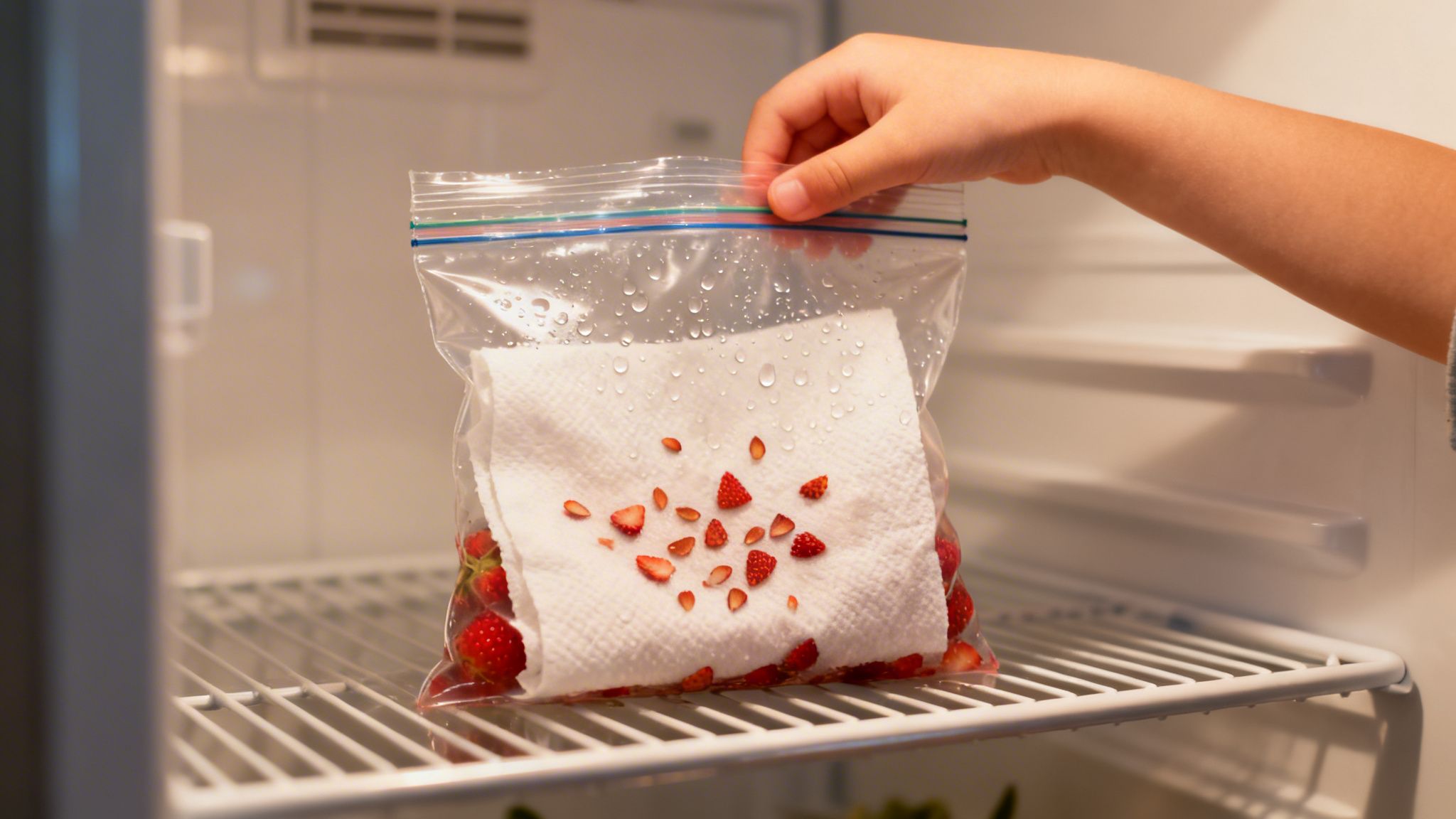
Try This: Here’s the simplest way to do it. Dampen a paper towel—not soaking wet, just moist—and sprinkle your strawberry seeds onto it. Fold the towel over, slide it into a sealable plastic bag or small container, and pop it in the fridge for 3–4 weeks. You can even get the kids to label it 'Seed Secret Mission' to make it a fun project
Planting Your Strawberry Seeds Step-By-Step
Is your mission checklist ready? It’s time to get your hands dirty! Now that your seeds have finished their chilly nap, we can give them a cosy new home. This is where your science mission really blasts off.

First up, let’s talk mission hardware. You don’t need fancy pots from a garden centre; recycled yoghurt pots or even egg cartons work brilliantly! Just ask a grown-up to help you poke a few small holes in the bottom so any extra water can escape.
Next, fill your pots with a good quality seed-starting soil mix. You’ll want to moisten it just enough so it feels like a damp sponge – not sopping wet, but definitely not dry and dusty.
Getting The Seeds In Their New Home
Here comes the most delicate part of the operation. Strawberry seeds are absolutely tiny and need sunlight to wake up, so we won’t be burying them deep underground.
- Time for a steady hand! Carefully sprinkle 3-4 seeds onto the surface of the soil in each pot.
- Gently press them down with your finger. You just want them to make good contact with the soil, not disappear into it.
- Give them their very first drink! A spray bottle is perfect for this. Misting the surface ensures you don’t wash those teeny-tiny seeds away with a big splash of water.
This is a fantastic hands-on experiment in plant science. To keep your mission organised, you can find more fun printable charts and labels on our Free Activities page.
And that’s it! Your seeds are officially planted. For a more detailed mission briefing and extra tips, check out our full guide on how to plant strawberry seeds from scratch.
Creating the Perfect Sprouting Environment
Once your seeds are tucked into their new home, your job is to give them the perfect little world to wake up in. Think of it like finding a planet in the ‘Goldilocks Zone’—not too hot, not too cold, but just right. For strawberry seeds, this means getting the warmth, light, and moisture spot on.
Getting this environment right is a huge part of the puzzle when we ask how long do strawberry seeds take to germinate. If it’s too cold or dark, they’ll simply stay dormant, waiting for better conditions to arrive. It’s a brilliant, hands-on science experiment for your own windowsill!
The Three Keys to Germination
You’ll want to keep a close eye on these three mission-critical elements. They are what will coax those tiny seeds into action.
-
A Warm Welcome: Strawberry seeds need a cosy spot to get going, somewhere around 18-24°C. A sunny windowsill often does the trick perfectly, providing gentle, consistent warmth throughout the day.
-
Let There Be Light: This is a crucial one. Unlike many other seeds that you bury deep in the soil, strawberry seeds need light to trigger germination. That’s why we only pressed them lightly onto the surface—they need to ‘see’ the light to get the signal that it’s safe to start growing!
-
Just Enough Moisture: Keep the soil consistently damp, but never soggy. A good rule of thumb is to aim for the texture of a well-wrung-out sponge. If the soil becomes waterlogged, the seeds can rot before they even have a chance to sprout.
Top Tip: An easy way to create the perfect humid, warm environment is to make a mini-greenhouse. Just pop the pot inside a clear plastic bag or cover it with a clear lid. This simple trick traps warmth and moisture, giving your seeds a fantastic head start.
If you’re keen to dive deeper into the science of it all, you can explore the engineering principles for plant growth for more ideas. And for more fun projects, don’t miss our guide on growing strawberries inside.
Troubleshooting and Watching Your Seedlings Grow
So you've followed all the steps, but your seeds are taking their sweet time to appear? Don't panic! Even seasoned gardeners (and Space Rangers) hit a few bumps along the way, and a little patience is key. Usually, a small adjustment is all it takes to get things moving.
Take a peek at your soil. Is it looking a bit parched and dry? A gentle misting of water should do the trick. If it’s looking soggy, on the other hand, you’ll want to ease up on the watering and make sure your pots have good drainage holes. Sometimes, the answer to how long do strawberry seeds take to germinate is as simple as finding a slightly warmer, cosier spot for them.
From Tiny Sprouts to Sturdy Seedlings
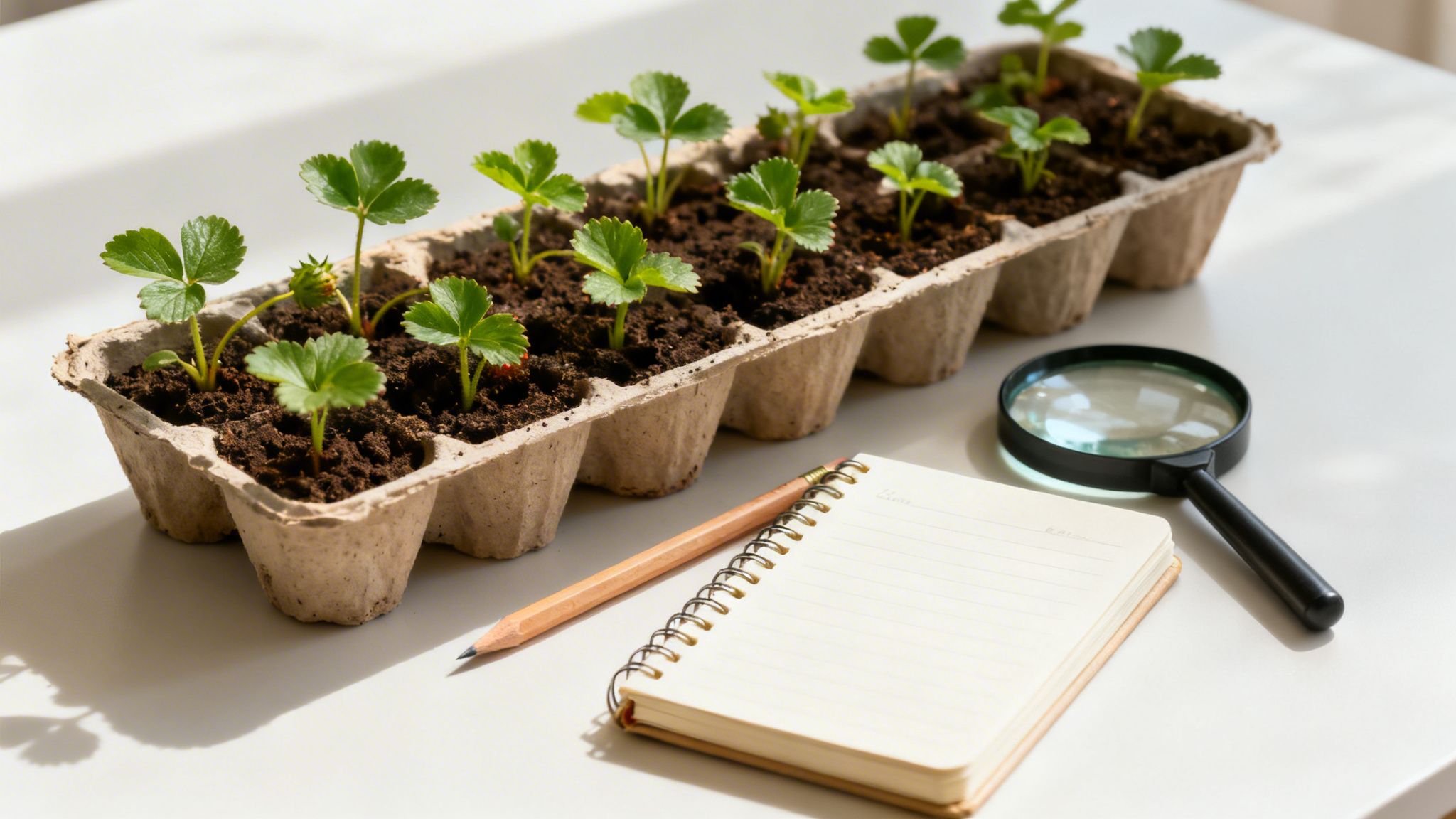
And then it happens. One morning, you’ll spot a tiny fleck of green pushing its way up through the soil. Mission success! It’s an amazing moment and the sign that your gardening adventure is well underway.
Once your seedlings grow their first ‘true leaves’—that’s the second set of leaves that appear after the initial two—they’ll need plenty of light and consistent moisture to get strong. If you’re keen to get it right, you can also explore our other guide on how to grow strawberry seed from start to finish.
Try This: Start a ‘Gardening Diary’! Grab a notebook and get your little explorer to draw their seedlings each day. They can measure how tall they are, count the leaves, and jot down any changes they notice. It’s a brilliant way to practise observation skills—just like when Space Ranger Fred completes a mission in our latest Space Ranger Fred book.
Frequently Asked Questions
Still have a few questions buzzing around your head? That's what being a great explorer is all about! Let's tackle some of the most common ones we get from our young gardening adventurers.
Can I Use Seeds from a Shop-Bought Strawberry?
You absolutely can, and it makes for a brilliant experiment! Just gently scrape the tiny seeds off the outside of a fresh strawberry with something like a toothpick. Give them a little rinse under the tap and let them dry completely on a piece of kitchen roll.
Once they're dry, they're ready for the cold treatment we talked about earlier. Just a heads-up, though: the strawberries you grow might be a fun surprise! Most fruit from the shops are special hybrids, so your new berries could taste or look a little different from the one you started with.
Why Do My Strawberry Seeds Need Light to Grow?
Now that is a clever question! Strawberry seeds are what gardeners call ‘light-dependent germinators’. All this really means is that light acts like a special wake-up call, telling the seed it's on the surface of the soil and it’s the perfect time to start reaching for the sun.
That’s exactly why we just press them onto the soil instead of burying them deep down like a runner bean or a pea.
When Is the Best Time to Plant Strawberry Seeds?
The ideal time to get your strawberry seeds started indoors is in late winter or early spring. A good rule of thumb is to plant them about 6-8 weeks before the last frost is expected in your area.
This gives your little seedlings plenty of time to grow strong and healthy before they're ready to move into the big wide world of the garden once the weather warms up for good.