
Rainy afternoon? Kitchen table full of odd bits of yarn? A child asking for “something fun” while you’re trying to think of something easy, cheap, and not too messy?
A pom pom ball is perfect for that moment. It starts as a simple craft, then turns into counting, measuring, colour sorting, storytelling, and even a little space science.
Your Next Mission Make Fluffy Pom Pom Planets
Some activities are handy because they fill twenty minutes. This one is better than that. A pom pom ball gives children something to make, something to tweak, and something to talk about afterwards.
I like that because the best activities don’t stop when the glue dries. They keep going in a child’s head.
On a grey day, a ball of wool can become a tiny planet. A blue one might be an ocean world. A stripy one might be a windy gas giant. A bright pink one might be a completely new discovery that needs a name, a moon, and a backstory.
That story element matters. Children often stay with a task for longer when the object they’re making has a purpose. A pom pom ball feels less like “just craft” and more like a mission.
Why this works so well
A pom pom is friendly to beginners because it has room for wobble. If the shape is uneven, it still looks charming. If the strands are a bit wild, that can look like rings, clouds, or alien fluff.
It also links beautifully with space play. If your child is already building models, drawing rockets, or talking about planets, these cosmic solar system model ideas can spark even more ways to turn a craft table into a mini observatory.
A good craft gives children a clear job with a playful ending. Pom poms do both.
By the time your fluffy planet is finished, you haven’t only made something cute. You’ve practised sequencing, patience, hand control, and creative thinking too.
Gather Your Mission Equipment
Before launch, every crew needs a kit check. The nice thing here is that the equipment list is short.
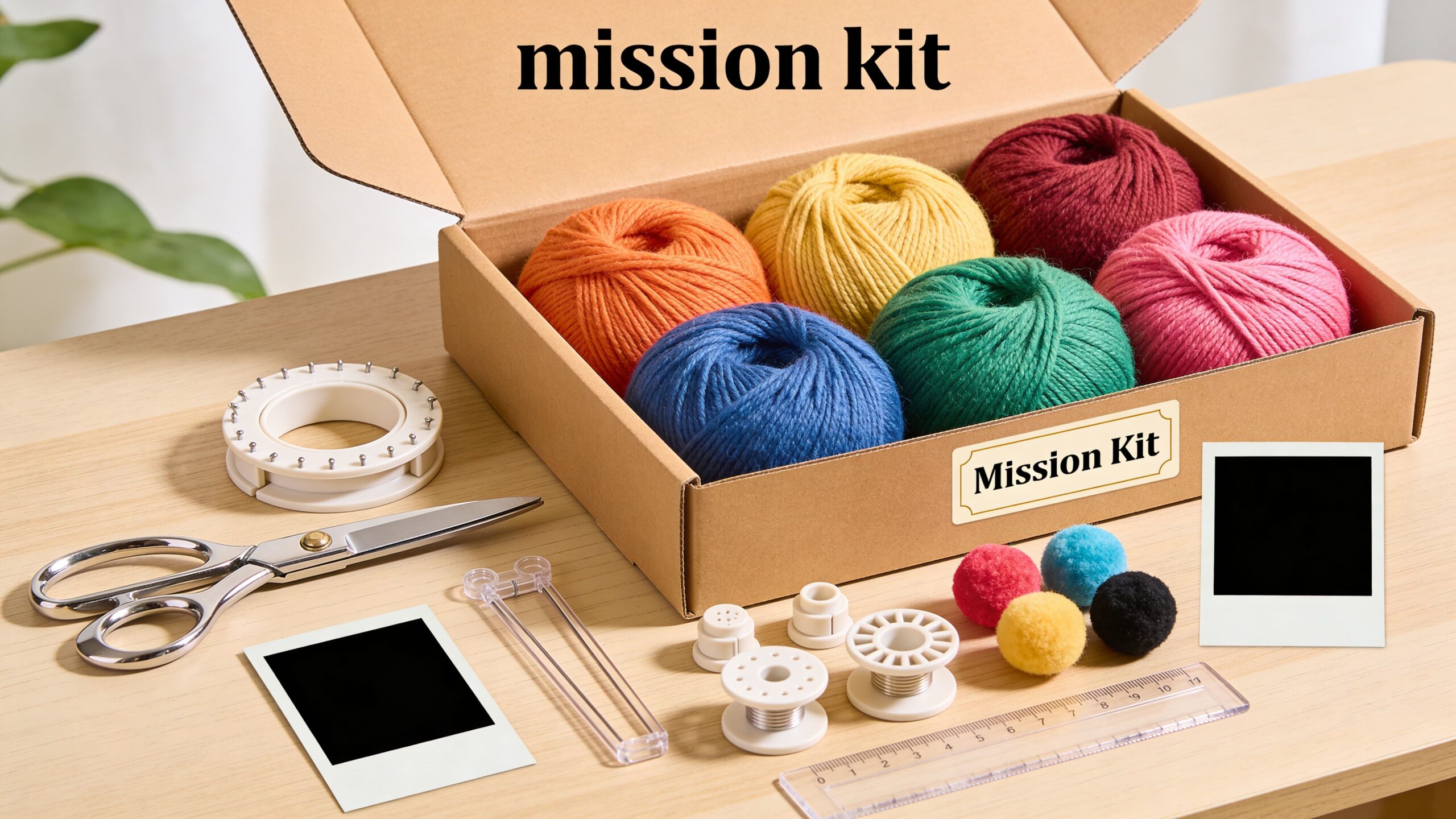
The basic mission kit
You’ll need:
- Wool or yarn. Any colour works. Thick yarn makes a fuller pom pom ball faster.
- Sharp scissors. These are for an adult or closely supervised older child.
- A wrapping tool. A fork is brilliant for small pom poms. Cardboard circles work well for larger ones. Fingers work too.
- An extra piece of yarn. This ties the middle and holds everything together.
- Optional extras. Googly eyes, pipe cleaners, felt shapes, or string for hanging.
If you’re working with a group, it helps to lay materials out in trays. One tray for wool. One for tools. One for decorating extras. Children cope better when the choices are visible and not all piled together.
Safety checks for younger makers
For early years settings aged 4 to 6, UK Health and Safety Executive 2025 guidelines mandate non-toxic, choke-proof materials, and only 12% of online pom pom tutorials reference EN71 toy safety standards according to this early years pom pom safety reference.
That’s a useful reminder for parents, teachers, and librarians. It means the craft itself may be simple, but the sourcing still matters.
A quick checklist helps:
- Check labels carefully. Look for non-toxic materials.
- Think about size. Small loose pom poms can be a choking risk for younger children.
- Use supervised scissors. Keep trimming as an adult-led stage when needed.
- Consider sensitivities. If a child reacts to fibres, choose materials with care and test gently.
Practical rule: if a material is going near under-5s, treat safety labels as essential, not optional.
Picking the right colours
The fun begins! Invite children to choose colours with a purpose.
A child might say:
- blue and green for Earth
- red and orange for a lava planet
- silver and black for a moon base
- rainbow wool for a mystery world no telescope has spotted yet
That tiny decision turns the craft into design thinking. They aren’t just grabbing wool. They’re making choices and explaining them.
The Creation Sequence Your Step-By-Step Guide
The method is simple once you see the order. Wrap. Tie. Cut. Trim.
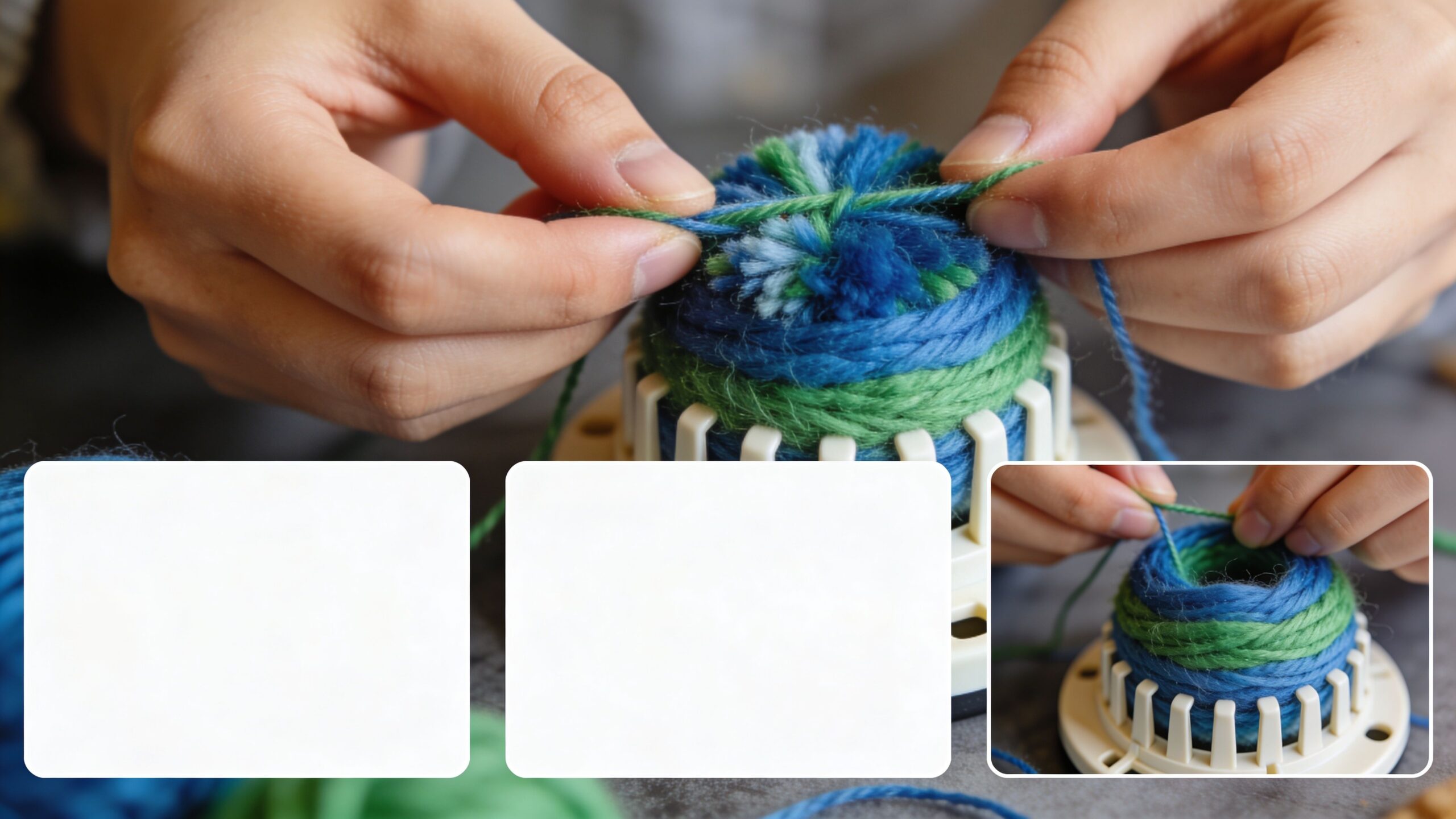
Phase one wrapping
Start with your fork, cardboard, or fingers. Hold the end of the wool in place and begin wrapping.
Keep going until you’ve built a thick bundle. If you stop too early, the pom pom ball can look sparse. If you wrap far too tightly, it becomes harder to tie and cut.
For children, this stage is brilliant for confidence. They can usually begin independently.
Try this language as you work:
- I think I know how this starts.
- I try one wrap at a time.
- I can keep going until it looks thick and fluffy.
A few practical tips help here:
- Use steady tension. The yarn should sit snugly, not strangled.
- Wrap more than you think. Fullness comes from plenty of layers.
- Mix colours together if you want a marbled planet effect.
Phase two securing the centre
This is the make-or-break part. Slide the wrapped bundle carefully off the fork or your fingers. If you used cardboard, keep the middle area clear enough to access with tying yarn.
Take a separate piece of wool and tie it tightly around the exact centre. Then tie it again. A double knot is your best friend here.
If the middle is loose, the pom pom ball may shed strands or fall apart later. If it’s tight, you’ve built the “core” of your planet.
Pull the centre knot as firmly as the material allows. Most pom pom problems begin here.
For younger children, I let them hold the bundle while an adult handles the pulling. That way they still feel involved, but the structure stays secure.
Phase three cutting the loops
Once the centre is tied, snip through the loops on both sides. This is the magical bit because the bundle suddenly changes from neat and flat to wild and fluffy.
At first it may look rather odd. More hedgehog than planet.
That’s normal.
Here’s a visual guide if you’d like to see the movement of the process in action:
Phase four trimming the sphere
Now give your pom pom ball a haircut. Trim the longer strands little by little, turning it as you go.
This part rewards patience. Don’t chop huge chunks at once. Small snips make a rounder shape.
A simple way to explain it to children is this:
- Turn the pom pom
- Spot the sticky-out bits
- Snip a little
- Turn again
If a child wants to stop before it’s perfect, that’s fine too. Some pom poms look wonderful when they’re shaggy. A planet doesn’t have to be polished to be exciting.
What children learn while making
There’s more going on here than craft.
| Skill | What the child is doing |
|---|---|
| Fine motor control | Wrapping, holding, tying |
| Sequencing | Following steps in order |
| Observation | Noticing shape and balance |
| Resilience | Adjusting when it looks messy |
| Speaking | Explaining choices and process |
By the end, many children can say, “I made that. I know how it works. I can explain it.” That’s a lovely learning moment.
From Pom Poms To Planets STEM Adventures
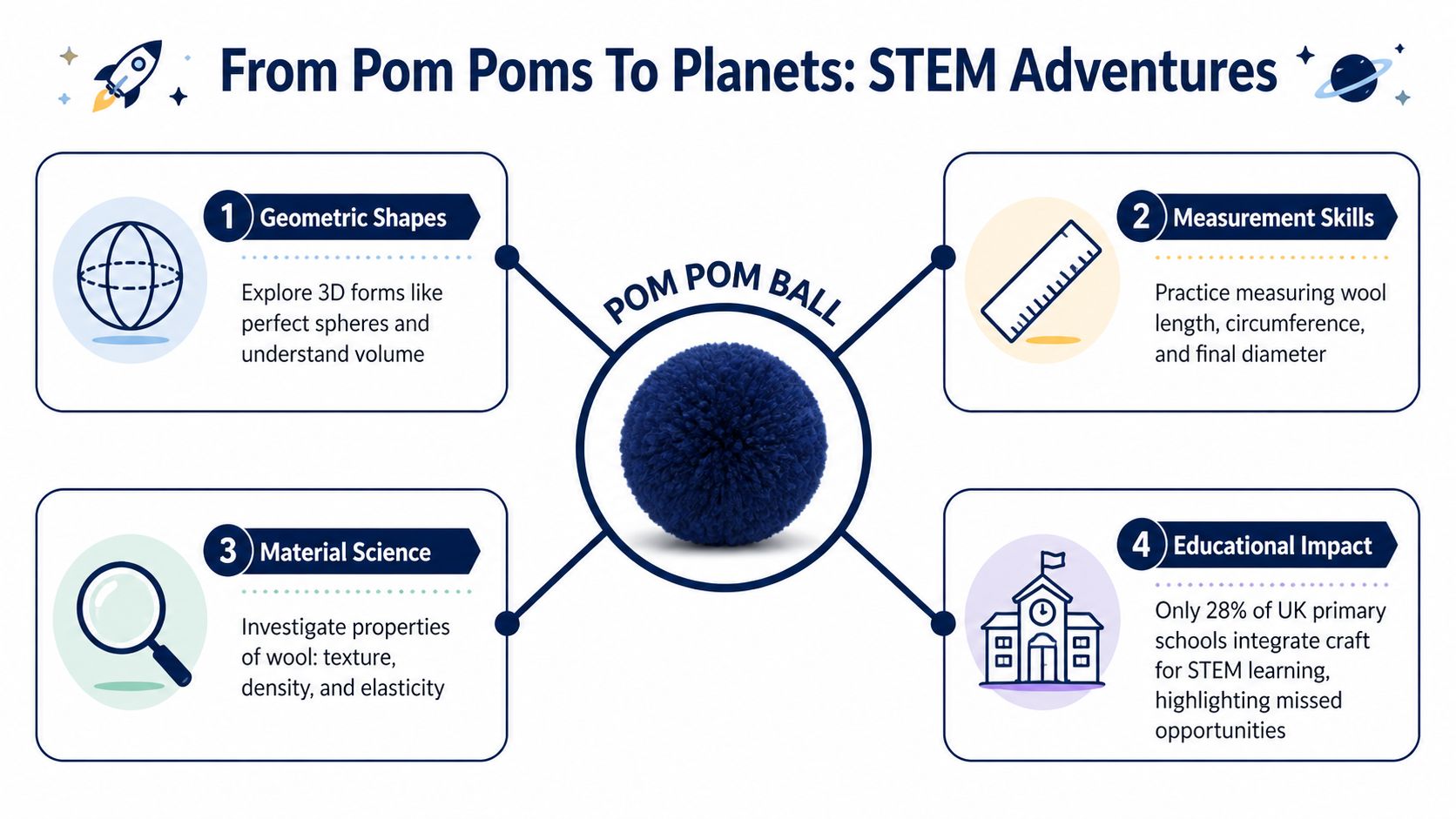
A pom pom ball doesn’t have to retire once it’s made. It can go straight into science play.
That’s where this gets especially useful for schools and homes. UK data indicates that only 28% of primary schools incorporate tactile manipulatives like pom poms into physics lessons, despite 65% of teachers reporting improved engagement in hands-on activities, creating a clear opening for practical classroom ideas, as noted in this UK primary STEM hands-on learning reference.
Gravity with fluffy planets
Drop two pom poms from the same height. Use one large and one small.
Ask children:
- Which lands first?
- Why do you think that?
- Was your prediction right?
This isn’t a perfect lab experiment, and that’s fine. The point is to encourage noticing, predicting, and explaining. Children start to see that science begins with questions, not with having the right answer immediately.
Build a pom pom solar system
Make several pom poms in different colours and sizes. Line them up as planets, or invent your own planetary system.
Then ask:
- Which one should be closest to the star?
- Which one might be icy?
- Which one could have moons?
If you want a painting extension, these solar system painting ideas for children pair nicely with the tactile version.
Sort, measure, compare
Pom poms are also handy for quieter STEM habits.
Try:
- sorting by colour
- ordering by size
- measuring circumference with string
- comparing density by squeezing gently
- counting how many wraps make a fuller sphere
Children often understand an idea faster when they can hold it, move it, and test it.
Four easy learning links
- Geometry. A pom pom ball is a friendly way to talk about spheres.
- Measurement. Children can compare diameter, wool length, and size.
- Material science. Wool feels different from synthetic fibres, and children notice that quickly.
- Scientific language. Words like orbit, surface, texture, and gravity become easier to use when there’s an object in hand.
This is the bit I love most. A fluffy craft subtly becomes a thinking tool.
Mission Variations Create A Pom Pom Alien
Once children can make one pom pom ball, they rarely want to stop at one. That’s excellent news.
The next leap is character design. A green pom pom with two eyes becomes an alien. A purple one with silver threads becomes a moon creature. A tiny yellow one becomes a baby space blob who definitely steals biscuits from the control room.
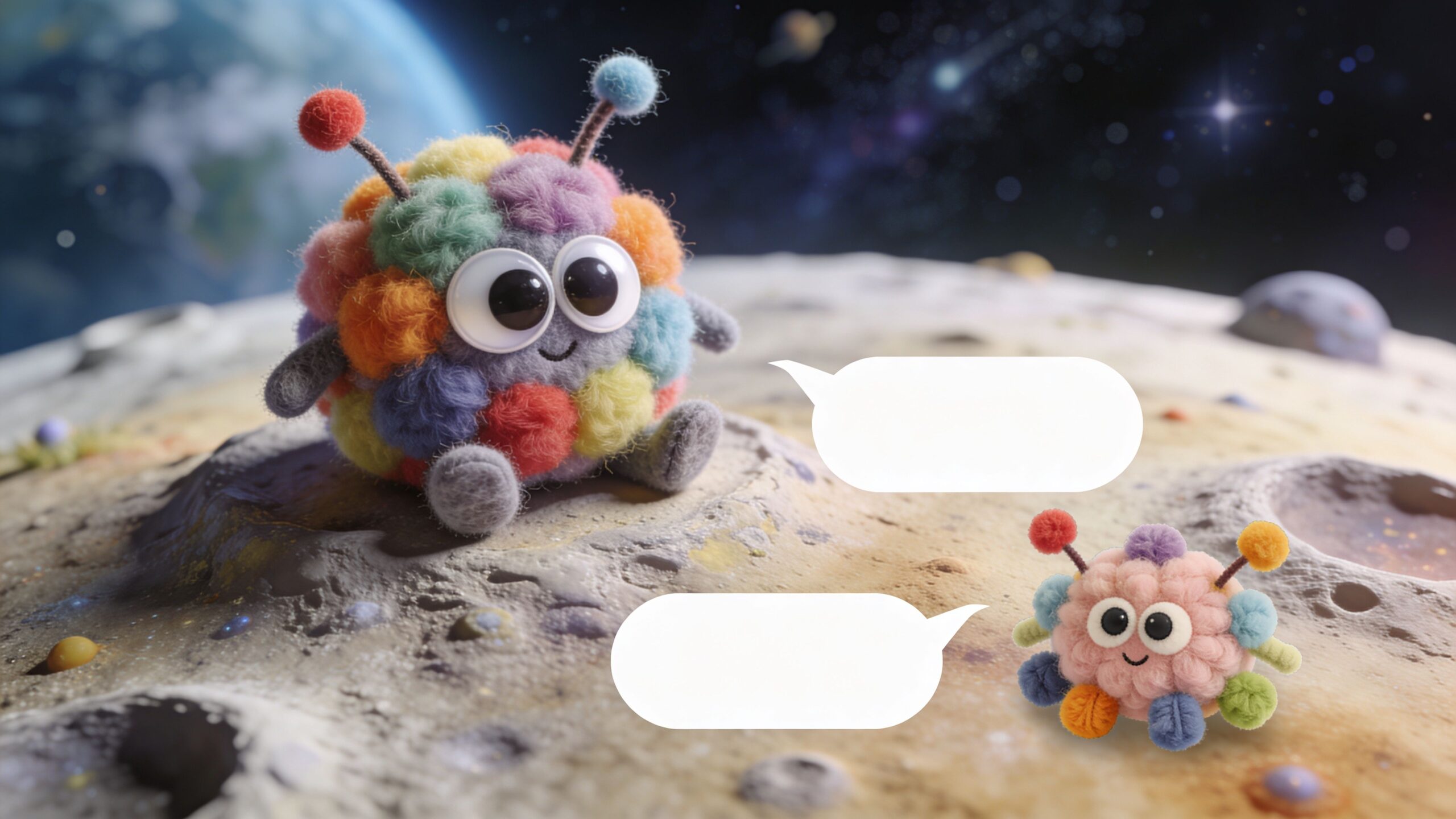
Easy ways to vary the design
Some children love following a model. Others want to invent wildly. Both approaches work.
Here are a few mission upgrades:
- Add eyes. Googly eyes turn fluff into a character instantly.
- Use two colours at once. Wrap both yarns together for stripes or swirls.
- Make a moon and planet pair. One large pom pom, one tiny one.
- Add pipe cleaner antennae. Suddenly you’ve got a very chatty alien.
- Thread several together. That makes a hanging galaxy garland.
If your group wants more creature inspiration, these playful pom pom animal ideas can help children branch out from planets into full cast-of-characters mode.
Story prompts that work well
Children often get stuck not on making, but on deciding. A simple prompt can get things moving:
- What does your alien eat?
- Which planet does it live on?
- Is it friendly, shy, noisy, or curious?
- Does it have a job on the spaceship?
That turns a craft table into speaking and writing practice without making it feel like formal work.
Troubleshooting At Mission Control
Even a cheerful pom pom mission can hit a few glitches. That doesn’t mean it’s gone wrong. It just means we need a quick systems check.
Problem and fix guide
| Problem | Likely cause | What to do |
|---|---|---|
| Pom pom falls apart | Centre knot is too loose | Tie much tighter, ideally with a double knot |
| Shape looks lumpy | Not enough trimming | Rotate and trim small bits evenly |
| Strands pull out easily | Centre wasn’t secured well | Re-tie firmly on the next attempt |
| Pom pom looks thin | Not enough wrapping | Use more yarn before tying |
| It’s hard to cut | Bundle is too tight or scissors are blunt | Wrap snugly, not too tightly, and use sharp scissors |
A wonky pom pom ball is not a failed pom pom ball. It’s often just one more trim away from looking great.
Messy first attempts are useful. They show children that making involves adjusting, not magic.
If you accidentally snip the middle tie while trimming, the pom pom may unravel. That feels dramatic, but it’s also a helpful lesson in which part of the structure matters most.
A Guide For Classroom Mission Commanders
A pom pom ball activity works surprisingly well with a whole class or library group because it has a clear sequence and a very visible result. Children can see progress quickly, which helps attention.
It also fits neatly across subjects. Art is obvious. Science follows naturally. Maths slips in through measuring and sorting. Speaking and listening appear when children explain their design.
Smart ways to run it with a group
For smoother sessions:
- Pre-cut cardboard winders so children can start quickly
- Create trimming stations with adult support for scissors
- Limit colour choices at first if decision overload is likely
- Use trays or envelopes to keep each child’s materials together
This reduces queueing and keeps the room calmer.
A history fact children remember
Pom poms have a much older story than many people realise. The pom-pom has military origins, and in Napoleon’s infantry colours denoted companies, with green for the first, light blue for the second, orange for the third, and violet for the fourth, as described in this history of the pom-pom.
That makes a lovely classroom hook. Children often enjoy learning that a fluffy craft item also connects to uniforms, symbols, and history.
You could follow that with colour-based sorting, group identity tasks, or a design challenge. If you’re mapping the activity into wider topic work, these solar system project ideas for schools offer more ways to stretch the learning.
Good classroom questions
Ask things like:
- Why did you choose those colours?
- How did you make yours rounder?
- What would you change next time?
- Is your pom pom best used for art, maths, or science?
Those questions build the “I think, I try, I can, I can explain” habit beautifully.
Mission Complete And Your Next Adventure
You’ve taken a humble ball of wool and turned it into a pom pom ball, a planet, a science tool, and possibly a tiny alien diplomat. That’s a good afternoon’s work.
The lovely thing about this craft is that it meets children where they are. Some want a simple fluffy object. Some want a whole invented galaxy. Some want to test how fast it falls to the floor and then argue about gravity over biscuits.
Quick answers adults often need
- Best age range? With supervision, it can be adapted from early years to upper primary.
- Best tool for beginners? A fork is simple and easy for small pom poms.
- Best group tip? Pre-prepare the wrapping tools.
- Best extension? Turn the finished pom poms into sorting, storytelling, or planet-themed STEM activities.
If your classroom or home learning space needs a softer reset after all that excitement, these calming activities and mindfulness strategies can pair nicely with creative sessions.
Keep the odd-looking first attempt. Keep the shaggy one. Keep the one with too many eyes. Those are often the favourites.
Learning should be experienced, not just delivered.
Meta title: How to Make a Pom Pom Ball Guide
Meta description: Learn how to make a pom pom ball with easy steps, simple STEM ideas, and fun space-themed activities for parents, teachers, and children.
Explore the adventures, activities, and learning fun at Space Ranger Fred. You can discover the book page for story-led STEM reading, grab printable fun from the freebies and activities area, and learn about interactive school visits that build confidence, communication, reading for pleasure, and hands-on science excitement.