
Why are children so drawn to feathered friends on screen? It isn't only the bright colours, silly waddles, or dramatic squawks. Cartoon birds often carry big ideas in small, memorable packages. A tiny canary can teach strategy. A noisy rooster can make explanation feel fun. A gentle giant can show that asking questions is brave.
That matters for parents, teachers, and librarians. Stories stick when facts alone slide away. If a child laughs first, they're often ready to think next. That's one reason cartoon birds characters work so well in reading time, classroom discussion, colouring activities, and simple STEM learning.
There’s also a useful gap here for educators in the UK. Search results don’t offer much solid UK-specific data on cartoon bird characters, and the material that does exist is mostly broad or international rather than focused on British classrooms or libraries, as noted by The Cartoonish list of cartoon bird characters and Birds in Animation from Animation Studies. So instead of chasing popularity charts that aren't there, it helps to ask a better question. Why do these characters help children learn?
That’s where story-led education shines. At Space Ranger Fred, Fred and his alien pal Zando use the same trick. They mix humour, adventure, and curiosity so children can say, “I think, I try, I can, I can explain.” The bird characters below do something similar in their own style. Some model persistence. Some teach emotional control. Some make observation feel like an adventure.
Let’s get to the flock.
1. Tweety and Sylvester – The Classic Predator-Prey Dynamic
Tweety and Sylvester are one of the clearest examples of why simple storytelling works. One wants lunch. The other wants to avoid becoming lunch. Children understand that setup straight away, and that makes the learning underneath it easy to spot.
Tweety may look tiny and helpless, but that’s the joke. He usually survives by noticing details, reacting quickly, and turning the environment to his advantage. That’s a lovely early lesson in problem-solving. Size isn’t everything. Thinking matters.
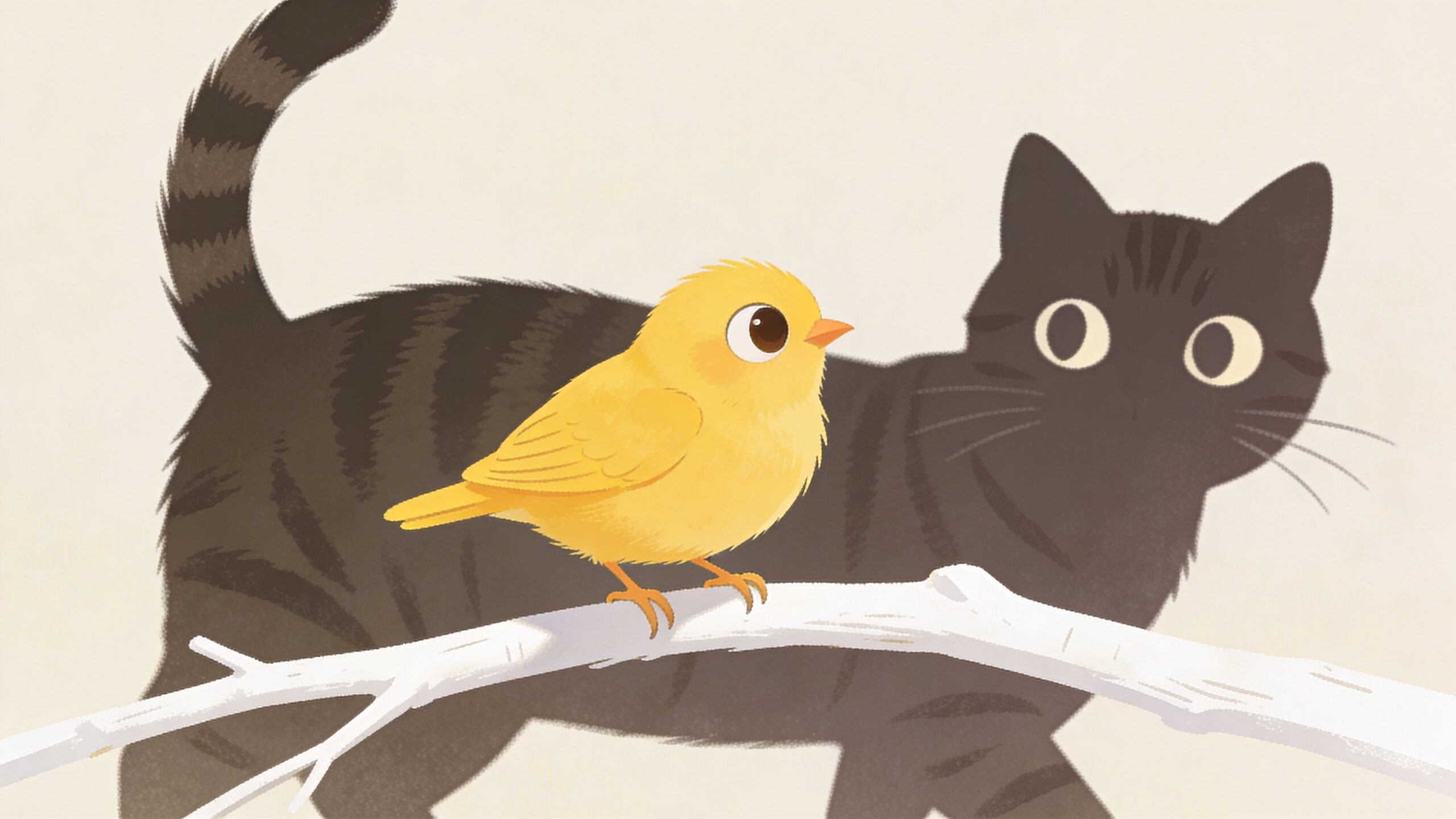
Alt text: cartoon birds characters canary and cat in a playful chase scene
What children learn from the chase
Every chase asks children to predict what might happen next. Will Sylvester hide behind something? Will Tweety spot the trap? Will Granny appear at the worst possible moment for the cat? That prediction work builds cause and effect thinking.
In class or at home, you can turn that into questions such as:
- Spot the pattern: What mistake does Sylvester keep making?
- Test an idea: What safer plan could Tweety try first?
- Think like an inventor: Which object in the room could become a useful tool?
Practical rule: Good cartoon conflict gives children a puzzle before it gives them an answer.
This pair also works well for reading comprehension. Children can retell the sequence, explain a character’s choice, and suggest a different ending. That moves them from “I watched” to “I can explain”.
For a screen-time companion, parents often pair fast-paced classics with calmer discussion afterwards. The same rhythm can work alongside story-rich viewing ideas such as best TV programmes for preschoolers.
If you’re building your own activity, keep the design bold and clear. A bird, a cat, a problem, a plan. Simple ingredients. Strong results.
2. Woodstock – The Loyal Sidekick Model
Woodstock proves that a character doesn’t need long speeches to leave a mark. He chirps. He flutters. He panics a bit. He stays loyal. Children read his feelings through movement, posture, and timing.
That’s powerful for emotional literacy. Young readers often notice body language before they can describe emotion neatly in words. A tilted head, a puffed chest, or a worried flap can say, “I’m nervous,” “I’m proud,” or “I’m trying my best.”
Why sidekicks matter so much
A sidekick gives the main character someone to care for, respond to, and sometimes rescue. That relationship creates warmth. It also helps children understand friendship without a long lecture.
Woodstock works because he’s small but never pointless. He adds humour, heart, and gentle chaos. In a classroom, that can spark discussions like:
- Read the feeling: How do we know Woodstock is worried?
- Notice support: What does a good friend do when someone struggles?
- Use non-verbal clues: What can we learn without dialogue?
Children who are shy speakers often respond brilliantly to characters like this. They can point to a picture and say what they think the character feels. That’s a lovely bridge into spoken language.
Sometimes the quietest character carries the biggest emotional message.
For Space Ranger Fred, this is gold. Zando doesn’t need a long speech on every page to be memorable. A look, a wobble, a beep, or a comic reaction can help children follow the emotional beat of a mission. It reminds us that communication isn’t only about words. It’s also about noticing.
3. Bugs Bunny – The Clever Problem-Solver
Strictly speaking, Bugs Bunny isn’t a bird. Fair point. But he belongs in this conversation because he often shows the same story engine that makes cartoon birds characters so effective. He watches. He waits. He outsmarts louder, faster, or more blustering opponents.
That style matters in STEM learning. Observation comes before solution. Bugs rarely wins by panicking. He notices what others miss, then uses logic mixed with mischief.
Clever beats strong
Children often meet stories where the biggest or noisiest character seems powerful. Bugs flips that idea on its head. He suggests that careful thinking can beat pure force. That’s a reassuring lesson for children who are still growing in confidence.
You can use a Bugs-style question set in reading or discussion time:
- Observe first: What clues does the character spot?
- Choose a strategy: What plan fits the problem?
- Review the result: Did the plan work, and why?
That last question is especially useful. Reflection is where learning settles.
For teachers exploring similar character design in children’s media, this Space Ranger Fred post on Buster Baxter from Arthur is a handy companion. It shows how familiar animated characters can support curiosity and thinking.
Bugs also reminds adults not to make educational stories too stiff. Children enjoy intelligence when it comes with a wink. If every lesson feels like homework in a hat, they drift away. If the clever bit arrives hidden inside a joke, they stay with you.
4. Foghorn Leghorn – The Boisterous Educator
Some children love a calm guide. Others need someone who practically bounces into the room shouting, “Listen up, this will be fun.” Foghorn Leghorn is firmly in the second camp.
He’s loud, overconfident, and gloriously committed to hearing himself talk. Yet that exaggeration is useful. He shows that explanation can have rhythm, character, and comic timing. A lesson doesn’t have to sound flat to be clear.
What a larger-than-life teacher can do
Foghorn’s style helps information feel theatrical. He turns ordinary moments into performances. That can help children remember a phrase, an idea, or a sequence because it arrives with a personality attached.
There’s a practical classroom lesson here. If you want children to remember something, make it vivid. Use a repeated phrase. Add a gesture. Make the explanation feel alive.
A boisterous guide can help with:
- Memory hooks: Repeated lines help children recall key ideas.
- Attention: Big expression pulls wandering minds back.
- Confidence: A cheerful voice gives permission to join in.
Of course, there’s a balance. Too much noise and the point gets buried. The best educational storytelling takes Foghorn’s energy, then trims it into something children can follow without being steamrolled by the rooster.
A memorable teaching voice isn't always quiet. It’s clear, distinct, and full of intention.
That’s useful in assemblies, story sessions, and school visits. Children often remember the teacher who sounded like they enjoyed the topic. Enthusiasm is contagious. Sometimes a bit of comic exaggeration helps the facts land.
5. Big Bird – The Gentle Giant Educator
Big Bird teaches in a way many children instantly trust. He is kind, curious, and willing to say, “I’m still learning.” For a child who worries about giving the wrong answer, that can feel like a door opening rather than a test beginning.
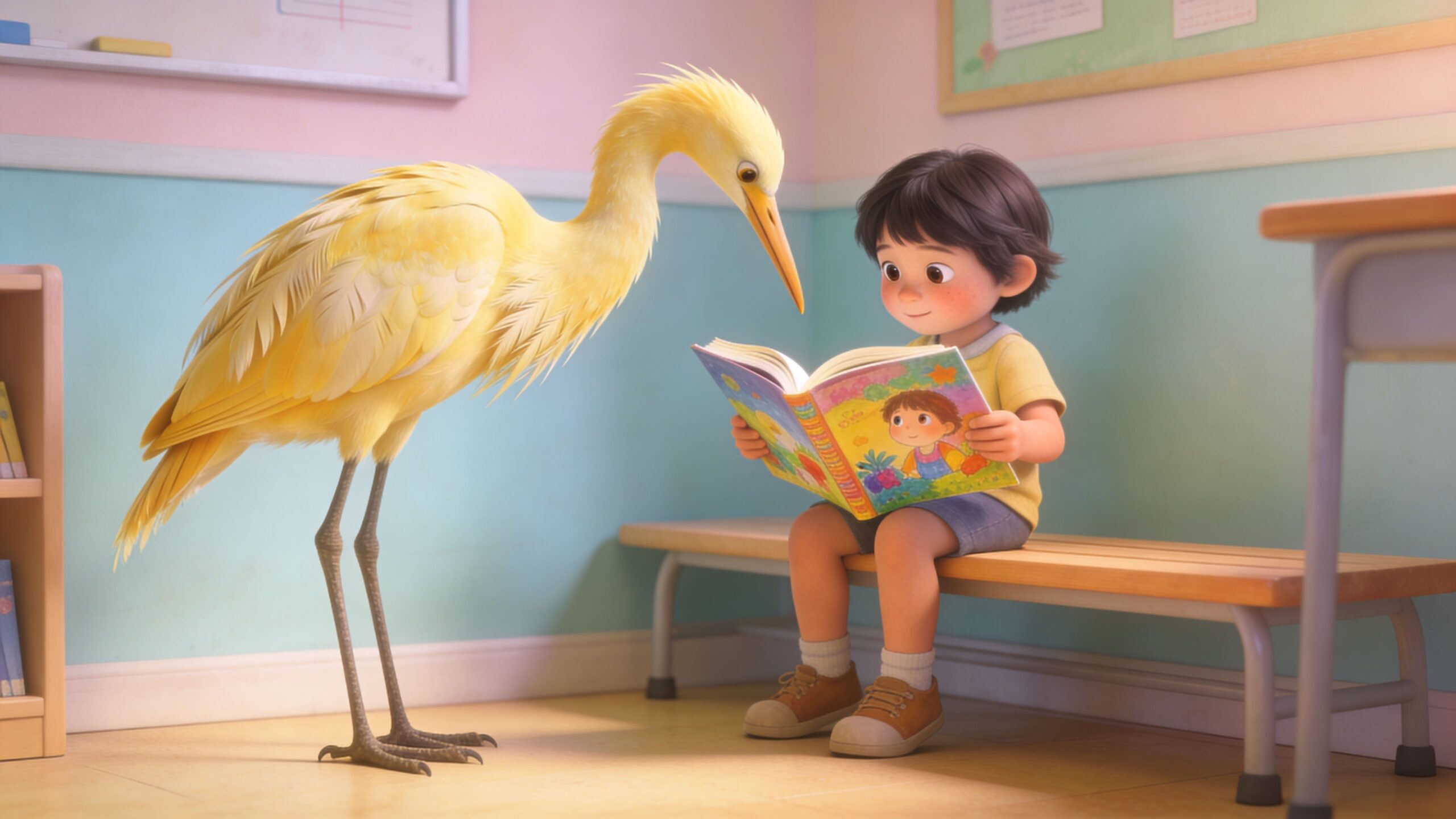
Alt text: cartoon birds characters inspiring reading and gentle learning
Why vulnerability helps children learn
Some bird characters entertain through speed or silliness. Big Bird works more like the calm adult in a library story corner. He asks the question a child was almost brave enough to ask, then stays with it long enough for the answer to make sense.
That matters because learning can feel a bit like trying to cross a stream on stepping stones. If the stones seem too far apart, children freeze. Big Bird shortens the gap. He shows that uncertainty is part of the process, not proof that someone is “bad at” the subject.
You can use that model in class or at home with very simple prompts:
“ What do we know already?”
“ What are we wondering?”
“ What could we try next?”
Those small questions build emotional safety and clear thinking at the same time.
This is especially useful in STEM learning. A child can wonder why something floats, how a wing helps with balance, or what makes a rocket rise without feeling foolish. The character gives them permission to be a beginner. That permission is often the first ingredient in real curiosity.
If you’re interested in how broader animal characters support learning and emotional development, this Space Ranger Fred guide to animal cartoon characters adds helpful examples.
Big Bird also points to something parents and teachers can use strategically. Gentle characters help children practise emotional intelligence while they learn content. They notice confusion, name feelings, ask for help, and keep going. In the Space Ranger Fred universe, that same principle makes Fred more than a flashy hero. A space adventure can join the flock rather nicely here. Fred does not need to know everything at once. He needs to observe, ask, test, and learn aloud so children can see how thoughtful problem-solving really works.
6. Toucan Sam – The Sensory Experience Character
Toucan Sam is colourful, distinctive, and impossible to ignore. Before a child even thinks about plot, they’ve already clocked the oversized beak, the bright palette, and the lively feel of the character.
That teaches an important storytelling lesson. Children don’t enter stories only through words. They enter through the senses. Colour, sound, pattern, and movement all help attention settle.
Make learning feel vivid
A sensory-rich character can be very useful in education, especially for younger children and visual learners. If you want them to remember a habitat, a setting, or a scientific idea, give them something concrete to picture.
Try asking:
- What colours stand out most?
- What sounds might fit this character?
- What kind of place does this design suggest?
Those questions build observation and description at the same time.
For space-themed learning, this is a gift. Planets, stars, alien environments, glowing controls, and comic gadgets all become easier to remember when they’re tied to strong sensory cues. A child may forget a technical phrase, but they’ll remember “the swirly purple moon with the noisy crater”.
This sensory approach also works well in craft. Colouring sheets, collage tasks, and display boards become more than decoration. They become memory tools. Children revisit the image and, with it, the idea attached to it.
If you want ready-made hands-on follow-up, the Space Ranger Fred freebies and activities page gives families and educators simple ways to carry a story into drawing, discussion, and play.
7. Daffy Duck – The Comic Relief Risk-Taker
Daffy is chaos in feathers. He charges ahead, gets things wrong, overreacts, and often ends up in a muddle of his own making. Children laugh because his plans go sideways in spectacular fashion.
Yet that’s exactly why he’s useful. Daffy shows that failure can be part of learning. Not glamorous failure. Not neat failure. Proper flop-into-a-wall failure.
Mistakes are part of the method
In STEM, children need room to test ideas that don’t work. A tower collapses. A paper plane nose-dives. A prediction misses the mark. Daffy-style comedy can help normalise that.
Instead of asking only, “Did it work?” ask:
- What did the character try?
- Why did the plan go wrong?
- What would they change next time?
That turns a joke into reflection.
For a playful example of how expressive character design shapes response, this Space Ranger Fred article on cartoon dog face design shows how exaggerated features help children read personality and intent.
Daffy also reminds adults not to rescue children too quickly from mistakes. If every wobble gets corrected at once, they miss the thinking part. Sometimes the richest learning arrives right after “Oops.”
Let children laugh at the failed plan, then help them build a better one.
That’s resilience in action. Not perfection. Progress.
8. Puffin Rock's Oona – The Nature Exploration Guide
Oona slows the story down in the best possible way. She pays attention to small changes in the world around her, and that matters because children often need help noticing before they start explaining.
Her episodes reward careful looking. A sound in the grass, a shift in the weather, a creature hiding in plain sight. For young viewers, that is early science wearing a cosy story jumper.
Curiosity is a science skill
Oona works well for parents and teachers because she models the first step in scientific thinking. She notices patterns. She asks simple questions. She treats the natural world as something to study kindly, not rush past.
That makes her useful far beyond story time.
A child watching Oona can practise the same habits with very little setup:
- Observe carefully: What did Oona spot first?
- Describe the setting: What do you notice about her habitat?
- Ask a fresh question: What would you want to find out next?
Those prompts support science topics like habitats, seasons, weather, and animal features. They also strengthen descriptive writing, because children have clear details to gather before they start talking or writing. In a classroom, that can be the difference between “It was nice” and “The cliff looked windy, cold, and full of nesting birds.”
As noted earlier in the article, librarians have been looking for more ways to connect bird stories with science learning. Oona fits that need neatly because she turns observation into a habit.
A space adventure can join the flock rather nicely here. If Oona helps children study cliffs, tides, and seabirds, Fred and Zando can help them study craters, movement, light, and unfamiliar habitats. The setting changes, but the learning pattern stays the same. Notice. Question. Explain.
This is the reason Oona works so well. She is not only a sweet character. She gives adults a simple model for raising curious children who look closely at the world, whether they are peering into a rock pool or out of a spaceship window.
9. Angry Birds' Red – The Leadership Through Emotion Model
Red is an interesting modern bird character because he isn’t calm, polished, or naturally easygoing. He’s prickly. He gets cross. He reacts strongly. Children recognise that emotional messiness because they feel it too.
What makes Red useful is that his stories often push him beyond simple anger. He has to work with others, protect people, and make better decisions under pressure. That’s leadership, just without the shiny badge.
A useful media note sits behind this too. In the UK animation sector, children’s animated content featuring bird characters holds a 28% market share among primary school-targeted media, according to the cited market summary. Whatever one thinks of individual franchises, bird-led content clearly has a strong place in children’s media.
Big feelings can still lead somewhere good
Children don’t need characters who are cheerful every second. They need characters who learn what to do with their feelings. Red shows that emotion itself isn’t the problem. What matters is the next choice.
A classroom or library conversation might ask:
- What is Red feeling?
- What action does that feeling lead to?
- What would a wise leader do next?
That sequence helps children separate emotion from behaviour.
Here’s a clip many children already know:
This also connects beautifully with game-based learning. A child can test, fail, adjust angle, and try again. That rhythm supports persistence without making it feel like a worksheet wearing a fake moustache.
10. Hilda's Twig – The Non-Traditional Ally Model
Twig isn’t a standard bird character, but that’s partly why this example matters. Children’s stories are full of companions who don’t fit neat boxes. Some don’t speak in words. Some look unfamiliar. Some communicate through action, loyalty, or instinct.
That matters in real life too. Children meet people and classmates who think differently, speak differently, or express care in unusual ways. Characters like Twig help difference feel friendly rather than frightening.
Friendship beyond words
Twig’s value lies in connection without tidy explanation. He responds, supports, and belongs. Children learn to read intention through behaviour, not only speech.
That has a lovely classroom use. You can ask children to identify how a character shows friendship without talking. They quickly notice waiting, helping, returning, listening, and staying nearby.
- Notice belonging: Who makes space for whom?
- Value differences: What does the unusual friend add to the team?
- Explain actions: How do we know the bond is real?
This sort of character also opens the door for Space Ranger Fred and Zando. Alien companions, odd creatures, and non-human helpers can model inclusive thinking in a way children accept naturally. If a child can root for an unusual sidekick in fiction, they may become more open-hearted in a school classroom too.
That’s one of the best gifts stories can give. They widen the circle.
10 Cartoon Bird Characters: Roles & Traits
| Character | Implementation complexity | Resource requirements | Expected outcomes | Ideal use cases | Key advantages |
|---|---|---|---|---|---|
| Tweety & Sylvester (Predator-Prey) | Low, simple chase structure and visual design | Low–Moderate, basic animation and voice work | Problem-solving through cause-and-effect; humour engagement | Short comedic STEM lessons, strategy/evasion games, colouring activities | Universally recognisable, easy to reproduce, cross-media adaptable |
| Woodstock (Loyal Sidekick) | Moderate, relies on expressive non-verbal animation | Moderate, strong animation and sound design for chirps/gestures | Emotional literacy, non-verbal communication skills | Sidekick roles, emotional learning segments, global audiences | Language-independent, strong emotional bond, merchandise-friendly |
| Bugs Bunny (Clever Problem-Solver) | Moderate, witty scripting and adaptive scenarios | Moderate, quality writing, voice talent, timing | Critical thinking, creative problem-solving, observation | Puzzle-based episodes, logic games, parent–child humour | Models adaptive thinking, broad appeal, narrative versatility |
| Foghorn Leghorn (Boisterous Educator) | Moderate, verbose, personality-driven teaching | Moderate, strong voice performance and scripting | Engaging information delivery; memorable explanations | Teacher-figure segments, concept demos, catchphrase-led lessons | Energetic pedagogy, memorable personality, entertaining instruction |
| Big Bird (Gentle Giant Educator) | High, requires nuanced performance or puppetry/animation | High, skilled performers, curriculum alignment, production values | Growth mindset, emotional literacy, guided learning | Curriculum-aligned early-childhood lessons, SEL programmes | Trusted educational credibility, models learning process, multi-age appeal |
| Toucan Sam (Sensory Experience Guide) | Low–Moderate, vibrant design and sensory cues | Moderate, distinctive design, music/sound, branding assets | High engagement via sensory stimulation; strong recall | Sensory-rich activities, branded experiences, immersive learning | Distinctive sensory identity, multi-channel adaptability, memorable visuals |
| Daffy Duck (Comic-Relief Risk-Taker) | Moderate, slapstick and consequence-driven comedy | Moderate, animation, voice, careful pedagogical framing | Normalises failure, teaches iteration, cause-and-effect | Experiments that fail safely, resilience lessons, comedic demos | Makes failure relatable, high engagement, models persistence |
| Oona (Puffin Rock, Nature Guide) | High, contemporary pacing and observational storytelling | High, quality animation, research-backed content, natural settings | Scientific curiosity, environmental awareness, respectful observation | Nature/science modules, eco-education, contemplative learning | Modern production values, ecological focus, credible educational content |
| Red (Angry Birds, Leadership Model) | Moderate–High, integrates game mechanics with narrative | High, game development, cross-platform assets, design | Teaches physics/strategy, emotional regulation, leadership | Educational games, interactive STEM activities, physics lessons | Engaging gameplay, multi-platform reach, links strategy to learning |
| Twig (Hilda, Non-Traditional Ally) | High, relies on nuanced non-verbal storytelling | High, strong animation, storytelling, character design | Inclusion, empathy, collaboration across differences | SEL curricula, diversity-focused narratives, team-based stories | Models inclusion and empathy, contemporary appeal, strengths-based teamwork |
Bring Story-Led Learning to Your Flock
What makes a cartoon bird stick in a child’s mind long after the screen goes dark?
Usually, it is not the feathers or the catchphrase. It is the job the character does in the story. One bird models careful observation. Another shows how to recover from a muddle. Another turns big feelings into action. For parents, teachers, and librarians, that matters because stories can act like rehearsal spaces. Children get to watch a useful habit in action before trying it for themselves.
This is the value of these cartoon birds characters. They offer patterns children can borrow. Tweety shows strategy under pressure. Woodstock shows loyalty without needing many words. Big Bird makes questions feel safe. Red helps children see that strong feelings need guiding, not hiding. Used well, these characters do more than entertain. They support language, emotional growth, problem-solving, and curiosity.
A helpful way to picture it is as a set of learning tools in story form. You would not use a magnifying glass for every job in a science box, and you would not use one character for every teaching goal either. If you want children to notice details, Oona is useful. If you want them to laugh at mistakes and try again, Daffy gives you plenty to work with. If you want to discuss teamwork across differences, Twig opens that door gently.
This also helps with a simple progression many adults already recognise. First, a child notices. Then they imitate. Then they explain. Stories make each step easier. A character does something memorable. A child copies that move in play, talk, drawing, or role-play. After that, the child can often explain the idea in their own words, which is when learning starts to hold fast.
Good story-led learning does not need a trolley full of equipment. It needs a strong character, one thoughtful question, and a small follow-up task. Ask why Tweety escaped. Ask what Big Bird was trying to understand. Ask how Oona pays attention to her surroundings. Then let children build, sketch, retell, predict, or act out what they noticed. The activity is the glue.
This approach fits the Space Ranger Fred universe particularly well. Fred and Zando work like story guides for curiosity. They invite children into a mission, which is much more appealing than being handed a pile of facts and told to sit still nicely. Often, this is when STEM clicks. Children ask better questions when the learning has a purpose, a problem, and a bit of play.
There is a practical point here too. UK guidance on cartoon character use in learning is still fairly patchy, so many adults rely on professional judgement and experience. That is sensible, and it already happens every day in classrooms, libraries, and homes. It also leaves plenty of room for clearer resources that connect character types to reading, science, speaking, and creative response. Story-led edutainment helps join those pieces together.
If you want to keep the momentum going, pair every story with one action. Read a chapter. Ask for a prediction. Try a mini mission. Invite children to explain what they spotted and why it mattered. This is how learning settles in.
If you’d like a place to start, the Space Ranger Fred books bring humour and STEM together in a way children can enjoy, and the Space Ranger Fred blog offers more ideas for story-led learning at home and in school.
Learning should be experienced, not just delivered.
Ready to turn curiosity into a mission? Explore the fun, funny, STEM-filled world of Space Ranger Fred through the books, try the activities, and if you're planning something special, invite Space Ranger Fred into your school for interactive storytelling that builds reading confidence, communication, and a love of discovery.