
Planning a party for a six-to-twelve-year-old can feel like plotting a mission to a new galaxy. You want laughter, movement, a bit of suspense, and preferably no stampede near the cake. That’s where great pass the parcel ideas come in.
But here's a key question. Why should pass the parcel be only paper and sweets? This classic British party game has been part of UK childhood for generations, and it still works because the format is simple, social, and full of anticipation. Yet a 2019 survey reported by the Irish Examiner found that 39% of children have never played pass the parcel. That feels like a shame, because the game is easy to run and brilliantly adaptable.
So let’s give it a fresh orbit.
Instead of every layer being just another bit of wrapping, each one can become part of a mission. A clue. A challenge. A laugh-out-loud instruction. A tiny learning moment hidden inside the fun. That’s very much the Space Ranger Fred spirit. Story first. Curiosity close behind. Learning sneaking in through the airlock.
If you’re planning a birthday, a classroom treat, a library event, or a rainy-afternoon family game, these pass the parcel ideas will help you turn one classic activity into something memorable. You can keep it simple or make it gloriously cosmic.
If you're collecting inspiration for the wider party too, have a peek at ABC Hire's top party ideas.
1. Space Ranger Fred STEM Challenge Pass the Parcel
This is the version for children who love to fiddle, solve, test, and shout, “I know it!” before you’ve finished the question.
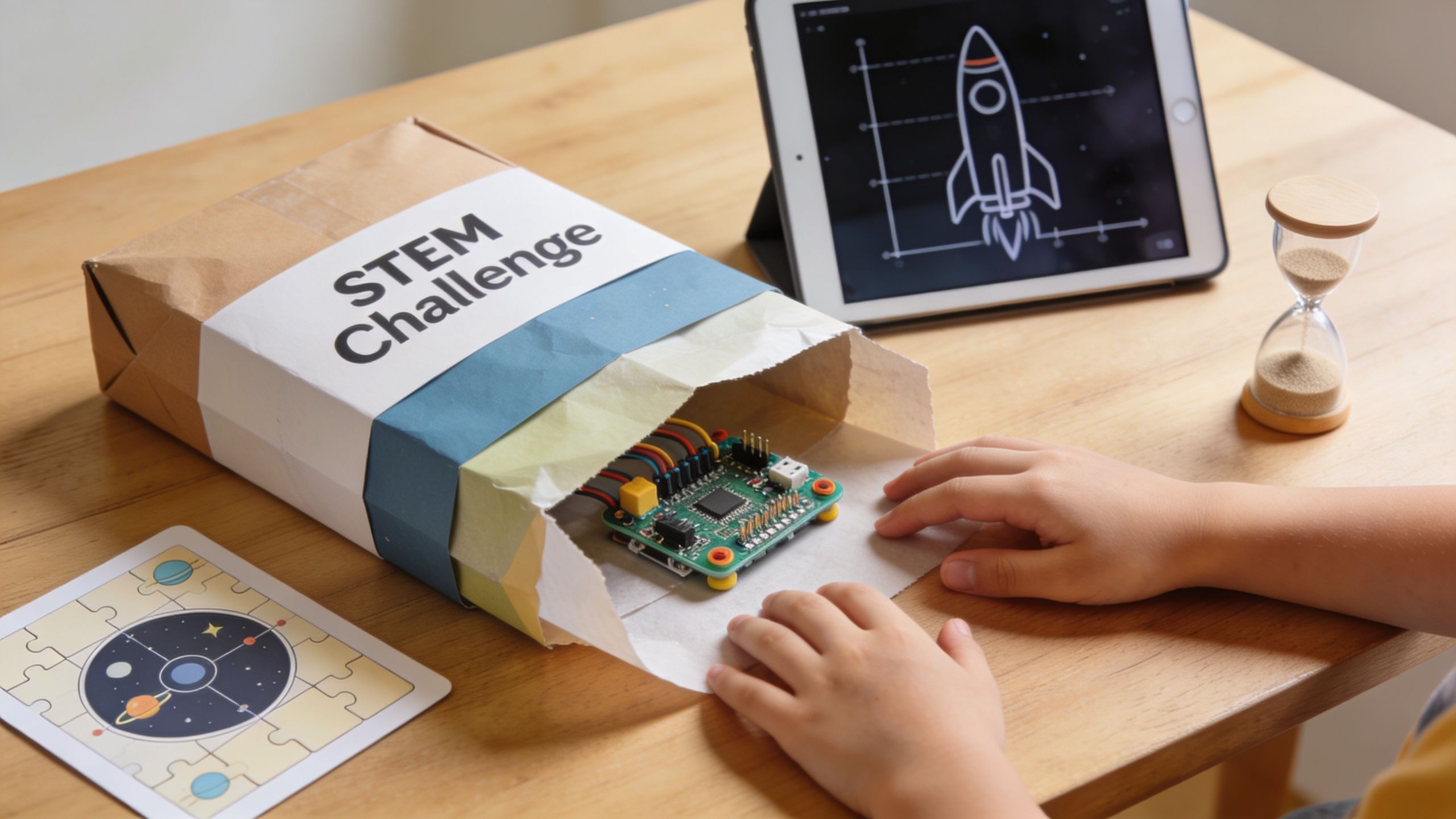
Wrap each layer with a mini STEM challenge tucked underneath. Keep the tasks short, practical, and easy to reset. One layer might ask the child to build the tallest paper rocket from two strips of card. Another might ask them to predict which object will roll fastest down a book ramp. Another could ask them to crack a simple code word from symbols.
Alt text: pass the parcel ideas STEM challenge for kids
This works especially well in classrooms, coding clubs, and science-themed parties because every stop of the music creates a tiny experiment.
What to hide in the layers
- Quick prediction cards Put in questions like “Which will float?” or “Which shape is strongest?” and let the group vote first.
- Build-it prompts Add a few straws, paper clips, or cubes and ask for a tiny bridge, launcher, or landing pad.
- Puzzle slips Use number patterns, symbol matching, or a secret astronaut message.
You don’t need fancy equipment. Pens, sticky notes, paper cups, foil, and string are more than enough. The trick is pace. If one challenge drags on, the music starts to feel like an abandoned spacecraft.
Practical rule: keep each challenge short enough that the room stays buzzy, not fidgety.
For younger children in the 6 to 8 range, make the task something they can try straight away. For older children, you can add a clue system. If they get stuck, “Mission Control” can offer a hint from a Space Ranger Fred character.
How to make it feel story-led
Give every challenge a purpose. Don’t say, “Build a tower.” Say, “Zando needs a signal booster before the comet storm arrives.” Children commit much faster when the task feels like part of an adventure.
If you want extra inspiration for child-friendly space concepts, the Space Ranger Fred guide to space science for kids is a lovely launchpad.
A final parcel prize could be a space-themed book, stickers, a mini certificate, or a “Junior Mission Engineer” badge. Everyone still gets the fun. One child gets the final reveal. No one has to calculate the thrust of an actual rocket, which keeps the carpets safer.
2. Character Quest Pass the Parcel
Some children don’t care who won the last round. They care who’s in the story.
That’s why a character quest version works so well. Each layer introduces a different Space Ranger Fred-style character with a mission, personality clue, or silly instruction. One layer might belong to the brave leader. Another to the clever inventor. Another to the chaotic one who definitely pressed the wrong button on purpose.
Children unwrap a layer, meet the character, and complete a task that matches them.
Try these character-style prompts
- The captain Ask the child to give the team one clear instruction in their best commanding voice.
- The scientist Give a tiny mystery, such as sorting “moon rocks” by colour or texture.
- The comic sidekick Ask for a space joke, funny alien walk, or dramatic emergency alarm noise.
This version is brilliant for reading groups and library sessions because it builds recall, listening, and imagination without feeling like a lesson in disguise. It also gives quieter children a role. They may not want to race, but they often love pretending to be Professor Comet or Captain Nova for thirty seconds.
If you want to make it extra polished, use matching wrapping colours for each character. Blue for the problem-solver. Silver for the inventor. Neon green for the suspiciously cheerful alien. Visual clues help children stay engaged before the layer is even opened.
Let the task match the character, not the child. That takes the pressure off and keeps the mood playful.
Small extras make a big difference. Pop in a sticker, paper badge, or character card between some layers. At the end, the whole group can decide which character helped the mission most. That creates conversation rather than just competition.
A real-world setting where this works beautifully is a bookshop event or school reading corner. One parcel becomes an interactive story hook. Instead of asking children to sit still and listen, you give them a reason to join in. That’s often the difference between polite attention and proper excitement.
3. Glow in the Dark Space Adventure Pass the Parcel
Some pass the parcel ideas feel fun. This one feels like an event.
Turn down the lights a little, bring out the glow stars, and wrap the parcel in bright paper, neon tape, or glow stickers. Each layer can reveal a secret message in fluorescent pen, a glowing planet token, or a challenge card that only appears properly under a torch or UV light.
Children love the theatre of it. The game suddenly feels less like “party game number three” and more like a lost mission file from deep space.
Best places to use this version
A glow-in-the-dark parcel is perfect for:
- Winter birthdays Early evenings help the glowing bits stand out.
- School discos It slots neatly between dancing and snacks.
- Sleepovers The low-light atmosphere adds instant mystery.
Use language that leans into the setting. “The stars have gone missing.” “The control panel is flickering.” “Only the next explorer can reveal the hidden code.” It sounds dramatic, yes. That is exactly the point.
You can hide simple tasks under each layer, such as spotting a glowing symbol, copying a constellation shape with string, or doing a moon-walk challenge across the room. One layer might reveal a tiny torch. Another might reveal the next mission clue written in invisible ink.
Keep it magical, not chaotic
Adults should handle any UV torch or lighting changes. Children should handle the fun bits. That balance saves a lot of bumping into chairs and claiming an asteroid attacked someone’s juice box.
You don’t need specialist kit to make this work. Glow bracelets, star stickers, black paper, silver pens, and battery tealights do plenty. Add a cosmic playlist in the background and the game feels completely transformed.
A nice touch is to make the final prize something that still glows after the game ends. A star keyring, glow bookmark, or space notebook keeps the mission alive for longer. That little afterglow matters. Children love taking a piece of the story home.
4. Collaborative Galaxy Builder Pass the Parcel
This one is my favourite for classrooms and mixed groups because it turns the usual winning moment into a shared success.
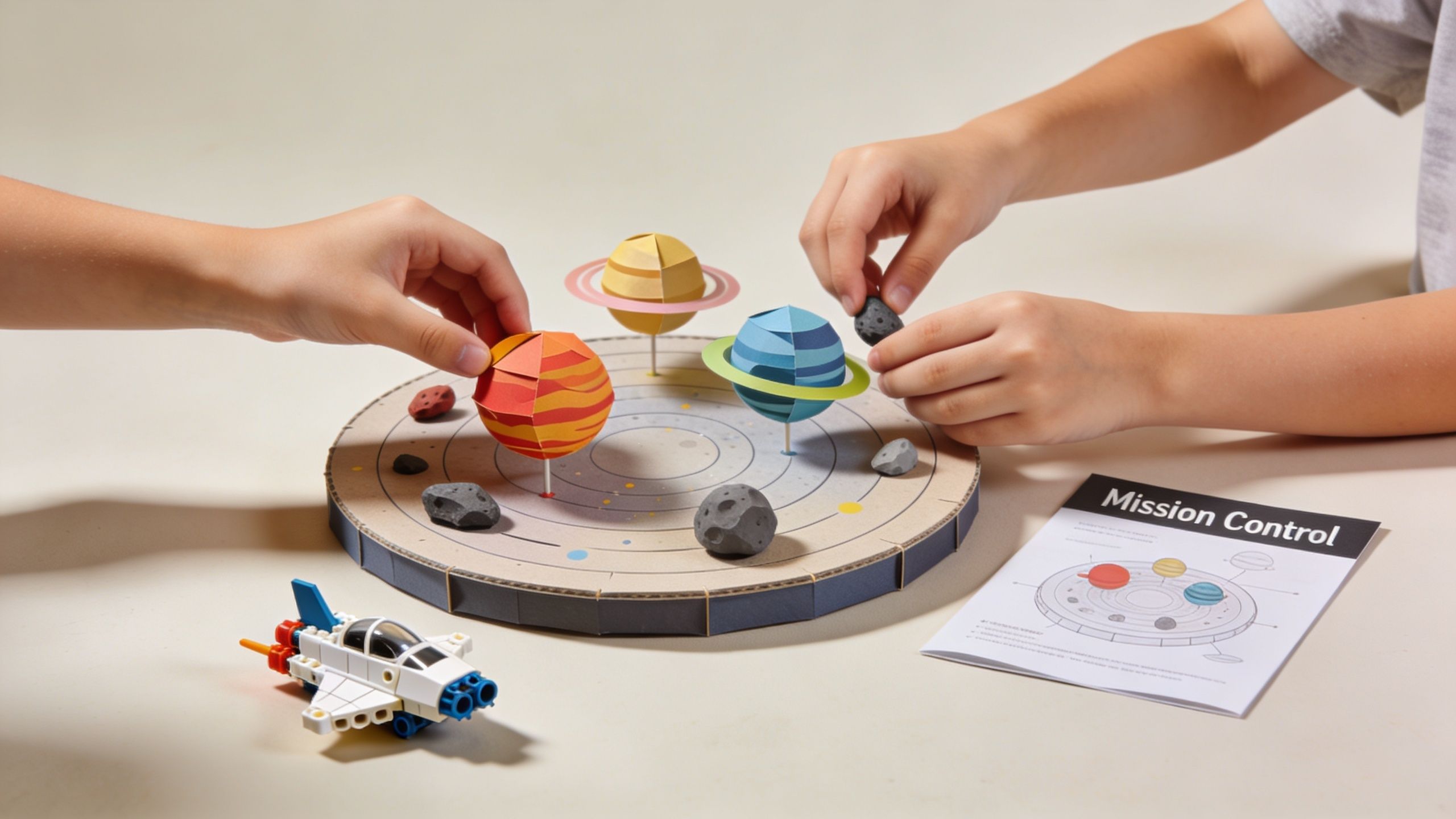
Instead of hiding individual treats in the layers, hide pieces of a bigger build. Each time the music stops, the child unwraps a layer and finds a planet, rocket part, astronaut, asteroid, or star panel. The group then adds that piece to a giant galaxy scene in the middle of the room.
Alt text: pass the parcel ideas collaborative galaxy builder for children
By the end, you don’t just have an opened parcel. You have something the children made together.
What can they build
- A tabletop solar system Card planets on sticks or magnets
- A mission control scene Consoles, characters, alien visitors
- A paper space station Compartments added one by one
This version is especially helpful if you want to reduce that “all eyes on the winner” moment. Traditional games can feel too competitive for some families. In that same 2019 parent survey discussed by Wikipedia’s overview of pass the parcel, 50% of parents said they avoid traditional party games because they see them as too competitive. A collaborative parcel sidesteps that neatly.
How to keep everyone involved
Assign tiny jobs as the build grows. One child can place stars. Another can hold the base. Another can decorate the rocket windows. If someone doesn’t want to unwrap, they can still be Mission Architect, Sticker Commander, or Chief Planet Placement Officer. Titles help. Children love a title.
A cooperative parcel works brilliantly when your group includes children with different confidence levels.
In a library setting, this can become a display for the afternoon. In a classroom, it can sit on the science table afterwards. At home, it makes a lovely party-photo backdrop. You could even send each guest home with a small extra, like a paper astronaut bookmark or colouring sheet, so the final model isn’t the only treat.
This version says something important to children without needing a speech. I think. I try. I can help. I can explain. That’s the sort of learning-through-play win Space Ranger Fred is built for.
5. Digital Hybrid Interactive Pass the Parcel
If your group loves tablets, phones, or anything with a screen and a beep, this version gives technology a proper job.
Wrap the parcel as usual, but add a QR code under each layer. When the music stops and a child unwraps, the group scans the code to reveal a clip, clue, sound effect, challenge, or choice. One code might lead to an animated briefing. Another might reveal an alien riddle. Another might ask the children to vote on the next mission path.
Used well, it feels like physical play and digital storytelling are working together rather than competing for attention.
Make the digital part simple
You don’t want five adults muttering, “Whose camera app works on this?” while twelve children hover like impatient satellites. Test everything first. Keep the instructions clear. Use one main device if the group is young.
The best digital-hybrid versions use the screen briefly, then send children back into movement, talk, or decision-making. That rhythm matters. Scan. Watch. Do. Pass. Repeat.
For ideas on playful screen-based experiences, the Space Ranger Fred article on interactive games for children fits this style well. If you’re shaping the parcel like a branching mission, this piece on designing interactive stories is also useful.
Good digital layer ideas
- Video briefings A short message from “Mission Control”
- Audio clues A strange alien sound to identify
- Choice points Vote between two planets or two tools
- Mini puzzles Match symbols or decode a route
A museum workshop, World Book Day event, or school enrichment session is a strong fit for this idea because it blends novelty with structure. Children still get the excitement of the unwrap, but the parcel can now carry animation, sound, and branching story moments as well.
The golden rule is balance. The device should support the game, not swallow it whole. If the children end the round talking to each other more than staring at the screen, you’ve got it right.
6. Sensory Discovery Pass the Parcel
Not every brilliant game has to be fast, loud, or full of buzzer noises.
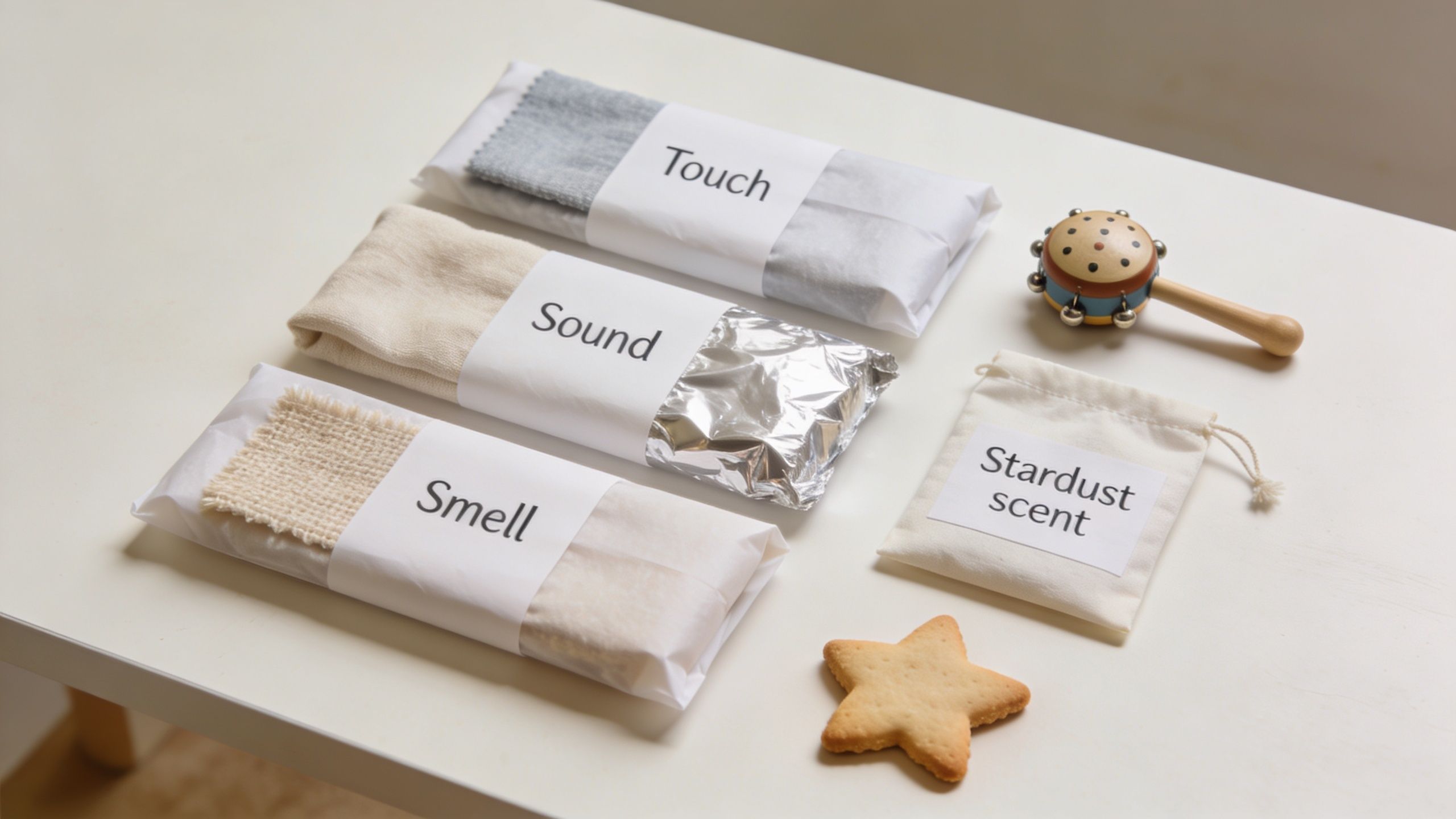
A sensory version is calmer and wonderfully inclusive. Each layer focuses on one sense and invites children to explore a texture, sound, smell, taste, or visual clue linked to a space adventure. One layer might include crinkly silver foil “moon dust”. Another might have a tiny sound tube that becomes a “comet shaker”. Another might reveal a star-shaped biscuit for a tasting pause.
Alt text: pass the parcel ideas sensory discovery game for kids
This one shines in family groups, early primary settings, and any event where children benefit from varied ways to join in.
Sensory layer examples
- Touch Soft pom-poms, bumpy stickers, smooth pebbles
- Sound Bells, shakers, rustly foil, whisper prompts
- Smell Mild scented cotton pads, clearly checked for sensitivities
- Taste Sealed star biscuits or themed sweets, labelled properly
- Sight Bright colours, glow shapes, constellation cards
The underserved bit in many pass the parcel ideas is accessibility for younger or more sensitive players. Traditional versions often assume everyone enjoys the same pace and noise level. A sensory parcel gives you options. A child can feel, point, describe, compare, or observe. That’s still participation.
Gentle structure works best
Use plain instructions. “Can you find the smooth one?” “Which sound is quieter?” “What does this smell remind you of?” These questions invite language without forcing a performance.
Do check allergens, ask about sensitivities, and avoid overpowering smells. If a child would rather skip a layer, let them. There’s no cosmic law demanding everyone must sniff the pretend moon herbs.
Quiet win: sensory play often draws in children who’d usually hang back during noisier group games.
This variation can also link beautifully to describing words. Rough, shiny, soft, crisp, sweet, fizzing, cold. Children practise vocabulary because they need it for the moment, not because it’s on a worksheet. That’s one of the best kinds of learning.
If you’d like more low-prep activities to pair with this style, the Space Ranger Fred freebies and activities page is a handy place to raid for printables.
7. Mission Based Elimination Pass the Parcel
What if pass the parcel felt less like luck and more like a space mission with checkpoints?
This version gives the game a clear story engine. Each layer is a mission stop. The child holding the parcel has to complete a quick task to keep the parcel moving through the adventure. Used carefully, elimination adds suspense without turning the room sour. The goal is excitement, not embarrassment.
The easiest way to get that balance right is to treat "out" as "reassigned". A child who misses a challenge can become mission control, timer captain, clue reader, badge giver, or cheer leader. That small change works like swapping a dead battery for a fresh one. The energy stays on, and every child still has a job in the crew.
Build it like a mission board
A good mission-based parcel needs variety. If every task is fast answering, the same children will race ahead. If every task is physical, others get squeezed out. Mix brain tasks, movement tasks, and imaginative tasks so different strengths get a turn.
You could organise the layers like this:
- Launch check Name two things a rocket needs
- Orbit task Hop between planet markers
- Alien contact Invent a greeting and matching action
- Asteroid puzzle Solve a simple riddle
- Captain's choice Pick a teammate to help with the challenge
That last one matters more than it seems. Shared tasks soften the sharp edges of elimination and make the game feel cooperative, even when only one parcel is in play.
Keep the missions short and clear
Older children usually enjoy this most, especially if they already know the standard version and want a fresh twist. Keep each challenge brief. Ten lively seconds is better than a long, wobbly minute while everyone waits and the birthday cake starts looking more interesting than your brilliant planning.
Clarity helps too. Say exactly what success looks like before the music starts. "Name three space words." "Balance the moon beanbag for five seconds." "Read the clue in your best robot voice." Children join in more confidently when the task is visible and manageable.
For a stronger story thread, you can link the mission cards into a larger plot, much like transmedia storytelling in children's adventures. One layer might repair the ship. Another might decode a warning. Another might help Space Ranger Fred choose the safest planet to land on. Suddenly the parcel is not just being unwrapped. It is carrying the mission forward.
Fairness makes the fun last
This version works best with an openly warm host. Cheer for brave tries. Praise funny answers. Let near misses count if the room is enjoying them. You are setting the tone like a teacher running a great class game. Firm structure, soft edges.
A final practical tip. Give everyone a small takeaway at the end, even if one child reaches the centre prize. That keeps the game satisfying for the whole crew and turns competition into shared celebration, which is where true party magic resides.
8. Storytelling Adventure Pass the Parcel
This is the softest, smartest version of all. It turns the parcel into a book you play together.
Each layer reveals the next part of a story. A chapter card. A picture. A clue. A prop. A character message. The child who unwraps can read it aloud, or an adult can do the reading while the group acts out bits, predicts what happens next, or decides what the heroes should do.
It’s pass the parcel, but it also feels like live theatre, guided reading, and a tiny radio drama all at once.
Build the story in short bursts
Keep each section short enough to hold the room. A cliffhanger is your best friend. “The lights on the ship went out.” “A strange egg began to glow.” “Zando opened the hatch and gasped.” Children lean in when the next layer matters.
You can tuck in physical objects that match the plot. A foil star map. A red warning card. A tiny alien badge. A planet postcard. Props help the story stick.
Why this version works so well
Children aren’t only waiting for a prize. They’re waiting for meaning. They want to know what happens next. That changes the whole energy of the game.
It’s especially strong for libraries, book weeks, and mixed-age family groups because children can contribute in different ways. One reads. One guesses. One holds the prop. One remembers the previous clue.
If you’re interested in the wider idea of stories unfolding across formats, the Space Ranger Fred explainer on transmedia storytelling connects beautifully to this approach.
You can finish with a final story page that declares the group official space explorers. Then the centre prize can be shared story sheets, bookmarks, colouring pages, or a featured Space Ranger Fred title. That way the parcel doesn’t just end. It launches the next adventure.
Pass-the-Parcel Ideas: 8-Point Comparison
| Variation | Implementation complexity | Resource requirements | Expected outcomes | Ideal use cases | Key advantages |
|---|---|---|---|---|---|
| Space Ranger Fred STEM Challenge Pass-the-Parcel | High, requires designing progressive STEM tasks and facilitation | Moderate–High, challenge materials, answer sheets, facilitators, basic tech | Strong STEM engagement, problem-solving skills, measurable learning | School STEM clubs, educational birthday parties, book launch events | Deeply educational, classroom-adaptable, cognitively engaging |
| Character Quest Pass-the-Parcel | Medium, needs character briefs and themed task design | Low–Medium, character cards/merchandise, printable clues | Increased brand affinity, character knowledge and fan engagement | Library reading programmes, fan events, themed parties | Builds emotional connection, highly customizable and shareable |
| Glow-in-the-Dark Space Adventure Pass-the-Parcel | Medium–High, technical setup for blacklight effects and safety | Moderate, UV materials, blacklights, darkened venue, safety oversight | High visual impact, memorable sensory experience | Evening events, planetariums, outdoor camps, science center parties | Strong "wow" factor, visually immersive, aligns with space theme |
| Collaborative Galaxy Builder Pass-the-Parcel | Medium, requires component design and coordinated assembly | Moderate, 3D/ craft components, storage, assembly space | Teamwork, communication skills, shared creative artifact | Classrooms, group events, library sessions, World Book Day | Encourages collaboration, inclusive, produces displayable result |
| Digital-Hybrid Interactive Pass-the-Parcel | High, needs QR/AR integration, content development and testing | High, devices/Wi‑Fi, AR content, ongoing maintenance | Extended digital engagement, trackable interactions, scalable difficulty | Tech-forward schools, platform launches, hybrid events | Multi‑platform reach, easily updatable, analytics-enabled |
| Sensory Discovery Pass-the-Parcel | Medium, careful planning for multi-sensory elements and safety | Moderate, textured materials, safe scents, sound props, hygiene supplies | Inclusive sensory engagement, supports early development and exploration | Early years, nurseries, sensory-friendly story times | Appeals to varied learning styles, developmentally appropriate |
| Mission-Based Elimination Pass-the-Parcel | Medium, requires fair mission design and sensitive facilitation | Low–Medium, props, timers, facilitator to manage elimination | High excitement, competitive engagement, quick assessment of skills | Competitions, school assemblies, older primary birthday parties | High-energy, scalable for groups, clear progress outcomes |
| Storytelling Adventure Pass-the-Parcel | Medium–High, needs tailored story writing and pacing control | Low–Medium, printed chapters/props, narrator or recording | Improved literacy, narrative engagement, suspense-driven participation | Libraries, reading events, book launches, World Book Day | Strengthens reading enjoyment, reusable format, deep narrative immersion |
Your Mission Launch an Unforgettable Party
What if one parcel could do more than keep children busy for ten minutes?
That is the unique appeal of these pass the parcel ideas. Each version turns a familiar party game into a small mission with a clear purpose. One child tests a theory. Another adds to a story. Someone else builds, listens, spots a clue, or helps a teammate. The wrapping paper becomes the launch sequence, and every layer gives children one more reason to stay curious.
Classic pass the parcel works because children grasp the pattern quickly. Sit in a circle. Pass the parcel. Wait for the music to stop. Open a layer. The best party games are a bit like a good picture book. The structure stays steady, so children feel confident, but each new page brings a surprise. That steady rhythm gives you room to add STEM thinking, storytelling, teamwork, and plenty of laughter without making the game hard to run.
That is why these eight ideas work so well in real rooms with real children.
The STEM Challenge parcel suits groups who love solving and making. Character Quest helps children step into role and use their imagination. Glow in the Dark adds excitement for a high-energy party, while Sensory Discovery offers a gentler route into play for children who prefer exploring through texture, sound, and simple surprises. Collaborative Galaxy Builder is brilliant for classrooms because the group creates something together instead of waiting for a single winner.
If you are choosing quickly, use the setting as your guide. A library group usually responds beautifully to Storytelling Adventure. A classroom often gets the most from Collaborative Galaxy Builder or the STEM version. A lively birthday party may race happily through Glow in the Dark or Mission Based Elimination. A mixed group, especially one with different confidence levels, often settles into Character Quest with much less fuss than adults expect.
There is also a bigger win here. Children are not only playing. They are practising how to listen, predict, explain, encourage, and keep going when the answer does not appear at once. Those are the hidden treasures of playful learning, and they last longer than the sweets.
Space Ranger Fred fits this kind of party planning neatly because the stories already blend humour, adventure, and science-flavoured curiosity. Instead of adding a random theme on top, you are building a mini mission that feels connected from start to finish. The game has a plot. The tasks have a reason. Even the quiet children often join in when a challenge feels like part of the adventure rather than a test in a party hat.
If you want the fun to continue after the last layer is opened, the Space Ranger Fred books are a lovely next step, as noted earlier in the article. For schools, libraries, or larger events, a Space Ranger Fred school visit can bring that same mix of storytelling, confident speaking, and playful science into the room.
A memorable party does not need piles of equipment or a schedule worthy of Mission Control. It needs one strong idea, a clear rhythm, and children who feel invited to explore.
Learning is far more powerful when children can play it, build it, and laugh through it together.
Meta title: 8 Cosmic Pass the Parcel Ideas for Kids
Meta description: Discover 8 creative pass the parcel ideas with STEM, stories, and space fun for kids. Perfect for parents, teachers, libraries, and parties.
Bring more story-led fun into your child’s world with Space Ranger Fred. You’ll find books, activities, and school visit ideas that turn reading, science, and imagination into one big adventure.