
Meta title: Kids Games for Wii for Fun and Learning
Meta description: Discover kids games for Wii that support active play, simple STEM thinking, and family fun with practical tips for parents and teachers.
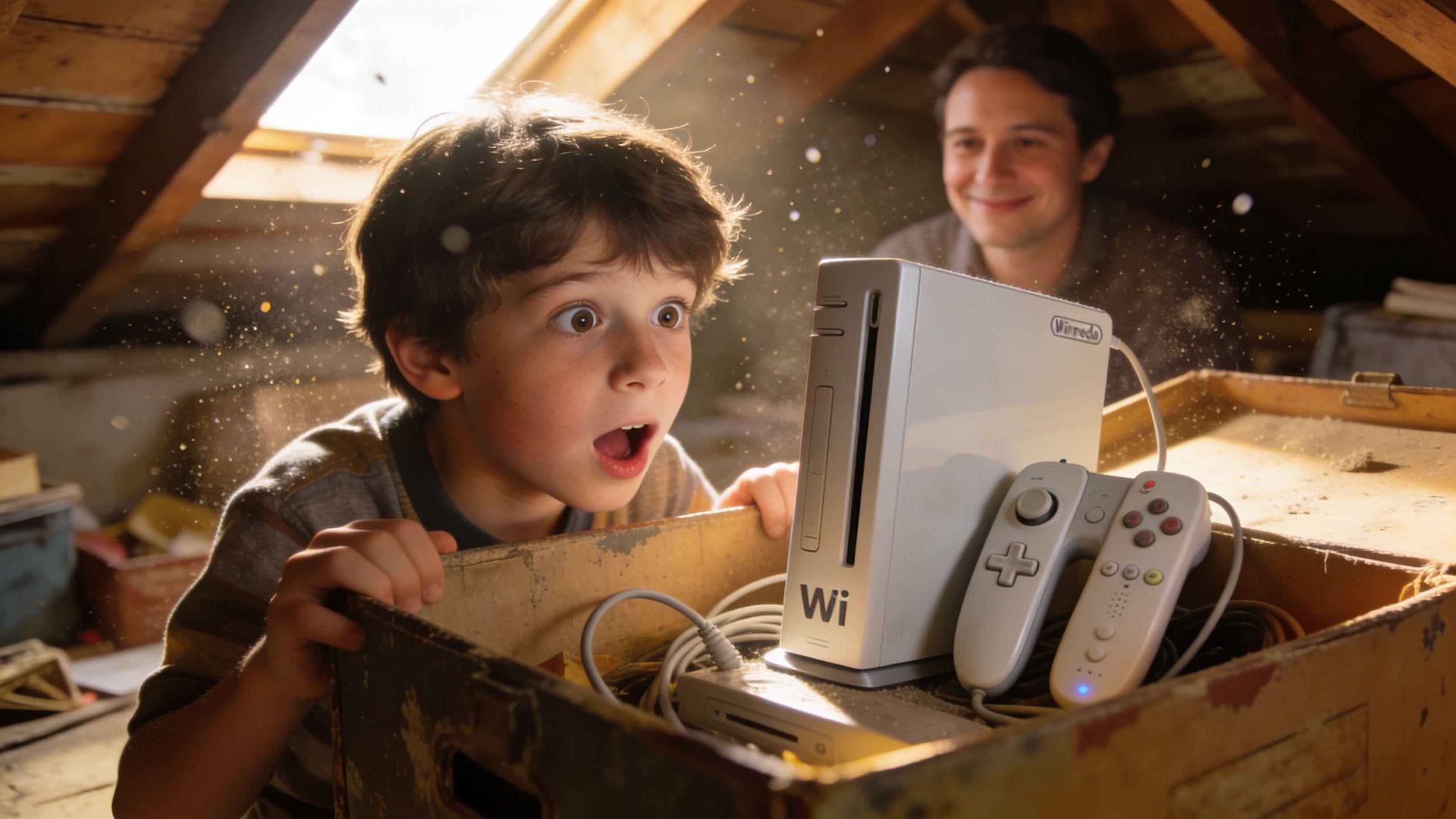
You know the moment. You're clearing a cupboard, opening an old loft box, or helping at school storage, and there it is. A Nintendo Wii.
At first it feels like pure nostalgia. Then a child spots the white console and asks, “What’s that?” Suddenly, you’re not looking at old tech. You’re looking at a low-fuss, family-friendly way to mix movement, play, and learning.
For many parents, teachers, and librarians, kids games for Wii still have a quiet advantage. They’re simple to pick up, easy to watch together, and brilliant for turning screen time into something more active and social. Not every game is educational, of course, but plenty of Wii play encourages timing, observation, coordination, turn-taking, and problem-solving.
That makes the Wii surprisingly useful today. It can become a rainy-day PE helper, a family game night hero, or a classroom reward that still asks children to think, try, and explain.
Why the Wii Is a Surprise Hit for Modern Kids
Some consoles ask children to learn lots of buttons before they can enjoy themselves. The Wii often does the opposite. A child can swing, point, steer, or bowl within minutes.
That matters. When controls feel natural, children spend less time getting frustrated and more time experimenting. They test what happens if they swing faster, aim differently, or change their timing. That’s active screen time in the best sense.
Why families still remember it so fondly
The Wii wasn’t just popular. It became part of home life. Wii Sports sold 82.9 million units globally, making it the best-selling title on any single console, and the Wii itself sold approximately 8.3 million units in the UK by 2013, reaching over 20% of UK households at its peak, according to Statista’s Wii sales overview.
Those numbers help explain why so many families still have one tucked away. The Wii earned its place by bringing in children, parents, grandparents, and people who didn’t think of themselves as gamers at all.
Practical rule: If a child can understand the movement before they understand the game menu, they’re more likely to stay engaged.
What makes it useful now
Modern children are used to slick graphics, so some adults worry the Wii will feel dated. Usually, children care less about that than grown-ups do. If the game is clear, lively, and lets them do something straight away, they’re in.
The Wii also suits shared spaces well. A teacher can see what’s happening. A parent can join in. A librarian can organise turns without everyone disappearing into separate screens.
A few reasons it still works:
- It gets children moving with obvious physical actions
- It supports turn-taking because local multiplayer is easy to set up
- It’s readable for adults who want to supervise without needing a gaming dictionary
- It encourages experimentation through movement, timing, and immediate feedback
There’s also something refreshing about its pace. The Wii often feels less like scrolling and more like doing. For children who learn best by trying things out, that’s a strong starting point.
Finding the Right Wii Game for Your Child
Choosing from kids games for Wii can feel oddly harder than it should. You’ll find lots of lists online, but many focus on nostalgia or entertainment value rather than what suits a child’s age, confidence, or learning style.
That gap matters. A common challenge for UK educators is that most Wii game lists aren’t evaluated against Key Stage 1 or Key Stage 2 needs, and many overlook games with logic and problem-solving potential, as noted in this guide to Wii games for families and educators.
Early Explorers ages 6 to 8
Children in this group usually do best with games that are visually clear, forgiving, and easy to restart. They don’t need lots of menu reading. They need obvious goals.
Ask yourself:
- Can my child understand the aim quickly
- Does the game reward trying, not just winning
- Are the controls simple enough to feel fair
Good signs include bright visuals, short rounds, and clear cause and effect. Sports games, party games, and straightforward movement-based games often work well here.
A younger child usually enjoys:
- Simple motion actions such as swinging, aiming, or balancing
- Short activities that don’t drag on after a mistake
- Friendly multiplayer with siblings or adults nearby
A good Wii game for a younger child should feel like a playground instruction, not a tax form.
If you’re also thinking about broader screen choices, this article on children’s video game habits and choices is a useful companion read.
Confident Adventurers ages 9 to 12
Older children often want more than novelty. They still enjoy bowling, racing, and party challenges, but they’re also ready for games that ask them to plan, predict, and solve problems.
They may like:
- Longer missions with memory and sequencing
- Puzzles that require observation
- Adventure games where tools must be used in the right order
- Competitive play where strategy matters as much as speed
A child in this stage might enjoy asking, “What happens if I do this first?” That’s a lovely sign. It shows they’re not just pressing buttons. They’re thinking ahead.
A quick way to choose
Here’s a simple guide you can use at home or in school:
| Child stage | Best game traits | Watch out for |
|---|---|---|
| Early Explorers | Simple controls, clear goals, short rounds | Busy menus, long text, tricky timing |
| Confident Adventurers | Puzzles, strategy, layered objectives | Games that are overly repetitive or fiddly |
When in doubt, watch the first ten minutes of play. Is your child curious, calm, and willing to try again? Or are they cross, confused, and handing you the controller every thirty seconds? The answer tells you a lot.
Exploring the Best Wii Game Genres for Learning
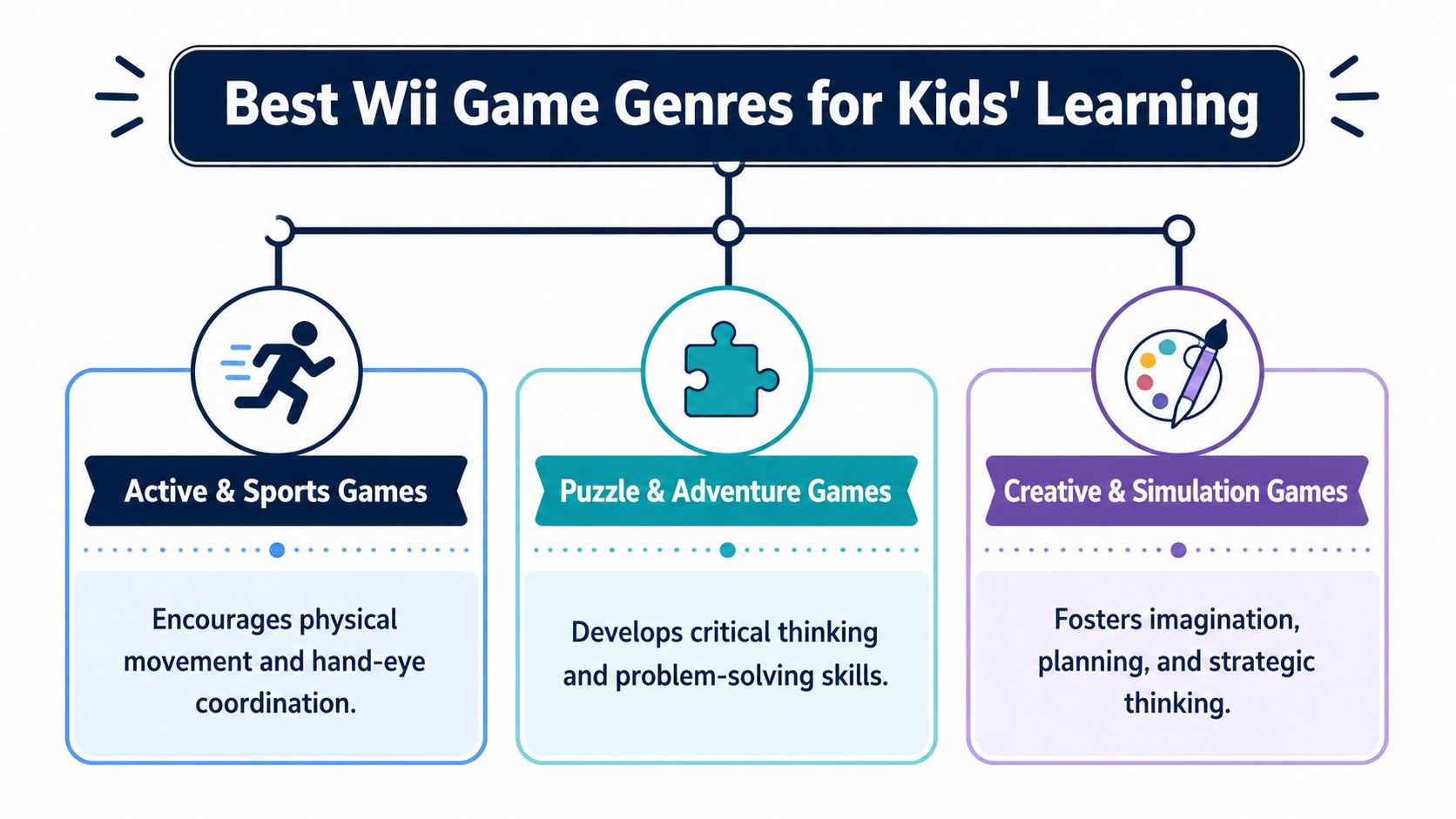
Some of the best kids games for Wii aren’t “educational” in the narrow sense. They teach through the type of play they create.
That’s far more useful than a giant list of titles with no context.
Active and sports games
These are often the easiest starting point. Children move their bodies, react quickly, and adjust based on what happens on screen.
That kind of play supports:
- Hand-eye coordination
- Timing
- Spatial awareness
- Understanding of force and direction
A useful example is EA Playground. Games like this use the Wii’s motion controls so that swings affect ball movement in ways that reflect real-world physics. Player actions modulate trajectories, which helps children aged 6 to 12 build an intuitive sense of cause and effect, as described in this overview of EA Playground on Wii.
If you’re planning a school fair or family event with a retro feel, local play works beautifully alongside bigger shared attractions like classic arcade machine rentals, especially when you want children to compare old-style physical play with more modern digital interaction.
Puzzle and adventure games
Children start to think like investigators, observing details, testing ideas, and working through sequences.
It’s a bit like a mission briefing. Spot the problem. Choose the tool. Try a solution. Adjust if needed.
That style of play can build:
- Logical thinking
- Patience
- Prediction
- Problem-solving language
A child who says, “I think that object goes there because…” is doing more than gaming. They’re explaining reasoning.
For off-screen follow-up, pair puzzle games with printable challenges from the Space Ranger Fred freebies and activities page. It’s a simple way to keep the thinking going after the console is switched off.
Creative and simulation games
These games often get less attention, but they can be excellent for planning and imagination. Children may design, organise, customise, or manage tasks over time.
The learning here is quieter, but still valuable:
- Planning ahead
- Decision-making
- Creative expression
- Sticking with a longer goal
Some children don’t want to race. They want to build, arrange, experiment, and tinker. That matters just as much.
When you choose by genre instead of hype, the Wii becomes easier to use well. You stop asking, “What’s the most famous game?” and start asking, “What kind of thinking do I want to encourage today?”
Connecting Wii Gameplay with Simple STEM Skills
A child lines up a Wii bowling shot, twists a little too far, and watches the ball drift into the gutter. On the next turn, they adjust their arm, slow down, and aim more carefully. That small moment contains the heart of STEM. Make a guess, test it, notice what happened, and try again.

The STEM hiding in plain sight
The Wii works well as a low-cost learning tool because it turns abstract ideas into something children can feel in their hands and bodies. Angle, force, timing, balance, pattern, and reaction stop being textbook words. They become part of the game.
Bowling is a clear example. Children choose a direction, judge speed, watch the result, then adjust. Racing games add prediction and quick decision-making. Balance games bring in body control and feedback. Puzzle games strengthen sequencing and logic.
That pattern is simple, but powerful.
- Predict what might happen
- Test an idea
- Observe the result
- Adjust the next attempt
- Explain what changed
It works like a child-sized science cycle. A Space Ranger Fred mission would call it gathering clues, trying a tool, and learning from the outcome.
What active play can build
Research published on PMC found positive trends in motor skills and physical literacy for children aged 6 to 12 who played Wii games regularly in short sessions. For parents and teachers, the useful takeaway is straightforward. Motion-based play can support coordination and body awareness alongside the fun.
That matters because STEM is not only about numbers on a page. Young children also learn through movement, timing, and spatial judgment. A child who learns how much force sends a virtual bowling ball too far is meeting the early foundations of physics in a form that makes sense.
Turning a game into a learning moment
You do not need to turn Wii time into a formal lesson. A short conversation after play is often enough.
Try questions like these:
- What did you change that time?
- Why do you think it worked better?
- What pattern did you notice?
- What would you test next?
These questions help children explain their thinking instead of only reacting. That habit builds confidence, patience, and clear reasoning. If a child says, “I aimed wider because the last shot curved,” they are doing real analytical work.
If you want more ideas for building a practical mix of screen time and learning, this guide to children’s educational video games offers useful examples. For children who enjoy number patterns and step-by-step problem solving, SmartSolve for math problem help can extend that same habit of working carefully through a challenge.
Used this way, the classic Wii becomes more than a nostalgia console. It becomes an affordable little lab for testing ideas, building coordination, and practicing the calm persistence children use in school, at home, and on every good mission.
How to Create a Safe and Fun Wii Gaming Zone
The Wii is cheerful chaos if you let it be. One enthusiastic tennis swing and suddenly everyone remembers why furniture corners exist.
A few simple habits make a huge difference.
Physical safety first
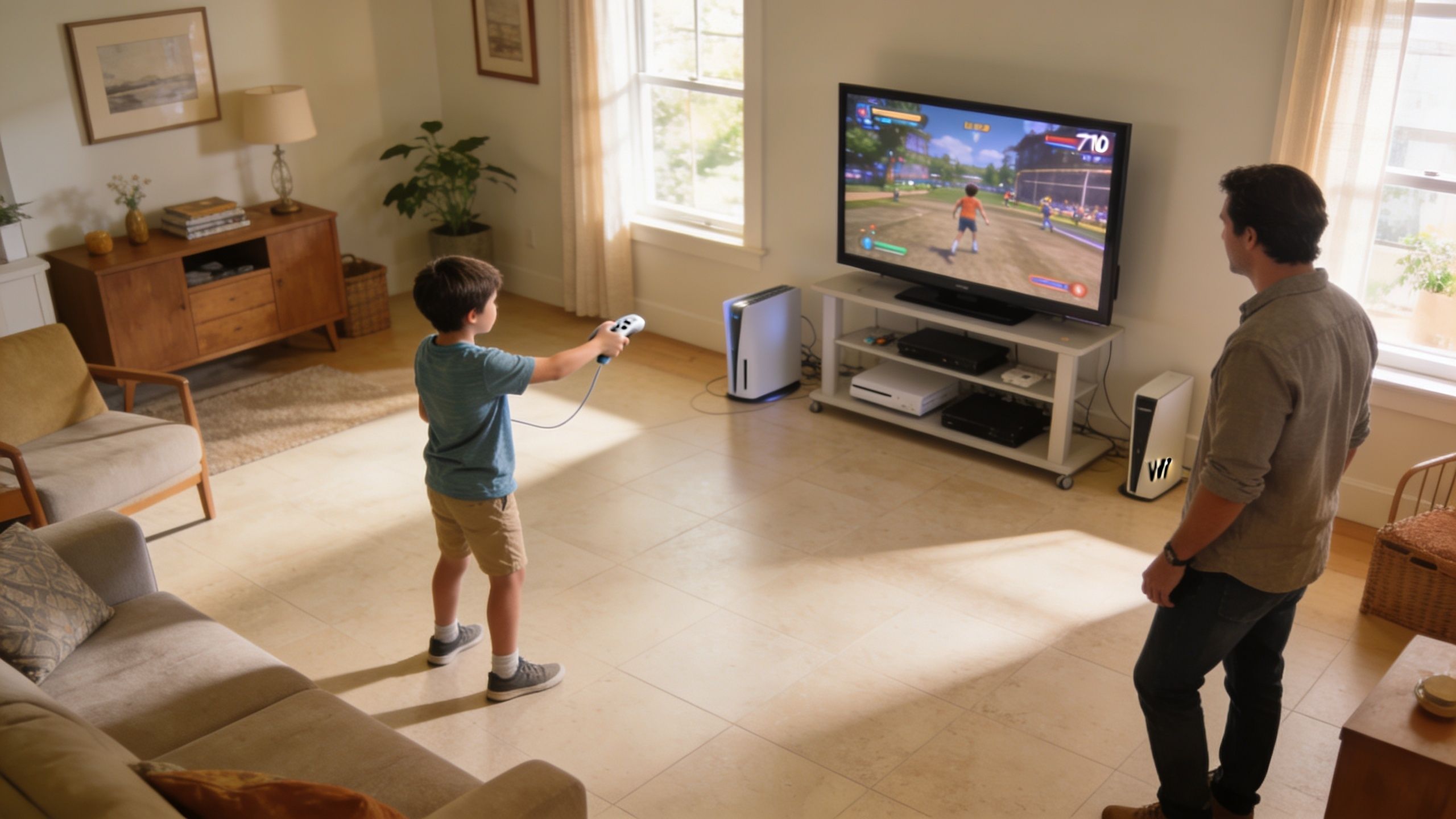
The wrist strap isn’t optional. It’s the closest thing the Wii has to proper mission gear.
Use this quick checklist:
- Clear the play area so arms and controllers have space
- Stand children sensibly apart during active games
- Use the wrist strap every time even for confident players
- Check the floor for rugs, cables, and socks that turn into skates
- Choose the right game for the room because bowling needs more space than a seated puzzle game
Digital safety and sensible setup
The Wii is older technology, which can make supervision simpler. Keep game choices visible, use parental controls where appropriate, and store discs in one place so children aren’t endlessly swapping titles without guidance.
Room setup matters too. If you need ideas for arranging a calm, practical play corner, this guide to a tidy gaming setup at home has useful inspiration you can adapt for a family lounge, school nook, or library activity space.
The best gaming zone isn’t the fanciest one. It’s the one where children can move safely, take turns, and stop without drama.
Healthy habits that keep it fun
Wii play works best as part of a rhythm, not the whole day. Mix it with reading, outdoor play, drawing, building, and plain old messing about.
A simple routine helps:
- Choose the game before starting
- Decide how long the session is
- End with something active or creative off-screen
That final step is especially helpful in schools and homes where transitions can be bumpy. Children cope better when there’s a clear next activity.
Unforgettable Family Game Nights with the Wii
The Wii shines brightest when people play together. Not perfectly. Not expertly. Together.
That’s why so many families still remember it with such affection. Wii Party sold over 9 million units globally, and in the UK family and kids’ genres accounted for 62% of the top 10 chart performance between 2008 and 2010, which underlines how central the Wii became to shared home entertainment, as noted in this list of best-selling Wii games.
The magic of multiplayer
A family Wii night doesn’t need a grand plan. Pick one cooperative game and one light competitive game. That’s usually enough.
Good combinations include:
- A team-based challenge where children solve or complete tasks together
- A silly sports round where adults can join without feeling hopeless
- A racing game that creates laughter even when everyone insists they were “definitely winning”
The hidden value is social. Children practise waiting, encouraging others, dealing with disappointment, and explaining rules to someone else.
Let the child become the expert
One of my favourite moments is when a child teaches an adult how to play. Their posture changes. Their voice changes. They stop being the one who needs help and become the guide.
That builds confidence in a very real way.
Try saying:
- Can you show Grandad how to steer
- Can you explain the best way to time that swing
- Can you tell me why that strategy works
That last one is gold. Explanation turns play into communication.
A child who can teach a game clearly is practising confidence, sequencing, and spoken language without even noticing.
A brilliant family night doesn’t have to be polished. It can be noisy, a bit lopsided, and full of dramatic claims about unfair bowling physics. What matters is that everyone joins in, everyone gets a turn, and the screen becomes a shared experience rather than a private one.
If your child loves stories, curiosity, and playful problem-solving, explore Space Ranger Fred for adventure-filled books, fun learning ideas, and activities that stretch family game night into reading, STEM chat, and imaginative missions. You can also visit the book page for your next read, try the free activities and printables, and, if you’re a school or library, ask about interactive school visits that support confidence, reading, storytelling, and communication through lively STEM-inspired sessions. Learning should be experienced, not just delivered.