
Have you ever been halfway through naming the planets, said “Mercury, Venus, Earth…”, then paused and looked to your co-pilot for help?
Space Ranger Fred knows that moment well. One minute a young explorer is staring up at the night sky from the garden, the next they are asking the big question: what are the planets names in order? So Fred is here with polished boots, a bright mission badge, and a flight plan that turns a tricky list into a proper space adventure.
Our mission route is clear. We travel out from the Sun in this order: Mercury, Venus, Earth, Mars, Jupiter, Saturn, Uranus, Neptune. Pluto used to appear on plenty of older classroom posters, but astronomers now place it in the dwarf planet group, so our main mission log sticks with eight planets.
To make the order easier to remember, Fred hands every recruit a memory line: My Very Excellent Mother Just Served Us Noodles. Silly? Absolutely. Helpful? Also yes.
Each stop ahead comes with its own planet story, a simple way to say the name, and a mini mission for young explorers to try at home or in class. If your crew wants a handy warm-up before launch, you can pair this roll call with a quick look at what planets are made of.
Helmets on. Zando has the star map open. Fred is at the controls, and the countdown has already begun.
1. Mercury – The Swift Messenger
Mercury races nearest to the Sun, so it gets first mention on our mission log. It’s the smallest planet in the solar system and the closest to our star, which makes it feel like the daring scout of the group.
Its name comes from the Roman messenger god, chosen because Mercury appears to move swiftly across the sky. There’s a lovely bit of history here too. Thomas Harriot, an English astronomer, made telescopic observations of Mercury in 1610, showing how early British astronomy helped shape the way we know the planets today.
How to say it
Say it like this. MER-kyuh-ree.
That rhythm helps younger children hear all three parts of the word instead of rushing through it.
Practical rule: Ask children to clap once for each part. MER. Kyuh. Ree.
Mercury is a rocky world, marked by craters and dramatic changes in temperature. That makes it perfect for a classroom chat about opposites. Hot and cold. Day and night. Fast and slow.
A Space Ranger Fred mission on Mercury might be a speed challenge. Fred lands, scans the ground, solves a problem quickly, and moves on before conditions change. Children usually love that idea because it turns a planet into a place with a purpose.
If you want to stretch the learning, pair Mercury with materials science and rocky planets by reading what planets are made of.
- Try a race activity: Line up eight planet cards and ask children to dash to Mercury first.
- Add mythology: Tell them the name comes from a messenger, then ask what message Mercury might deliver.
- Make it sensory: Use rough paper or pebbles to model a cratered surface.
2. Venus – The Mysterious Twin
Venus is second in the planets names in order, and at first glance it sounds rather friendly. It’s often called Earth’s twin because the two planets are similar in size. That’s where the similarity starts to wobble.
Venus is famous for being bright in the sky, which makes it a wonderful planet for family stargazing or a school evening event. It’s also a useful reminder that worlds can look beautiful from a distance and still be harsh places up close.
How to say it
Say it like this. VEE-nuhs.
Children usually remember Venus quickly because the name sounds soft and bright, a bit like the planet’s appearance in the sky.
Named after the Roman goddess of love and beauty, Venus gives teachers and parents a nice bridge between science and story. One minute you’re learning order and pronunciation. The next, you’re talking about atmosphere, light, and why planets can be so different from one another.
Venus is a brilliant example of why scientists compare planets instead of assuming they’re all alike.
A simple mission activity works well here. Give children two circles on paper. Label one Earth and one Venus. Then ask them to fill each with clues. Which one is our home? Which one shines brightly in the sky? Which one feels welcoming to us?
That kind of side-by-side thinking builds the “I can explain” part of learning. It moves children beyond memorising a list and into noticing patterns.
For librarians or teachers planning themed sessions, Venus is a strong “mystery stop” in a solar system trail. It looks calm. It asks big questions. It makes children curious.
3. Earth – Our Home Planet
Have you ever looked down at a muddy trainer, up at a rainy cloud, and realised you are standing on a planet?
That is the lovely surprise of Stop Three on Space Ranger Fred’s mission. Earth is not a faraway world to spot through a telescope. It is the place where breakfast happens, school bags go missing, gardens grow, and bedtime questions begin. For Fred, Earth is Mission Control, the blue home base where every launch starts and every discovery returns.
How to say it
Say it like this. URTH.
It is short and strong, which makes it a cheerful win for young explorers learning the planets names in order. Children can say it, point to it, and connect it to their own lives straight away.
Earth stands out because it has liquid water, breathable air, and living things in astonishing variety. Forests, oceans, insects, whales, cities, snow, deserts. Our planet feels familiar because we live here, but from space it is a remarkable world.
That makes Earth a brilliant teaching stop. Instead of only memorising a list, children can start with what they know. The wind on their face. A puddle in the playground. The Moon overhead. Then they can look outward and ask bigger questions about other planets. If your crew wants to peek ahead to the next stop, Fred’s guide to what Mars is like makes a fun compare-and-contrast challenge after Earth.
Mission activity for Earth
- Build Mission Control: Set up a table with clipboards, maps, and homemade ranger badges.
- Keep an Earth log: Record the weather for a week and compare sunny, windy, cloudy, and rainy days.
- Protect the planet: Turn recycling, planting, or litter-picking into a home-planet rescue mission.
Earth gives this mission its heart. Young explorers are not only learning the third planet’s name. They are learning why this planet is worth caring for.
4. Mars – The Red Planet
Mars is where the adventure feeling really kicks in.
Fourth in the planets names in order, Mars has captured imaginations for years because it feels both close and mysterious. It’s often called the Red Planet because of the rusty dust on its surface, and that colour alone is enough to hook many young explorers.
How to say it
Say it like this. MAHZ.
It’s a crisp, punchy word. Good for a dramatic countdown. “Next stop. Mars.”
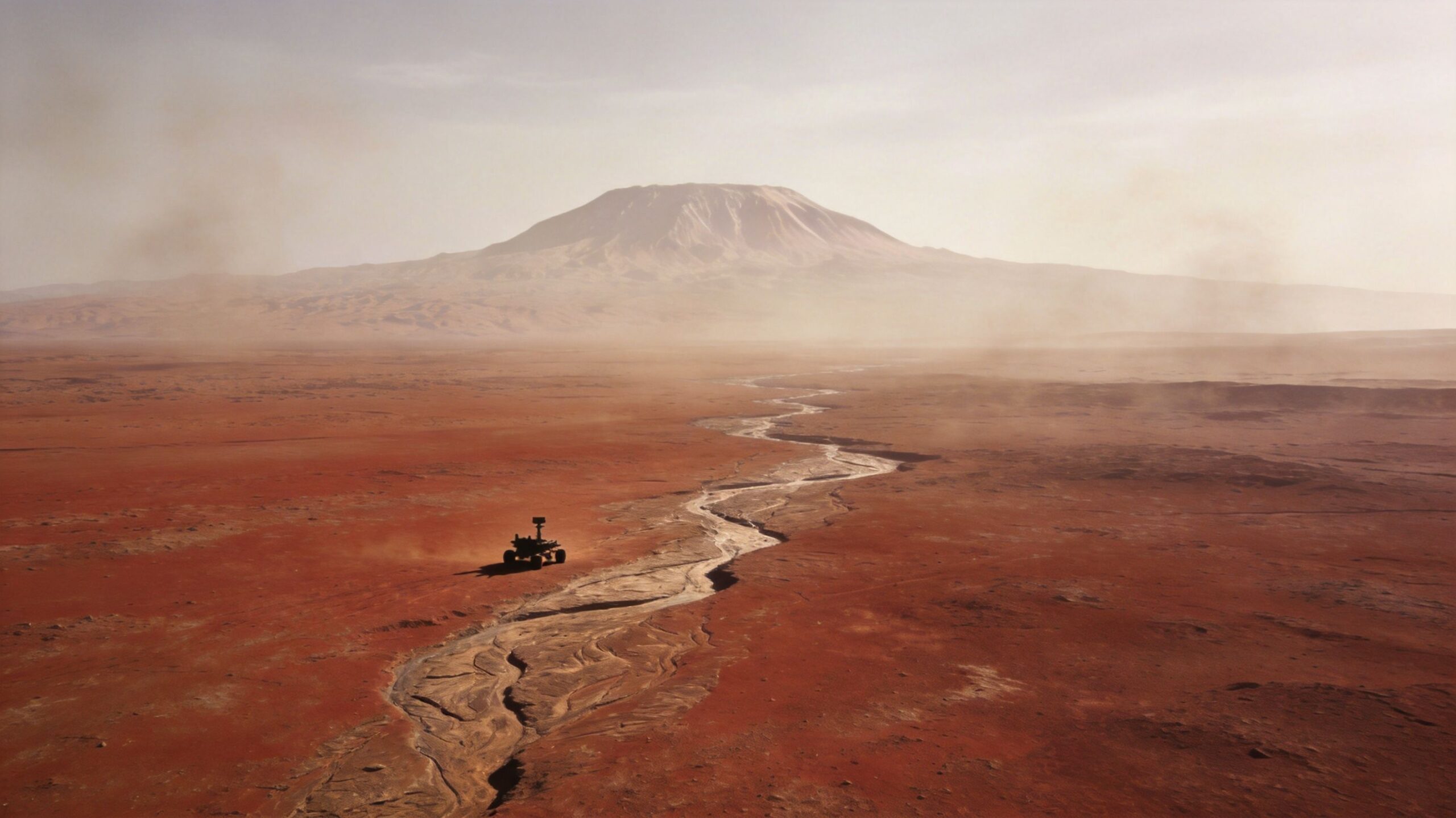
In Space Ranger Fred stories, Mars makes a brilliant exploration world. It’s the sort of place where Fred and Zando would scan rocks, look for clues, and follow a trail across a dusty plain. For children, that translates beautifully into evidence hunts and creative problem-solving.
A strong classroom or library idea is to set up a “Mars investigation desk”. Add red paper, magnifying glasses, printed rover images, and notebooks for observations. Suddenly, children aren’t merely hearing about Mars. They’re behaving like explorers.
If you want to build on that curiosity, the Space Ranger Fred post on what Mars is like fits neatly into a follow-on activity.
Ask, “What would you pack for Mars?” Children often reveal what they already understand about survival, shelter and discovery.
Mars works especially well with older primary pupils because it invites thoughtful questions. Could humans visit one day? What would they need? How do robots help us learn first? Those questions make science feel active and human.
5. Jupiter – The Giant Guardian
Jupiter doesn’t enter the room gently. It stomps in like a giant.
Fifth from the Sun and the largest planet in our solar system, Jupiter helps children grasp a very useful scientific idea. Not all planets are built alike. Some are rocky. Some are giant worlds made of swirling material with no hard surface to stand on.
Alt text: planets names in order Mars rover terrain
How to say it
Say it like this. JOO-pi-ter.
That middle beat makes it fun to chant in a group. Try saying the first five planets in rhythm and you’ll hear the pattern build.
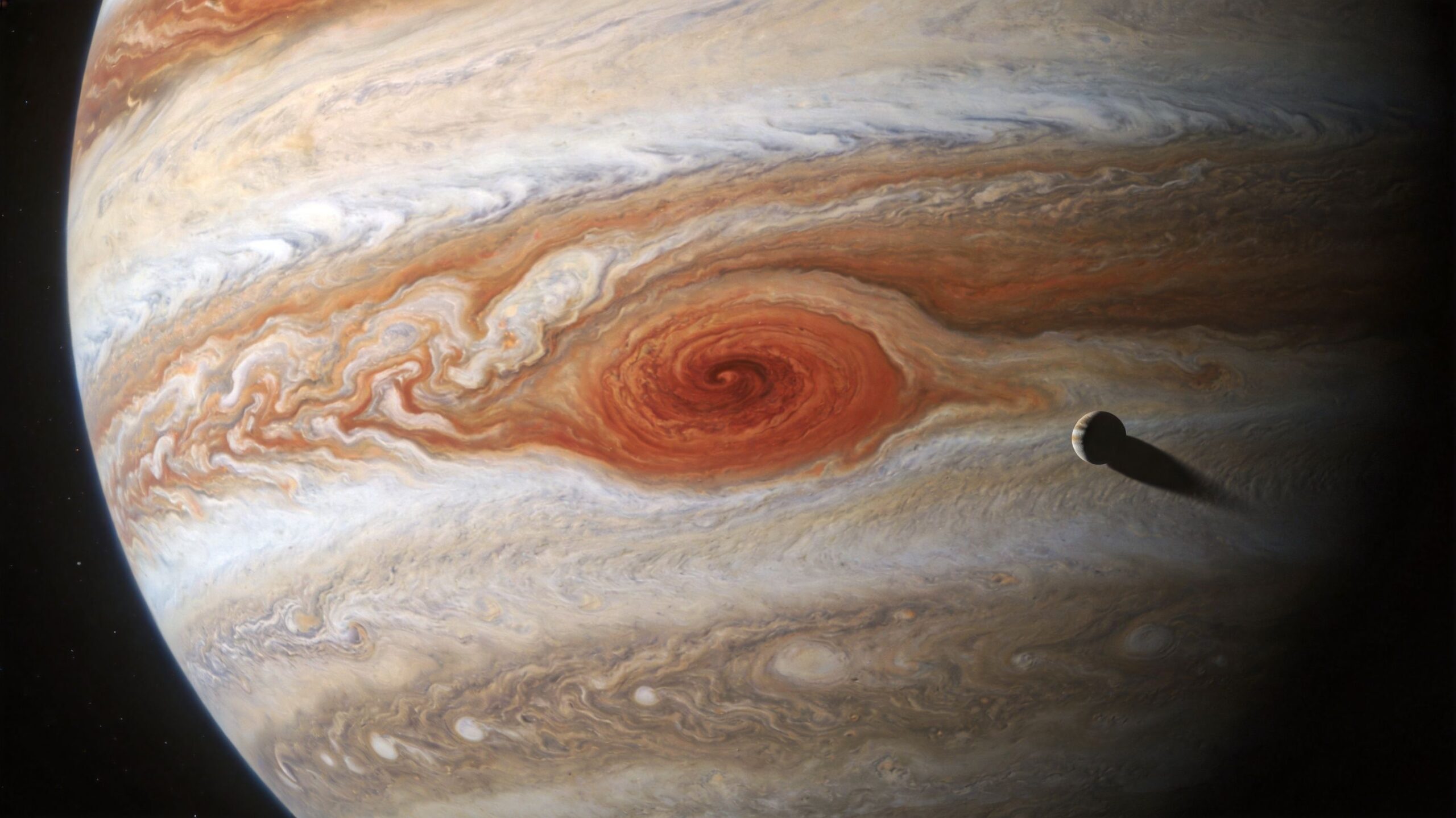
Jupiter is famous for its Great Red Spot, a huge storm system that has become one of the best-known images in space science. For children, storms are relatable. They’ve seen rain hammer windows and wind whip trees. Jupiter lets you take that familiar idea and stretch it into something cosmic.
A giant-size activity
- Use scale comparisons: Ask which is bigger, a marble or a beach ball. Then connect that to Earth and Jupiter.
- Create storm art: Swirl paint or chalk in circles to mimic giant weather systems.
- Moon mission cards: Let children invent rescue or research missions to Jupiter’s moons.
Jupiter is also a nice turning point in the list. Once children reach it, they’ve moved from the smaller inner planets to the giant outer worlds. That shift helps them organise the solar system in their minds, not just memorise names.
6. Saturn – The Ringed Wonder
What would Space Ranger Fred spot first as our ship glides up to Saturn? The answer is easy. Those bright, sweeping rings look like a giant hula hoop around a golden world.
Sixth from the Sun, Saturn is the stop on our mission where children often gasp before anyone even says the name. They know it at once. A planet with rings feels like something from a storybook, yet it is real, circling the Sun far beyond Jupiter.
How to say it
Say it like this. SAT-urn.
Short. Clear. Satisfying to say.
Alt text: planets names in order Jupiter with moon shadow
Fred’s mission note for young explorers: Saturn’s rings are not one solid band. They are made from countless bits of ice and rock, all travelling together around the planet. That makes Saturn feel even more exciting, because those lovely rings are really a vast collection of tiny pieces moving in space.
Saturn also has a place in the history of astronomy in Britain. Thomas Harriot observed it in 1610 during the early days of telescope use. Children may not remember his name straight away, but they often remember the idea that people in the past peered through simple telescopes and tried to make sense of such a strange, beautiful planet.
Mission activity: build your own ringed world
- Make a Saturn model: Cut out a paper planet, then slide a card ring around the middle.
- Sort the ring pieces: Use white beads, paper dots, or rice for “ice” and small pebbles for “rock”.
- Say the planets in order: Pause at Saturn and let everyone draw a ring in the air with their finger.
If your crew wants the next part of the mystery, explore why Saturn has rings.
A short video can also help children picture the world more vividly:
Saturn also works beautifully in memory games. Its place in the order, after Jupiter and before Uranus, gives children a strong visual checkpoint in the solar system. Once they can picture the ringed planet, the full line of planets often becomes much easier to remember.
7. Uranus – The Sideways Planet
What would Space Ranger Fred say if our next stop looked as though it had tipped over on purpose?
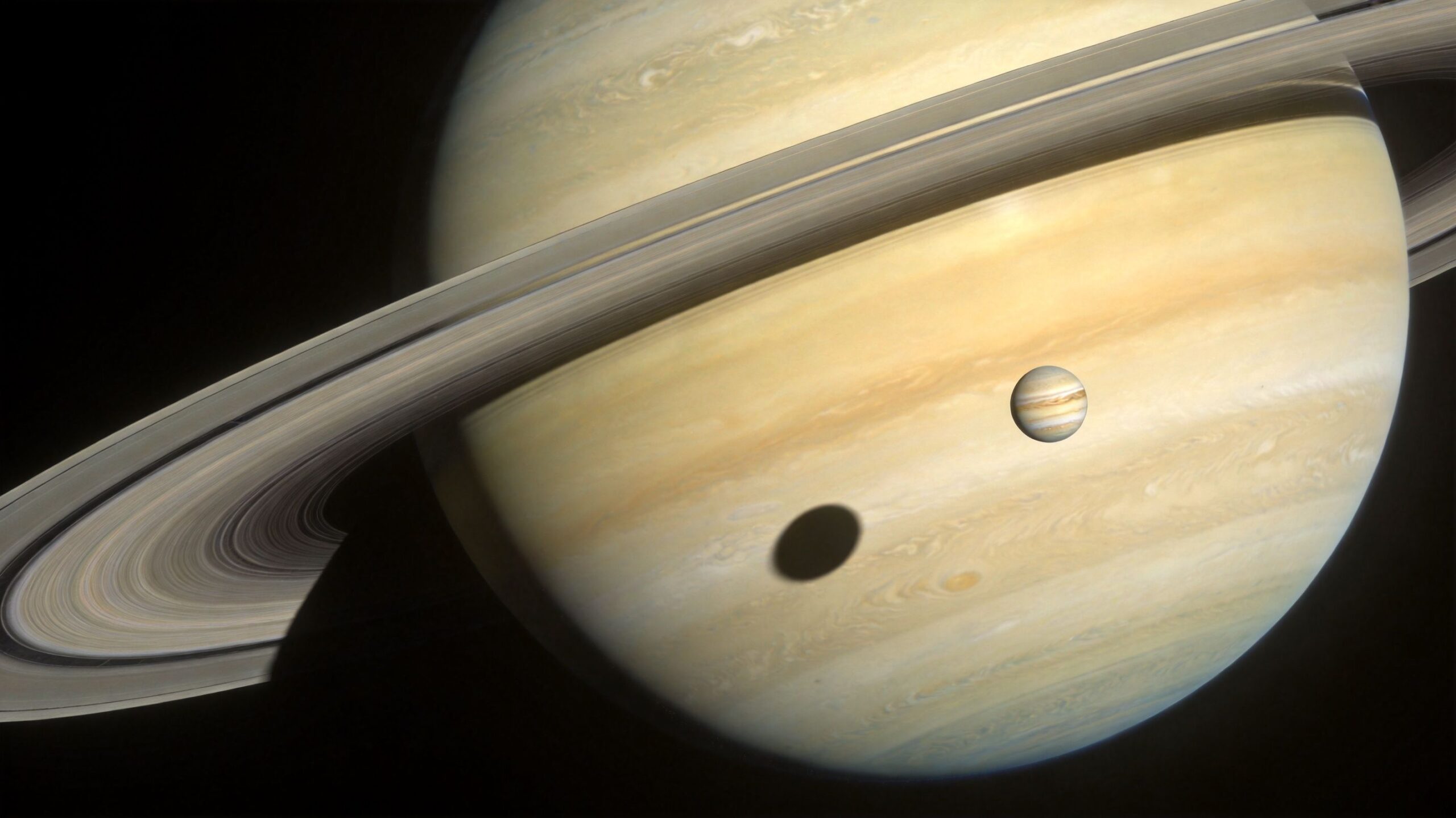
Uranus is the sort of planet that makes children stop and grin. Seventh from the Sun, pale blue-green, and tilted so far on its side that it seems to roll around the Sun rather than spin like a top. On our mission map, this is the point where young explorers realise every world has its own trick.
How to say it
Say it like this. YOOR-uh-nuhs.
A cheerful, matter-of-fact voice usually does the job. Fred would say the name, nod once, and carry on to the science.
Uranus also gives this mission a lovely British connection. William Herschel spotted it from the UK in the eighteenth century while studying the night sky, and his discovery helped change how people understood the solar system. Children often enjoy that detail because it turns astronomy into a real scene. One person, one telescope, one surprising new world.
Instead of rings bright enough to steal the show like Saturn’s, Uranus brings a different kind of surprise. Its extreme tilt means its seasons are wildly unusual, with parts of the planet getting long stretches of sunlight and darkness during its journey around the Sun. That makes Uranus feel less like a neat diagram in a book and more like a proper mystery stop on Fred’s adventure route.
Mission question for young explorers: “If your whole planet was tilted sideways, what would day and night feel like?”
Use that question during story time or a home lesson and children often start building the science for themselves. They picture strange seasons, odd skies, and a planet that refuses to behave like the others. That is exactly why Uranus earns its place in the line-up. It makes the order of the planets more memorable because it is gloriously unusual.
Mission activity: roll the sideways planet
- Tilt a ball on its side: Use a toy ball or orange to show how Uranus spins differently.
- Shine a torch as the Sun: Move the light around and see which parts stay bright longer.
- Say the order aloud: Mercury, Venus, Earth, Mars, Jupiter, Saturn, Uranus. Then give Uranus a little sideways roll with your hand.
8. Neptune – The Windiest World
Neptune is the final stop on the main planetary route. Eighth from the Sun, blue in appearance, cold in character, and full of frontier energy.
There’s something satisfying about ending the planets names in order with Neptune. It feels far away. It sounds bold. It gives the list a strong finish.
How to say it
Say it like this. NEP-tyoon.
That pronunciation often sticks well because it sounds a bit grand and dramatic, which suits the far edge of the solar system rather nicely.
Neptune’s discovery also has a strong UK connection. John Couch Adams, a mathematician at Cambridge, completed calculations in October 1845 that predicted where the planet should be based on irregularities in Uranus’s orbit. Johann Galle later verified the planet after receiving a prediction from Urbain Le Verrier, but Adams’ work remains a striking example of British mathematical skill in planetary discovery.
This gives Neptune a wonderful “puzzle solved with maths” feeling. Not every discovery begins with someone peering through a telescope. Sometimes it begins with someone noticing that something doesn’t add up.
Final frontier activity
- Make a mission badge: “Reached Neptune”.
- Draw the edge of the solar system: Let children decide what they imagine beyond it.
- Retell the order aloud: End with Neptune as the grand finale.
For reading sessions, Neptune works beautifully as the final page turn. It’s where mystery remains. It tells children that learning the list isn’t the end of curiosity. It’s the beginning.
Ordered Planets Comparison
| Planet | Implementation complexity | Resource requirements | Expected outcomes | Ideal use cases | Key advantages |
|---|---|---|---|---|---|
| Mercury – The Swift Messenger | Low–Medium, simple concepts but observation is challenging | Basic classroom props, simulations, limited telescope access | Understand orbital speed, proximity to the Sun, temperature extremes | Intro lessons, time-lapse activities, quick-thinking metaphors | Teaches orbital mechanics and extremes; strong mythological hook |
| Venus – The Mysterious Twin | Medium, atmospheric and climate topics need careful simplification | Greenhouse-effect demos, evening observation guides, visuals | Grasp greenhouse effects, atmospheric pressure, retrograde rotation | Climate science modules, Earth comparison activities, night-sky spotting | Very bright/easy to spot; powerful "twin planet" comparison |
| Earth – Our Home Planet | Low, highly relatable and easy to demonstrate | Local fieldwork tools, simple instruments, observation materials | Foundational ecology, seasons, conservation and stewardship | Environmental lessons, mission-control narratives, hands-on experiments | Directly observable, life-supporting example; strong real-world ties |
| Mars – The Red Planet | Medium, geology and colonization concepts need depth | NASA imagery, rover mission media, habitat simulation materials | Understand planetary geology, past water, exploration tech | Exploration missions, colony-building challenges, evidence hunts | Strong real-mission links, dramatic landscapes, relatable day length |
| Jupiter – The Giant Guardian | Medium–High, gas giant and magnetism concepts are abstract | Telescopes/binoculars, scale models, multimedia for moons | Comprehend planetary scale, storm dynamics, moon systems | Scale comparisons, moon-exploration modules, storm-tracking | Spectacular size and many moons; iconic Great Red Spot for storytelling |
| Saturn – The Ringed Wonder | Medium, ring mechanics are visual but conceptually rich | Ring models/visuals, telescope imagery, density demos | Learn about ring composition, buoyancy/density, diverse moons | Visual branding, ring exploration activities, Titan-focused studies | Highly recognizable rings; visually captivating and memorable |
| Uranus – The Sideways Planet | Medium, axial tilt and ice-giant concepts are novel | Tilt simulations, comparative models, limited exploration data | Grasp axial tilt effects, extreme seasons, ice giant traits | Rotation mechanics lessons, novelty exploration modules | Unique sideways tilt offers an engaging “mystery” teaching angle |
| Neptune – The Windiest World | Medium–High, extreme weather and distance are abstract | Advanced simulations, Voyager 2 data, multimedia resources | Understand extreme atmospheres, wind dynamics, frontier exploration | Final-frontier modules, extreme weather studies, Triton exploration | Edge-of-solar-system intrigue, fastest winds, striking deep-blue color |
Your Mission Debrief: From Explorer to Expert
What happens when a young explorer can rattle off Mercury, Venus, Earth, Mars, Jupiter, Saturn, Uranus and Neptune without peeking?
Space Ranger Fred would call that a successful return to base.
By the end of this mission, the planets are no longer just names in order. Mercury is the scorching sprinter. Venus hides behind thick cloud. Earth is home. Mars glows red. Jupiter towers over the others. Saturn shows off its rings. Uranus spins on its side. Neptune whips up fierce winds. Each stop now has a story, a sound, and a picture in your child’s mind.
That is how memory sticks. A child starts by repeating the order, then matching each planet to one clear fact, then saying the names with confidence. Before long, they are explaining the Solar System to a sibling, a classmate, or a grandparent over tea.
Classrooms, libraries, and family reading time all benefit from that kind of playful learning. Hands-on planet trails, pronunciation practice, and simple sorting games give children a chance to speak, move, point, and remember. The list becomes an adventure log.
Busting space myths about Pluto
One question nearly always pops up on the mission.
“What about Pluto?”
Pluto was discovered in 1930 and was taught for many years as the ninth planet. In 2006, the International Astronomical Union reclassified it as a dwarf planet, so the official line-up of planets stays at eight. Pluto is still a fascinating world. It falls into a different group.
Pluto still matters. It is not part of the main eight-planet order.
Your next Space Ranger mission
Try a quick mission activity at home or in class. Ask your young explorer to lay out eight cards, toys, or drawings on the floor, then place the planets in the correct order from the Sun. For an extra challenge, have them say each name aloud and add one fact for every stop.
If your young explorer enjoys imaginative writing too, this guide to funny comic storylines is a fun way to spark new space adventures and character ideas.
Learning works best when children can retell what they know in their own words. With a memorable mission, a few vivid facts, and Space Ranger Fred cheering them on, they do far more than recite the planets. They become the expert in the room.
Meta title: Planets Names in Order with Space Ranger Fred
Meta description: Learn planets names in order with Space Ranger Fred. A fun UK-friendly solar system guide for children, parents, teachers and librarians.