
Your child is in the back seat asking how the song got into the car radio. Or maybe a pupil has just looked up from a tablet and asked, “How can Wi-Fi work if there aren't any wires?”
That's a brilliant question. It leads straight into one of the strangest and most useful ideas in science.
The Invisible World of Radio Waves
So, what are radio waves?
They are a kind of invisible light. Not the sort you can see with your eyes, but part of the same huge family of energy called the electromagnetic spectrum. If that phrase sounds a bit grand, don't worry. The simple version is this: the universe has lots of different kinds of “light”, and radio waves are one of them.
Radio waves are especially unusual because they are the longest waves in the electromagnetic spectrum, with some stretching longer than a whole planet, while visible light waves are thousands of times shorter than even the shortest radio waves. That's noted by UCAR's radio waves explainer.
Think of dropping a pebble into a pond. You see ripples spread out. A wave is a bit like that. It carries energy from one place to another. Radio waves do this invisibly, racing through the world at 299,792,458 metres per second.
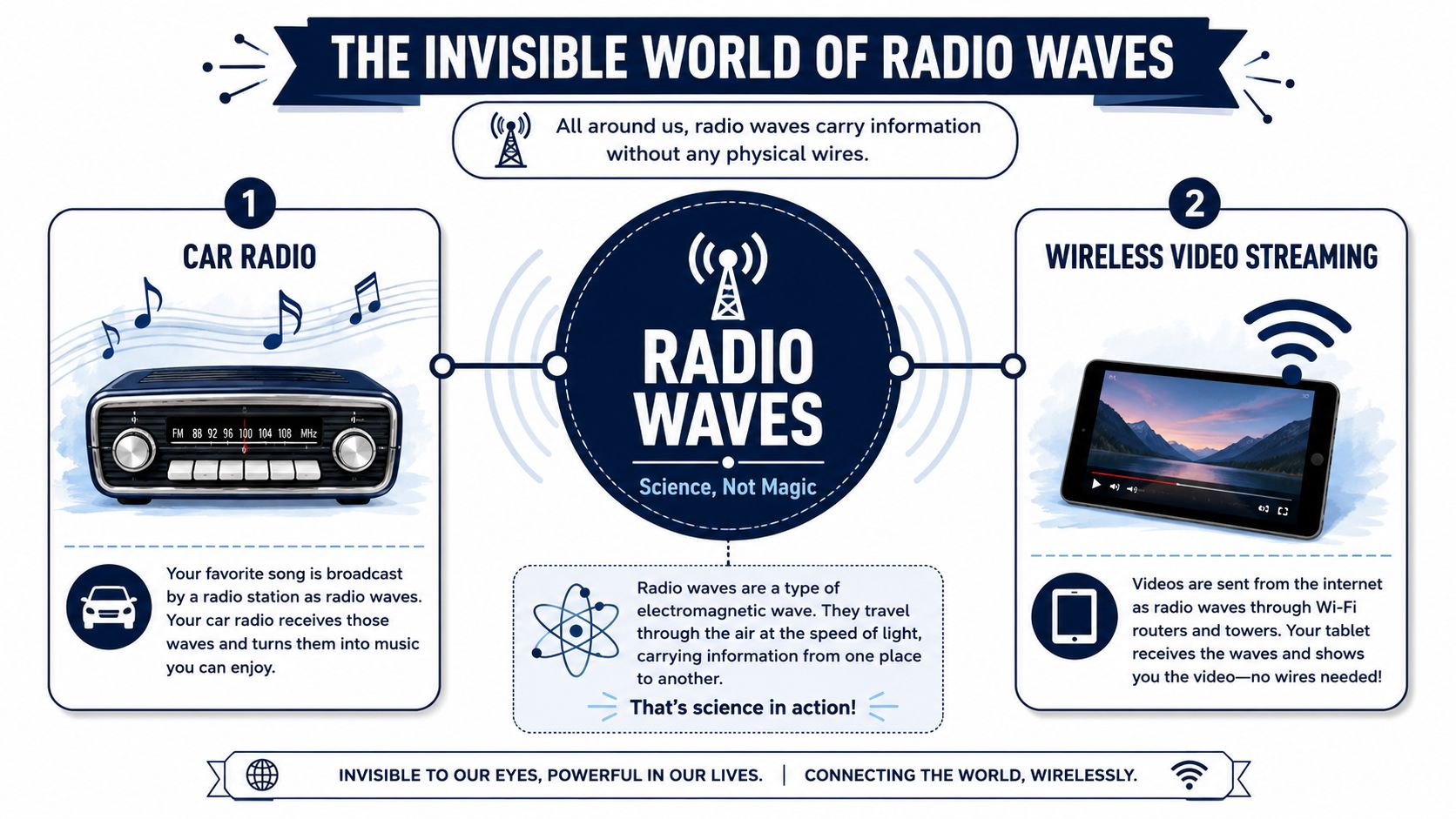
A wave you can't see
A slinky is another handy way to picture it. If you wiggle one end, the movement travels along it. Radio waves also carry movement, or more accurately energy and information, from one place to another.
That's why your car radio can pick up music. It's why a tablet can stream a video with no cable plugged in. It feels magical, but it's physics.
Practical rule: If something sends information wirelessly, radio waves are often doing the job.
Children often wonder whether radio waves are “made up” because they can't see them. They're very real. We just need tools to detect them, just as we need microscopes to see tiny things. If your family enjoys invisible science like this, the electromagnetic spectrum guide from Space Ranger Fred is a helpful next read. So is a bigger cosmic question such as what a black hole is.
How Radio Waves Travel Through Deep Space
The part that often makes children frown is this. Sound needs air. So how can a message travel through empty space?
Here's the key idea. Radio waves don't need air, water, or any other material to carry them. They can move through a vacuum.
Many UK primary teachers find this hard to explain, and that gap is noted in this NOVA background page on radio waves and space. It's a tricky idea because children are used to things needing a path. Cars need roads. Trains need tracks. Sound needs something to vibrate through.
Fred and the silent asteroid field
In one Fred-style adventure, Fred and Zando Centauri are drifting through a silent asteroid field. No wind. No air. No whooshing noises. If Fred shouted, nobody would hear a thing outside the ship.
But if Fred presses the transmitter and sends a radio message, the signal keeps going across the emptiness.
Why? Because radio waves are electromagnetic waves. They aren't little puffs of air. They are moving electric and magnetic energy. That means they carry their own way of travelling.
Sound is a wiggle in matter. Radio is a wiggle in electromagnetic energy.
That one sentence helps many children sort the two ideas out.
A child-friendly way to say it
Try this at home or in class:
- Sound needs something to shake, such as air
- Radio waves don't need air, so they can cross space
- That's why spacecraft can still send messages home
If you want another story-led example of signals travelling over huge distances, the satellites guide connects nicely with this idea.
Everyday Magic From Wi-Fi to Walkie Talkies
Radio waves aren't only for astronauts and giant antennas. They're all around ordinary life.
Here's a quick hunt around the house, classroom, and car.
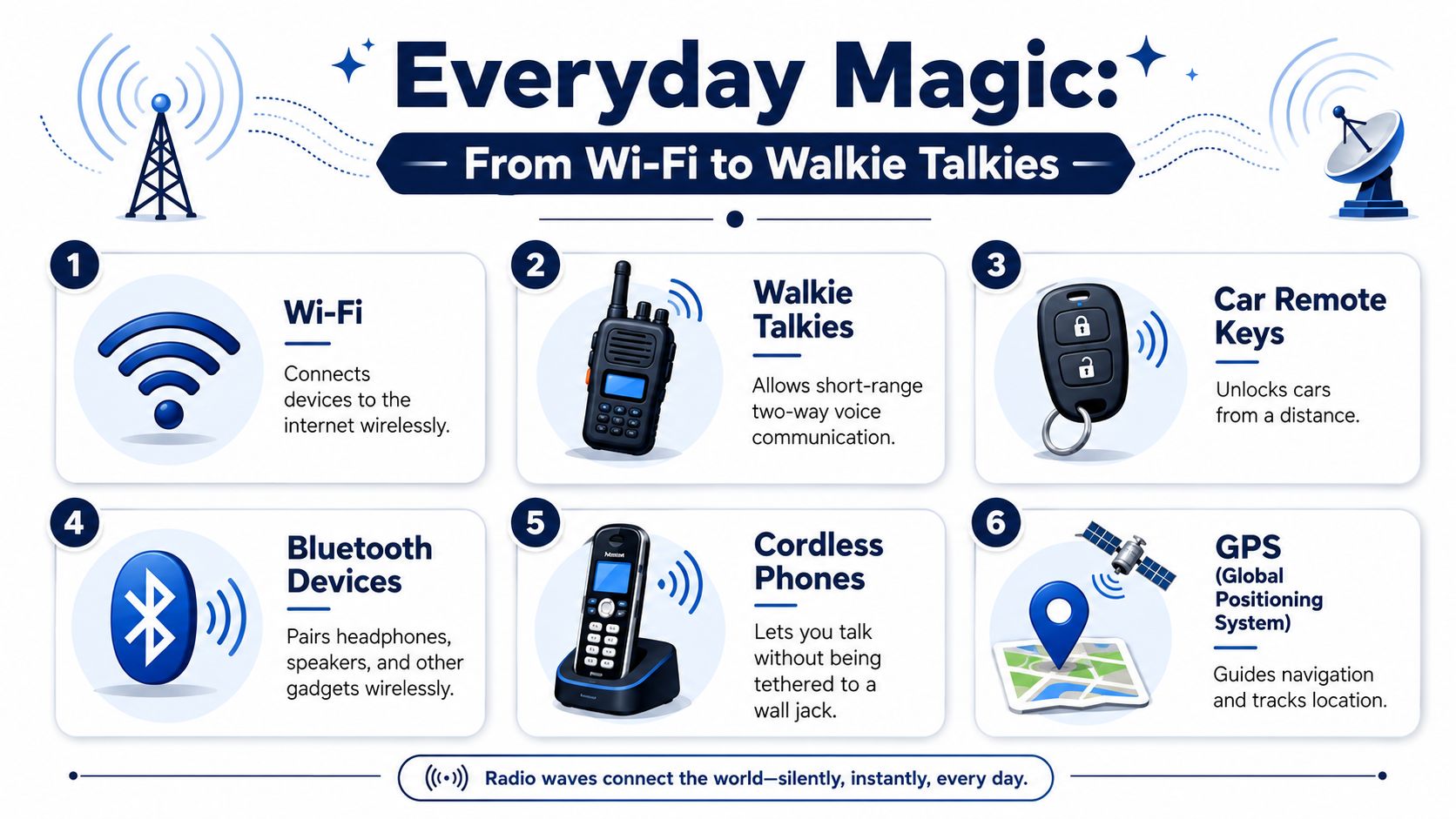
Where you'll spot them
Wi-Fi router
It's like a mini radio station for internet signals around your home.Walkie talkies
They send voices back and forth using radio waves over short distances.Car key fob
Press a button, and a radio signal tells the car to lock or open.Bluetooth headphones
These listen for nearby radio signals from a phone or tablet.GPS
Radio signals help devices work out where they are.Weather radar
In the UK, the Met Office uses radio waves between 8 and 12 GHz for weather radar systems that can spot raindrops miles away, as described in this radio wave applications overview.
One family, lots of jobs
It often surprises children that “Radio waves” doesn't just mean an old-fashioned radio on a shelf. The term includes many wireless tools that do completely different jobs.
If an older child asks how newer mobile networks fit into the picture, this plain-English guide to how 5G ultra wideband works is a useful extra read.
Mid-mission reading break. If your child likes stories that tuck science into adventures, the Space Ranger Fred books present ideas like this through characters, missions, and questions children ask.
How We Make and Hear Radio Waves
Space Ranger Fred presses the talk button on his ship. He speaks into a microphone, and a moment later his friend hears his voice through a speaker on another vessel. No invisible string connects them. A radio system does the job.
That system has three main parts working together. A transmitter makes the signal. An antenna sends or catches the radio wave. A receiver reads the signal and turns it into something useful, such as sound.
From voice to wave to voice again
A microphone first turns Fred's voice into an electrical signal. The transmitter then adds that signal to a radio wave, rather like placing a message on a fast-moving carrier. The antenna releases that wave into the space around it. At the other end, another antenna catches a tiny trace of the wave, and the receiver separates the message from the carrier so a speaker can turn it back into sound.
Children often ask, “Does the voice itself fly through the air?” Not quite. The voice is converted into a pattern, and that pattern rides on the radio wave.
| Part | Job |
|---|---|
| Transmitter | Makes and sends the signal |
| Antenna | Helps send out or catch the wave |
| Receiver | Reads the signal and changes it into sound, pictures, or data |
A torch offers a handy comparison. You press the switch, electricity powers the torch, and light heads outward. A radio transmitter also sends energy outward, but as radio waves instead of visible light.
How scientists learned this was possible
In the 1880s, Heinrich Hertz created and detected artificial radio waves, showing that James Clerk Maxwell's ideas about electromagnetic waves were correct. You can read a short summary in this radio wave history overview.
That mattered because it turned an invisible idea into a real experiment. Once scientists could make radio waves and detect them, they could begin building tools that sent messages without wires.
For parents and teachers, this is often the moment a child's eyes light up. Fred's space radio may sound magical, but the science behind it was tested carefully, bit by bit, by real people asking good questions. If your young explorer starts wondering about other invisible things moving through space, this child-friendly guide to what cosmic radiation is makes a helpful next read.
Are the Radio Waves in My House Safe
This is one of the most sensible questions a parent can ask.
Phones, tablets, routers, baby monitors, smart speakers. If they use radio waves, are those waves safe around children?
The broad answer is reassuring. Over 90% of UK parents have wondered about this, and experts confirm that the non-ionising radio waves from everyday devices operate within strict UK safety limits, as explained on NASA's radio waves page.
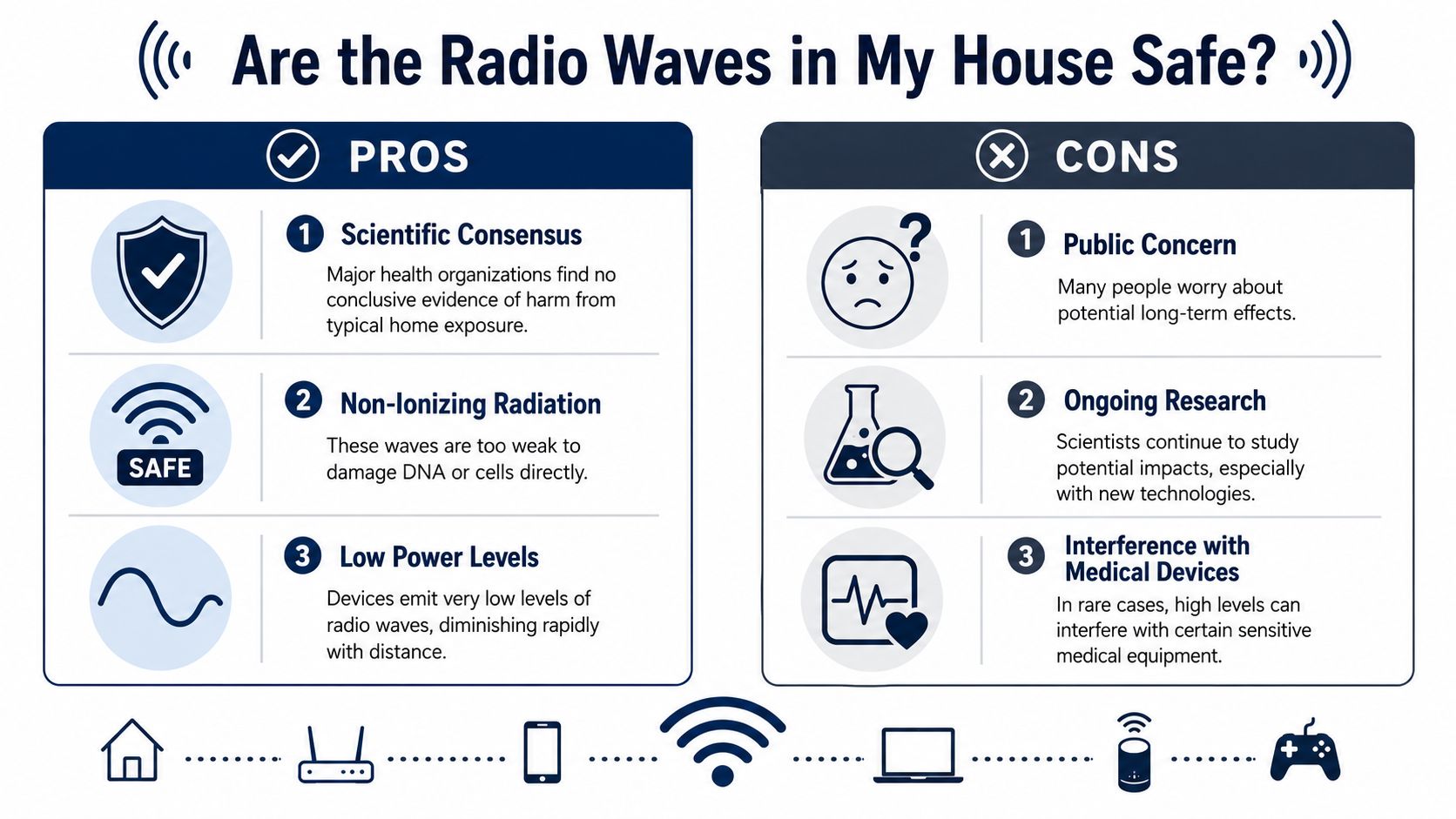
Gentle push and hard kick
A child-friendly way to explain this is to compare types of energy.
Some radiation is strong enough to damage cells directly. That's the sort we treat with much more caution. Radio waves from home devices are non-ionising, which means they are much gentler.
Consider this:
- A hard kick changes things violently
- A gentle push moves things without smashing them
Radio waves used for Wi-Fi and similar devices are in the gentle-push category.
A calm answer for home and school
That doesn't mean adults should wave away children's questions. It means we can answer them clearly.
You might say, “Yes, radio waves are real. Yes, devices use them. And the kinds used in homes are controlled by safety rules.”
For children who mix up different kinds of radiation, the cosmic radiation explainer can help separate “space radiation” from the radio signals used by household gadgets.
Your Mission Become a Radio Wave Explorer
The best way to remember science is to do something with it.
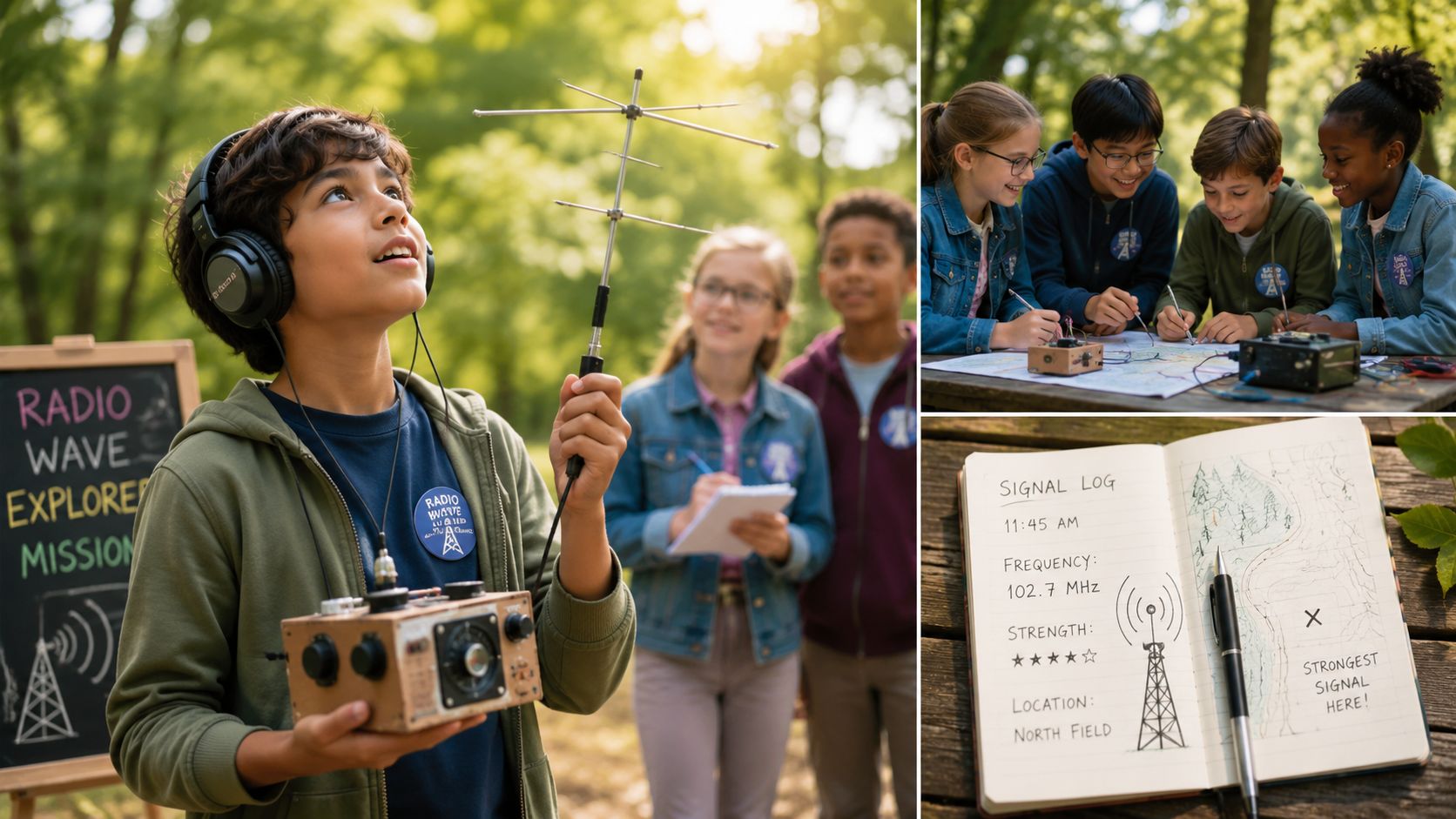
Mission one the human radio wave
Gather a few children in a line.
Ask them to stand close together for a “short wavelength” and farther apart for a “long wavelength”. Then have them bob up and down slowly, then faster. This helps show that waves can differ in size and rhythm.
Try using the confidence ladder:
- I think a wave is a pattern that travels
- I try making long and short waves with my body
- I can spot that waves can be different sizes
- I can explain that radio waves carry information without wires
Mission two the radio wave hunt
With an adult helping, use a portable AM radio and move around the house. Near some electronics, you may hear buzzes, crackles, or changes in sound. Children quickly realise that invisible signals and electrical activity are happening all around them.
That doesn't “hear Wi-Fi” in a neat cartoon way, but it does spark the right question: how much of our world is busy even when it looks still?
Try this: Ask your child which objects in one room might use radio waves, then test their guesses.
A short video can help bring that idea to life:
Keep the mission going
If you want printable follow-up tasks, colouring sheets, and hands-on learning prompts, visit the Space Ranger Fred activities page.
For families, teachers, and librarians, this is the bigger takeaway. Radio waves may be invisible, but children can still learn them through stories, movement, questions, and play. That's where story-led education sticks.
For more adventures, science-rich stories, and classroom-friendly ideas, visit Space Ranger Fred. You'll find books for curious readers, plus interactive school visits that support confidence, reading, and communication through storytelling and STEM. Learning should be experienced, not just delivered.