
A birthday is creeping closer. The invitations are half done, someone wants a duck cake, and you're wondering whether you've agreed to a joyful family memory or a small domestic space disaster.
Good news. A Birthday Duck Cake can be both fun and doable. It doesn't have to look bakery-perfect to win the room. In fact, a slightly wonky duck often has more character. That's science and charm working together.
Your Next Great Birthday Mission Should You Choose to Accept It
A lot of birthday baking starts the same way. A child asks for something wonderfully specific. Not just a cake. A duck. Preferably cheerful, slightly silly, and worthy of gasps when it lands on the table.
That is where this mission begins.
The duck cake has a proper family-baking legend behind it. The classic design has been passed down through generations and is widely linked with the Australian Women's Weekly Birthday Cake Book. Even the official Bluey version keeps the same basic engineering idea, using a 25cm x 8cm bar tin and a deep 20cm square cake tin, baked for 30 minutes and 1 hour before carving and joining the pieces into the duck shape, as shown in the official Bluey duck cake method.
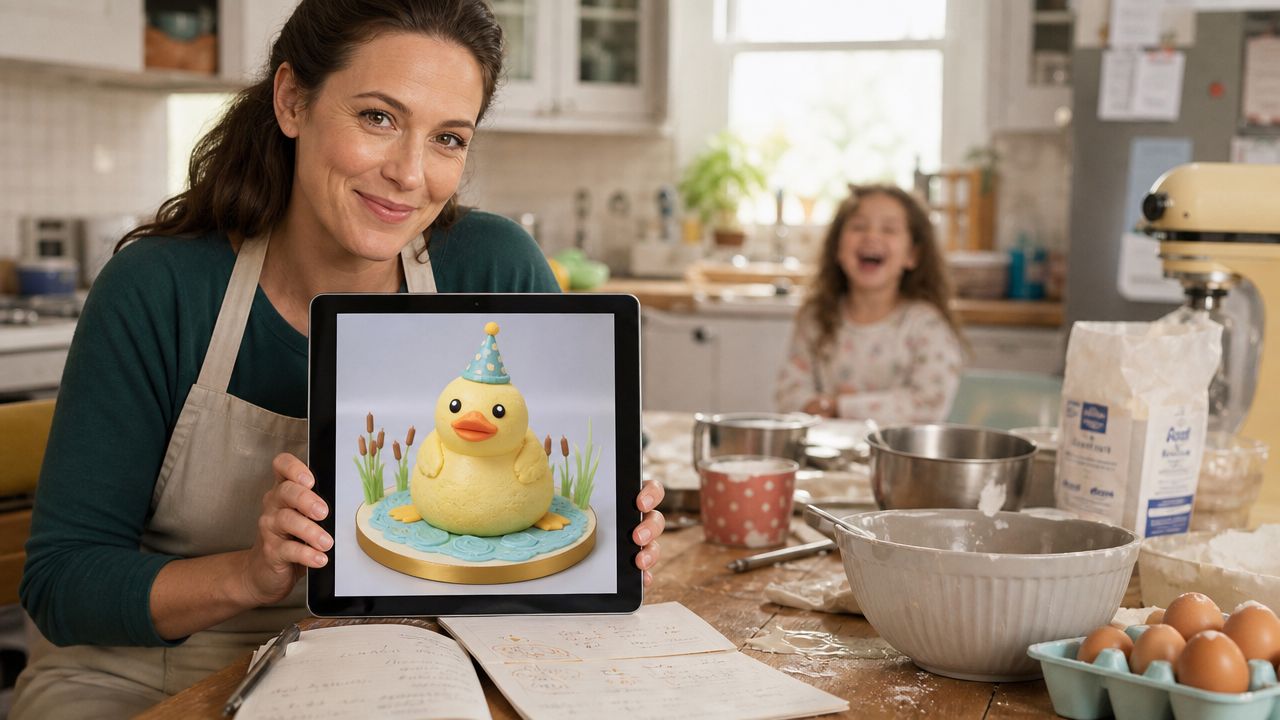
That matters because it tells us something reassuring. This isn't a mysterious chef-only project. It's a build. A model. A mission made from ordinary cakes and a bit of imagination.
Why children love this mission
Children don't just see icing. They see a character.
One child might decide the duck is a captain. Another might insist it's a pond explorer. A third will give it a dramatic backstory involving custard, sprinkles, and an emergency landing on the kitchen table.
Mission mindset: I think. I try. I can. I can explain.
That simple sequence turns baking into learning. Children plan. They test. They adjust. Then they proudly explain why the beak points that way or why the duck needs blue sweets around the base for its "water landing zone".
If you're building a full party around the cake, these Blue goodie bag ideas can help carry the theme into the rest of the celebration without making your prep list feel endless.
What usually worries adults
Most grown-ups don't fear the sponge. They fear the shape.
That's sensible. Carving, stacking, and decorating can sound fiddly. But the trick is to stop thinking "masterpiece" and start thinking "assembly". A duck cake is just a set of simple forms working together. Body. Head. Beak. Tail. Then a coat of icing to bring the whole creature to life.
Mission Briefing Your Ingredients and Tools
Before launch, gather your supplies. This is the calm part. The useful part. The bit where future-you says, "Excellent decision. I can easily find the spatula."
A popular UK-style duck cake recipe uses a deep 20cm cake tin and bakes at 140°C for about 1.5 hours. That same recipe lists 595 kcal per serving, with 56g carbohydrates, 6g protein, and 40g fat, so this is very much a celebration cake rather than an everyday pudding, according to this UK duck birthday cake recipe.
Mission fuel
You can use your favourite sturdy sponge recipe, but aim for one that bakes evenly and holds its shape. For decoration, many home bakers use a combination like this:
- Cake base: a firm sponge suitable for carving
- Buttercream: for filling, sticking pieces together, and coating the outside
- Cream or jelly elements: if you're creating a pond scene
- Desiccated coconut: useful for texture
- Fondant details: handy for ducks, eyes, or little finishing touches
Mission hardware
Most kitchens already have enough kit for this mission:
- A deep 20cm tin: a familiar home-baking size and easy to manage
- Mixing bowls and spatula: your control panel
- Bread knife or serrated knife: best for careful shaping
- Cooling rack: important for structure
- Cake board or large plate: your launch platform
- Skewers or safer alternatives: only if your design needs support, and only with care around young children
Let the cake do the hard work first. A well-baked sponge is easier to shape than an over-soft one.
Why the low temperature helps
This is a lovely little bit of kitchen STEM. Lower, steadier heat helps the cake cook more evenly. That gives you a sponge that's less likely to crumble or dome too wildly, which makes carving simpler.
In plain language, a sturdy cake behaves like a good building block. If the base is sound, the duck has a much better chance of surviving lift-off.
The Assembly Bay Building Your Duck Cake Structure
Your duck starts to feel real at this stage. One minute you have cake on a rack. The next, you have a small edible creature preparing for launch.
The job here is simple. Build a shape that holds together, looks cheerful, and survives the trip to the table.
Stage one, cool before you carve
Let the cake cool completely on a wire rack before you do anything else. A cool sponge cuts more cleanly, holds its edges better, and gives buttercream a fair chance to stay where you put it.
Warm cake behaves like a sandcastle with wet walls. It slumps, tears, and drops crumbs into every bit of icing. If your young co-pilots are eager to begin, give them a scouting task instead. Ask them to decide where the duck's head, tail, and beak should go.
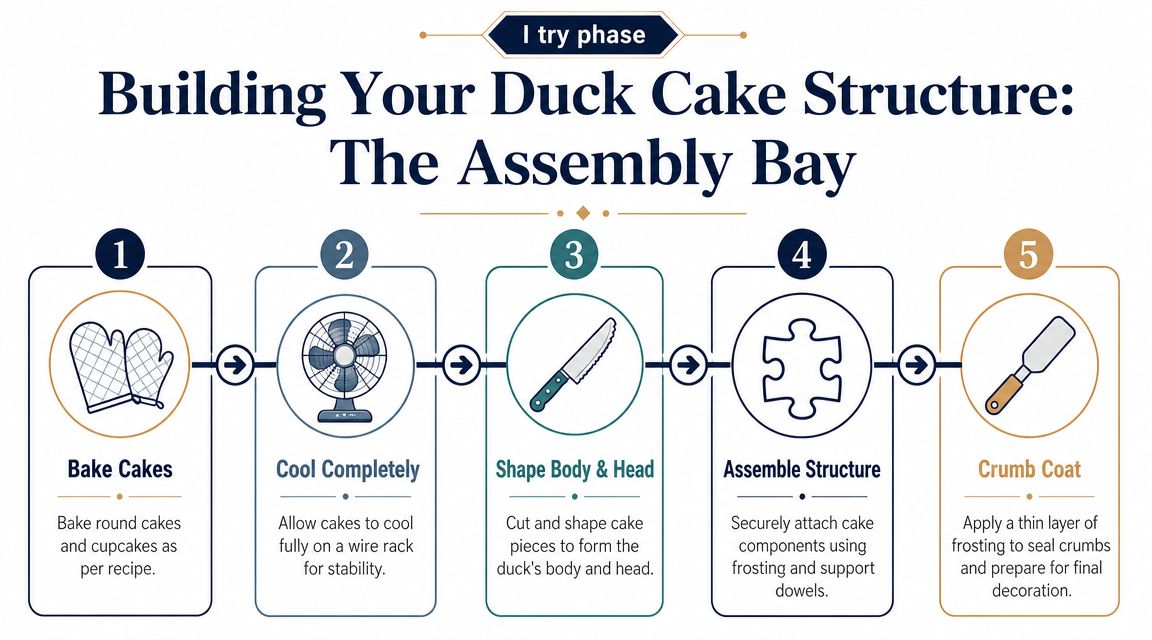
Stage two, build with simple shapes
A duck cake is easier to make when you stop seeing "duck" and start seeing a few basic forms. That is a handy bit of baking STEM. Big projects become easier when you break them into stable parts.
Use this assembly plan:
- Body: the main rounded cake piece
- Head and neck: a smaller section set slightly higher
- Tail: a trimmed wedge or gentle point
- Beak: fondant, icing, or a soft shaped sweet
Set the pieces in place before adding any buttercream. Turn them, trim lightly, and check the silhouette from a few steps back. Kids are often brilliant mission spotters here. They notice whether the duck looks friendly, sleepy, or slightly too much like a submarine.
Mission rule: Test the structure dry first, then glue it together.
Stage three, secure the launch vehicle
Use buttercream between each section like edible mortar. Press just enough to connect the pieces without squashing them. If the head slides or the body feels wobbly, chill the cake for a short rest and try again. Cold buttercream firms up, which gives you more control.
This is also where structure matters. A wider body gives you a stronger base, just like a rocket needs a stable launch platform. If you build the neck too tall too quickly, gravity usually wins.
Some bakers add supports such as skewers for taller designs. For younger children, classrooms, or low-fuss family baking, the safer route is often a shorter neck and a simpler shape that stands on its own. If you do use supports, keep track of them carefully and remove them before serving.
Stage four, add the crumb coat
Spread on a thin layer of buttercream over the whole cake. This is your crumb coat, the first protective shell that traps loose crumbs and smooths the surface for decorating later.
It rarely looks pretty.
That is fine. The crumb coat works like primer under paint or the outer shell on a training model. It is there to improve the final result, not to win beauty contests. Once it has chilled and set, your duck will be much easier to cover and decorate without dragging crumbs through the icing.
Creative Command Decorating Your Intergalactic Duck
The structure is built. Now the duck gets a personality.
This is usually the moment children lean in. Suddenly they have opinions. Strong ones. The duck needs eyelashes. No, stars. No, a helmet. No, an entire pond planet.
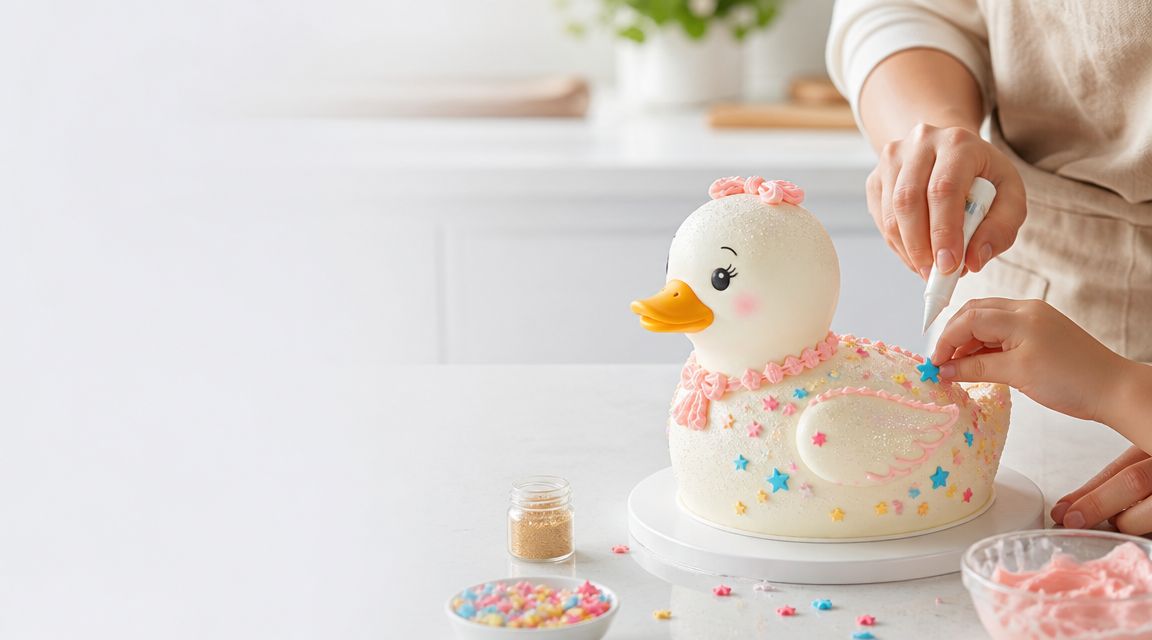
Start with the big features
Cover the duck with smooth buttercream first. Then add the features that make it unmistakably duck-like:
- Eyes: small fondant circles, icing dots, or soft sweets
- Beak: orange icing or fondant
- Feather texture: short spatula flicks or piped buttercream
- Feet or water details: optional, but fun
White or pale yellow icing gives the classic look. Blue around the base can become a pond, a splash zone, or an alien sea if your mission takes a more galactic turn.
Add story, not just decoration
A cake becomes memorable when it feels like a character. Try one of these ideas:
- The Commander Duck: add a tiny fondant helmet
- The Rocket Pond Duck: use star sprinkles around the cake board
- The Racing Duck: add a bold stripe and a number on the side
- The Library Duck: perch a tiny fondant book nearby for a story-themed party
If you want brighter finishing details, especially for coloured drips or chocolate accents, this guide to mastering chocolate coloring techniques is a useful extra reference.
A drawing activity can help children plan their design before the icing starts flying. These space rocket drawing ideas work nicely as a warm-up because they get children thinking in shapes, colour, and character design.
Here's a visual walk-through if you'd like to see a duck cake in action before you decorate your own:
A child who helps decorate usually feels proud to explain the final design. That's the learning part hiding inside the icing.
Mission Variations and System Upgrades
Not every baking mission needs advanced carving. Sometimes you need the version that works on a busy weeknight, in a classroom, or when your energy reserves are somewhere near empty.
A big gap in many duck cake guides is simplicity. Lots of methods assume confident carving and special decorating confidence. A safer, easier Cadet Mode is often the better fit for families and schools, especially where practical safety matters more than decorative perfection, as discussed in this duck cake simplification guide.
Choose your mission mode
| Mode | Best for | How it works | Main benefit |
|---|---|---|---|
| Cadet Mode | Busy parents, teachers, beginners | Bake a sheet cake or simple sponge and cut a clear duck outline from the top view | Fewer moving parts, less collapse risk |
| Space Ranger Mode | Confident home bakers | Build the duck from separate sections for more height and shape | More dramatic final look |
Dietary modifications system upgrades
Use this table as a planning guide. Always check the products you buy for suitability.
| To Replace | Suggested Swap | Notes |
|---|---|---|
| Wheat flour | Gluten-free flour blend | Choose one intended for cakes so the crumb stays soft |
| Butter | Dairy-free baking block | Better for structure than very soft spread |
| Milk | Plant-based milk | Pick a neutral flavour if possible |
| Eggs | Egg replacer suitable for baking | Check the pack instructions for cakes |
| Fondant decorations | Soft fruit pieces or piped icing | Helpful when you want a simpler finish |
Child-safe shortcuts
For younger children, keep the decorative plan gentle and manageable:
- Skip hidden supports if possible
- Use soft decorations instead of hard sweets
- Make pieces ahead so the decorating session stays fun
- Let children handle colour choices and simple piping rather than sharp tools
Mission Debrief Party Ideas and FAQs
The candles are lit, the camera is ready, and your duck is holding formation on the table. Mission accomplished. You and your crew did more than bake a birthday cake. You tested structure, watched simple kitchen chemistry at work, and turned a pile of ingredients into something cheerful enough to make a whole room grin.
That is solid Space Ranger work.
A duck cake also gives you an easy launch point for the rest of the party. You do not need a complicated setup. A few small activity stations can keep children busy while the grown-ups pour drinks, find plates, or make last-minute repairs to a slipping beak.
Party ideas that match the cake
Try building the party table like a tiny space base with one job at each stop:
- Asteroid snack station: grapes, popcorn, cheese cubes, or round crackers in bowls
- Planet lab: paper circles, crayons, stickers, and glue for quick planet art
- Mission design desk: children draw their own duck astronaut, spaceship, or alien sidekick
- Story dock: a quiet corner with cushions and a few space or animal books
If you want the whole celebration to feel connected, these space-themed birthday party ideas can help you tie together crafts, snacks, and story time without making the day harder to run.
Presentation helps too. A raised cake stand works like a launch platform. It gives the duck a clear stage and makes candles, icing details, and photos easier to manage. If you are comparing options, Chef Shop's cake stand recommendations are a useful place to start.
Quick FAQs from mission control
Why did my cake collapse?
Usually the cake was too warm, too soft, or carrying too much weight in one area. A duck cake needs the same thing a small bridge needs. A firm base and balanced load. Chill the cake between steps, and choose Cadet Mode shaping if you want fewer weak points.
Why is my buttercream too runny?
Heat is the usual culprit. Buttercream changes texture quickly when the room is warm. Pop it into the fridge for a short rest, then stir it again until it turns smooth and spreadable.
What if my duck looks a bit wonky?
That often means it looks homemade, which is part of the charm. Add clear features like the eyes, beak, and wings first. Those details help the brain read "duck" right away, even if the outline is not perfect.
The goal is a stable, happy duck and a room full of people ready to sing.
Can children help?
Yes, and this is often the best part of the mission. Younger helpers can choose colours, place sprinkles, or add simple decorations. Older children can sketch a design first, mix colours, or help pipe easy shapes. Give them safe jobs with clear edges, and the kitchen stays much calmer.
What should I make ahead?
Bake the cake layers early if you can. You can also colour icing, prep decorations, and clear a decorating space the day before. That lowers launch-day stress and gives you more energy for the fun part.
Which version is best for a school or group activity?
Cadet Mode usually works best. One larger cake with simple decorating gives children a quick win and keeps the risk low. Space Ranger Mode is better for a family bake where you have more time to build the shape in stages.