
A child once told me, very seriously, that aliens probably prefer chocolate milk because it’s easier to sip in zero gravity. That’s the sort of leap in logic that makes adults laugh, then pause, because hidden inside the silliness is real thinking.
That’s why buster baxter arthur still matters. He isn’t only the funny best friend. He’s a child-sized lesson in curiosity, friendship, mistakes, recovery, and asking odd questions that lead somewhere useful.
Meet Buster Baxter Arthur's Best Friend and Explorer
Some children love rules. Others love possibilities.
Buster Baxter belongs firmly in the second group. He’s the friend who hears a strange noise and builds a whole theory around it. He’s the one who gets excited about aliens, snacks, mysteries, and stories that might be true, or might be gloriously untrue. Children recognise that energy straight away.
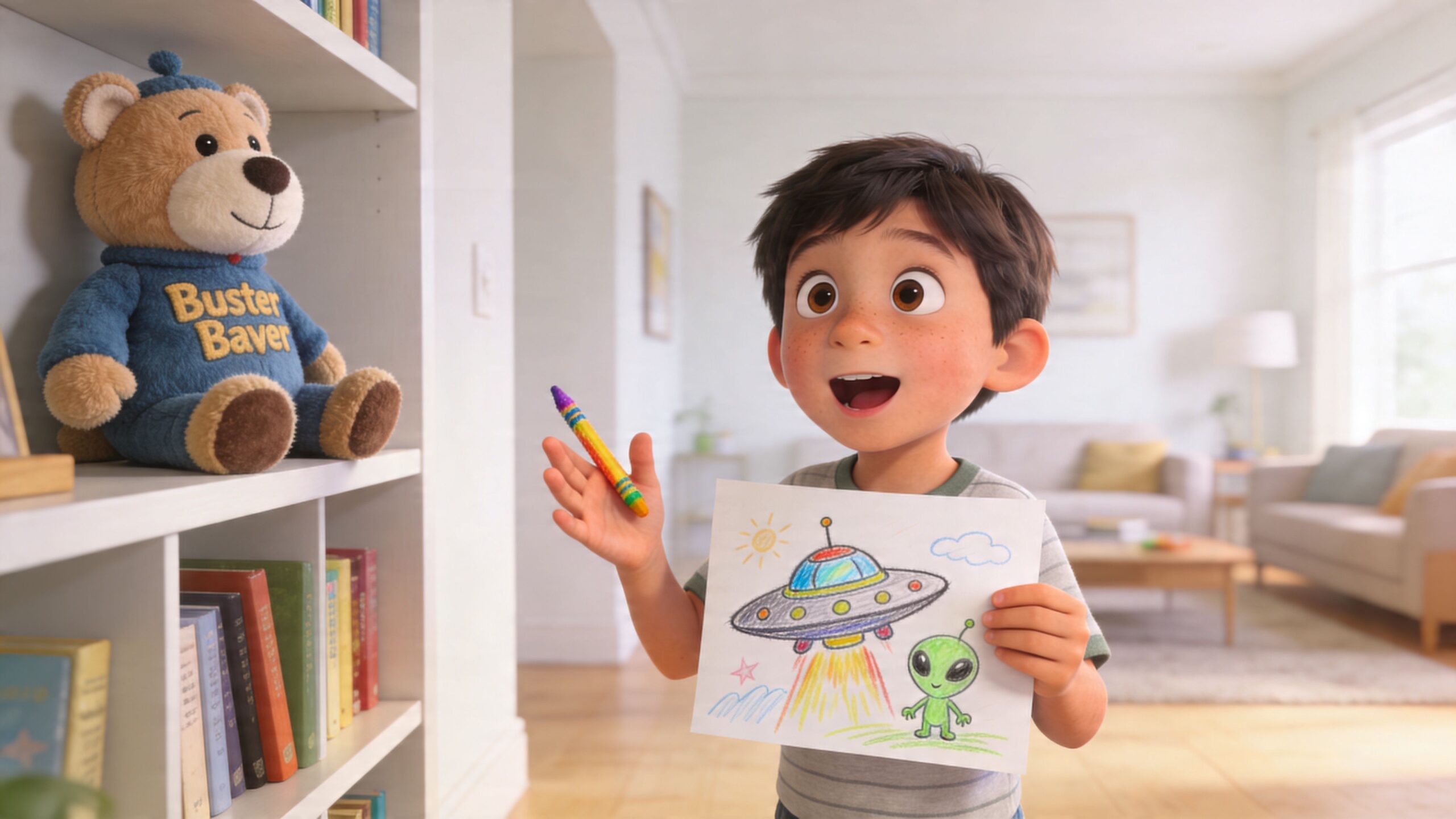
Why children warm to Buster
Buster feels familiar because he reflects common childhood habits:
- Big imagination means he can turn an ordinary day into an adventure.
- Quick enthusiasm means he often jumps in before thinking everything through.
- Loyal friendship means he stays emotionally important, even when he causes chaos.
- Curious thinking means he notices unusual details other characters miss.
That mix is powerful in the classroom and at home. Children often see themselves in Buster before they can explain why. One child might connect with his chatter. Another might connect with his nervousness under the humour. Another likes that he’s a bit odd.
Practical rule: When a child loves a quirky character, don’t dismiss it as fluff. Ask what they notice, what they agree with, and what they would do differently.
More than comic relief
Adults sometimes treat the funny sidekick as decoration. Buster isn’t decoration.
He helps children test ideas safely. They can laugh at his over-the-top theories while also learning about trust, consequences, and perspective. That’s one reason character-led stories work so well in teaching. If you’re interested in how animal characters often carry surprisingly rich lessons, this look at animal cartoon characters is a useful companion read.
Buster also gives adults a gentle opening for deeper conversations. Friendship. Family changes. School effort. Feeling distracted. Wanting attention. Wanting to belong. Those are big topics. A playful rabbit makes them easier to approach.
And for children who love stories of exploration, Buster’s appeal is obvious. He doesn’t just move through a plot. He pokes it. He questions it. He adds wild theories to it. That spirit matters because learning often starts the same way. A child asks something odd. An adult listens. A conversation begins.
The Secret Origin of Buster Baxter
Buster has been around long enough to feel timeless, but his history is quite specific. He first appeared in the 1979 book Arthur’s Eyes, then made his television debut on September 2, 1996, in the US-based PBS animated series. His spin-off, Postcards from Buster, ran from 2004 to 2012 according to this background on Postcards from Buster.
The traits that make him memorable
Buster isn’t the tidy, polished sort of character. That’s part of the charm.
He’s often shown as easy-going, imaginative, food-loving, and keenly interested in the unusual. His fascination with aliens is one of his most recognisable traits. It gives children permission to wonder about space, mysteries, and things they can’t yet prove.
He’s also loyal. That matters more than any running joke.
A lot of children meet characters in pairs. One is grounded. One is impulsive. Buster works because he balances Arthur. He brings energy where another character brings caution.
The family story children quietly notice
Buster’s background also carries emotional weight. His family story includes change, and that matters because many children live with change too.
When a children’s character deals with separation, travel, or shifting routines, young viewers often feel seen without being put on the spot. They don’t need a lecture. They need a story where life isn’t perfect and love still exists.
Here’s a simple way to describe Buster to children:
| Part of Buster | What children notice | What adults can talk about |
|---|---|---|
| His imagination | “He makes weird ideas sound possible” | Creative thinking |
| His friendship | “He sticks by Arthur” | Loyalty and repair |
| His distractions | “He loses focus” | Effort and support |
| His odd interests | “He likes strange stuff” | Confidence in being yourself |
That’s why Buster still works for a British audience even though his roots are American. The setting may differ, but the feelings don’t. Curiosity, friendship, distraction, confidence, and worry are universal parts of childhood.
Why Every Story Needs a Buster
Arthur may be the centre of the series, but Buster often supplies the spark.
He changes the temperature of a scene. He notices the weird possibility. He asks the question no one else asks. He makes a simple problem less simple, which is often what good stories need.
He creates movement
Without a character like Buster, many stories would stay neat and predictable.
He nudges events off course. Sometimes that causes trouble. Sometimes it reveals the true lesson. Children learn a lot from characters who don’t always make the best first choice, because that’s how childhood often feels. You try something. It flops. You regroup.
Buster’s presence helps stories explore:
- Misunderstandings that need talking through
- Friendship strain that doesn’t end the friendship
- Fear or uncertainty hidden under jokes
- Unusual interests that become strengths
He gives children a model for imperfect learning
Many educational characters are very capable. That’s useful, but it can also feel distant.
Buster is useful in another way. He’s imperfect in a recognisable way. He can be distracted. He can be overconfident. He can get carried away by his own ideas. Children know that feeling. So do adults, if we’re honest.
Some children learn best from the character who gets it wrong first.
That’s one reason he’s more than a sidekick. He helps children see that growth isn’t only about being clever. It’s about listening, adjusting, and trying again.
He makes difference feel normal
Buster’s role also matters because he broadens what “normal” looks like in a children’s story.
He isn’t cool in the polished sense. He’s not the child who always says the right thing at the right time. He brings his own flavour, habits, interests, and emotional quirks. That makes stories kinder to children who don’t feel neat and standardised themselves.
For teachers and librarians, this is gold. A character like Buster lets you ask better questions:
- Why did he think that?
- What clue did he miss?
- Was he trying to help, impress, or protect himself?
- What could he do next?
Those questions move children beyond plot recall. They build empathy and reasoning.
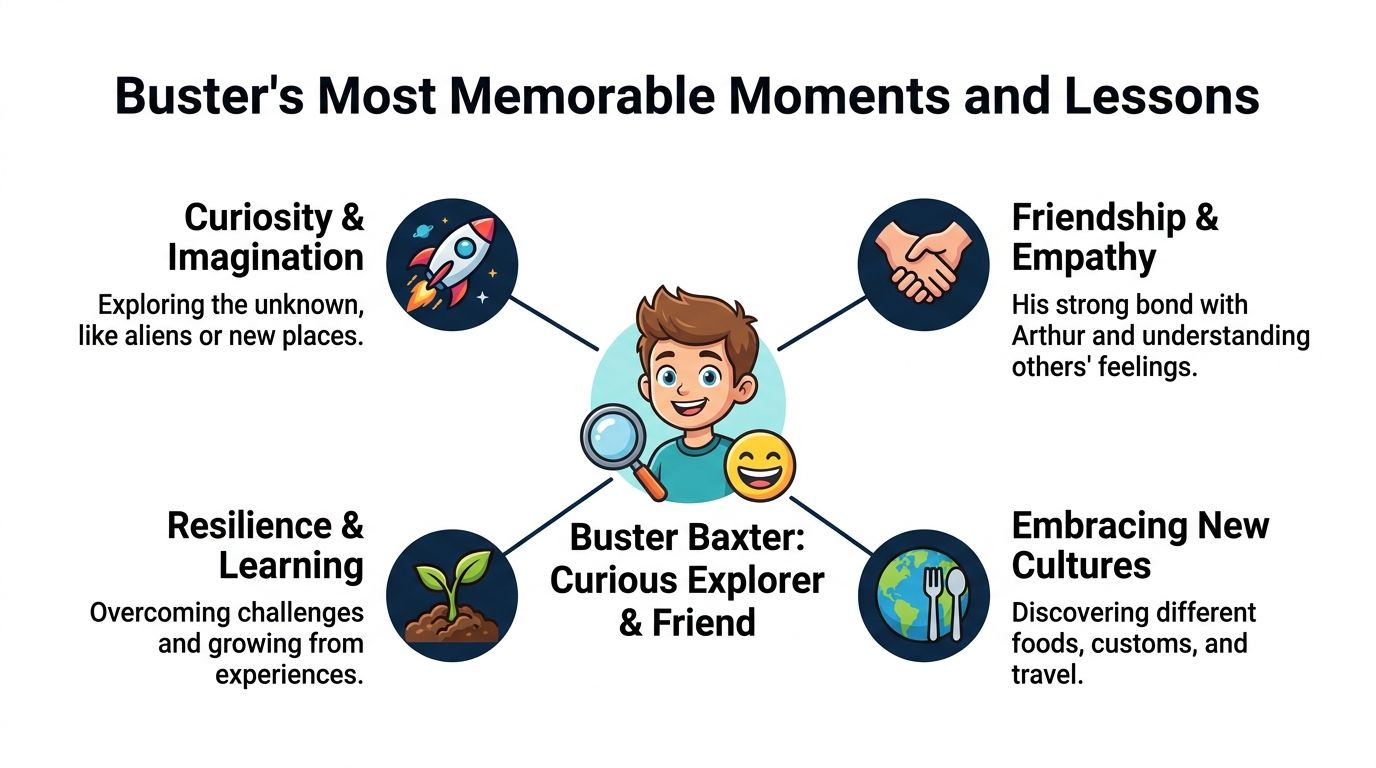
Buster's Most Memorable Moments and Lessons
Some Buster stories stay with children because they’re funny. Others stay because they show a feeling children know well but can’t yet name.
When overconfidence backfires
A strong example is Buster Baxter, Cat Saver. In the UK context, Buster’s portrayal has been linked with Ofsted’s 2023 EYFS framework for social-emotional growth because episodes like this model cause and effect around overconfidence and problem-solving, as noted on the episode page for Buster Baxter, Cat Saver.
Children understand this quickly. Buster enjoys attention. He starts to believe his own story a bit too much. Then reality pushes back.
That creates a clear learning chain:
- A child does something brave or interesting.
- Praise feels exciting.
- Confidence swells into showing off.
- Consequences appear.
- Reflection becomes possible.
That’s a brilliant discussion prompt for school or home. Not because children need scolding, but because they need practice noticing how one choice leads to another.
When school feels hard
Another useful pattern appears in stories where Buster struggles academically. He doesn’t fit the “always prepared, always focused” model. That’s exactly why he works.
Children who wobble in lessons often think the problem is who they are. Buster helps adults shift the message. The issue isn’t identity. It’s strategy, effort, support, and time.
“You’re not stuck. You’re still learning how.”
When strange interests become strengths
Buster’s fascination with aliens also deserves more respect than it sometimes gets. Adults may hear “aliens” and think “nonsense”. Children hear “aliens” and begin asking real questions.
What would life need to survive in space? How would we send a message? What counts as evidence? How do scientists investigate the unknown?
That’s not a distraction from learning. It’s a route into learning.
A quick classroom lens
Here’s a simple way to use key Buster moments:
| Story pattern | Skill children practise |
|---|---|
| Showing off and facing consequences | Self-awareness |
| Losing focus at school | Growth mindset |
| Wondering about aliens | Scientific curiosity |
| Staying close to a friend after conflict | Empathy |
If your child loves that blend of humour, adventure, and curiosity, you can find similar energy in the Space Ranger Fred book collection.
The Many Voices of Buster Baxter
Some children are surprised to learn that a character’s voice can change over time while the personality still feels the same.
That’s part of the craft. Buster has lasted across books, television, and a spin-off because the performance behind him keeps the core feeling intact. The exact line delivery matters. So does rhythm. So does warmth.
Why voice acting matters
A character like Buster could easily become annoying in the wrong hands.
He talks a lot. He can sound excitable. He lives close to the edge of absurdity. A voice actor has to make that feel lovable rather than exhausting. That takes skill.
Adult viewers often notice this before children do. Children say, “That sounds like Buster.” Which, really, is the whole point.
A character that survives across formats
Buster also works well across different kinds of storytelling. He can fit a short comic exchange, a more emotional episode, or a travel-based format such as his spin-off. That flexibility is one reason he lasts.
If you enjoy seeing how characters move across books, television, digital media, and educational experiences, this article on what transmedia storytelling is offers a helpful lens.
A strong children’s character isn’t held together by one joke. They’re held together by a recognisable heart.
That’s true of Buster. Even as performances and formats shift, the essentials remain. He’s curious. He’s funny. He’s flawed. He feels like himself.
Activities Inspired by Buster Baxter
Buster proves especially useful for parents, teachers, and librarians. His stories give children something concrete to respond to. Not a lecture. Not a worksheet dropped from nowhere. A character they know.
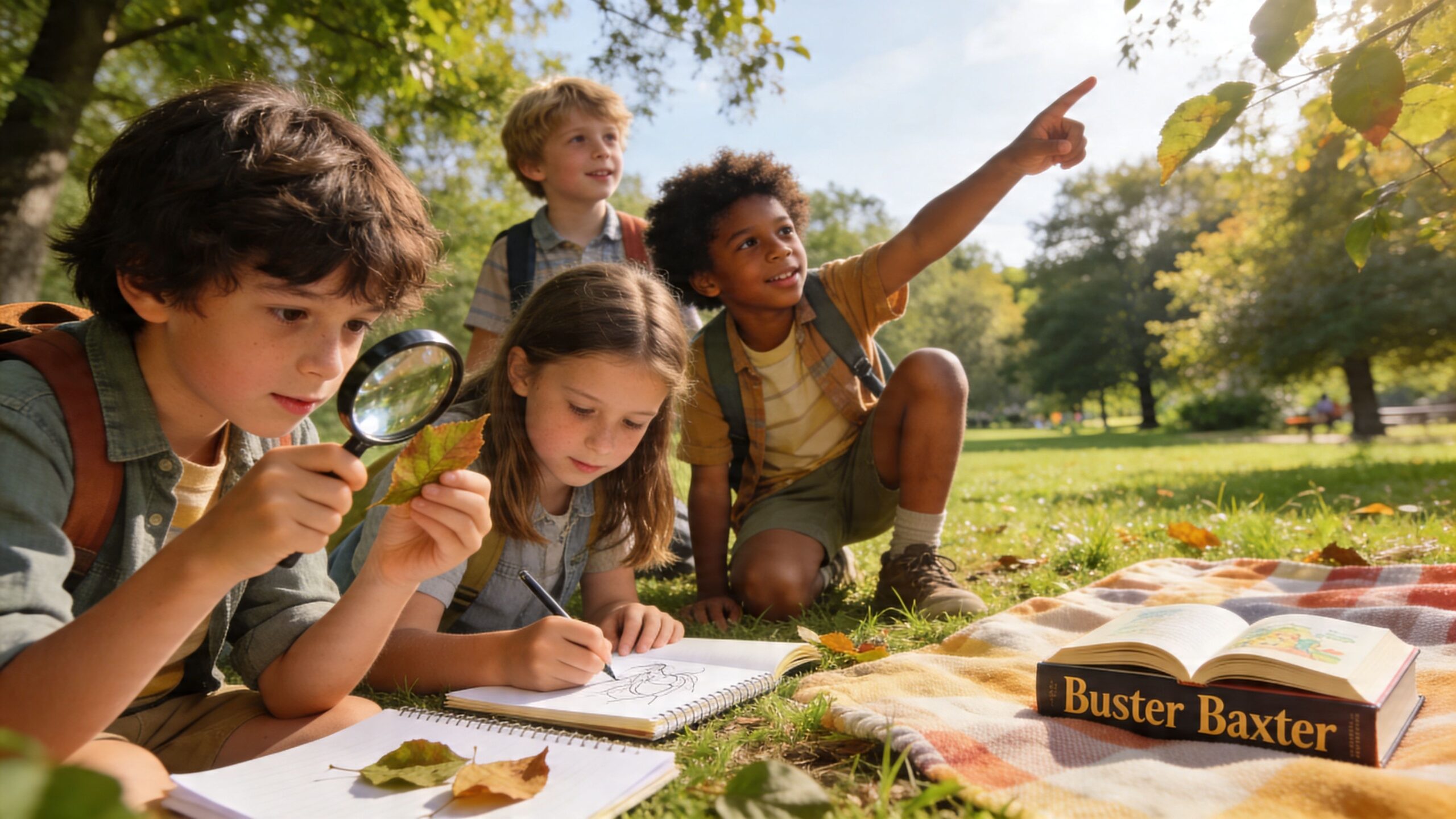
Try a growth mindset chat
Characters like Buster, who show effort-dependent academic performance in stories such as Buster Makes the Grade, can support growth mindset work. UK Department for Education data linked through this Buster Baxter profile says such approaches can improve maths attainment by 28% for disadvantaged pupils.
You don’t need a big programme to use that idea. Start with a few questions:
What went wrong first
Was it lack of effort, confusion, distraction, or worry?What helped Buster improve
Children often notice support from others before adults mention it.What would you try next time
This keeps the focus on action, not shame.
A simple sentence frame helps:
“I thought I couldn’t do it yet, but I can try by…”
Use imaginative writing
Buster is perfect for low-pressure writing.
Try one of these prompts:
Postcard task
Write a postcard from an ordinary place as if it were mysterious. A school hall could become an alien training base.Evidence hunt
Ask children to invent a strange claim, then list clues for and against it.Snack review
Let them review an unusual lunch item as if they were a food explorer.
For children reluctant to write, draw first. Label next. Then speak the idea aloud before writing a sentence.
Open a gentle conversation about focus and big feelings
There’s a clear gap in UK-specific educational resources that use Buster to talk about ADHD awareness and classroom support. The available fact base notes 8.4% of UK children aged 5 to 16 show similar hyperactive behaviours, and DfE reporting referenced there shows a 15% rise in primary school ADHD referrals, according to this Buster Baxter resource note.
Use that carefully. Don’t diagnose through a cartoon character.
Do use Buster as a softer starting point:
- What helps when your brain feels busy
- How can a friend help without taking over
- What do you do when you want to move, talk, or blurt
This related piece on a cartoon dog face is useful if you’re exploring how expressive characters help children read emotions.
Here’s a short video break if you want a visual teaching moment:
Make curiosity hands-on
Buster’s alien obsession can become simple STEM.
Try this mini activity set:
Shadow mystery
Shine a torch on classroom or household objects. Ask children to guess the object from its shadow.Message to space
Design a symbol-based message for an imaginary visitor. Keep it simple. What would they need to know?Observation notebook
Go outdoors and record three things that seem odd at first glance. Then try to explain them.
Home and classroom reminder: “I think, I try, I can, I can explain” works best when children say it after doing something, not before.
For more printable fun, reading extras, and activity ideas, visit the Space Ranger Fred freebies page.
The Enduring Lesson of Buster Baxter
Buster lasts because he gives children permission to be unfinished.
He’s curious without being polished. Loyal without being perfect. Funny without being shallow. He gets things wrong. He gets distracted. He worries. He wonders. He tries again. That’s a useful model for real children, because real children are still building themselves.
What adults can take from him
Parents, teachers, and librarians don’t need to turn every episode into a formal lesson. Often the best move is smaller.
Notice the pattern. Name the feeling. Ask one good question.
Buster helps adults do that because his stories naturally raise topics children live with every day:
| Buster trait | Real-life learning |
|---|---|
| Wild imagination | Creative confidence |
| School struggles | Asking for help |
| Loyal friendship | Repair after conflict |
| Busy, scattered energy | Self-regulation conversations |
There’s also a practical reason to take him seriously. The evidence available points to a lack of UK-specific resources using Buster to support ADHD awareness, even though the cited figures note 8.4% of UK children show similar behaviours and a 15% rise in primary school ADHD referrals in the referenced material. That gap matters because children need relatable examples, not only formal labels.
The four-part lesson children can carry
Buster’s biggest gift may be this simple sequence:
I think
My ideas matter, even if they’re unusual.I try
I can test a thought, attempt a task, or ask a question.I can
I learn through mistakes, effort, and support.I can explain
I can share what I noticed, what changed, and what I learned.
That’s the heart of story-led education. Not perfect answers. Better thinking.
And that’s why buster baxter arthur still belongs in conversations about literacy, emotional growth, and curiosity. He reminds us that children don’t only need role models who get everything right. They need role models who explore, wobble, recover, and keep going.
If you’d like story-led adventures that build curiosity, reading confidence, and STEM thinking, explore Space Ranger Fred. You can discover the books for children who love big ideas and bold missions, and if you’re a school or event organiser, you can also book interactive visits that support reading, communication, and confident participation through live storytelling and space-themed learning. Learning should be experienced, not just delivered.