
Meta title: Moon Size Compared to Earth Guide
Meta description: A fun visual guide to moon size compared to earth, with simple facts, hands-on activities, and child-friendly explanations for home or school.
A child points at the sky.
“The Moon looks huge tonight. Is it really that big?”
That's the sort of question that can stop a parent halfway through washing up and send a whole classroom into detective mode. The Moon feels close, bright and familiar. But when we ask about moon size compared to earth, the answer is much more surprising than typically expected.
A Big Question About Our Little Moon
One of the trickiest things about space is that our eyes can fool us. The Moon looks bold and important in the sky, so children often assume it must be nearly as big as Earth. Fair guess. It's round, bright and follows us home from the shops like a silent space puppy.
But space doesn't work by “looks about right”.
Why this question matters
When children ask about size, they're really asking several science questions at once:
- How big is the Moon really
- How does it compare with Earth
- Why does it sometimes look enormous
- What changes because it's smaller
Those are brilliant questions. They build observation, comparison and explanation. That's proper science thinking.
Mission note: Good science starts with noticing something odd and being brave enough to ask about it.
If your young explorer is also curious about why the Moon changes shape across the month, this friendly guide to moon phases for kids is a great next stop.
The first idea to hold on to
The Moon is much smaller than Earth. It only seems grand in the sky because it's close enough for us to see it clearly. That's where many children get muddled. They mix up apparent size with true size.
To illustrate: A small toy held near your face can block your view of a much bigger tree far away. The toy hasn't become giant. It just happens to be closer.
That same sort of visual trick is part of why the Moon can seem so impressive overhead. So let's bring the cosmos down to the kitchen table and make the comparison feel real.
If Earth Was a Football What Would the Moon Be
Adults often jump straight to kilometres. Children usually need a picture first.
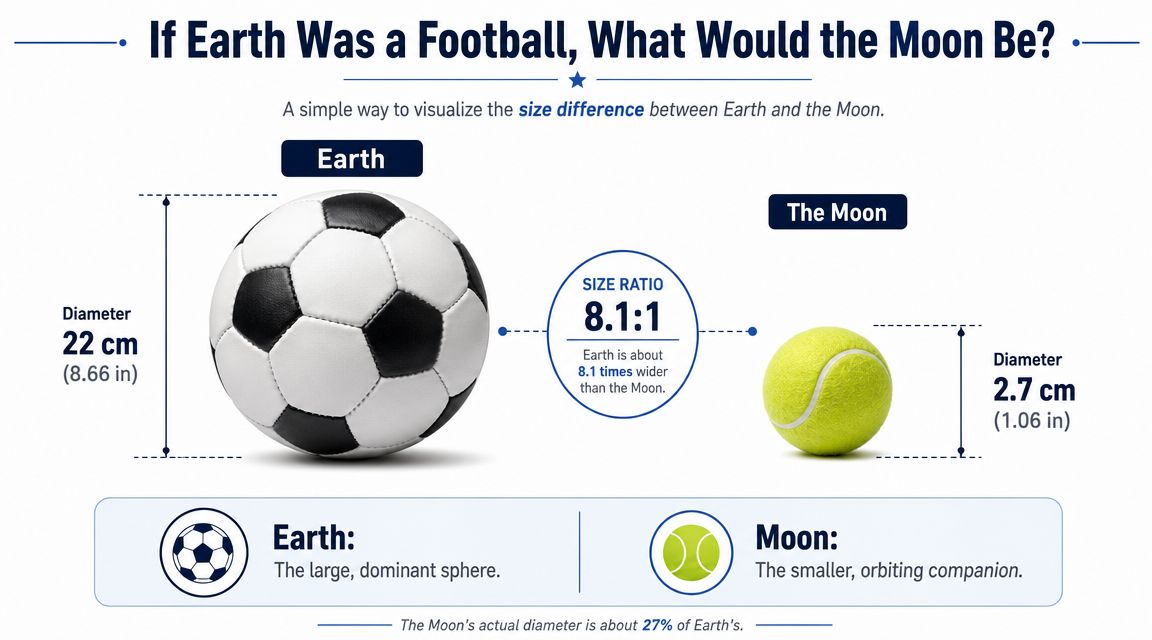
So here's the easiest way to grasp moon size compared to earth. If Earth was a football, the Moon would be more like a tennis ball. Not the same size. Not even close. A smaller partner travelling alongside.
Why this picture works
Children can hold a football. They can hold a tennis ball. Their hands tell them the story before any chart does.
A football feels broad and dominant. A tennis ball feels compact and light. That's the kind of comparison a six-year-old can remember at bedtime and explain again at breakfast.
Try saying it like this:
- Earth is the big ball
- The Moon is the little ball
- The little ball still matters a lot
That last point is important. Smaller doesn't mean unimportant. The Moon helps shape tides, lights our night sky and gives us eclipses that make everyone look up and say, “Whoa.”
A kitchen-table way to test the idea
Put a larger ball and a smaller ball side by side. Then ask:
- Which one has more room inside it
- Which one would feel heavier
- Which one seems more likely to have a stronger pull
Children usually answer correctly before they know the scientific vocabulary. That's a lovely teaching moment. They're already reasoning from size to effect.
The best analogies don't replace science. They open the door to it.
This is also where confidence grows. A child can say, “I think Earth is bigger.” Then, “I'll try a model.” Then, “I can explain it.” That's learning with both hands and brain switched on.
Earth and Moon Size by the Numbers
Numbers can feel a bit like space code at first. Put them beside a familiar object, though, and they start to behave.
Here is the Moon and Earth comparison in a way children can scan quickly, point at, and chat about over the kitchen table.
Earth vs Moon quick facts
| Measurement | Earth (The Football) | The Moon (The Tennis Ball) |
|---|---|---|
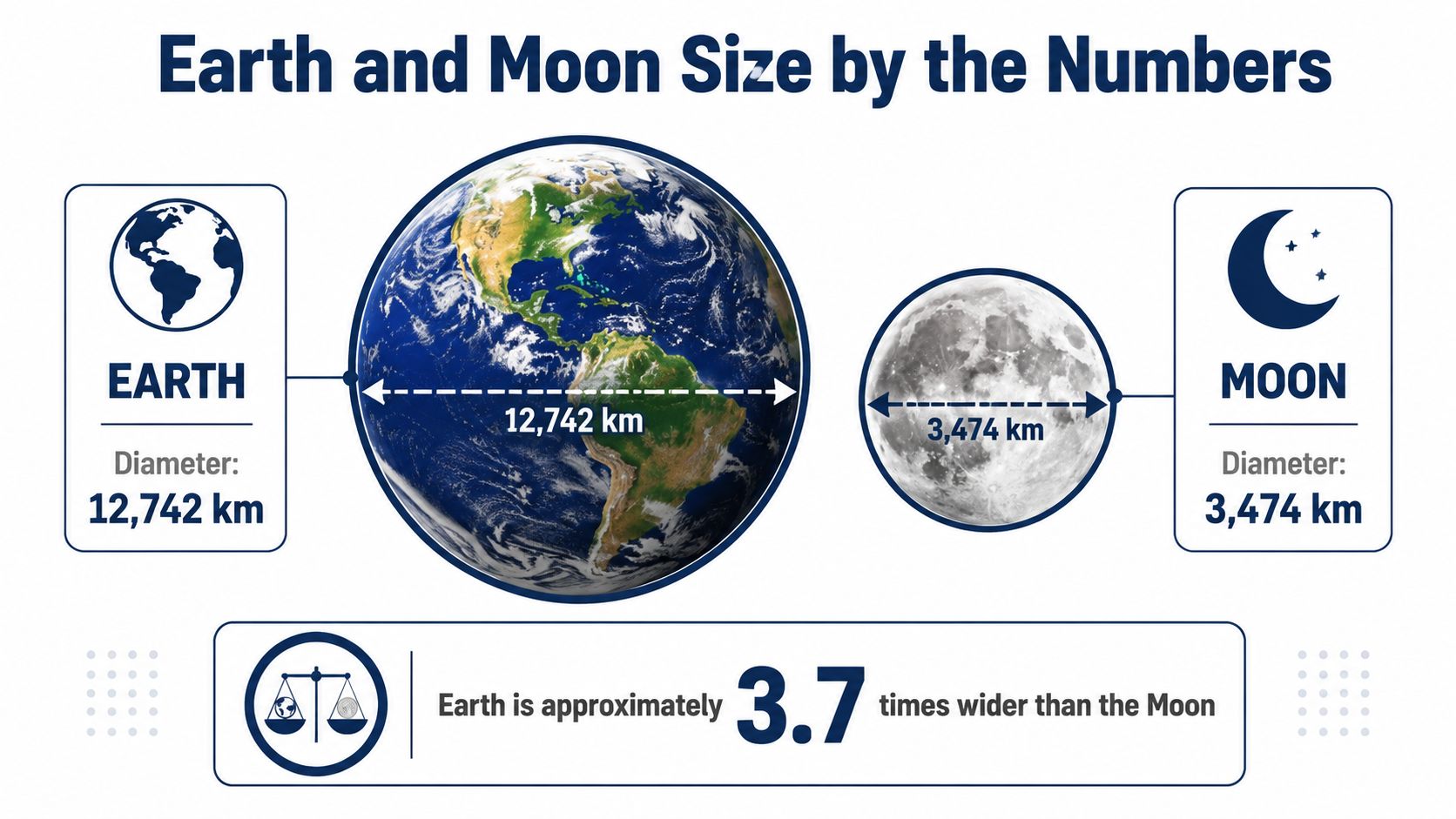
| Diameter | 12,800 km | 3,475 km |
| Surface area | ~510 million km² | about 37.9 million km² |
| Volume | much larger | about 21.9 billion km³ |
Earth's diameter is about 12,800 km and the Moon's is 3,475 km. That gives us a wonderfully clear picture. The Moon is about one-quarter as wide as Earth, so about four Moons could line up across Earth's middle.
What those numbers really mean
Diameter means width. If a child stretches their arms to show “how wide”, they are already getting the idea.
Surface area means how much outside space there is. Earth has far more room on the outside than the Moon, which helps children grasp why the Moon is a much smaller world even before they hear any tricky science words.
Volume means how much space is inside. You can describe it as how much “planet filling” each world has, a bit like comparing a giant loaf with a small bread roll. The numbers in the table show that Earth has far more stuff packed inside than the Moon.
That matters later for gravity, but children do not need to tackle that all at once.
For families who want to keep the mission going after this section, these fun facts about the Moon for children work nicely alongside a drawing, model, or snack-time chat.
A child-friendly takeaway
If your young space ranger remembers one line, let it be this:
Earth is about four Moon-widths across.
It is short, visual, and easy to repeat to Grandma, a teacher, or a toy astronaut heading off on a sofa-cushion moon landing.
Why You Could Jump Higher on the Moon
The size question gets extra fun when you turn it into a jumping test.
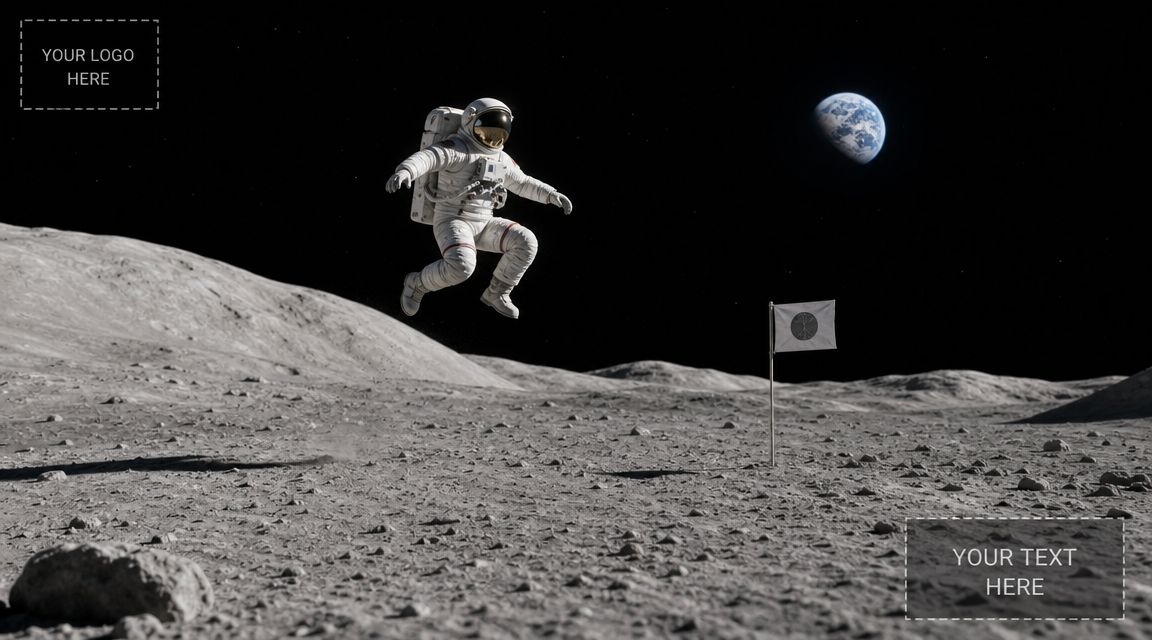
A smaller world usually has a gentler gravitational pull, so the Moon does not tug on you as strongly as Earth does. That is why astronauts would feel lighter there and spring up in those famous slow, floaty hops.
Less planet, gentler grip
A handy way to explain it to children is with a simple tug idea. Earth is the bigger world, so it has more material packed inside and a stronger pull. The Moon is much smaller, so its pull is gentler.
Kitchen-table science helps here. Put a big orange next to a small plum. If the orange stood for Earth and the plum stood for the Moon, you would expect the bigger one to have the stronger “hold”. Gravity works a bit like that. Bigger world, bigger tug.
You can keep the language wonderfully simple:
- Earth pulls harder
- The Moon pulls more gently
- So jumps go higher and last longer on the Moon
A moon-bounce your child can picture
Mission Commander Fred lands on the Moon, bends his knees, and gives one mighty hop. Up he goes in a slow, floaty bounce, a bit like a springy toy in slow motion. Back on Earth, the very same hop would come down much faster because Earth gives him a stronger pull.
That is the key idea children can hold onto. Same jumper. Same legs. Different pull.
If your young explorer wants a clearer step-by-step guide, this page on gravity explained for kids makes the force easier to picture.
Classroom shortcut: Smaller world, gentler pull, higher jump.
It links the Moon's size to something children can feel in their imagination, which is often the moment the science really clicks.
Activity Make Your Own Earth and Moon
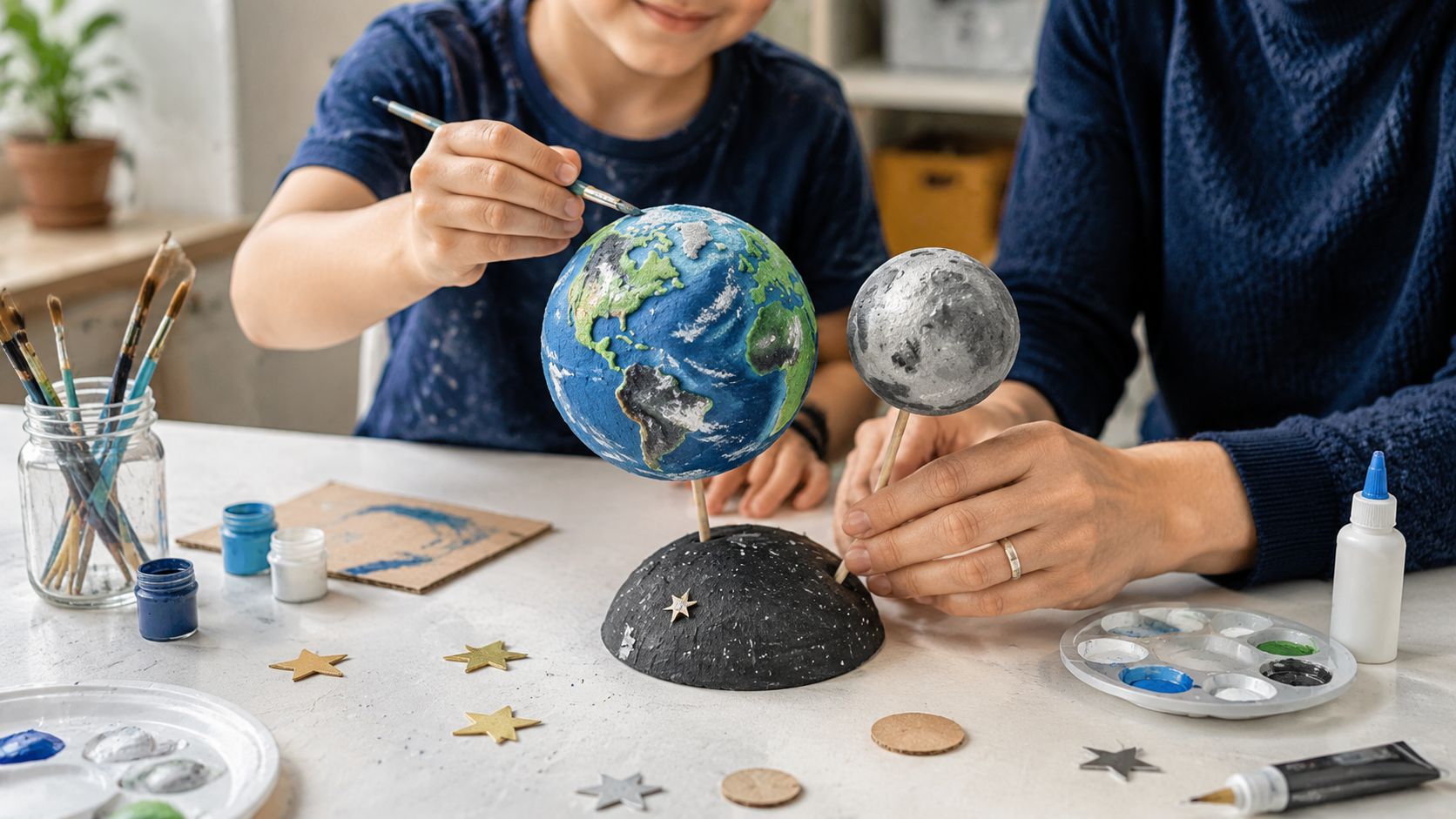
Facts stick better when children build something with their own hands. So here's a mission you can run at home, in class, or at the library craft table.
Mission briefing
You'll need:
- Two lumps of modelling clay or play-dough
- A ruler if you want extra precision
- Blue and grey colours if your crew enjoys decorating
- A tray or table space because space missions can become gloriously messy
If you'd rather sew soft ball models, Stitch Mingle's DIY ball pattern is a handy extra resource for making round shapes children can compare by sight and touch.
How to build the model
Make Earth first
Roll your biggest ball. This is your planet.Make the Moon smaller
Roll a second ball that looks about one-quarter as wide as your Earth ball.Put them side by side
Ask your child, “Does the Moon still look big enough?” If it looks too chunky, shrink it a bit.Test the four-across idea
See whether about four Moon widths match the width of your Earth model.Talk while you build
Ask, “Which would have more room inside?” and “Which do you think would pull harder?”
That's the science magic. The making and the thinking happen together.
For more printable ideas, activity sheets and hands-on extras, visit the Space Ranger Fred freebies and activities page.
A short video can help children see the comparison in action too:
Keep the learning language simple
Try these sentence starters:
- I think the Moon is much smaller than Earth.
- I try making a model to check.
- I can show the size difference.
- I can explain why the smaller one might have weaker gravity.
That's a lovely progression for children aged 6 to 12. It turns astronomy into something they can say, do and teach back.
Mission Control Answers Your Top Questions
The model is built, the balls of clay are on the table, and then comes the best part. The questions.
Why does the Moon look so big in the sky sometimes
Your eyes and brain are brilliant, but they can still be tricked.
The Moon can look extra large when it sits low near the horizon because your brain compares it with trees, chimneys, houses and hills. Up high in a wide, empty sky, it often looks smaller. Its apparent size also changes a bit because the Moon's distance from Earth is not exactly the same all the time, as explained in this guide to apparent sizes and angles in the sky.
So the big lesson is simple. Looking big is not the same as being big.
If the Moon is small, why can it cover the Sun
Distance does the clever part.
The Sun is enormously bigger than the Moon, but it is also much farther away. From Earth, the two can appear nearly the same width in the sky, which is why the Moon can slide in front of the Sun during an eclipse.
That feels like a magic trick, but it is really a space geometry trick.
Is the Moon close to Earth
By playground standards, no chance.
By space standards, it is our next-door neighbour. Even so, it is still a very long way from us, as noted earlier in the article. That is why the Moon can be much smaller than Earth and still look impressive in the sky. Nearer than the Sun does not mean near in the way children usually mean it.
A good kitchen-table way to say it is this. The Moon is close enough to study easily, but far enough away that astronauts had to make a huge journey to reach it.
What should children remember most
Keep these two ideas together. Size and distance are different things.
A small object nearby can look bigger than a giant object far away. That one idea helps children make sense of the Moon, eclipses, and lots of other space puzzles too.
Ask children, “How do you know?” That question turns a guessed answer into a real piece of science thinking.
If your class or family enjoys these big cosmic questions, a related read is how far away are the stars, which helps children think about distance in space without getting lost in giant ideas.
If you'd like more story-led space learning, explore the books, activities and adventures at Space Ranger Fred. They're built to make reading fun, science friendly and curiosity something children feel proud of. You can also explore the book page for adventures that mix humour with STEM. If you're a school, library or event organiser, ask about interactive visits through the school visits page, where live space-themed sessions help lift storytelling, reading confidence, and communication.