Meta title: Dinosaurs Train Toys for STEM Play
Meta description: Discover how dinosaurs train toys support STEM play, storytelling and smart buying choices for homes, schools and libraries.
A small dinosaur balanced on a train carriage is often a sign that something brilliant is happening on the floor.
Maybe you are a parent trying to choose a toy that does more than beep. Maybe you are a teacher hoping one set can spark talk, teamwork and science questions. Or maybe you are a librarian who knows one well-placed dinosaur can get a whole room leaning in.
Dinosaurs train toys sit in a sweet spot. Children already love the two ingredients. Adults love what those ingredients can unlock. Curiosity. Problem-solving. Storytelling. Early science talk. Plenty of joyful roaring.
All Aboard the Dino Express a Journey Begins
One child builds a simple circle of track. Another adds a volcano made from blocks. Then a T-Rex joins the train, even though it is too big for the carriage and not very interested in ticket rules.
That is often how the best learning starts.
Children do not separate play into neat little boxes. A train set becomes transport engineering. A dinosaur figure becomes a museum exhibit. A tunnel becomes a question. Will it fit? Why not? What can we change?
Why these toys caught on so quickly
The original Dinosaur Train toy line did not become popular by accident. In the UK, the toys launched in late 2010 and became a top seller in their first year, capturing an estimated 15% of the dinosaur-themed toy market for ages 3 to 6 by mid-2011. The line also sold over 250,000 units in the UK by the end of 2011, helped by its mix of play and palaeontology across the Triassic, Jurassic and Cretaceous eras, according to Learning Curve launch coverage.
That tells us something important.
Children were responding not just to bright colours or familiar characters. They were responding to a toy idea that connected movement, creatures, names, eras and questions about the natural world.
Why children stay interested
A standard train toy can be lovely. Add dinosaurs and the play becomes more layered.
Children start asking things like:
- Who rides where on the train
- Which dinosaur is too tall for the tunnel
- What period each dinosaur came from
- How to rebuild the track so the train does not get stuck
Those are not random questions. They are the beginning of classification, engineering and scientific thinking.
Teacher tip: If a child keeps moving one dinosaur from place to place, do not rush to correct them. Ask, “What made you choose that carriage?” Their answer often reveals the learning.
A simple way to see the magic
A wooden loop on the carpet can become a fossil rescue route. A battery train can become a supply mission through a “lava valley”. A station can become a field research base.
That is why these toys last in classrooms and homes long after the first excitement. They are not just for pressing and watching. They invite children to build, test, notice and explain.
And yes, they also invite excellent dinosaur noises. Education should make room for those too.
How to Choose the Best Dinosaur Train Toys for Your Explorer
Some families want a sturdy set that can live in the playroom for years. Some teachers need something that works for shared use and fast tidy-up. Some children want a train they can push all over the room. Others want lights, sounds and dramatic hill climbs.
Choosing well gets easier when you break the decision into a few clear questions.
Start with material
The first big choice is usually wood or plastic.
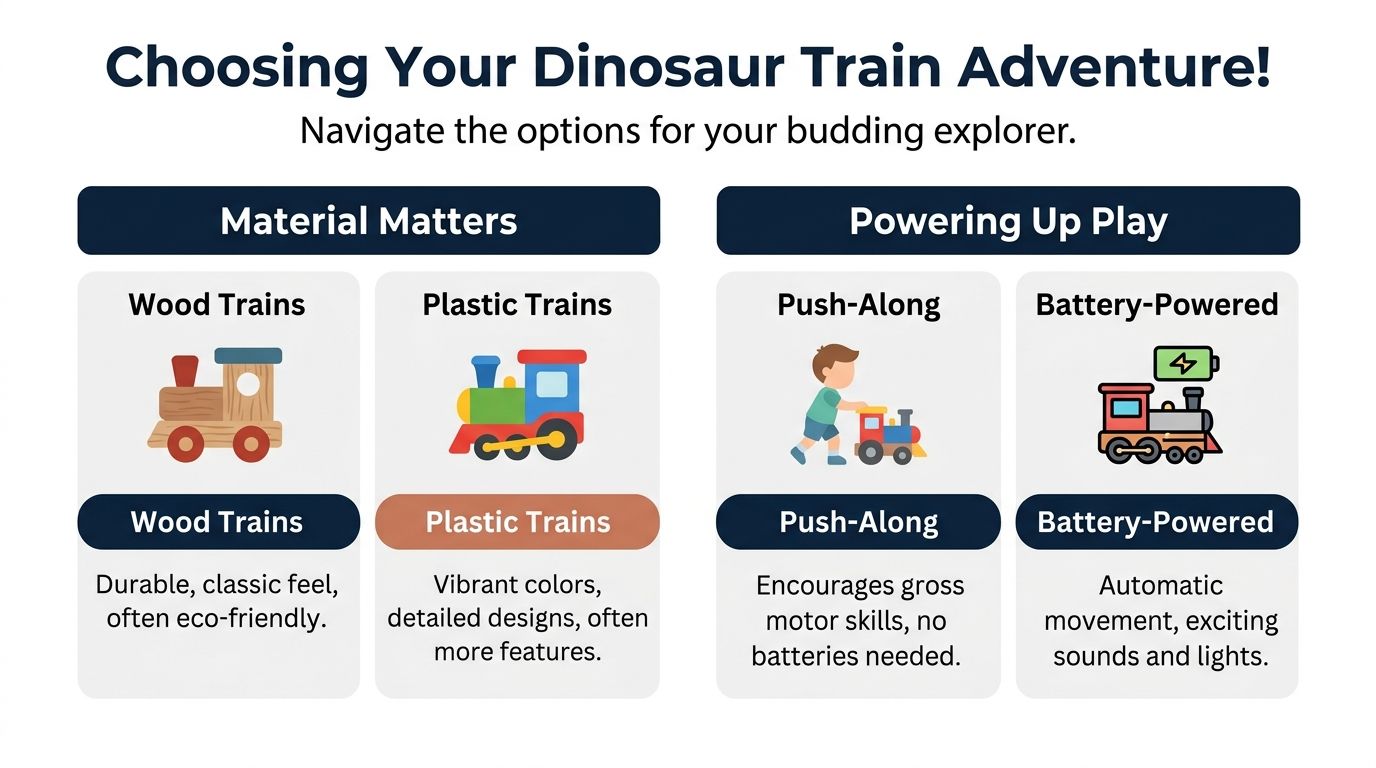
Wooden sets often suit families and schools who want durability, simple construction and compatibility with existing railway toys. Plastic sets often appeal when children enjoy moving parts, bright styling or motorised action.
A useful example is the 49-piece Bigjigs Rail Dinosaur Train Set. It is compliant with EN71 European safety standards and is compatible with 90% of major wooden railway brands. The same product information also states that use of this style of set improved fine motor skills in 3 to 7 year-olds by 85% after four weeks in the cited research on the Bigjigs Rail Dinosaur Train Set page.
Think about how the child plays
Not every child plays in the same way. Some like calm, repetitive arranging. Some love speed and noise. Some invent stories before they even touch the train.
A quick comparison helps:
| Type | Best for | Watch for |
|---|---|---|
| Wooden push-along | Open-ended play, classroom use, track building | Check fit with any tracks you already own |
| Plastic battery-powered | Action play, sounds, moving features | More upkeep, more moving parts |
| Character-led sets | Children who love named dinosaurs and role play | Replacement pieces may be harder to find |
| Open railway plus separate dinosaur figures | Flexible story play and easier expansion | Less “all in one” feel |
Safety matters more than theme
The dinosaur theme may be the reason a child falls in love with a set. Safety is the reason an adult says yes.
Look for:
- Standards first: If you are buying wooden sets, EN71 compliance is a reassuring marker on products such as the Bigjigs example above.
- Solid joins: Tracks should connect without forcing.
- Smooth surfaces: Run a finger along edges. Splinters and rough spots are a no.
- Age fit: Small figures can be awkward in mixed-age settings.
Key takeaway: The best toy is not the one with the most features. It is the one a child can return to again and again with confidence.
Match the toy to your goal
Ask one final question before buying.
What do you want this set to do most often?
If the answer is “support storytelling”, choose flexibility. If it is “survive group play”, choose toughness. If it is “spark science chat”, choose a set with distinct dinosaurs, visible track parts and room for building experiments.
For many adults, that one question clears the asteroid field immediately.
Unlocking STEM Learning with Every Chug and Roar
A child does not need a lab coat to think like a scientist. Sometimes they just need a train, a slope and a dinosaur that keeps falling off at the wrong moment.
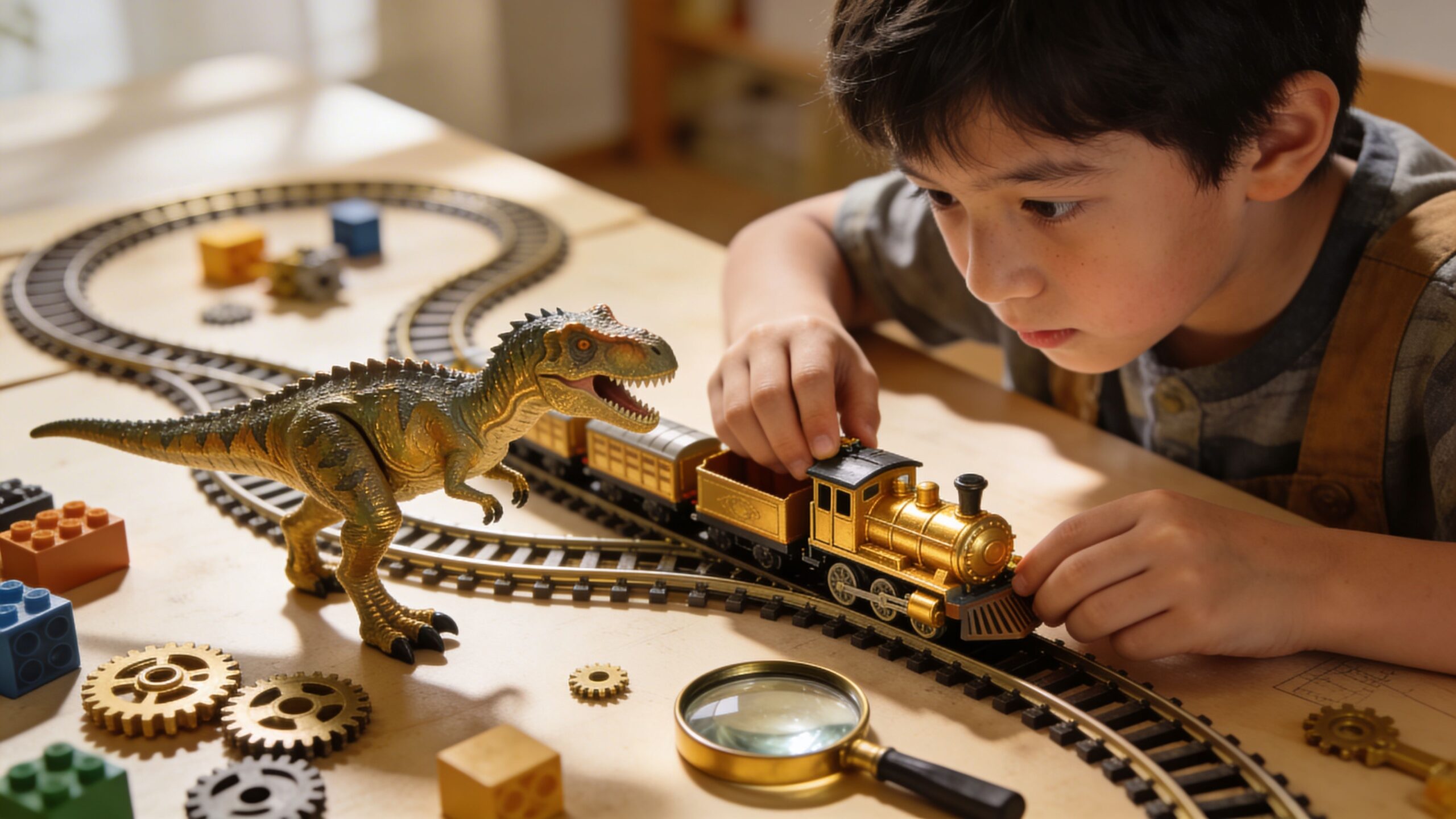
The beauty of dinosaurs train toys is that they turn big ideas into visible, hands-on problems.
The STEM hidden in ordinary play
When children build a track, they are working with engineering. They are testing shape, balance and connection.
When they send a train down a slope, they meet physics. They notice speed, momentum and what happens when the carriage is too heavy.
When they sort dinosaurs by names, features or time periods, they start using scientific classification.
That blend of play and curiosity has real cultural weight. In 2011, Dinosaur Train toys were endorsed by London’s Natural History Museum, and the TV series’ focus on scientific inquiry was credited with a 25% increase in UK museum visits by preschool groups, according to the PBS LearningMedia fact card resource.
That matters because it shows where toy play can lead. Off the carpet. Into questions. Into books. Into museums.
A simple learning script that works
When adults want to deepen play without taking over, I like a four-step rhythm:
- I think the dinosaur is too tall for the tunnel.
- I try moving the tunnel or swapping the carriage.
- I can make the train get through.
- I can explain why the first design did not work.
This approach gives children language for observation and revision. It also helps adults avoid doing all the fixing.
If your child is fascinated by “real dino stuff”, even a small object can extend the conversation. Looking at displays of genuine T-Rex tooth fossils can open up careful talk about evidence, fossils and how scientists learn from remains.
For a broader look at how these playful moments connect to science thinking, this guide on https://www.spacerangerfred.com/2026/02/07/what-is-stem-learning/ is a helpful companion.
Questions adults can ask during play
Try prompts like these:
- What changed when the track got steeper?
- Which dinosaur needs the longest carriage, and why?
- How could we test a safer route to the station?
- What do you notice about the wheels on this part?
A short demonstration can help too:
Try this: Do not praise only the finished build. Praise the noticing. “You spotted the problem quickly” builds stronger thinkers than “good job” on its own.
Create Intergalactic Dino Missions The Space Ranger Fred Way
The track on your floor does not have to stay on Earth.
Once children have the train set out, story turns the whole thing into an expedition. The volcano becomes a cave entrance on a distant moon. The bridge becomes a meteor crossing. The slow green dinosaur in the last carriage becomes the ship’s most important navigator, even if he does keep sneezing at dramatic moments.
Mission ideas children can start today
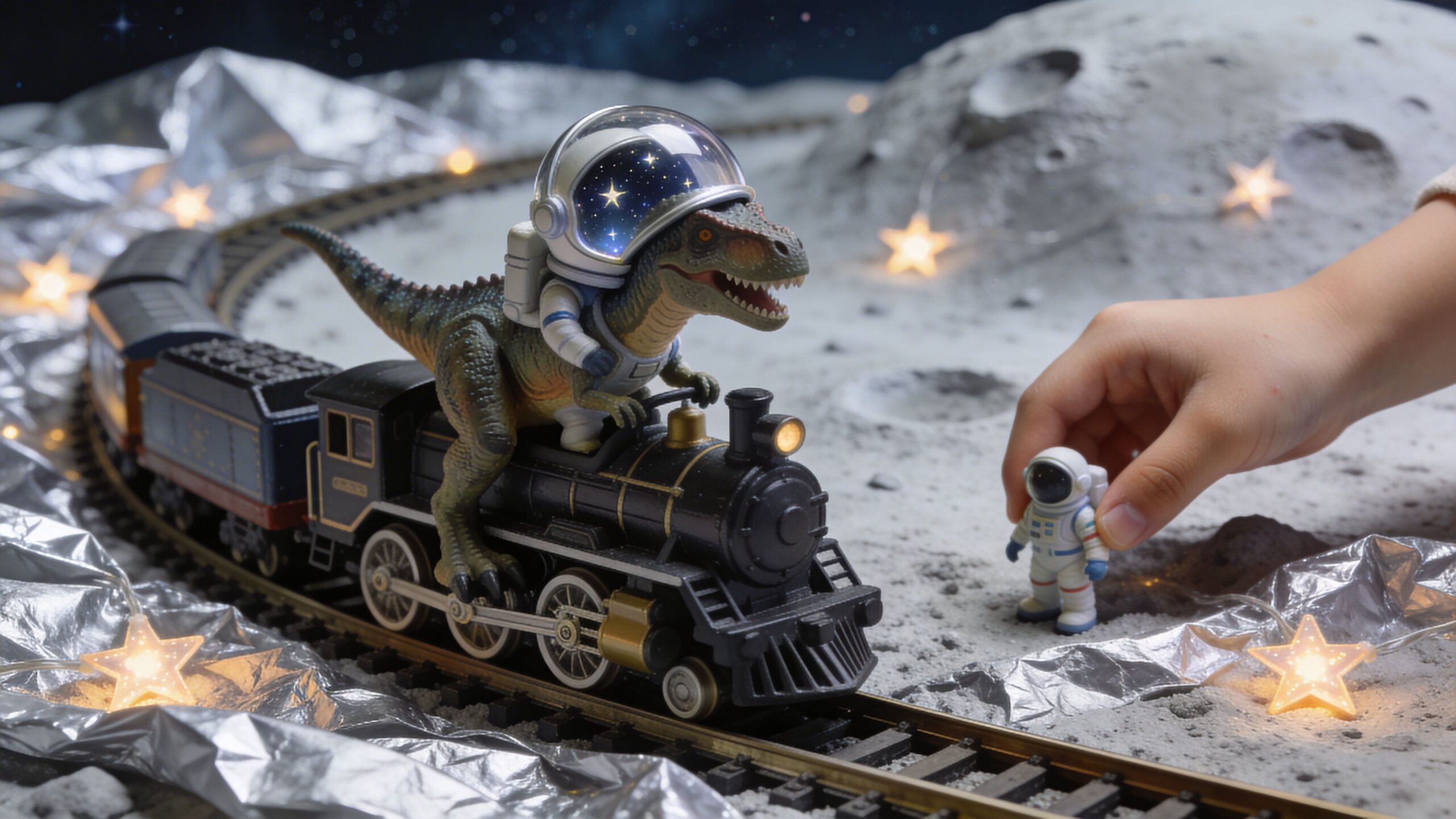
Here are a few favourite prompts for turning dinosaur play into a story-led STEM adventure:
The lost egg rescue
A storm has scrambled the route map. The train must deliver a dinosaur egg to the correct nest before nightfall.
Children can:
- design a safe route
- decide which carriage protects the egg best
- explain why one path is smoother than another
The crystal cave delivery
The dinosaurs need glowing crystals to power a research station. The tunnel is too low for the tallest passenger.
That gives children a reason to rebuild, compare sizes and solve a visible problem.
The time-travel field trip
The train visits different prehistoric periods. At each stop, children sort figures into the place they think fits best, then defend their choices.
That one works beautifully in classrooms because it encourages speaking and listening, not just building.
Story makes abstract thinking easier
Children often explain more when they are “in role”. A child who shrugs at “Tell me about your design” may happily announce, “Captain, the Triceratops carriage is unstable and requires reinforcement immediately.”
That is still explanation. It is just wearing a space helmet.
If you want inspiration for how creativity and science can work together, this article on https://www.spacerangerfred.com/2025/08/31/space-adventures-science-and-storytelling-why-creativity-and-stem-belong-together/ is a useful read.
A visual experience can help older children stretch the imagination even further. The Feeding a Titanosaur VR project is a good example of how immersive dinosaur learning can feel active, physical and story-rich at the same time.
A small routine that builds confidence
I like to give missions three parts:
The problem
“The supply train cannot cross the crater bridge.”The build
Children change the track, carriages or cargo.The report
They explain what worked and what failed.
Mission tip: End by asking, “What would you improve next time?” That keeps the adventure open and teaches revision without making it feel like correction.
For children who love making worlds, dinosaurs train toys can become something bigger than a toy set. They become a stage for language, logic and imagination all at once.
Keeping Your Dinosaur Fleet Mission-Ready
Toys work better when adults treat maintenance as part of the adventure, not a boring interruption. In my house and in classrooms, I call it the pre-flight check.
Children usually join in if you make it sound official enough.
Your quick pre-flight checklist
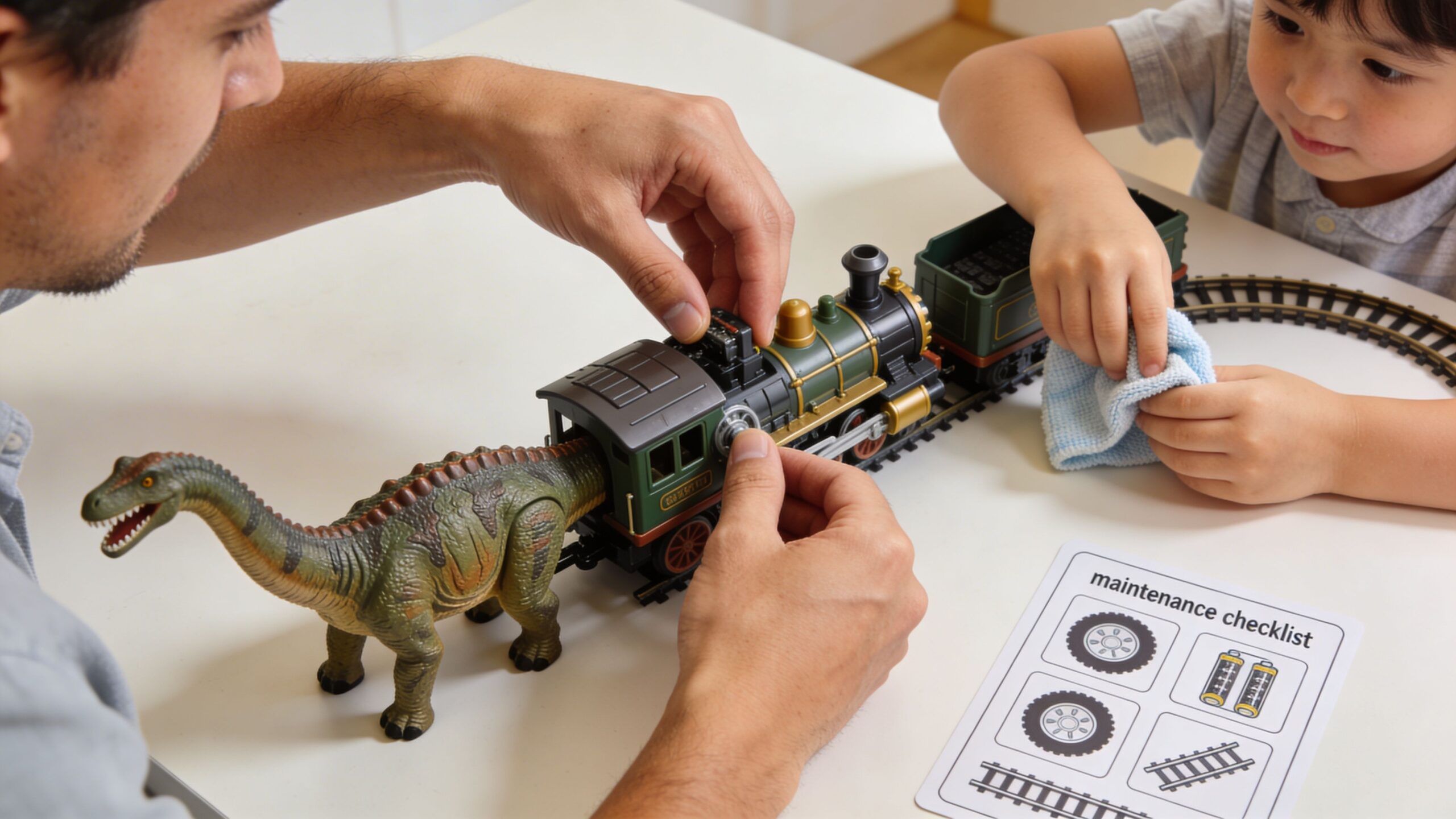
Before a play session, or before putting a set away, check these points:
- Track condition: Look for bent plastic pieces, loose joins or rough wooden edges.
- Couplings and wheels: Make sure carriages still connect cleanly and roll freely.
- Battery compartment: If the set uses batteries, check for any signs of leakage or corrosion.
- Loose extras: Tiny signs, trees and figures are often the first pieces to disappear or crack.
Extra care for battery-powered sets
Battery-powered dinosaur train sets can be great fun, but they need a bit more attention. Quality control data for these sets shows common problems can include track snapping in high humidity and 25% faster battery drain during continuous play. The same data says that pre-soaking flexible tracks in warm, soapy water can increase setup speed by 50% and reduce strain on the parts, according to the TUMAMA dinosaur race track product information.
That is a practical tip worth remembering, especially for schools and clubs where setup happens in a hurry.
Cleaning without fuss
Keep it simple.
For wooden pieces, use a lightly damp cloth and dry them properly. For plastic parts, wipe off dust and sticky marks without soaking motors or battery areas. If a set has been stored for ages, clean before use rather than handing it straight over.
Practical reminder: A toy that derails constantly stops being educational very quickly. Maintenance protects the learning as much as the toy.
Children can help too. Give them jobs like “wheel inspector” or “track engineer”. It turns care into responsibility, which is another useful lesson tucked inside play.
Finding and Adapting Dinosaur Train Toys Today
This is the awkward truth. Many adults go looking for original Dinosaur Train toys and discover that the easy shopping route has vanished.
Major UK retailers do not appear to stock recent Dinosaur Train products, so parents and educators often end up searching resale sites instead. That matters because there is strong interest in second-hand STEM toys, and 68% of parents are identified as seeking durable, second-hand STEM toys in the cited market summary on the Henson launch page background reference.
What to check before buying second-hand
When you are browsing resale listings, focus less on the headline photo and more on the practical details.
Ask:
- Is the set complete enough to play with well? Missing one tree is fine. Missing key track joins is not.
- Will it fit what you already own? Compatibility matters more than brand nostalgia.
- Can the seller show the underside or close-up markings? This helps with age and safety checks.
- Are there any cracks, corrosion or broken couplings? Small faults become big frustrations.
If you want more dinosaur-themed play ideas while you hunt for the right set, this collection of https://www.spacerangerfred.com/2025/09/25/dinosaur-games-for-children/ can keep the momentum going.
Adapting older toys for today’s learners
Older sets can still be wonderful. They may just need thoughtful adjustments.
For children with different sensory or communication needs, simple changes can help:
- Add tactile markers to carriages so children can identify roles by touch.
- Use high-contrast labels for stations, tunnels and dinosaur names.
- Create picture cards that match figures to actions such as stop, go, load and unload.
- Widen play zones on the floor or table so mobility access is easier.
You do not need to turn the toy into a complicated project. Small, kind adjustments often do the most.
The best approach is to ask, “What is getting in the child’s way?” Then change that one thing first.
Your Next Adventure Awaits
A train set, a few dinosaurs and a bit of floor space can do a surprising amount of work. They can support science talk, storytelling, teamwork and confidence. They can also rescue a rainy afternoon magnificently.
The true power of dinosaurs train toys is not in the plastic or wood. It is in what children do with them. They test ideas. They solve problems. They tell stories. They explain their thinking.
That is learning at its best. Active, memorable and full of wonder.
If you want more story-led STEM fun, explore Space Ranger Fred for engaging books, free activities and inspiring ideas that help children read, imagine and think like explorers. If you are planning for a classroom, library or event, you can also discover interactive school visits that support confidence, communication and a love of learning through storytelling and science.