Ever wondered what a planetarium is? Imagine a special kind of cinema, but instead of showing films about superheroes, it shows you the universe itself. The adventure doesn't happen on a flat screen but on a massive, curved ceiling called a dome. It makes you feel like you’ve left Earth behind and are sitting right in the middle of space.
Your Very Own Spaceship
Think of a planetarium as your own personal spaceship, ready to whisk you away on a tour of the cosmos without you ever leaving your comfy, reclining chair. That’s the magic! It's a place where you can trace glittering constellations, fly past swirling planets, and watch distant galaxies dance right above your head.
It doesn't matter if it's cloudy outside or the middle of the day. Inside a planetarium, the night sky is always perfectly clear and absolutely bursting with wonder. It's an incredible experience that makes tricky space ideas, like how mind-bogglingly far apart the planets are, much easier to get your head around.
What Happens on a Planetarium Adventure?
A trip to the planetarium is a brilliant way to turn learning into a thrilling adventure. Here’s what young explorers can do, see, and feel:
- A Room That Transforms: As the lights dim, the ceiling seems to melt away. Suddenly you’re surrounded by thousands upon thousands of twinkling stars. What will you spot first?
- A Journey Through Space: One minute you might be taking a gentle tour of the star patterns in our night sky, the next you could be blasting off on an exciting flight right through our solar system. Imagine flying past Mars!
- A Story Unfolds: Most shows are led by a friendly presenter who acts as your 'spaceship captain'. They will point out amazing sights and share fascinating facts about the universe as you travel together.
This amazing journey helps you connect the dots between what you might read in a book and what space actually looks like. It’s like stepping inside the pages of an adventure story, where you get to be the explorer.
A planetarium isn't just about watching; it's about experiencing. It turns science lessons into a breathtaking show that sparks curiosity and makes you ask some seriously big questions.
A visit is the perfect way to build on what you already know about space. For example, if you've been learning about the planets, seeing them glide across that giant dome makes them feel so much more real. You can learn more about our cosmic neighbourhood in our easy guide to what is the solar system. The whole experience helps every child feel like a real Space Ranger, ready for their next mission.
Your Planetarium Mission at a Glance
Here’s a quick summary of what to expect on your trip, helping young explorers feel prepared and excited for their cosmic journey.
| What You Will See | What You Will Do | How You Might Feel |
|---|---|---|
| Thousands of stars, planets, and galaxies projected onto a giant dome. | Sit back in a comfy chair, look up, and listen to your guide. | Excited, amazed, and maybe a little bit like a real astronaut! |
| Close-up views of planets like Mars and Jupiter. | "Fly" through space and visit different parts of the solar system. | Curious to ask lots of questions about space. |
| The shapes of constellations, like Orion the Hunter or the Big Dipper. | Learn how to spot famous star patterns in the real night sky. | Inspired to go stargazing with your family. |
This table gives you a sneak peek into the mission, but remember, every planetarium visit is its own unique adventure. Prepare for liftoff!
How a Planetarium Creates Its Starry Magic
Have you ever sat back in a planetarium and wondered how they squeeze the entire universe into one room? It’s not actual magic, but it’s a brilliant bit of science that turns a plain old dome into a window on the cosmos.
The secret is a special ‘star machine’ known as a projector. Just think of the dome ceiling as a giant, blank canvas and the projector as a very clever paintbrush, ready to paint the night sky all around you.
Two Types of Star Machines
Most planetariums use one of two kinds of projectors to bring their shows to life, and each has its own unique way of working.
- The Star Ball (Opto-Mechanical): Picture a massive, shiny ball covered in thousands of tiny, pin-sharp holes. A super-bright light inside shines through these holes, throwing a perfectly crisp map of the stars onto the dome. This is the classic way planetariums have created breathtakingly realistic night skies for decades.
- The Universe Console (Digital): These days, many planetariums have gone digital, using projectors that work a bit like a super-powered video game console. They can do so much more than just show stars—they can fly you on a thrilling 3D tour through Saturn’s rings or let you zoom across the surface of Mars.
The whole planetarium concept actually landed in the United Kingdom after being invented in Germany way back in the 1920s. This technology completely changed how we could learn about astronomy, finally moving us beyond just staring at static charts in books.
Of course, it’s not just about what you see. A huge part of the experience comes from the sound. The right sounds can make you feel like you're really there, hurtling through the asteroid belt. Creators use all sorts of clever tricks to make captivating space sound effects that bring these cosmic journeys to life.
This little map shows how a planetarium pulls together stars, planets, and constellations into one amazing place for us to explore.
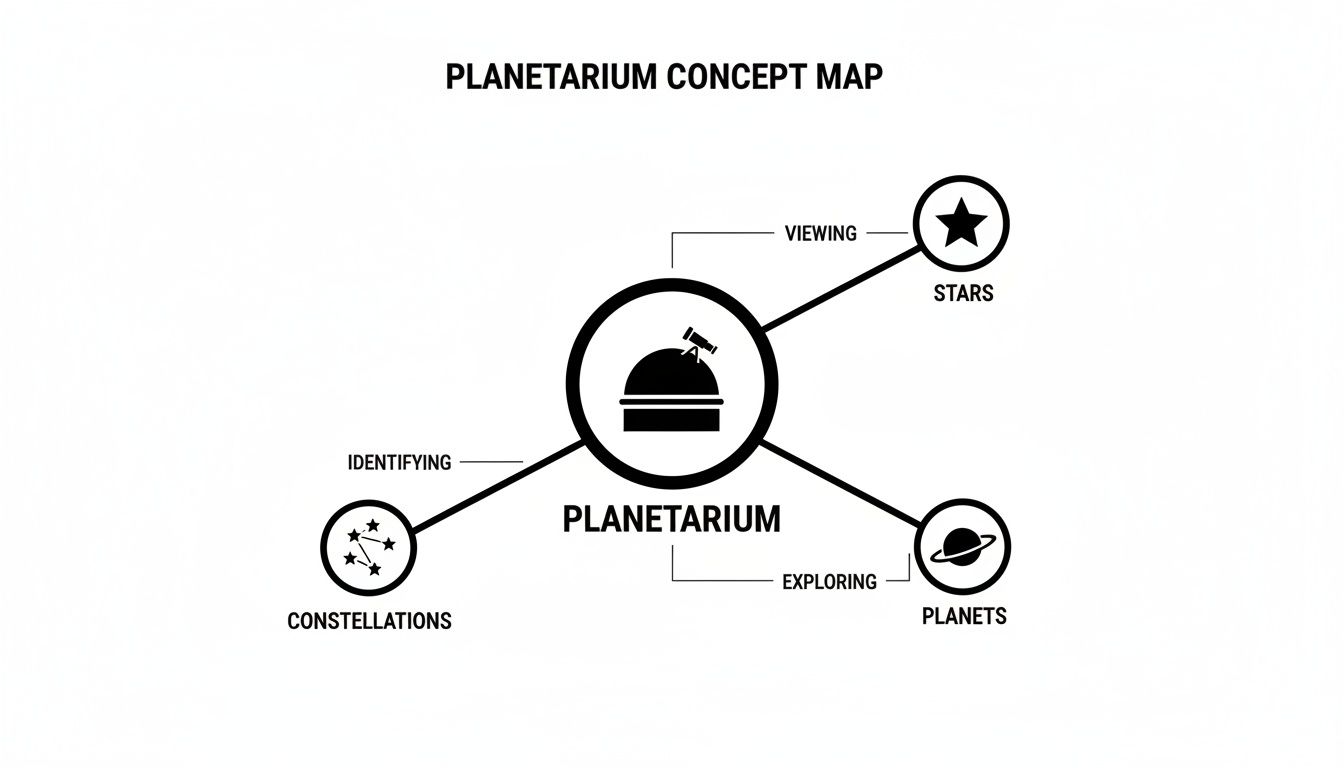
As you can see, that dome is the centrepiece where all these different bits of the universe are brought together for your cosmic tour.
Whether it’s a traditional star ball or a cutting-edge digital system, the goal is always the same.
A planetarium's technology is designed to do one incredible thing: make you forget you're sitting in a room and feel like you're truly exploring the cosmos.
This amazing tech allows presenters to create shows that aren't just educational but feel like a proper adventure—perfect for curious minds like Space Ranger Fred’s.
Your Guided Tour of the Universe
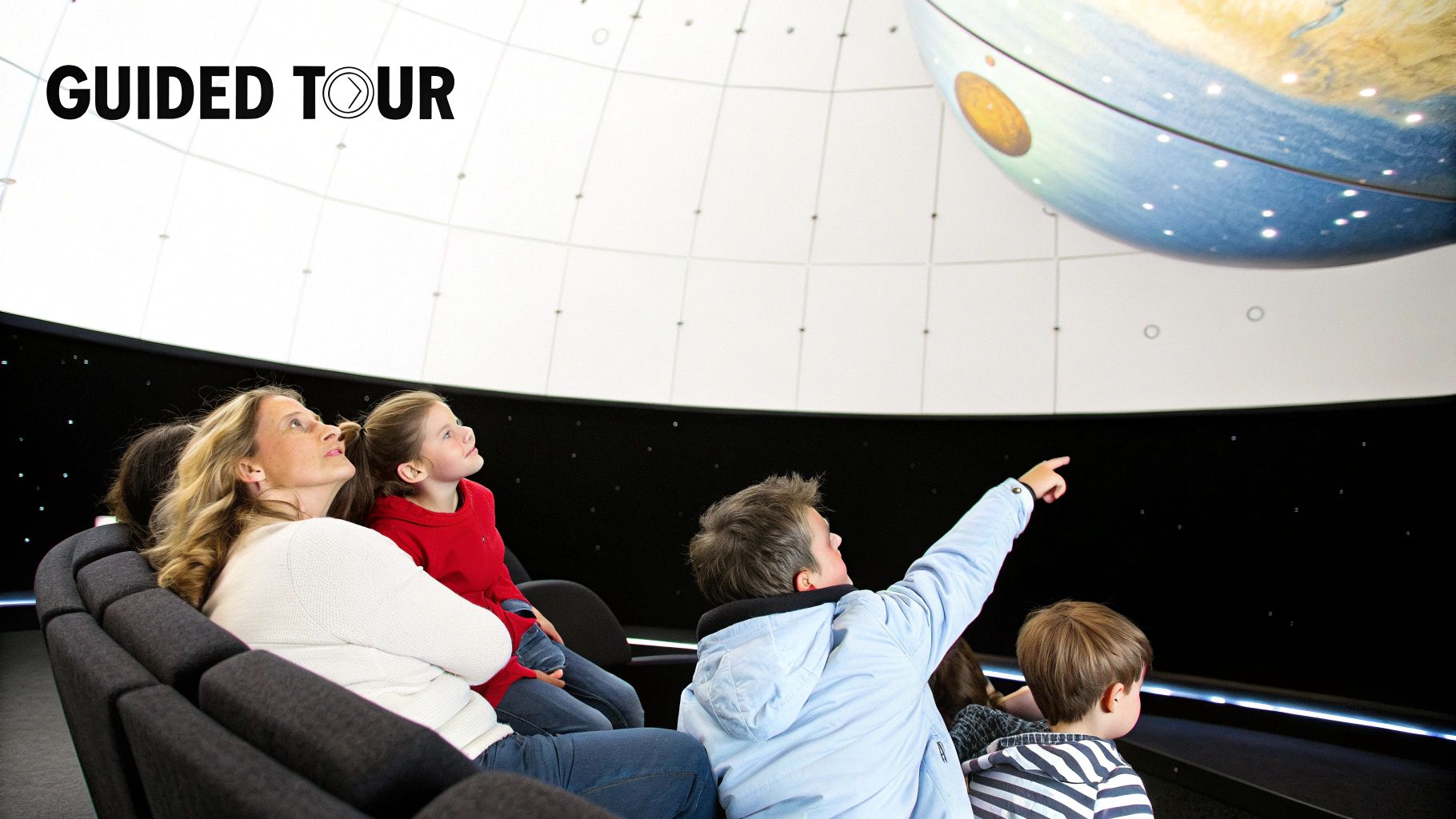
Right, so you’ve found your comfy reclining seat, the lights are dimming, and a quiet buzz of excitement fills the dome. The real adventure is about to kick off! So what actually happens during a planetarium show? Think of it as your very own guided tour of the universe, with an expert spaceship captain at the helm.
Most shows are led by a friendly presenter who narrates the journey live. They’ll point out incredible sights, share some mind-boggling facts, and answer any curious questions that pop up, making everyone feel like a seasoned astronaut. They're your guide through the cosmos, making sure you don't miss a single spectacular moment.
What Kind of Show Will You See?
Not all cosmic tours are the same. Planetariums offer a whole galaxy of different shows, which means there’s a perfect journey waiting for every kind of explorer, big or small.
Your mission might involve:
- A Gentle Constellation Tour: These shows are a beautiful introduction to the night sky. Your guide will sweep across the dome, tracing the patterns of famous constellations and often bringing them to life with stunning illustrations and stories from ancient myths. It's pure stargazing magic.
- A Thrilling Flight Through the Solar System: Buckle up! On these trips, you’ll blast off from Earth and get up close with our planetary neighbours. You might find yourself soaring over the colossal canyons of Mars, diving through the icy rings of Saturn, or marvelling at the stormy Great Red Spot on Jupiter.
- A Journey to Distant Galaxies: For older or more adventurous explorers, some shows travel far beyond our cosmic backyard. You could fly through nebulae where stars are being born or visit galaxies millions of light-years away. To get a better feel for these massive star cities, check out our guide on what is a galaxy.
No matter the destination, storytelling is at the heart of every great show. It’s this focus on story that turns what could be a simple science lesson into an adventure you won't forget.
The best planetarium shows don’t just tell you about space; they make you feel like you are part of the story, hurtling through the cosmos on an epic quest for discovery.
This approach is exactly what we love at Space Ranger Fred! Planetariums understand that the best way to learn is by doing, seeing, and imagining.
Most importantly, planetariums are brilliant at tailoring their shows for different age groups. They offer everything from simple, gentle introductions for the youngest space cadets to more detailed deep-dives for older kids and grown-ups. This means you can always find a cosmic journey that’s just right for your family’s mission.
Why a Planetarium Visit Inspires Young Explorers
A trip to a planetarium is so much more than a fun day out. It’s a genuine cosmic adventure, the kind of experience that can spark a lifelong passion for science and turn a simple family outing into a journey to the stars.
One of the most magical things about a planetarium is how it takes huge, tricky ideas and makes them feel completely real. Concepts like the mind-boggling size of the universe or the way planets glide around the Sun are tough to grasp from a textbook. But when you’re sitting under that giant dome, watching it all happen around you, everything just clicks.
Making Big Ideas Feel Real
That feeling of being right there is everything. It helps children grab hold of complex subjects in a way that feels exciting, not like a stuffy classroom lesson.
- Seeing the Scale: When planets are projected across the dome, even in a simplified way, a child can finally see that Jupiter is an absolute giant next to our little Earth.
- Understanding Movement: Watching the world spin on its axis to create day and night isn't just a diagram anymore—it’s something they can witness.
- Connecting to the Cosmos: Suddenly, space isn’t just a collection of facts and figures. It feels like a place you could actually visit.
This hands-on, visual experience is what makes the learning stick. It shifts a child’s understanding from, "I read about that," to, "I actually saw it happen."
Inspiring Awe and Wonder
That moment when the lights go down and a sea of stars fills the dome overhead? It's pure magic. That feeling of awe is a powerful tool for learning, prompting kids to ask those big, brilliant questions: How many stars are really up there? Are there other planets like ours? What’s at the very edge of everything?
A planetarium doesn’t just hand out answers; it sparks curiosity. It gives children the confidence to wonder, to ask questions, and to find out more for themselves—which is what science is all about.
Many of these places are fantastic educational hubs. The Peter Harrison Planetarium at the Royal Observatory Greenwich, for instance, has become a cornerstone for inspiring the next generation of UK scientists through its incredible shows and school programmes. You can read more about its history and impact on astronomy education here.
A visit is a brilliant way to support STEM learning, linking what kids learn at school to an unforgettable real-world experience. And to keep the adventure going once you’re home, don’t forget to check out our free activities page for lots of fun ways to explore space together.
Bring the Night Sky Into Your Living Room
The adventure doesn’t have to end just because the show is over. Why not bring a little slice of that cosmic magic back home? It’s surprisingly easy to turn your living room into a mini-observatory with a few creative projects.
Getting hands-on is a brilliant way for families to explore the science behind what is a planetarium together. Before you know it, your home will be a celestial workshop where your kids are the inventors, astronomers, and chief storytellers.
Create Your Own Constellation Projector
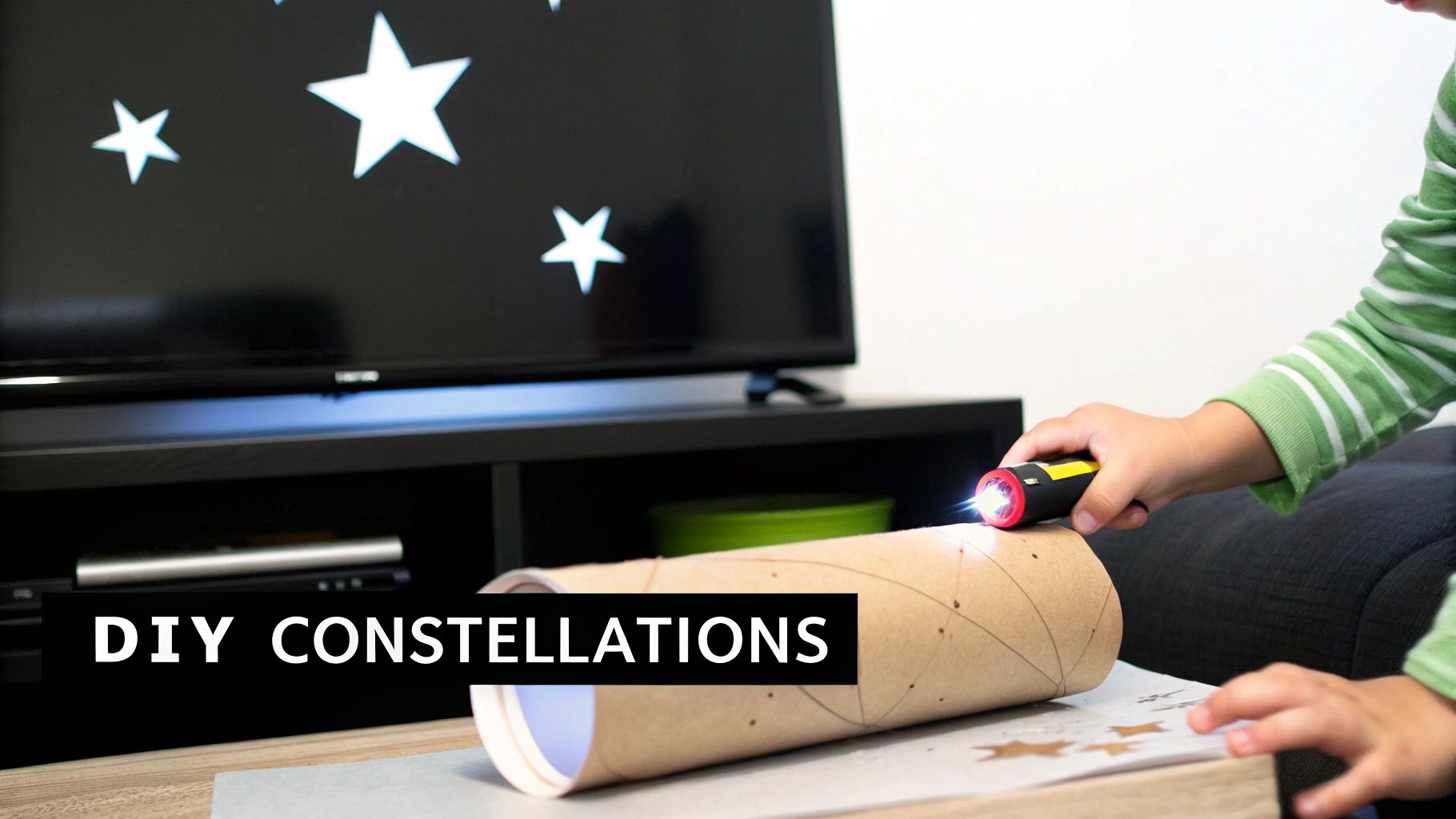
Fancy seeing Orion the Hunter striding across your bedroom ceiling? With this simple activity, which cleverly mimics how a classic planetarium projector works, you can!
- Gather Your Gear: You'll need a cardboard tube (a kitchen roll tube works a treat), a pin, a small piece of dark paper or card, a rubber band, and a torch.
- Make Your Star Disc: Pop the dark paper over one end of the tube and pull it taut. Secure it firmly with the rubber band.
- Poke the Stars: Now for the fun bit! Carefully use the pin to poke holes through the paper in the shape of your favourite constellation. More holes mean more stars!
- Light Up Your Sky: Find a dark room, shine the torch through the open end of the tube, and point it at a wall or the ceiling. Voilà! Your very own constellation will appear.
It's a fantastic, low-tech way to understand how planetariums use little more than light and shapes to paint a starry sky. Have a go at inventing your own patterns!
Starlight Storytelling and Star-Spotting Apps
Another brilliant activity is to follow in the footsteps of ancient astronomers and become a cosmic storyteller. They looked up at the stars and imagined heroes, beasts, and epic tales. Now it's your family's turn to invent new constellations and the myths that go with them.
You can also turn your phone or tablet into a portable planetarium. Family-friendly stargazing apps use your location to show you exactly what stars and planets are twinkling above you in real-time. It’s just like having a pocket-sized planetarium guide.
When children make and do, they connect with huge scientific ideas on their own terms. Creating their own starry night empowers them to see science not just as a school subject, but as something to play with and explore.
To keep the cosmic wonder going, you could even explore some fun cosmic solar system model ideas. And once you've built your projector, why not try spotting some real star patterns with our guide to finding constellations?
Tips for Your First Planetarium Mission
Ready to book your family’s cosmic voyage? A little bit of planning can turn a great day out into a spectacular one. With a few simple tips, you can make sure everyone’s first mission to the stars is a roaring success.
Arriving about 15–20 minutes early is a brilliant idea. This gives everyone, especially little explorers, time for their eyes to adjust to the dim lighting. It’s also the perfect moment to find your seats without a last-minute rush, letting you all settle in and get ready for the stars to appear.
Choosing Your Cosmic Adventure
Most planetariums offer a whole galaxy of shows, so it’s worth checking their schedule to find one that’s just right for your crew. Look out for shows specifically designed for younger children if you have little ones with you—they're often shorter and a bit more gentle.
If any of your children might be a bit nervous about the dark or the feeling of motion, a quiet word beforehand can make all the difference. Just remind them that they’re perfectly safe in their ‘spaceship’ seat and that the lights will come back on when the adventure is over.
After the show, plan a little 'mission debrief'. This is a lovely chance to chat about everyone’s favourite parts, whether it was flying past Mars or seeing the beautiful patterns of the constellations up close.
This tradition of sharing science with the public has a long and proud history in the UK. Way back in 1833, for example, the Greenwich Time Ball was installed to help sailors check their clocks, and the observatory continued to be a hub for learning. You can discover more about this fascinating history of UK astronomy and see how it paved the way for the incredible planetariums we have today.
A planetarium offers a fantastic view of the stars, but it's a different experience from using a real telescope. If your visit inspires your young explorer to get a closer look at the moon, our guide on how to use telescopes is the perfect next step for their journey.
Common Questions About Planetarium Visits
It’s only natural to have a few questions before blasting off on a new adventure! We’ve gathered some of the most common queries from our fellow Space Rangers to help you plan the perfect trip.
Is a Planetarium the Same as an Observatory?
That’s a brilliant question, and one we hear a lot! While they both help us explore the cosmos, they do very different jobs.
- A planetarium is like a cinema for the stars. It uses special projectors to create a breathtaking show on a huge, curved ceiling, taking you on a guided tour of the universe.
- An observatory is a scientist's workshop. It’s home to giant, powerful telescopes that astronomers use to look directly at real stars, planets, and galaxies far, far away.
Think of it this way: a planetarium tells you the amazing stories of space, while an observatory gives you a window to see those stories happening for real.
Are the Shows Suitable for Very Young Children?
Absolutely! Many planetariums design shows just for their youngest explorers. These are often a bit shorter, with simpler stories, bright colours, and gentle music to keep little ones engaged. It's always a great idea to check the venue’s website for age recommendations to find the perfect cosmic journey for your little astronaut.
What if My Child Worries About Motion Sickness?
This is a common concern for parents, but rest assured, most shows are designed to feel smooth and comfortable. The feeling of flying through space is all a clever illusion created on the dome.
If you’re still worried, try picking a seat towards the back. This keeps more of the dome in your field of view and can help reduce that feeling of movement.
The most important thing is to relax and enjoy the journey. Remember, you're sitting in a comfy chair, not actually zooming through an asteroid field—even if it really feels like you are!
What Can We Do After the Visit?
Keep that sense of wonder alive! A brilliant post-visit activity is to get out the crayons and draw your favourite part of the show. Or, when it gets dark, you could head outside and try to spot a constellation you learned about in the real night sky.
For even more ideas, our Space Ranger Fred free activities page is packed with fun missions to continue the adventure.
The universe is full of amazing stories, and a planetarium visit is a wonderful way to begin exploring them. For more adventures that blend science, story, and fun, blast off into the world of Space Ranger Fred and discover a galaxy of books and activities waiting for you. Find out more at https://spacerangerfred.com.